Skip to content
How should I choose between private label and custom formulation for my personal care brand?
To choose between private label and custom formulation, you must balance time-to-market, budget, MOQ, differentiation and regulatory complexity. Private label uses existing, proven formulas and packaging for faster, lower-risk launches. Custom formulation builds unique textures, claims and active stacks but needs more time, budget and clearer brand strategy.
Table of Contents
Can't find the answers?
Please rest assured—you are always welcome to contact us. Throughout the entire customization process for your beauty and skincare products, we will be available at any time to answer all your questions.
Why does the “private label vs custom formula” decision shape your whole brand strategy?
Choosing between private label and custom formulas is not just a technical question. It affects your launch timing, cash flow, margin structure, channel strategy, brand story and how easily you can extend or reposition your line in the next two to three years.
How this decision impacts your brand?
| Dimension | Impact of this decision | Why it matters for brand owners |
|---|---|---|
| Time-to-market | How quickly you can launch | Influences channel opportunities and trend timing |
| Capital and cash flow | Upfront investment vs staged spending | Defines how much risk you can take on first launch |
| Differentiation level | How unique your formulas and textures can be | Affects pricing power and long-term positioning |
| Operational complexity | Project management load and R&D depth | Impacts your team workload and need for technical staff |
| Regulatory and testing | Documentation, stability, extra tests | Determines how easily you can enter strict markets |
| Scalability and roadmap | How easy it is to add SKUs and extend lines | Shapes your 2–3 year product roadmap |
Many founders treat “private label vs custom formula” as a simple price comparison. In reality, this decision sits at the core of your brand strategy. It decides how quickly you can enter the market, how much risk you take on in the first year, and how believable your brand story will be to retailers and consumers.
If you choose pure private label, you benefit from proven formulas, short timelines and low project complexity – but you also accept that other brands may use the same base. If you choose full custom formulation, you invest more time and coordination into unique textures and active systems that truly belong to your brand. Learn how our Product Development capabilities support both private label and custom strategies.
The right answer is different for a first-time Amazon seller, a growing salon chain and a dermocosmetic brand entering pharmacies. This page gives you a practical framework to decide which path fits your situation – and how Zerun can support you whether you start with private label, go directly to custom, or combine both in a hybrid roadmap. When you are ready to brief an OEM partner, see our guide on how to brief a cosmetic OEM for a complete skincare line.
What do “private label” and “custom formulation” actually mean in manufacturing?
In manufacturing, “private label” usually means adopting an existing, proven formula and packaging with your branding. “Custom formulation” means developing a new formula from scratch or with deep modifications. Many brands use a middle option: lightly customized private label built on mature bases.

Pure private label
You choose from existing formulas that are already tested, stability-checked and in production. The packaging is standard or lightly adjustable. You add your logo, artwork and maybe minor details such as scent. This is the fastest and simplest way to launch.
Short definition: Existing formula + standard packaging + your logo
Typical use case: Fast test of a new niche, gifting, entry product

Customized private label
You still start from a mature base formula, but you can tweak certain parameters within safe limits: fragrance direction, viscosity, certain active levels, sometimes adding or removing non-critical ingredients. Packaging can be more tailored to your brand system.
Short definition:Existing base formula with tweaks + custom packaging/labels
Typical use case:Brands needing some differentiation with lower risk

Full custom formulation
The formula is designed around your brief: target skin concerns, markets, textures, claims and brand story. R&D creates a new or substantially different system, often combined with tailored packaging. This route requires more development time and deeper collaboration.
Short definition:New formula built for your brief + tailored packaging
Typical use case:Strong concept brands, dermocosmetic and salon lines
The terms “private label” and “custom” are often used loosely in the market. To make a smart decision, it helps to understand how a real OEM/ODM factory like Zerun uses these concepts.
At Zerun, we often combine these three modes within the same brand. For example, a brand may use private label for basic cleansers and body products, customized private label for kits, and full custom formulas for a few hero serums that define the brand.
How do private label and custom formulation compare on key decision factors?
The right choice depends on how you weigh speed, risk, budget and uniqueness. Private label wins on speed and simplicity. Full custom wins on differentiation and tailor-made performance. The hybrid route balances both by starting on mature bases and evolving hero SKUs later.
Instead of asking “Which is better?”, a more useful question is “Which model fits my brand, my risk level and my next 12–24 months?”. To answer that, you can compare private label, customized private label and full custom formulation across a few objective factors.
Ask yourself:
- How quickly do you need to be in the market?
- How much complexity can your team handle right now?
- How important is it for your textures and claims to feel truly unique?
- How sensitive are your customers and regulators to formula details and documentation?
The matrix below gives you a high-level view that you can use in internal discussions or investor conversations. It is not about right or wrong, but about finding the best match between your current situation and the manufacturing model.
Comparison matrix:
| Factor | Pure Private Label | Customized Private Label | Full Custom Formulation |
|---|---|---|---|
| Time-to-market | Fastest (weeks) | Fast to moderate | Slowest (months) |
| Upfront development cost | Lowest | Low to medium | Highest |
| MOQ flexibility | Often lowest, especially for trials | Low to medium, depending on changes | Medium to higher, depends on formula complexity |
| Differentiation / uniqueness | Low (others can use same base) | Medium (noticeable tweaks + unique packaging) | High (textures and claims tailored to your brand) |
| Formula control | Low | Medium (within parameters of the base system) | High (design from brief with R&D team) |
| Testing & documentation load | Lowest (existing data reused) | Low to medium | Medium to high (more new testing) |
| Regulatory complexity | Lowest | Low to medium | Needs more planning per market |
| Project management load | Light | Moderate | Higher, multi-step R&D process |
| Best for | First tests, gifting, Amazon trials | Growing brands, niche lines, salon sets | Established brands, strong concepts, dermocosmetic |
If you are unsure after looking at this table, you probably belong in the hybrid zone: start with private label or customized private label for your first launch, then move your best sellers into custom development when you have real data from your market.


If you choose to start with private label, explore some of our ready-made hero products:
– Private label anti-aging cream
– Private label acne serum
– Private label hair growth oil
– Private Label Hyaluronic Acid Moisturizer
– Private Label Deodorant Spray
– Private Label Dark Spot Serum
– Private Label Aloe Toner
When is private label the smartest way to launch your line?
Private label is ideal when you need to test a market quickly, protect cash flow and keep operational complexity low. It works especially well for new Amazon or DTC brands, corporate gifting projects and salon sets where speed and reliability matter more than unique actives.
Private label is not a “cheap shortcut”. Used correctly, it is a strategic tool for learning fast with real customers before you commit to heavier R&D investments. It allows you to launch a coherent line with professional formulas and packaging while keeping your project lean.
Private label is usually the smartest starting point if:
- You are launching your first brand and still refining your positioning.
- You want to test multiple markets or channels without overcommitting to one idea.
- You need to hit a specific date – a sales event, seasonal campaign, corporate gifting deadline – and cannot afford long development cycles.
- You do not yet have internal technical staff and want a simple project flow.
Zerun’s private label offering is built on our most proven formula platforms in skincare, haircare and body care. These are products that have already been accepted by demanding markets and can be adapted with your branding, packs and minor adjustments.
Who should start with private label?
| Buyer type / scenario | Why private label fits | Typical Zerun support |
|---|---|---|
| New Amazon / Shopify skincare brand | Needs fast launch, proven formulas, simple project flow | Existing hot formulas + branding + Amazon-ready packs |
| Corporate gifting / promo buyers | Focus on logo, gift box and deadline, not deep R&D | Ready-made lotions, creams, hand care with custom sets |
| Small salon or spa starting retail line | Wants professional-looking products to support in-salon care | Salon-friendly textures + coordinated packaging |
| First-time founders testing positioning | Needs real market feedback before heavy investment | Small MOQs, multiple scents or actives for A/B testing |
Starting with private label does not lock you in forever. Once you see which SKUs perform best and what your customers love or dislike, you can move into custom upgrades on a much stronger foundation.

When is a fully custom formula the right strategic choice?
Full custom formulation is worth the investment when your brand promises specific performance, targets sensitive or problem-prone skin, needs unique textures or must meet strict retailer and regulatory standards that generic formulas cannot fully support.
There are situations where private label – even with customization – will not be enough. If your brand story is built around a specific biological mechanism, a particular active stack or a demanding target group, you need a formula that is engineered for that brief, not simply adapted.
A fully custom route makes strategic sense when:
- Your products are positioned as clinical, dermocosmetic or problem-solution driven, and you plan to enter pharmacies, clinics or strict retail chains.
- You need to control pH, surfactant systems, active combinations and sensorials very precisely to support claims such as “barrier repair”, “soothing for reactive skin” or “designed for inflamed skin”.
- Your concept relies on a unique texture or format – for example, oil-in-serum, bi-phase essences, solid balms or multi-functional treatments that are not available as standard bases.
- You already have a strong brand and customer base, and you want to create hero products that clearly stand apart from generic offerings.
Zerun’s R&D team uses your detailed brief (skin types, concerns, target markets, claim tone, packaging, MOQs) to design custom formulas that balance performance, tolerance and manufacturability. We can also suggest actives and texture strategies that fit both your brand story and your regulatory boundaries.
Who should consider full custom?
| Buyer type / scenario | Why custom formulas are needed | Typical Zerun support |
|---|---|---|
| Clinical / dermocosmetic skincare brands | Need precise actives, pH, tolerance and robust documentation | Bespoke formulas, derm-style packaging, compliance input |
| Established brands upgrading a hero product | Must deliver clear performance gains and new story | R&D projects around specific active stacks |
| Strong niche concepts (e.g. inflamed skin) | Require tailored textures and layered active systems | Multi-step routines built for specific mechanisms |
| High-end salon or spa signature lines | Need exclusive textures and scents unavailable to competitors | Co-created sensorials and packaging systems |
If you are somewhere in between – you want more uniqueness than basic private label but are not ready for a full custom line – you can still use a hybrid strategy: start with mature bases that are lightly customized, then evolve your best-performing SKUs into fully custom formulations once you have data and cash flow to support the upgrade.

If full custom formulation is the right strategic choice, you can go deeper into our functional development areas:
– Brightening and dark-spot formulations
– Anti-aging and firming formulations
– Sensitive and inflamed skin formulations
– Hair care or growth formulations
– Hair styling formulations
– Hair protection formulations
Can I start with private label now and move to custom formulas later?
Many successful brands start with private label to validate demand, then invest in custom formulas for their best-selling SKUs. A hybrid roadmap lets you learn from real customers, prove channels and cash flow, then upgrade hero products with deeper R&D when the time is right.
Hybrid roadmap: from private label to custom formulation:
| Phase | Focus | What you do as brand owner | What Zerun does as OEM/ODM |
|---|---|---|---|
| Phase 1 | Private label launch | Choose SKUs, packaging, branding, channels | Provide existing formulas, packs, fast sampling |
| Phase 2 | Learn and optimise | Track reviews, returns, feedback, hero SKUs | Suggest tweaks: scent, viscosity, packaging details |
| Phase 3 | Upgrade hero SKUs to custom formulas | Decide which SKUs deserve deeper differentiation | Design custom formulas around proven success patterns |
The result is a line that evolves intelligently. You minimise risk at the beginning, but you still move toward a more ownable, differentiated brand as your business grows.

You do not have to choose between private label and custom formulation once and for all. For many founders, the smartest move is a hybrid approach:
- Use private label or customized private label to enter the market fast, with low development risk and manageable MOQs.
- Monitor reviews, reorders and channel feedback to discover your true hero SKUs and your customers’ real pain points.
- Once you have evidence, invest in custom formulas for the products that deserve a stronger, more defensible position.
This sequence is especially powerful if you are launching on Amazon, Shopify or in salon chains where you can see data quickly. Instead of guessing what might work and pouring budget into theoretical concepts, you build your R&D plan on real-world proof.
At Zerun, we design hybrid roadmaps deliberately. We know which of our existing formulas are ideal for fast entry, and which areas (like sensitive skin, anti-inflammatory care, hair growth or scalp care) benefit most from custom upgrades later. Many brands follow this roadmap:
– Start with private label best-sellers to test channels.
– Then work with our custom formulation team to upgrade hero SKUs.
How do time, risk and complexity compare across the three paths?
Even without exact prices, you can compare your options by time, risk and complexity. Private label has the lowest development risk. Customized private label balances upgrade potential with manageable effort. Full custom requires the most coordination but can deliver strong, defensible differentiation.
It is often hard to talk about budgets and costs across different countries and currencies. But you can still make a solid decision using three universal dimensions:
- Time – How long from first conversation to first shipment?
- Risk – How much can go wrong in terms of formula, positioning and documentation?
- Complexity – How many decisions, steps and people are involved?
Once you map private label, customized private label and full custom formulation against these three factors, patterns become clear:
- Pure private label is fast and low risk, ideal for learning.
- Customized private label is a medium step that adds personality without overwhelming your team.
- Full custom is a high-focus project that should be reserved for when your concept and channels are clear.
The table below gives you a pragmatic, non-financial way to frame internal decisions with co-founders, investors or buyers.
For a closer look at how these factors play out in real OEM projects, see our oily-skin OEM manufacturer page and other scenario-based guides.
Time–risk–complexity comparison:
| Dimension | Pure Private Label | Customized Private Label | Full Custom Formulation |
|---|---|---|---|
| Development timeline | Short | Short to medium | Medium to long |
| Formula risk | Lowest (proven bases) | Low to medium | Medium to higher |
| Operational complexity | Low | Medium | High |
| Learning from market | Fast | Fast | Slower, needs more planning |
| Brand differentiation | Limited | Moderate | Strongest |
You can use this matrix together with your brand stage:
- Early-stage or first-time founders → usually start at the left and move right over time.
- Growing brands with stable sales → operate in the middle zone, then choose a few key SKUs to push into the right column.
- Established or clinical brands → can justify beginning closer to the right, especially for their core treatments.


How does Zerun Cosmetic support private label, custom and hybrid projects?
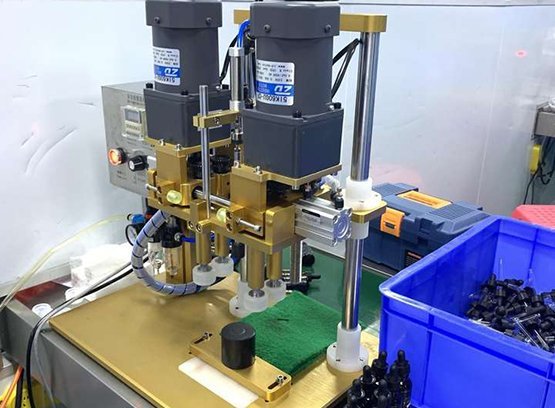
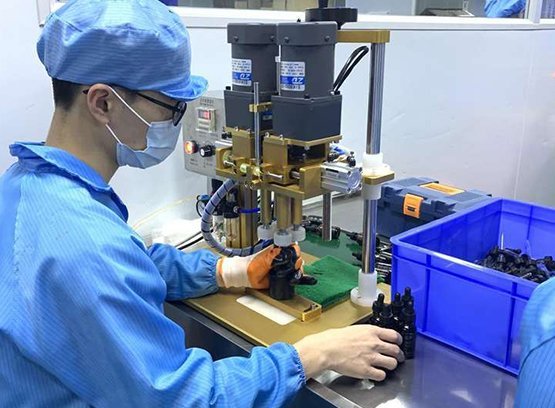
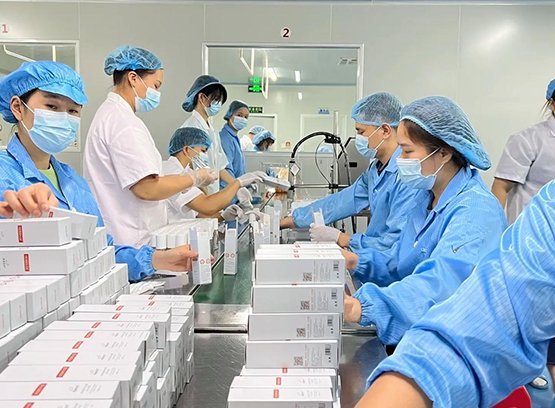
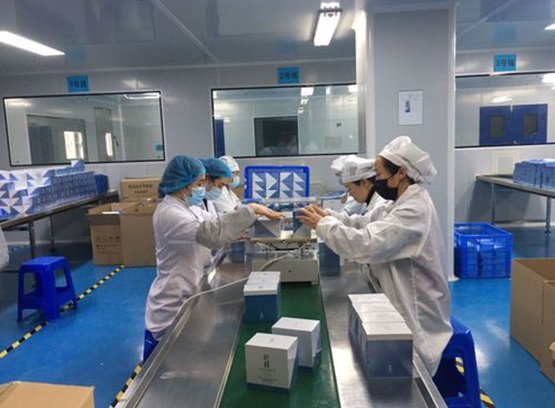
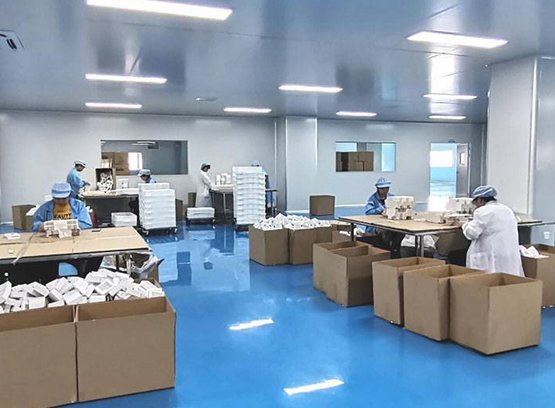
Zerun Cosmetic runs four specialized factories and an experienced trade team, so we can support fast private label launches, deeper custom R&D and hybrid roadmaps. You do not have to choose one path forever – we design a sequence that fits your risk level and brand vision.
Playlist

0:16
0:16
0:16











Zerun service modes at a glance:
| Zerun service mode | What you get | Typical buyer profile |
|---|---|---|
| Zerun Private Label | Ready-made formulas, curated packs, quick branding options | New Amazon brands, gifting buyers, test lines |
| Zerun Customized Private Label | Tweaked bases, more packaging choice, closer brand fit | Growing brands, niche concepts, salon lines |
| Zerun Full Custom | Bespoke formulas, deeper R&D, tailored packaging systems | Established or high-ambition brands |
How we guide you through the decision
When you contact Zerun, we do not immediately push you to one side. Instead, we ask:
- Your current channel mix and launch deadlines.
- Your expected MOQ range per SKU.
- How sensitive your target market is to ingredients, claims and certifications.
- Whether your brand story demands a unique texture or ingredient system, or can start from proven bases.
Based on your answers, we recommend:
- A private label set to validate your concept quickly; or
- A customized private label mini-line as a balanced starting point; or
- A full custom path for lines that must meet higher technical requirements.
You can also decide to combine them, for example:
- Private label for hand creams and body lotions,
- Customized private label for haircare sets, and
- Full custom for a small number of hero facial serums.
Because Zerun controls not only personal care manufacturing but also packaging, printing and raw material supply, we are structured to support different project modes without sending you to multiple vendors.
No matter which path you choose, you get:
- A personal project manager familiar with your markets and channels.
- Access to our library of 5,000+ mature formulas across skincare, body care and haircare.
- A packaging team that understands how to match bottle, jar, tube and label systems to your brand.
- An international trade team that can coordinate documentation and shipping for your target countries.
From there, you can choose the level of customization that fits your stage.
Case study: How brands chose between private label and custom?
With four specialized factories, over 5,000 mature formulas and 26 R&D chemists, Zerun Cosmetic can translate a clear brief into a full skincare line: from lab concept and customized packaging to printing, international shipping and long-term line extensions.
Mini case story 1 – US Amazon brand: start private label, then upgrade serums
A new US Amazon brand wanted to enter the brightening and hydrating skincare niche with limited team size and no in-house chemist. They needed professional-looking products, but their main goal was to test category, pricing and marketing angles as fast as possible.
- We helped them choose a small private label line: cleanser, toner, hydrating serum and cream, all based on proven formulas.
- They selected packaging from existing bottles and jars and focused their energy on branding, listing optimisation and reviews.
- After one year, two serums emerged as clear heroes. We then upgraded these to custom formulas, keeping the same global concept but strengthening the active stacks and textures.
This path let them move from “generic-looking” to more unique over time, using real sales data as their guide.
Mini case story 2 – European derm-style brand: direct to custom for sensitive skin
A European brand approached us with a clear mission: a line for sensitive, redness-prone skin that would be sold in pharmacies and clinic-like environments. Their brand promise depended on tolerance, barrier repair and careful ingredient selection.
- From the start, we recommended a full custom route for their core cleanser, serum and cream.
- We worked within strict requirements around surfactants, fragrance, allergens, preservatives and pH, and we designed textures that felt medical yet pleasant.
- For some secondary SKUs (like hand cream and body lotion), we used customized private label bases aligned with the same positioning.
Here, generic formulas would not have supported their claims or retailer expectations. Custom development was a strategic necessity, not a luxury.
Mini case story 3 – Middle Eastern salon chain: hybrid model for in-salon and retail
A salon chain in the Middle East wanted both professional in-salon treatments and retail sets clients could take home. They needed:
- Distinctive, sensorially rich formulas for in-salon use, and
- A reliable, scalable line for retail shelves without excessive R&D.
We proposed a hybrid plan:
- In-salon hero treatments (masks, serums, intensive creams) were built as custom formulas, co-created with the salon team to match their treatment protocols.
- The retail line used customized private label products with coordinated packaging and scents, keeping lead times and complexity under control.
This way, the chain gained both signature professional products and an accessible retail range, while managing risk and timelines.
FAQ – Briefing a cosmetic OEM for a complete skincare line
Q: Should I start with private label if I have no previous cosmetic experience?
A: For most first-time founders, private label is the safest and fastest starting point. You do not need to manage deep R&D, complex testing plans or long development cycles. Instead, you can focus on understanding your customers, building your brand story and learning which SKUs actually sell. Once you have stable demand and clearer feedback, you can upgrade key products to customized or fully custom formulas.
Q: When should I switch from private label to custom formulas?
A: You should consider moving to custom formulas when three things are true: you know which SKUs are your heroes, you have consistent sales or strong retailer interest, and you can clearly describe what is missing in existing formulas (for example, a different texture, stronger claims or better tolerance). At that point, investing in custom R&D helps you defend your position and justify a stronger price and brand story.
Q: Can I mix private label and custom formulas in one brand?
A: Yes. Many brands use a mix. For example, you might use custom formulas for your flagship facial serums and creams, customized private label for haircare or body products, and pure private label for gift sets or seasonal kits. The key is to keep your visual identity and messaging coherent, so customers experience the line as one brand, even if formulas come from different development paths.
Q: How do MOQs differ between private label and full custom projects at Zerun?
A: In general, private label projects allow lower starting MOQs per SKU, because the formulas and packs are already in use. Custom projects often require a higher minimum due to dedicated R&D, raw material planning and more specific packaging. However, the exact MOQ depends on product type, packaging choice and whether you are planning a one-off run or a long-term line. Our team will propose realistic MOQ options once we understand your plan.
Q: If my budget is limited but I need some differentiation, what is the best path?
A: If your budget is limited yet you still want some differentiation, customized private label is usually the sweet spot. You can start from a proven base, then adjust elements that most influence your brand story: fragrance direction, texture within a defined range, hero actives where possible and, very importantly, packaging and design. This gives you a recognisable, coherent line without the cost and complexity of fully custom R&D from day one.
Q: Can Zerun reuse data from private label formulas when we move to custom?
A: When you upgrade from private label to custom formulas, we can definitely reuse market learnings: customer reviews, preferences on texture, fragrance and performance, as well as channel performance data. Technical data such as stability and safety tests are product-specific, so new formulas may need fresh testing. However, having a history with similar systems helps us design custom formulas more efficiently and anticipate potential issues earlier.
Q: What if I start with custom formulas and later decide I need simpler products too?
A: That is possible as well. Some brands begin with highly specialised custom SKUs and later request simpler, more universal products for additional channels or lower price tiers. In that case, we can introduce private label or customized private label SKUs that share a similar visual identity. This gives you a tiered offering: advanced custom formulas as your flagship, and simpler private label products as entry points.
Q: How can I decide which SKUs should be private label and which should be custom?
A: A practical rule is: make your story-critical SKUs custom over time, and keep supporting products in the private label or customized private label zone. Ask yourself: if customers remember only one or two products from my brand, which should they be? Those are good candidates for custom R&D. Cleansers, basic body lotions or simple add-ons can often start and remain as private label, as long as they are high quality and fit your positioning.
Start To brief Your cosmetic oem skincare line Today
You do not need a huge team or an in-house lab to build a serious skincare line. You need a clear brief, a capable manufacturing partner, and a roadmap that turns your ideas into stable, compliant, beautiful products your customers actually rebuy.