Skip to content
Choosing the best hair oil brands has never been more confusing. From Ayurvedic growth oils and luxury shine drops to scalp serums and “most expensive hair oil” icons, shoppers and buyers face hundreds of options claiming miracles in tiny bottles. Price, packaging and perfume often shout louder than the actual formula.
The best hair oil brands, however, quietly do the same things well: they use high-quality base oils, sensible actives, safe fragrance, stable textures and honest claims. Whether you are a consumer looking for a daily oil or a brand owner researching the market before launching your own line, understanding what really separates strong hair oil brands from average ones is essential.
This guide first breaks down how to judge a hair oil brand—using ingredients, texture, testing, price tier and transparency. Later sections (and a separate companion piece on “most expensive hair oils”) use this framework to look at 18 widely recommended hair oil brands across mass, premium and luxury tiers, so you can benchmark or design your own products more intelligently.
What Makes a Hair Oil Brand Truly Great?

A truly great hair oil brand combines high-quality base oils, purposeful actives, comfortable textures, safe fragrance, realistic claims and consistent performance for specific hair and scalp types. It is defined less by “luxury image” and more by long-term results and formulation discipline.
Many hair oil brands look impressive on social media: glass bottles, gold caps, intense shine in one swipe. But once you start reading INCI lists, listening to real user feedback and looking at how formulas age over 6–12 months, the differences become obvious.
Strong hair oil brands are usually built on five foundations:
- Ingredient integrity – plant oils, esters, actives and antioxidants chosen for a clear purpose, not just marketing buzzwords.
- Formula engineering – balancing slip, absorption, washability and build-up so the oil works in real routines.
- Fragrance and sensorial identity – scents and textures that match the brand’s positioning, without overwhelming sensitive users.
- Packaging fit-for-purpose – bottle type, dispenser and size that suit the formula and sales channel.
- Testing, safety and transparency – basic microbiology, stability, compatibility and realistic claims that can be explained to customers.
A “most expensive hair oil” that ignores these basics is just an expensive perfume in a bottle. Conversely, a mid-priced brand that manages ingredients and performance carefully can become a long-term favourite for salons, retailers and consumers.
The Complete Framework for Evaluating Hair Oil Brands
The best way to compare hair oil brands is to treat each bottle as an engineered formula, not just a cosmetic accessory. Evaluate base oils, actives, silicones, fragrance, packaging, testing and transparency to see whether a brand’s story matches its real-world performance.
Below is a practical framework you can use whether you are a shopper, a retailer, or a brand planning your own OEM/ODM hair oil line.
1. Base Oil Quality and Sourcing
Base oils form the structural foundation of any hair oil. They determine glide, absorption speed, weight on the hair and long-term feel.
- Premium plant oils Argan, jojoba, sweet almond, camellia, grapeseed, avocado and baobab oils are frequently used in higher quality hair oils. Cold-pressed or minimally refined grades retain more natural lipids and antioxidants, which can support shine and softness.
- Economical carriers and blends Sunflower, soybean, rice bran and light mineral oil are often included to manage cost and viscosity. These ingredients are not automatically negative, but brands should be transparent about how and why they use them.
- Refined esters and lightweight synthetics Ingredients such as coco-caprylate, C13-15 alkane or isopropyl myristate help create dry-touch, fast-absorbing textures. Well-designed formulas combine these esters with natural oils rather than relying on them alone as inexpensive fillers.
When assessing hair oil brands, consider the following questions:
- Do they clearly identify the main oils used, rather than using vague phrases such as “natural oils”?
- Are the first three to five ingredients primarily purposeful carriers, or mostly low-value fillers?
- Do they describe sourcing in a specific, credible way (for example, Moroccan argan oil or Indian amla oil), rather than in general marketing language?
2. Active Ingredients and Claims Logic
Convincing marketing is easy to create; claims that are supported by the formula are more demanding. Strong hair oil brands link their promises to defined active ingredients used at reasonable levels.
Common claim themes include:
- Hair growth and density support Caffeine, certain peptides, botanical extracts such as rosemary, saw palmetto and ginseng, niacinamide and selected vitamins are often used in products that support scalp condition and the appearance of thicker hair. Serious brands explain that results depend on consistent use over time, not overnight transformations.
- Damage repair and split-end management Film-forming polymers, lipid-rich plant oils and some silicones and ester blends can temporarily smooth the cuticle and improve combability. Responsible brands avoid promising permanent repair of split ends and instead focus on surface protection and improved feel.
- Frizz control and shine enhancement Silicones, lightweight esters and high-refractive-index oils such as argan or camellia help reduce frizz and increase shine. Well-balanced formulas provide smoothness without excessive greasiness or heavy build-up.
- Scalp comfort and anti-irritation support Tea tree, rosemary, bisabolol, panthenol, zinc PCA and soothing plant extracts are often included in scalp-focused oils. These should be used with consideration for sensitivity and supported by appropriate testing.
When you evaluate brand claims, check whether:
- The brand’s key promises (for example, growth, frizz control, shine or scalp comfort) clearly correspond to specific active ingredients in the formula.
- For “luxury hair oil” or “most expensive hair oil” positioning, there is additional investment in fragrance design, sensorial experience and testing, rather than only upgraded packaging and advertising.
3. Silicones, Light Esters and Texture Engineering
In hair care, texture is almost as important as ingredient choice. Many leading hair oil brands do not rely solely on natural oils, nor do they completely exclude silicones. Instead, they design the texture carefully.
- Lightweight, dry-touch systems These may contain volatile silicones or modern ester alternatives to create fast-absorbing, non-greasy finishes. They are appropriate for fine, easily weighed-down or oil-prone hair types. The objective is a smooth feel that washes out cleanly.
- Richer, repairing systems These typically include higher levels of non-volatile silicones, plant butters and long-chain esters. They are suited to dry, bleached, highly textured or very thick hair that needs additional cushioning and slip.
- Hybrid oil-serum and leave-in treatments Some brands combine water-based actives (such as proteins and amino acids) with oil-based protective layers to create more complex treatment textures. This is common in higher-end or “clinic-style” positioning.
When reviewing texture, please pay attention to:
- Does the brand clearly explain which hair types the product suits (for example, fine, thick, curly, coily, or colour-treated hair)?
- Does it provide guidance on dosage and frequency of use to reduce the risk of over-application and heaviness?
- Does the brand discuss ease of washing out, especially when non-volatile silicones are present at higher levels?
4. Fragrance, Potential Allergens and Sensorial Identity
For luxury hair oils and “most expensive” hair oil concepts, fragrance often becomes a central part of the brand identity.
- Fine-fragrance style compositions High-end lines may use more sophisticated accords, such as floral-woody, amber or musky notes, aiming to leave a refined scent in the hair that resembles a light perfume.
- Aromatherapy-inspired profiles These rely on essential oils such as lavender, rosemary, ylang-ylang and citrus notes, and are often associated with relaxing, refreshing or spa-like positioning.
- Fragrance-free or low-allergen options These serve sensitive scalps or more medical and dermocosmetic channels, minimising known fragrance allergens and focusing on a neutral or very soft scent profile.
Well-designed brands will:
- Disclose fragrance and essential oil components clearly and respect relevant safety guidelines (for example, IFRA standards).
- Use fragrance to express a coherent brand personality, whether spa-oriented, salon-professional, dermocosmetic or luxury fragrance-led.
- Provide clear guidance for more sensitive users, rather than focusing only on strong, long-lasting scent.
5. Packaging and Format Engineering
The same formula placed in different packaging can create entirely different user experiences and commercial strategies.
- Dropper bottles Suitable for targeted application and small doses, such as on ends, partings or specific scalp areas. Common in “serum-style” hair oils and higher-end treatments.
- Pump bottles Appropriate for routine full-length application, salon back-bar use or family-size products. Typical fills range from 50 to 150 ml or larger.
- Sprays and mists Used for shine sprays, scented hair mists or light protective oils. These are often preferred for fine hair or daytime top-up use because they help distribute a thin, even layer.
- Roll-ons, ampoules and mini formats Useful for travel sets, discovery kits and gifting concepts, particularly in e-commerce. They also allow consumers to test multiple oils before committing to full sizes.
When assessing packaging decisions you should consider:
- Compatibility between the container and the formula (for example, how the oil interacts with plastics, pumps and sprayers over time).
- Whether fill size and format are appropriate for the sales channel (salon, retail, e-commerce or gifting).
- Whether packaging features and finishes credibly support the stated price tier, especially in luxury segments.
6. Testing, Stability and Safety Standards
Hair oil brands that plan for long-term success invest in “invisible” technical work behind the scenes.
Typical evaluations include:
- Basic microbiological assessments and preservative challenge testing where applicable, even for high-oil systems.
- High- and low-temperature stability, as well as light exposure tests, to monitor colour change, oxidation and potential separation.
- Packaging compatibility tests, especially for sprays, pumps and droppers.
- Scalp tolerability or patch tests for more sensitive or dermocosmetic positioning.
Consumers and buyers rarely see full reports, but they can look for signals such as:
- References to stability and safety testing in product literature or brand FAQs.
- Any mention of specific test types for key claims in higher-end or clinic-style brands, such as in-use tests, consumer studies or instrumental measurements.
7. Brand Transparency and Long-Term Consistency
Finally, transparency and consistency often separate enduring hair oil brands from short-lived trends.
Stronger brands usually:
- Publish complete ingredient lists and explain the role of key ingredients in accessible language.
- Disclose manufacturing locations and give at least a basic overview of compliance with major regulations in key markets.
- Maintain texture, fragrance and performance consistency across batches and over multiple years.
- Respond constructively to product issues and feedback rather than simply discontinuing problematic lines.
For brand owners, buyers and OEM clients, this last dimension is especially important. The goal is not only to identify one successful hair oil, but to work with brands and manufacturing partners that can replicate quality reliably and support a coherent, scalable hair oil range over time.
Which Hair Oil Brands Are Most Often Ranked “Best” Globally?
Across e-commerce bestseller lists, editorial testing and “luxury hair oil” round-ups, a relatively small group of brands appears again and again. The 18 brands below are not the only good options worldwide, but they are frequently cited as benchmarks for performance, sensorial experience and brand storytelling in hair oils.
1. Kérastase (France)
Kérastase is a salon-origin brand known for its Elixir Ultime and other oils that blend precious plant oils with advanced conditioning agents to deliver shine, smoothness and heat protection. Its formulas are engineered for different hair types and concerns, backed by L’Oréal’s research infrastructure and presented in premium, glass-like packaging that supports a high-end positioning.
2. Oribe (United States)
Oribe’s Gold Lust Nourishing Hair Oil is often described as a “luxury benchmark” thanks to its silky, weightless texture and blend of argan, jasmine, lychee, edelweiss and other antioxidant-rich extracts. The brand invests heavily in fine-fragrance style scents and sculptural packaging, which, together with performance, justify its upper luxury price tier.
3. Moroccanoil (United States)
Moroccanoil Treatment remains one of the most recognisable hair oils worldwide, combining argan oil with silicones to create high shine, frizz control and easier styling. Its amber bottle, turquoise accents and signature warm scent have become iconic, and the brand offers multiple variants (light, curl, etc.) to cover different hair types.
4. Olaplex (United States)
Olaplex No.7 Bonding Oil pairs a very lightweight oil texture with the brand’s bond-building technology, designed to support damaged, bleached or chemically processed hair while adding shine and heat protection. The brand’s strong clinical positioning and repair narrative allow it to sit at a premium price point while serving as a technical treatment rather than just a cosmetic gloss.
5. Gisou (Netherlands)
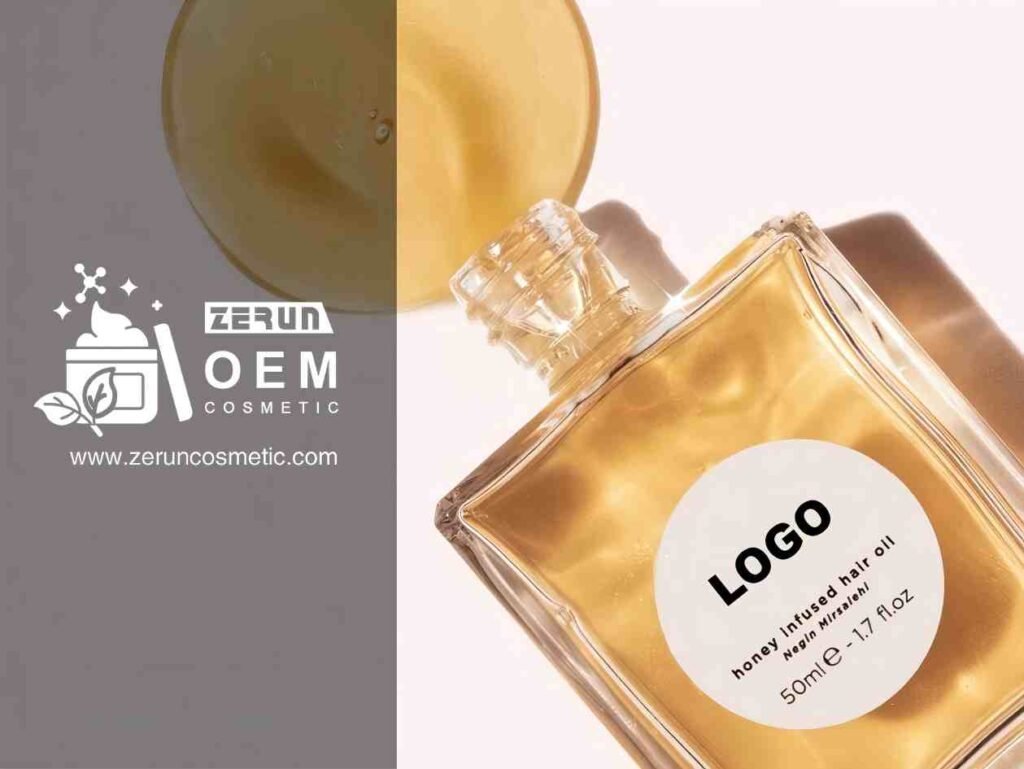
Gisou’s Honey Infused Hair Oil is built around honey from the Mirsalehi bee garden, used as a humectant and conditioning agent to help balance moisture and softness. The brand combines distinctive glass packaging, a strong founder story and dessert-like fragrance profiles to position itself as a modern luxury hair oil for shine, nourishment and visual indulgence.
6. Davines (Italy)
Davines offers salon-focused oils such as OI Oil, formulated with ingredients like roucou oil to provide softness, shine and protection while maintaining a lightweight feel. Its philosophy emphasises sustainable sourcing, eco-conscious packaging and professional performance, supporting a premium yet understated positioning attractive to salons and design-driven consumers.
7. Aveda (United States)
Aveda integrates plant-based oils and Ayurvedic inspiration into its hair oil and treatment portfolio, typically using blends of organic or naturally derived oils with essential oils for scent. The brand’s long-standing commitment to environmental responsibility, cruelty-free standards and salon training helps justify mid-to-premium pricing for consumers who prioritise botanical formulations and sustainability.
8. Leonor Greyl (France)
Leonor Greyl is a heritage French haircare brand whose Huile de Leonor Greyl and other oils are designed for dry, processed hair, offering softening, protection against seawater and UV, and intensive hydration. Formulas rely heavily on natural oils (the flagship oil is reported to be about 97% natural), combined with a refined rose-forward scent and elegant packaging that reinforce its luxury image.
9. Mielle Organics (United States)
Mielle Organics’ Rosemary Mint Scalp & Hair Strengthening Oil has become one of the most visible growth-oriented oils, pairing rosemary and mint with other conditioning ingredients and often discussed for textured and protective styles. The brand targets an accessible price point while offering a strong performance narrative for scalp care and length retention.
10. Vegamour (United States)
Vegamour positions its HYRD-8 Weightless Repair Hair Oil and related products as vegan, “clean” and clinically tested, with textures designed for fine or easily weighed-down hair. It focuses on plant-based actives and data-driven claims, appealing to ingredient-conscious consumers who want measurable improvements without heavy silicones.
11. Living Proof (United States)
Living Proof, founded by scientists and using patented technology, offers oils such as the Frizz Vanishing Oil that are optimised by hair type and climate. Formulations often avoid traditional heavy silicones, relying instead on tailored molecules and esters to control frizz and enhance shine while preserving movement, which supports a science-led premium positioning.
12. Ouai (United States)
Ouai Hair Oil is frequently recommended as a multi-purpose frizz-taming and shine-enhancing product that can also be used for soft styling. The brand combines a blend of oils with a recognisable fragrance profile and minimalist packaging, targeting consumers who want polished but not overly “formal” hair, at an accessible premium price.
13. Fable & Mane (United Kingdom)
Fable & Mane’s HoliRoots Hair Oil is positioned as a pre-wash hair and scalp treatment inspired by Ayurvedic traditions, combining plant oils with herbs such as ashwagandha and dashmool. The focus on ritual, heritage storytelling and scalp wellness, together with mid-range pricing, makes it attractive to consumers seeking culturally rooted yet modern formulas.
14. JVN Hair (United States)
JVN’s Complete Pre-Wash Scalp & Hair Treatment Oil uses ingredients such as hemisqualane to condition hair and support scalp comfort before cleansing. The brand emphasises inclusive marketing, clean formulations and sensorial but balanced textures, appealing to consumers who want performance with clear sustainability and ethics messaging.
15. L’Oréal Paris (France)
L’Oréal Paris Elvive Extraordinary Oil is a widely available mass-market hair oil that blends botanical oils with silicones to provide shine, smoothness and protection at an affordable price. It is often mentioned as an effective “dupe” for more expensive salon oils, offering high perceived value for price-sensitive shoppers and large retailers.
16. K18 (United States)
K18 Molecular Repair Hair Oil builds on the brand’s patented peptide technology to help repair damaged hair bonds while providing shine and heat protection. Its clear focus on measurable repair for bleached and chemically treated hair, along with minimalist, clinical styling, positions it as a high-performance, high-price technical treatment.
17. Rōz (United States)
Rōz Santa Lucia Styling Oil is frequently recommended for fine or normal hair, combining lightweight plant oils with a refined scent to smooth and add shine without heaviness. The brand’s aesthetics and founder story (celebrity stylist origin) support a premium, design-driven positioning in editorial and social media coverage.
18. HASK (United States)
HASK is a value-focused haircare brand whose oils incorporate ingredients such as Kalahari melon oil, orchid oil and white truffle, aiming to deliver noticeable conditioning at wallet-friendly prices. The brand’s emphasis on exotic oils, accessible pricing and broad retail distribution makes it a common recommendation for consumers seeking genuine oil-based benefits without luxury costs.
Comparison Table: How These 18 Hair Oil Brands Position Themselves
The ranges and descriptions below are approximate and refer mainly to typical retail prices for individual hair oils (around 30–100 ml) in USD.
| Brand | Country / Region | Core oil / ingredient focus | Main strengths | Typical price band* | Brand type / positioning | Best suited for… |
|---|---|---|---|---|---|---|
| Kérastase | France | Blends of plant oils + conditioning agents | Salon heritage, high shine, targeted ranges, strong R&D | $40–$70 | Luxury salon brand | Salon clients, premium shoppers, damaged or colour-treated hair |
| Oribe | United States | Argan, jasmine, lychee, edelweiss and other extracts | Very refined texture, fine-fragrance scent, luxurious pack | $50–$80+ | Luxury niche brand | Luxury buyers, fragrance-driven users, editorial and celebrity-inspired looks |
| Moroccanoil | United States | Argan oil with silicones | Iconic scent, instant shine, easy styling | $25–$50 | Premium mainstream | Everyday users seeking shine and frizz control across many hair types |
| Olaplex | United States | Bond-building technology + lightweight oils | Damage repair narrative, heat protection, salon credibility | $28–$40 | Science-led repair brand | Bleached, chemically treated or heavily styled hair |
| Gisou | Netherlands | Honey-infused oil blends | Moisture balance, distinctive founder story, luxury image | $40–$80 | Luxury influencer-led brand | Consumers wanting nourishing shine with strong brand storytelling and aesthetics |
| Davines | Italy | Botanical oils (e.g. roucou) in salon treatments | Sustainable focus, elegant textures, eco-conscious image | $30–$55 | Premium sustainable salon brand | Design-driven salons, eco-aware premium shoppers |
| Aveda | United States | Botanical oil blends, essential oils | Plant-based philosophy, Ayurveda influence, salon network | $25–$50 | Botanical salon / eco brand | Eco-conscious users, holistic salons, normal to dry hair |
| Leonor Greyl | France | High % natural oils (e.g. Brazil nut, carnellia) | Heritage French luxury, intensive care, UV/sea protection | $45–$80 | Heritage luxury haircare brand | Very dry, processed hair; clients seeking natural-leaning luxury |
| Mielle Organics | United States | Rosemary, mint, botanical oils | Strong scalp/growth narrative, textured hair focus, value | $10–$20 | Accessible textured-hair brand | Textured and protective styles, growth-focused routines |
| Vegamour | United States | Vegan plant oils and actives | Clean positioning, clinical claims, lightweight textures | $40–$60 | Vegan, “clean” premium brand | Ingredient-conscious buyers, fine or normal hair needing repair |
| Living Proof | United States | Custom molecules + esters, some oils | Science-driven formulas, frizz control without heaviness | $30–$45 | Science-based premium brand | Users in humid climates, frizz-prone hair, performance-focused consumers |
| Ouai | United States | Oil blends for shine and frizz control | Multi-use styling, recognisable scent, minimal packaging | $26–$40 | Lifestyle-driven premium brand | Style-focused consumers seeking polished but relaxed hair |
| Fable & Mane | United Kingdom | Ayurvedic herbs + plant oils | Scalp and ritual focus, cultural storytelling, pre-wash use | $30–$45 | Ayurvedic-inspired niche brand | Consumers interested in scalp rituals and heritage-inspired treatments |
| JVN Hair | United States | Hemisqualane-based treatment oils | Inclusive branding, clean formulas, texture + scalp care | $25–$40 | Inclusive, clean premium brand | Users wanting balanced performance and sustainability messaging |
| L’Oréal Paris | France | Botanical oils + silicones in Elvive Extraordinary Oil | Strong value, wide distribution, “dupe” for salon oils | $10–$20 | Mass / drugstore global brand | Budget-conscious shoppers, supermarkets, mass e-commerce |
| K18 | United States | Patented peptide + lightweight oil system | Intensive repair for damaged hair, bond technology focus | $45–$70 | High-performance repair brand | Heavily bleached or chemically treated hair, salon back-bar and prosumers |
| Rōz | United States | Lightweight botanical oils for styling | Fine-hair-friendly texture, refined scent, stylist founder | $40–$60 | Premium editorial / niche brand | Fine to normal hair, design-oriented consumers |
| HASK | United States | Oils such as Kalahari melon, orchid, white truffle | Exotic oils at accessible prices, mass retail presence | $8–$18 | Value-focused mass brand | Entry-level oil users, price-sensitive shoppers, drugstore and online platforms |
- Price bands are approximate and based on typical retail pricing at the time of writing; exact prices vary by region, retailer and product size.
How Do Hair Oil Brands Compare by Price Tier and Positioning?
Hair oil brands differ by price because of base oil quality, active levels, fragrance sophistication, packaging finishes, testing depth and brand equity. Understanding these tiers helps you choose the right reference brands for your own positioning and margins.
1. Overview of Key Price Tiers
Most hair oil brands can be grouped into four broad tiers:
- Mass / Value Tier
- Typical price: low.
- Focus: accessible shine and frizz control using economical oils plus silicones.
- Strength: strong value perception and very wide distribution.
- Premium Mass / Mid-Range Tier
- Typical price: moderate.
- Focus: better plant oils, lighter textures, clearer claims and more modern packaging.
- Strength: balance between performance, aesthetics and price for everyday use.
- Luxury Salon / Prestige Tier
- Typical price: high.
- Focus: more complex oil blends, targeted actives, refined textures and elevated fragrance.
- Strength: strong brand equity, salon support, aspirational image and technical storytelling.
- Ultra-Luxury / “Most Expensive” Tier
- Typical price: very high.
- Focus: exceptional sensorial profile, fine-fragrance level scents, heavy glass packaging and often limited lines.
- Strength: status, gifting appeal, strong visual identity and long-term brand desirability.
For brand owners and buyers, comparing tiers is less about “good vs bad” and more about matching formula cost, packaging, testing and narrative to the target retail price and channel.
2. Why Some Hair Oils Cost 10–20× More Than Others
Several factors drive large price gaps between hair oil brands:
- Base oils and actives
- Rare oils, higher inclusion levels or clinically supported actives increase cost.
- Mass-tier products often rely on cheaper carriers with small amounts of premium oils for marketing focus.
- Fragrance and sensorial design
- Fine-fragrance compositions and multi-layered accords are significantly more expensive than simple fragrancing.
- Ultra-luxury and “most expensive hair oil” concepts invest heavily in this dimension.
- Packaging materials and components
- Custom glass, weighted caps, metallised parts and special closures raise component and freight costs.
- Mass tiers use simpler glass or PET with standard pumps to control cost.
- Testing depth and regulatory work
- Stability, compatibility, performance and claim-support studies add development cost but increase credibility, especially in professional or dermocosmetic channels.
- Brand equity and scale
- Established prestige brands can charge more due to reputation, heritage and resale value, not only ingredient cost.
- Niche brands may price higher due to small-batch production and limited volumes.
When you plan a hair oil line, you can decide consciously which of these levers to invest in, rather than letting cost and price drift without a clear strategy.
3. When Luxury or “Most Expensive” Positioning Makes Sense
A high-price hair oil strategy is most appropriate when:
- The product is a hero item anchoring a premium or luxury hair line.
- The brand invests in signature fragrance, texture and packaging that clearly exceed mass-market expectations.
- The oil sits in salon, spa or boutique retail channels where storytelling and service support the price.
- The target consumer values sensory experience, gifting appeal and brand image as much as functional performance.
For many brands, it is more effective to build a tiered architecture: a reliable core hair oil at mid-range pricing, plus one or two flagship luxury oils for margin and storytelling, instead of only chasing “most expensive” claims.
Ingredient & Label Guide: What to Look for in Hair Oil Brands
Reading hair oil labels carefully reveals whether a brand’s promises are realistic. Focus on base oils, key actives, supporting agents, fragrance and preservatives, as well as how clearly the brand explains its choices.
1. Understand the Ingredient Order
Ingredients are usually listed in descending order of concentration. When you read a label:
- Expect main carriers (such as plant oils, esters or light synthetics) in the first lines.
- Look for key actives (for example, rosemary extract, caffeine, niacinamide, peptides) not only at the very end.
- Be cautious if marketing emphasises an ingredient that appears very low on the list with no explanation of dosage or role.
2. Distinguish Oil, Serum and Treatment Concepts
Many brands now blur categories, so labels help you clarify the format:
- Pure or near-pure oil blends
- Primarily plant oils and esters; often positioned for ends, lengths or pre-wash use.
- Oil-serum hybrids
- Combine a water phase and an oil phase, sometimes with proteins, amino acids or humectants.
- Scalp treatment oils
- Include soothing, anti-flake or microcirculation-supportive ingredients, often with more detailed usage instructions.
Understanding the intended format helps you compare products more fairly and brief manufacturers more precisely.
3. Key Ingredient Families to Recognise
When scanning labels, pay attention to the following groups:
- Nourishing base oils
- Argania Spinosa Kernel Oil, Simmondsia Chinensis (Jojoba) Seed Oil, Cocos Nucifera (Coconut) Oil, Prunus Amygdalus Dulcis (Sweet Almond) Oil, Camellia Japonica Seed Oil and similar.
- Repair and strengthening agents
- Hydrolysed proteins, peptides, amino acids, ceramide-like lipids and specialised bond-building molecules.
- Scalp and soothing agents
- Rosmarinus Officinalis (Rosemary), Melaleuca Alternifolia (Tea Tree), Panthenol, Bisabolol, Zinc PCA, Niacinamide and select herbal extracts.
- Shine and smoothing agents
- Dimethicone, Cyclopentasiloxane, Amodimethicone and modern esters that help align hair fibres and enhance light reflection.
- Antioxidants and stabilisers
- Tocopherol (vitamin E), certain chelators and other stabilisers that slow oxidation and help maintain colour and odour over time.
4. Labelling Red Flags
Be cautious with hair oil brands that:
- Use vague descriptors like “infused with precious oils” without naming specific oils.
- Emphasise “no silicones” while replacing them with heavy, sticky esters but not adjusting usage instructions.
- Suggest permanent repair of split ends or regrowth claims that do not match the ingredient set.
- Avoid disclosing the full INCI list or manufacturing origin.
For professional buyers and brand owners, such signals indicate limited formulation transparency and may not be suitable as benchmarks for serious product development.
5. Special Considerations for Sensitive Scalps and Regulatory Buyers
If you work with sensitive scalps, clinic-style channels or stricter markets:
- Check for known fragrance allergens and essential oil levels.
- Consider whether preservatives and antioxidants meet your regulatory expectations for key regions.
- Prefer brands that offer at least a basic level of documentation or technical explanation for their claims.
These label insights can then be translated directly into brief documents for your own OEM/ODM projects, ensuring that marketing language and technical reality stay aligned.
Texture, Fragrance & Usage Experience: Matching Hair Types and Routines

Many successful hair oil brands win not only on ingredients but on how the product feels, smells and fits into daily routines. Texture and fragrance should match hair type, climate, styling habits and consumer preferences.
1. Fine or Oily Hair: Lightweight, Fast-Absorbing Oils
For fine or easily weighed-down hair, the most suitable brands:
- Use lighter esters, low-viscosity oils and sometimes volatile silicones to avoid a greasy finish.
- Emphasise very small amounts per use and easy wash-out.
- Position their oils as finishing or anti-frizz products rather than intensive masks.
These products are often preferred in humid urban environments and for consumers who style hair daily but do not want visible residue.
2. Normal to Thick Hair: Balanced, Polished Textures
For medium or thicker hair types, balanced oils:
- Combine richer plant oils with controlled levels of smoothing agents.
- Offer both pre-blow-dry and finishing use, often providing heat protection.
- Aim for a “polished but flexible” feel that maintains movement.
Brands in this space frequently build their identity around healthy shine and salon-quality styling results.
3. Curls, Coils and Highly Textured Hair: Rich and Cushioning Blends
Textured hair often benefits from more emollient and occlusive formulas:
- Higher levels of non-volatile oils and butters to reduce friction and breakage.
- Support for twist-outs, braids and protective styles, sometimes combined with scalp comfort claims.
- Guidance on layering with creams, gels and leave-ins to avoid heavy build-up.
Many specialist brands in this category communicate clearly on curl patterns and protective styling routines, helping consumers integrate oils into multi-step regimens.
4. Damaged, Bleached or Colour-Treated Hair: Treatment-Led Oils
For heavily processed hair, brands that position oils as treatments:
- Combine bond-supporting technologies, proteins or peptides with smoothing oils.
- Emphasise heat protection, cuticle sealing and reduction of friction during brushing.
- Sometimes recommend pre-wash or overnight use to improve feel before cleansing.
These formulations are often presented in more clinical language and are closely linked to salon services and professional recommendations.
5. Scalp-Focused Oils and Pre-Wash Treatments
Scalp oils and pre-wash treatments form a distinct segment:
- Textures are designed to spread easily along the scalp without excessive dripping.
- Fragrance is usually cleaner and more herbal, aligning with care and freshness.
- Usage instructions emphasise massage, dwell time and thorough rinsing or washing.
Such products serve consumers concerned with flaking, tightness, itch or slow growth, and they work best when integrated into a defined weekly routine.
6. Fragrance Preferences and Lifestyle Fit
Finally, fragrance preference and lifestyle play a decisive role:
- Fragrance-forward luxury oils suit users who regard hair as a fragrance carrier and value a lasting, sophisticated scent.
- Soft or fragrance-free oils suit sensitive scalps, fragrance layering with perfumes, or clinical channels.
- Aromatherapy-style profiles appeal to spa, wellness and evening routine positioning.
When you analyse hair oil brands, consider not only what is inside the bottle, but how the texture and fragrance guide consumers to use the product every day. For brand owners, designing the correct sensorial profile and usage instructions is often the difference between a formula that is admired once and a product that becomes a repeat purchase.
Buyer’s Checklist: How Retailers and Brand Owners Should Assess Hair Oil Brands
Retailers and brand owners should evaluate hair oil brands using a structured checklist: ingredient quality, formulation logic, texture fit, fragrance strategy, packaging, pricing, documentation and supply reliability. This ensures that each SKU supports both consumer satisfaction and commercial performance.
1. Ingredient Quality and Base Oil Strategy
- Are the main carriers clearly identified and technically appropriate for the target hair types?
- Is there a logical balance between premium oils and economical components, relative to the price tier?
- Are antioxidants and stabilisers included to support reasonable shelf life?
2. Active Ingredients and Claim Support
- Do the advertised benefits (growth, repair, frizz control, scalp comfort, colour protection) correspond to identifiable active ingredients?
- Are there any references to in-house testing, consumer use tests or instrument measurements?
- Are claims phrased realistically, avoiding language that suggests medical treatments or guaranteed regrowth?
3. Texture, Build-Up and Washability
- Is the texture appropriate for the intended hair types and climates?
- Does the brand provide clear guidance on dosage and frequency to minimise greasiness and build-up?
- Is the oil easy to remove with standard shampoos, or does it require clarifying products that may not suit all users?
4. Fragrance, Allergens and Sensitivity
- Does the fragrance profile match the intended channel (salon, spa, pharmacy, mass retail, luxury)?
- Are key fragrance allergens declared where required, and is there an option for sensitive scalps?
- Is the olfactory signature strong enough to support brand identity without overwhelming other products in a routine?
5. Packaging, Formats and Channel Fit
- Is the packaging technically compatible with the formula (for example, pumps, droppers and sprays tested with the oil)?
- Are sizes and formats appropriate for the channel: salon back-bar, retail shelf, e-commerce sets or travel kits?
- Does the visual design credibly support the claimed price tier and positioning?
6. Pricing Architecture and Margin Potential
- Does the ingredient and packaging quality appear coherent with the retail price?
- Is there room for sustainable margins for distributors and retailers after discounts and promotions?
- Can the brand support a tiered architecture (entry, core, premium, luxury) without internal contradictions?
7. Documentation, Compliance and Technical Support
- Are basic documents available: INCI list, safety information, usage instructions and shelf life guidance?
- For stricter markets, is the brand able to provide regulatory documentation when required?
- Can technical questions about ingredients, usage and compatibility be answered clearly and consistently?
8. Supply Reliability and Long-Term Consistency
- Is there evidence of stable availability and controlled reformulations over time?
- How often are packaging, scent or texture changed without clear communication?
- Does the manufacturing partner behind the brand appear capable of maintaining quality across increased volumes?
This checklist can also be used directly when briefing an OEM/ODM factory, turning your evaluation standards into explicit development requirements.
From Studying “Best Hair Oil Brands” to Building Your Own Line (OEM/ODM)
Once you understand how leading hair oil brands combine ingredients, texture, fragrance and packaging, the next step is to translate those insights into your own product architecture. A capable OEM/ODM partner can convert competitive benchmarks into manufacturable, regulation-ready formulas.
1. Define Positioning Before Formula
- Clarify your target markets and channels: mass retail, premium e-commerce, salon, spa, pharmacy or luxury boutiques.
- Decide whether your hair oil line will focus on daily shine, intensive repair, scalp health, textured hair care, or a combination.
- Map your desired price tiers and margin expectations before finalising any formula costs.
2. Turn Benchmark Brands into Clear Briefs
- Select several reference products from different tiers (for example, one mass-market value oil, one salon oil, one luxury fragrance-led oil).
- Analyse their ingredient lists, textures, fragrances and packaging formats using the earlier framework.
- For each reference, write a short brief: which aspects you want to emulate, which you wish to avoid, and where you want to differentiate.
3. Design a Coherent Hair Oil Range
Rather than creating one isolated SKU, plan a small but coherent system:
- A core everyday hair oil suited to your main consumer base.
- One or two specialised SKUs, such as a scalp treatment oil, an intensive repair oil or a curl-focused oil.
- Optionally, a flagship luxury oil with upgraded fragrance and packaging for gifting and higher margins.
This structure makes your range easier to explain to buyers and consumers while allowing for future expansion.
4. Choose Base Systems, Actives and Sensory Profiles
Working with an OEM/ODM partner, you can:
- Select base oils and esters that match your positioning (for example, lightweight for fine hair, richer for highly damaged or textured hair).
- Define active stacks for growth support, anti-frizz, heat protection, colour care or scalp comfort, within regulatory boundaries.
- Specify fragrance directions: fine-fragrance style, aromatherapy-inspired, very soft “skin-care-like” scents or fragrance-free.
- Define target viscosity, spreadability and absorption profiles for each SKU.
Clear technical targets at this stage significantly reduce the number of reformulation rounds later.
5. Align Packaging and Formats with the Range Story
- Decide which products will use droppers, pumps, sprays, rollers or mini vials.
- Coordinate volumes and bottle silhouettes so that the range looks unified but not repetitive.
- Plan any gift sets, starter kits or discovery collections early, so primary packs and secondary boxes are designed together.
This integrated approach makes it easier to use the same formulations across multiple commercial formats, improving efficiency.
6. Build in Testing, Documentation and Launch Readiness
With your manufacturing partner:
- Schedule essential stability, compatibility and basic safety testing for each formula.
- Prepare the documentation required for your key markets, including INCI lists, usage instructions and claim wording.
- Define clear consumer or professional usage protocols for salons, spas or education content.
When these steps are planned from the beginning, your hair oil line is not only attractive on the shelf, but also ready for regulatory review and professional sales discussions.
FAQ: Hair Oil Brands & Product Development
1. Are luxury hair oil brands always better for hair health than mid-range options?
Not necessarily. Luxury brands often invest more in fragrance design, packaging and storytelling. Some also use very high-quality oils and advanced actives, but others focus primarily on sensorial experience. Mid-range brands can offer excellent hair health benefits with simpler packaging and more modest positioning if their formulas are well engineered.
2. What ingredients should sensitive scalps avoid in hair oils?
Sensitive scalps may react to higher levels of certain fragrance allergens, strong essential oils, occlusive ingredients that trap irritants, or actives not designed for leave-on scalp use. In these cases, fragrance-free or low-fragrance oils with simple, well-tolerated ingredients and clear usage guidance are often more appropriate.
3. How many hair oil SKUs should a new brand launch initially?
For most new brands, starting with a compact range is more manageable. One core hair oil for the main target hair type, plus one or two specialised products (for example, a scalp treatment oil and a repair oil) is usually sufficient. Additional SKUs can be introduced after real usage and sales data confirm demand.
4. Do “most expensive hair oils” perform better in online channels or in salons?
High-price hair oils can succeed in both environments, but they typically require strong storytelling and education. In salons and spas, professionals can demonstrate texture and results directly. Online, detailed content, clear ingredient explanations, high-quality imagery and social proof are essential to justify the price.
5. Can a small brand create a signature hair oil without very high minimum order quantities?
Yes, provided the OEM/ODM partner offers relatively low minimum order quantities and flexible packaging options. By focusing on one or two carefully defined formulas and using standardised primary packaging, small brands can develop distinctive oils without committing to very large initial volumes.
6. How long does it usually take to develop a custom hair oil line?
Timelines vary, but a typical project may require several months from initial briefing to first shipment. Key steps include formula design, sampling and revisions, stability and compatibility checks, packaging development, artwork approval, regulatory review where needed and final production. Clear briefs and prompt feedback can significantly shorten this process.
7. Should a brand completely avoid silicones if it wants a “clean” positioning?
Not in every case. Some markets and retailers have strict definitions that exclude silicones, but from a technical perspective, certain silicones offer clear benefits in smoothness, shine and heat protection. A brand should decide how it defines “clean,” communicate that definition transparently and design its formulas accordingly.
Conclusion
The best hair oil brands combine ingredient quality, disciplined formulation, carefully designed textures and coherent storytelling. Analysing them through a clear framework allows you to see why some products become long-term favourites while others remain short-lived trends.
If you are planning to build or upgrade your own hair oil range, a capable OEM/ODM partner can help you move from benchmark analysis to a concrete product plan—covering base oil systems, active stacks, texture design, fragrance direction, packaging formats, testing and regulatory preparation.
Share your target markets, hair types and price tiers, along with any reference hair oil brands you admire. Together with an experienced personal care manufacturer, you can develop a focused, technically sound and commercially realistic hair oil line that is ready for global retail, salon or e-commerce launch.