Skip to content
How to make a solid shampoo bar from a liquid formula?
Making a “bar version” isn’t a simple conversion. A liquid cleanser or shampoo relies on water, solubilizers, and flow—while a solid bar relies on structure, hardness, rub-off control, and how it behaves in a wet bathroom. The good news: when you choose the right bar format, rebuild the base properly, and validate packaging + testing early, solid bars can feel premium, travel-friendly, and surprisingly high-performing.
Why convert liquid skincare products into solid products?
Solid formats can reduce shipping and leakage risk, cut packaging, and create travel-friendly routines. A successful conversion starts by confirming the key business benefit and whether the product is a good fit for a bar.
Lower shipping cost and fewer leakage headaches
Less water shipped means lighter cartons, better freight efficiency, and lower risk of liquid leakage claims.
Solid formats travel well for e-commerce and cross-border delivery when hardness and packaging are designed correctly.
Fewer pump failures and cap leaks can reduce returns, especially in hot or long-distance routes.
Concentrated formats also support “travel-friendly” positioning without relying on TSA-size messaging.
Packaging reduction and sustainability positioning
Solid products often use less plastic and simpler packs (paper cartons, tins, tubes), which fits low-waste storytelling.
Smaller pack volume improves storage and merchandising for retail and gifting sets.
A solid line can help meet retailer sustainability filters without changing the brand’s hero ingredient story.
“Refillable” or “reusable tin” systems can add premium value while keeping the routine simple.
Format advantages in real use
Solid cleansers and shampoo bars can deliver controlled rub-off and consistent payoff when the base system is well designed.
Balm bars and treatment sticks can create a protective feel and targeted application that some liquids cannot match.
Less mess and easier handling can improve daily adherence for on-the-go users.
Solid formats also allow new sensory cues (glide, creaminess, rinse feel) that feel “premium” when executed well.
Brand expansion without rebranding
A solid version can extend an existing hero SKU into a new format for travel, gifting, or minimalist routines.
It creates a new point of difference versus competitors who only sell liquids.
Solid formats can support bundling (home + travel, bar + case, bar + tin) and increase AOV without adding complex new claims.
Converting one hero product first reduces development risk and creates a template for future solid SKUs.
Step-by-Step — How to turn liquid skincare products into solid form?
A 7-step workflow enables the transformation of liquid skincare products into solid soap product lines.
Step 1. Choosing the right solid form
Match the format to how the product is used
- Rinse-off face/body cleansing: syndet cleansing bar (not true soap if you want skin-friendly pH and milder feel)
- Hair cleansing: syndet shampoo bar (built from solid surfactants + binders)
- Hair conditioning: conditioner bar (cationic conditioning base; very different from shampoo bars)
- Skincare leave-on: balm bar / serum stick (anhydrous wax-butter-oil system; “glide” becomes the key)
A fast “conversion fit” check
- If your liquid relies on high water content + thickening polymers, expect a full rebuild.
- If the core benefit is cleansing, a syndet bar is usually the closest performance match.
- If the core benefit is moisturizing, a balm/stick can work—but it won’t “feel like the liquid.”
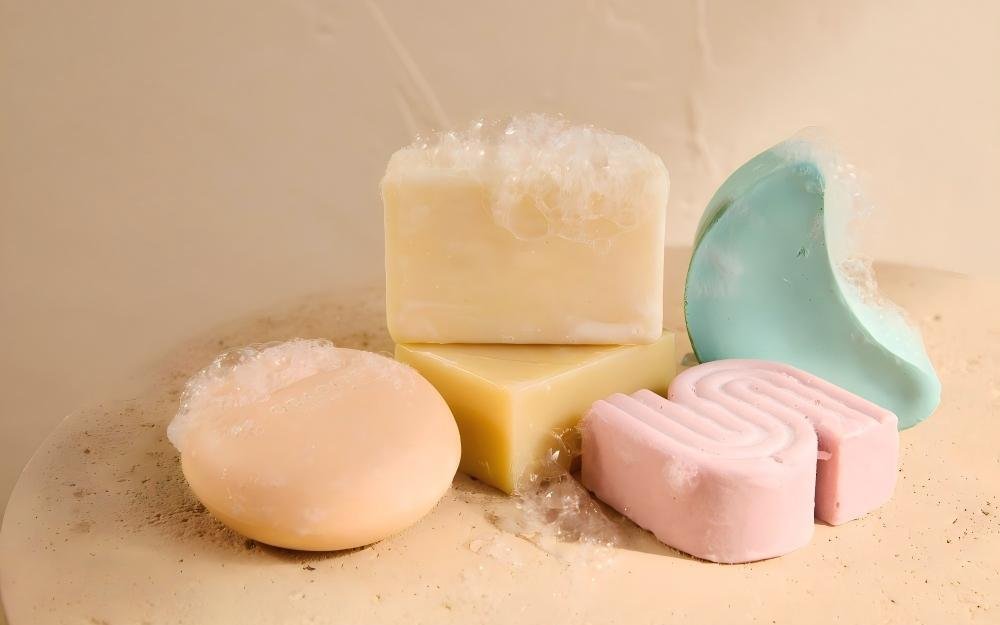
Format decision table
| Your original liquid | Best solid direction | Why it works | Where brands fail |
|---|---|---|---|
| Gel/foam cleanser | Syndet cleansing bar | mild cleanse, controlled pH | bar feels “draggy” |
| Liquid shampoo | Syndet shampoo bar | concentrated surfactant base | harsh feel / residue |
| Conditioner | Conditioner bar | real conditioning deposition | greasy roots |
| Lotion/serum | Balm bar / serum stick | waterless glide + occlusion | melts, feels waxy |

Start with “bar mechanics,” not ingredient nostalgia
- Hardness: survives shipping + storage without cracking
- Payoff: releases product evenly during rubbing (not too dusty, not too oily)
- Glide: doesn’t drag on hair/skin
- Rinse feel: no waxy film, no squeaky strip
- Wet durability: doesn’t turn mushy in a soap dish
The building blocks you’re really designing
- Structure: fatty alcohols, waxes, butters, solid surfactant blocks (depending on format)
- Binders: keep the bar cohesive (reduces crumbling)
- Slip/conditioning: reduces friction and improves comb-through or skin feel
- Stability helpers: antioxidants, chelators (when relevant), and packaging protection
Step 2. Rebuild the liquid into a solid base
Why syndet usually wins for “liquid-to-bar” conversions
- Your liquid cleanser/shampoo already behaves like a surfactant system—syndet bars are the “waterless cousin.”
- You can tune mildness, foam, and rinse feel more predictably.
- pH-balanced syndet bases are commonly described in the ~5–6.5 range, aligning with skin/scalp comfort goals.
What to tune first (so reviews don’t tank)
- Mildness vs cleansing power: prevent “hair feels like straw” or “face feels tight” complaints
- Residue control: avoid heavy oils that stay behind and make hair flat or skin filmy
- Foam expectations: customers expect foam in shampoo/cleanser bars—manage it with the surfactant blend
Step 3. Choose soap or syndet for the bar

Shampoo/cleanser bar system table (what each part is doing)
| System part | What it controls | What users notice | Failure symptom |
|---|---|---|---|
| Surfactant base | cleanse + foam | “it actually washes” | greasy, poor rinse |
| Binder/structurer | hardness + payoff | “doesn’t crumble” | cracks, breaks |
| Conditioning/slip | friction reduction | “hair feels smooth” | tangles, breakage |
| Humectant/oily phase | feel + glide | “not squeaky” | waxy film, flat roots |

Step 4. Decide preservative strategy with testing
Why this question is tricky in real bathrooms
- A bar can be “waterless” on paper but still pick up water during use and become a better home for microbes.
- Many complaints aren’t “micro failure”—they’re mushy texture, odor drift, or slime, which can still hurt trust even if counts are acceptable.
- A brand’s “clean” standard may restrict preservative options, so you need a risk-based plan instead of guessing.
A simple testing sequence that prevents wrong decisions
Test 1: Water activity (aw)
- Confirms whether the bar’s matrix is supportive of microbial growth as manufactured.
- Test 2: Micro baseline (micro limits)
- Checks starting cleanliness and whether the process and raw materials are controlled.
- Test 3: “Wet use simulation” stress
- Wet/dry cycling + storage simulation (soap dish vs tin vs humid shelf) to see if aw and texture drift.
- Test 4: PET (challenge test) only when risk is not clearly low
- Especially relevant if the bar is soft, used in shower conditions, or contains ingredients that hold water.
Micro strategy table
| Bar type | Typical exposure | Risk direction | Smart action |
|---|---|---|---|
| Anhydrous balm bar | low | lower | aw + stability checks |
| Syndet cleansing bar | medium (wet sink) | medium | aw + hygiene + packaging |
| Shampoo bar | high (shower) | higher | storage design + validate plan |
| Soft “moisturizing” bar | high | higher | consider PET if needed |
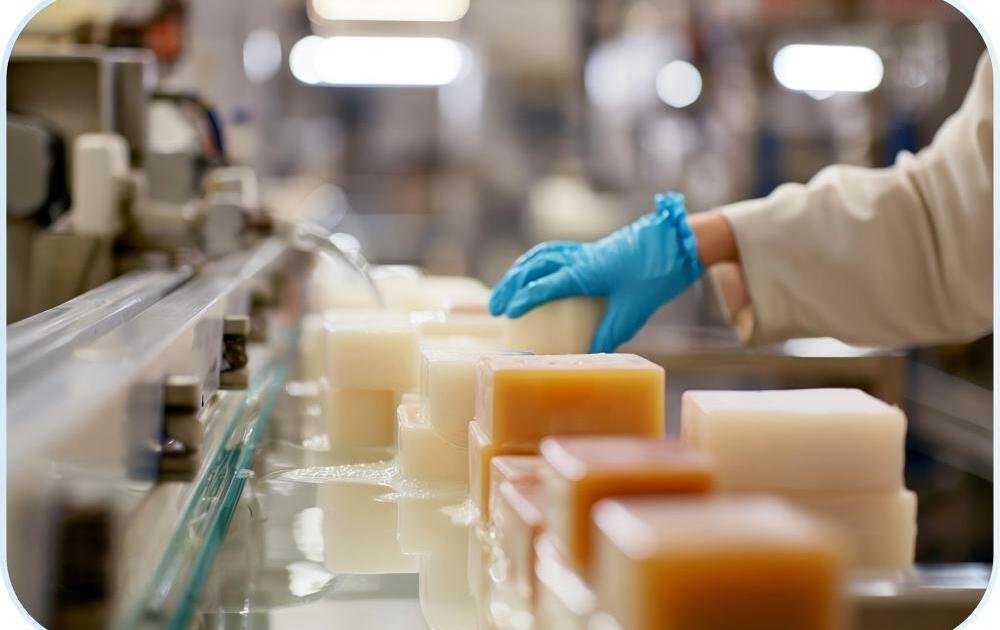
Step 5. Set QC tests so bulk matches sample
Bar-specific QC checks that actually predict complaints
- Hardness + break resistance: drop/impact checks, edge chipping
- Payoff rate: how fast the bar wears down (value perception)
- Wet durability: does it turn slimy or keep shape after repeated wet/dry cycles?
- Residue + rinse feel: especially for fine hair and acne-prone skin
Testing plan table (simple but effective)
| Test | What it answers | When to run | What “fail” looks like |
|---|---|---|---|
| Wet/dry cycling | shower reality | early + pre-bulk | mush, warping |
| Heat/humidity hold | shipping risk | pre-pilot | sweating, softening |
| Packaging compatibility | friction + odor | pre-pilot | sticking, smell change |
| User trial | routine fit | pilot | “draggy,” “waxy,” “flat” |
Step 6. Pick packaging that prevents complaints

Paper carton + inner wrap
- Best for retail displays and “low-plastic” positioning.
- Inner wrap helps reduce scuffing and dust during shipping.
- Add one clear line on pack: “Store dry between uses.”

Aluminum tin
- Best for travel sets and gifting (protects against crushing).
- Include a drainage insert or advise: “Let bar dry before closing.”
- Works well as a bundle add-on to reduce “mess in luggage” complaints.

Paper tube push-up
- Feels premium and keeps hands clean during use.
- Choose a low-friction tube wall to avoid sticking as humidity rises.
- Add a “push-up slowly” cue to prevent cracking or over-dispense.

Drainable tray/case (accessory)
- Designed for the shower: encourages quick dry-out and longer bar life.
- Cuts “mushy/slimy” complaints by preventing pooled water.
- Bundles well with tins for a “home + travel” bar kit.

Step 7. Launch the bar with clear positioning
Positioning: make the “why” obvious in one sentence
- Lead with concentration + convenience: “one bar replaces X uses,” “easy travel,” “less packaging.”
- Tie “solid” to a benefit customers feel: “richer lather,” “clean rinse,” “less mess in luggage.”
- Keep claims realistic: “same role as your liquid,” not “identical feel.”
Build a launch structure customers can shop in 5 seconds
- Start with one hero bar that matches the biggest repeat role of the liquid line:
- cleanser bar for skincare, shampoo bar for haircare.
- Add only one “next step” at a time:
- Step 2: conditioner bar or mask bar (not both at launch).
- Step 3: accessory bundle (drain case / travel tin) to reduce complaints and increase AOV.
- Use a simple naming system: Cleanse Bar / Condition Bar / Treatment Bar (avoid creative names that hide the routine role).
What products we provide for you?
These categories cover the most common personal care solid soap product lines that brands have created for retail and e-commerce.

Zerun Helps to design more cosmetic products
☑Solid facial cleansing bar
☑Solid body cleansing bar
☑Shampoo bar
☑Conditioner bar
☑Shaving bar
☑Deodorant bar
☑Balm bar
☑Moisturizing lotion bar
☑Treatment stick (spot/targeted balm)
☑Scalp treatment bar
☑Exfoliating cleansing bar
☑Solid perfume bar
☑Travel bar kit
Why choose Zerun Cosmetic for liquid-to-solid conversion?
Zerun supports liquid-to-solid conversion with disciplined formula design, bar-specific testing/QC, and packaging that prevents cracking, melting, and mushy complaints—so the final bar keeps the “hero feel” and stays consistent from sample to bulk.

What makes Zerun different for this positioning
Active-first product development: formulas are built around outcomes and tolerance, then optimized for texture, finish, and layering in real routines.
Clean policy flexibility: fragrance-free and low-irritant lanes can be developed without making products feel bland or “too basic.”
Stability and compatibility discipline: early checks reduce the classic failures—separation, discoloration, odor drift, pump clogging, and active performance drop.
Range consistency at scale: shared base systems and standardized packaging components help keep reorders consistent across batches and markets.
Where buyers see the advantage most clearly
Faster decision-making: clear sample iterations with controlled variables (active level, texture, finish, fragrance policy).
Better channel readiness: packaging sourcing and packaging design services support make it easier to land a premium look without custom-mold overreach.
Documentation mindset: structured ingredient, safety, and quality information that supports compliant labeling and smoother market entry planning.
Frequently Asked Questions about Solid Beauty Bars
Most questions revolve around whether bars perform as well as liquids, whether preservatives are needed, how to stop bars from turning mushy, and which packaging works for ecommerce. The practical answers usually come from format choice, water activity risk thinking, and storage design that matches real bathrooms.
Q1: Is a shampoo bar the same as a soap bar?
- Not necessarily—many high-performing shampoo bars are syndet-based rather than true soap.
- If you want a milder, scalp-friendly experience, syndet systems are usually the safer route.
- The “bar version” goal is to match liquid shampoo behavior, which points to syndet architecture.
Q2: Do solid bars always need preservatives?
- Many bars are lower risk due to low water activity, but “always/no” is the wrong framing.
- Risk increases when bars are soft, stored wet, or handled with wet hands repeatedly.
- A practical approach is: measure aw,
evaluateuse conditions, then decide on PET and packaging rules.
Q3: Why does my bar turn mushy or slimy in the shower?
- Storage is usually the cause: pooled water + no drainage + closed containers.
- Fixes that work: drainable dish, keep bar out of direct spray, and never close a tin while the bar is damp.
- If it still happens, your bar mechanics likely need more wet durability.
Q4: How do I stop a bar from cracking during shipping?
- Improve impact tolerance: hardness alone can make bars brittle.
- Use better protective packaging (fit, cushioning, reduced friction).
- Add a simple drop test and heat/humidity hold before scaling.
Q5: Can I turn any liquid face wash into a facial cleansing bar?
- You can, but it’s a rebuild: surfactant system + binders + glide + rinse feel.
- Decide the “feel target” first (gentle, foam-rich, low residue), then build the base around it.
- Don’t assume a liquid polymer thickener strategy translates to a bar.
Q6: Will a conditioner bar feel greasy on fine hair?
- It can if the conditioning system is too heavy or users apply it to roots.
- Fixes: “lengths-only” labeling, lighter deposition design, and clear frequency rules.
- Include a quick “how to use” panel so misuse doesn’t become bad reviews.
Q7: What packaging works best for ecommerce?
- You need impact protection + moisture management: cartons are fine with inner wrap; tins protect well but must avoid condensation; tubes look premium but need humidity tolerance.
- Include storage instructions on pack to reduce soggy complaints.
Q8: How do I price a solid bar vs the liquid version?
- Price around uses per unit, not grams vs milliliters.
- Communicate “concentrated” and expected longevity clearly.
- Add an accessory bundle (tin/case) to reduce complaints and raise perceived value.
Make A Sample First?
If you have your own formula, packaging idea, logo artwork, or even just a concept, please share the details of your project requirements, including preferred product type, ingredients, scent, and customization needs. We’re excited to help you bring your personal care product ideas to life through our sample development process.
How Zerun Cosmetic supports buyers who want a true manufacturer partner
- Our team will answer your inquiries within 12 hours.
- Your information will be kept strictly confidential.
Overview: We help brands convert liquid ideas into solid formats by treating the project like a system build—format choice, bar mechanics, packaging reality, and a test plan that protects you from “great sample, bad bulk” surprises.
- Format selection and feasibility: choose the correct bar type (syndet cleanse, shampoo, conditioner, balm/stick) based on performance goals and user behavior.
- Solid base engineering: design hardness, payoff, glide, rinse feel, and wet durability so the bar performs in real bathrooms.
- Packaging and storage design: recommend cartons, tins, tubes, and drain solutions that reduce sogginess, cracking, and shipping damage.
- Risk-based micro approach: use water activity thinking and practical testing pathways to keep safety and claims disciplined.
- Scale-ready QC: bar-specific QC targets (payoff, crack resistance, wet durability) so bulk matches the approved sample.