Skip to content
What documents to ask a cosmetic manufacturer before placing an order?
A “ready” OEM is proven by document discipline: clear specs, traceable raw materials, repeatable batch records, and test/label inputs that survive compliance checks and real-world selling. The checklist below helps verify what is being made, how consistently it can be reproduced, and what risks appear if key documents are missing.
Why pre-order documents decide most bulk risk?
Pre-order documents predict bulk outcomes faster than factory photos. They show whether specs, raw material control, and batch release records are real. Missing or vague files usually lead to bulk drift, relabeling, or delayed launches.
Spec clarity prevents “sample looks right” failures
- Without spec targets and tolerances, “approved” becomes subjective, and bulk can drift in feel, color, odor, viscosity, or dispensing.
- A good spec sheet turns taste into measurable QC anchors, so disputes don’t become opinion battles.
- If the OEM can’t show how specs are set and checked, consistency is usually accidental.
Raw material files reveal hidden compliance delays
- Missing SDS/COA/specs for key inputs often blocks downstream safety work, label finalization, retailer onboarding, or marketplace reviews.
- “We can provide later” becomes expensive when artwork is done, inventory is booked, and a missing document forces reformulation or relabeling.
- Strong OEMs treat supplier documentation as a controlled system, not a last-minute scramble.
Batch records determine repeatability and traceability
- A clean Batch Manufacturing Record (BMR) template and batch COA plan show the OEM can reproduce the same product repeatedly.
- If complaints happen (leak, odor drift, irritation feedback), traceability is the difference between a fast fix and a brand crisis.
- Weak batch documentation usually correlates with “depends on operator” manufacturing.
Testing + label inputs protect launch readiness
- Testing plan first: agree on stability + micro tests and simple pass rules before bulk.
- Label inputs frozen early: lock INCI order, warnings, directions, net content, and coding placement before artwork.
- Claims stay within proof: match key claims to available evidence and keep versions consistent across sample → bulk.
How should buyers structure a “document map” before requesting files?
A document map helps buyers group requests by what each file proves, so nothing critical is missed. It also keeps communication clear and prevents messy, duplicated requests across formula, packaging, and labeling.
Group 1 — Product identity and QC targets
- Confirms “what is being made” in measurable terms, not opinions.
- Prevents bulk drift disputes by locking targets and tolerances early.
- Makes sample approval meaningful because it ties to specific QC anchors.
Group 2 — Raw material compliance inputs
- Confirms key ingredients are traceable to suppliers/lots with usable documentation.
- Reduces late-stage compliance stalls caused by missing SDS/COA/spec sheets.
- Prevents “same INCI, different reality” when a supplier or grade changes.
Group 3 — Manufacturing and traceability records
- Confirms repeatability: the OEM can run the same process consistently.
- Enables investigation if issues happen (odor drift, leaks, irritation complaints).
- Shows whether batch release is disciplined or “looks fine, ship it”.
Group 4 — Testing and label/claim readiness
- Confirms shelf-life and micro-risk thinking is real, not assumed.
- Prevents artwork and listing rework by locking label inputs and version control.
- Keeps claims aligned to what can be supported, reducing marketplace and regulator risk.

Which pre-order documents are non-negotiable, and what does each verify?
This section lists the minimum pre-order document pack and explains what each item verifies. It is built to confirm bulk consistency, raw material traceability, and batch release readiness without overwhelming the OEM.
Minimum pack — ask once, in one message
- Product spec sheet (targets + key tolerances)
- Draft INCI list + intended use + directions
- Key raw materials: SDS + COA + spec/TDS (actives, preservatives, fragrance if used)
- Packaging BOM (component list) + basic packaging specs
- Finished product COA template (what is tested per batch)
- BMR template (batch manufacturing record)
- Stability/micro plan snapshot (what tests, when, pass criteria)
- Label input sheet (INCI order format, warnings, net content, coding placement)
- Change-control triggers (what changes force re-checks)
What each document “proves”
| Document | Verifies | Buyer value |
|---|---|---|
| Spec sheet | QC anchor for bulk | Prevents drift disputes |
| RM SDS/COA/spec | Supplier control | Avoids compliance stalls |
| Packaging BOM/spec | Pack consistency | Prevents leak/fit issues |
| Batch COA template | Release discipline | Confirms batch proof |
| BMR template | Repeatability | Reduces operator variance |
| Test plan snapshot | Shelf-life readiness | Avoids late failures |
| Label input sheet | Artwork readiness | Prevents relabeling |
| Change-control rules | Reorder stability | Prevents silent changes |
Which missing documents are high-risk “pause signals” before a PO?
Here are the missing-document signals that should pause a PO. These gaps usually predict bulk drift, compliance delays, or painful rework after artwork and production have already started.
Pause signal 1 — No measurable QC anchor
- No spec sheet, or only “appearance ok” without targets.
- No tolerances where it matters (viscosity range, fill tolerance, pump output range).
- No clarity on what is checked at batch release.
Pause signal 2 — Weak raw material documentation control
- SDS/COA/spec missing for key actives/preservatives/fragrance (if used).
- Supplier identity unclear, or “we switch suppliers” without change control.
- No documented route to provide fragrance/allergen-related inputs when needed.
Pause signal 3 — No batch repeatability evidence
- No BMR template or in-process record structure.
- No finished batch COA plan “per batch” (only occasional checks).
- No lot coding and traceability logic.
Pause signal 4 — No launch readiness discipline
- No stability/micro plan with pass criteria (only “we usually do stability”).
- Label inputs treated as “designer’s job” rather than controlled data.
- No change-control triggers (formula/pack/label can change casually).

High-risk gaps table
| Missing item | What it signals | Best buyer action |
|---|---|---|
| Spec + tolerances | No bulk control | Pause PO until defined |
| Batch COA per batch | Weak release proof | Require COA template |
| BMR template | Low repeatability | Ask for record samples |
| RM SDS/COA/spec | Supplier control gap | Require key RM pack |
| Test plan + pass rules | No readiness gate | Define criteria first |
| Change-control triggers | Silent changes likely | Demand version rules |
What extra documents should be requested for EU vs US projects?
EU and US projects share the same base pack, then add a few market-specific inputs for safety workflow, labeling, and claim boundaries. This section shows what to add only when relevant.

How to think about it (keep the base pack consistent)
- The base pack proves identity, traceability, batch discipline, and readiness.
- Market add-ons are mainly about: safety workflow inputs, label fields, and claim boundaries.
- Ask the OEM to state what they provide vs what requires external partners—clearly.
EU vs US add-ons (compact table)
| Area | EU add-ons to request | US add-ons to request |
|---|---|---|
| Safety workflow | PIF/CPSR input structure | Safety substantiation pathway |
| Label inputs | EU-required label fields | US label format essentials |
| Claims control | EU claim boundary notes | Claim risk screen for channel |
| Records | Versioning + retention rule | Incident record readiness |
| Fragrance | Allergen data pathway | Consistency documentation |
How can buyers compare multiple OEMs using the same checklist?
Use the same checklist to compare multiple OEMs objectively. The goal is to judge document completeness and control (versions, batch proof, responsibility clarity), not slogans.

Compare on three buyer-critical dimensions
- Completeness: Can they provide the minimum pack without “later, later”?
- Clarity: Are responsibilities and file ownership clearly stated (who provides what, when)?
- Control: Do they show versioning, change triggers, batch release discipline?
Use “evidence style” as a signal
- Strong OEMs provide templates, indexes, and examples quickly.
- Weak OEMs answer verbally but avoid showing actual document structure.
- Consistency in naming and version/date control is a major green signal.
Ask for a “sample document pack” for a similar SKU
- 1 spec sheet example + 1 batch COA template + 1 BMR template + 1 label input sheet example.
- This reveals their true operating system faster than facility photos.
Frequently Asked Questions about pre-order OEM documents
Most questions focus on which documents matter most before a PO, how to judge an OEM’s real compliance maturity, and how to avoid “sample OK, bulk fails” outcomes. The answers below use practical checklists and pass/fail signals that fit EU/US projects and e-commerce reality.
Q1: Which documents should be non-negotiable before paying a deposit?
- A spec sheet with measurable targets (and key tolerances where it matters).
- Key raw material pack: SDS + COA + spec/TDS for actives/preservatives/fragrance (if used).
- Batch proof templates: finished batch COA template + BMR template (or examples).
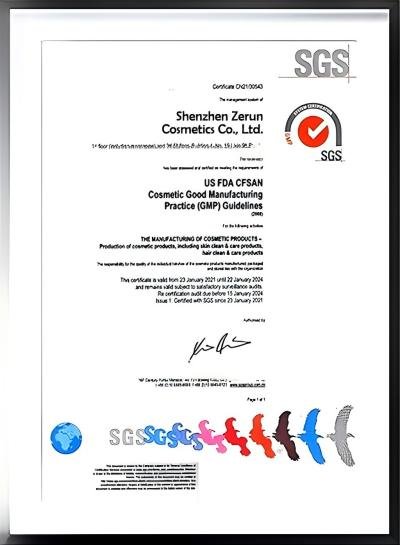
Q2: Is a GMP certificate enough to prove compliance readiness?
- No—GMP shows a system exists, but it doesn’t replace product-specific specs, batch records, and test/label inputs.
- Treat certificates as background, then judge by whether the OEM can share real templates and document indexes.
- If the OEM avoids showing file structure, expect weak control at scale.
Q3: Should an OEM provide a batch COA for every batch?
- For most serious B2B projects, yes: a per-batch COA is the clearest “release discipline” signal.
- Ask what is tested every batch vs periodically, and what triggers holds or rework.
- If it’s “only when requested,” bulk consistency risk is usually higher.
Q4: What causes “sample OK, bulk feels different” most often?
- Specs were not locked: no targets/tolerances for viscosity, appearance, odor, or pump output.
- Raw materials changed: supplier/grade changed without version control or re-validation.
- Process drift: no clear BMR/in-process checks, so results depend on operator and timing.
Q5: When should label inputs be requested—before or after packaging design?
- Before artwork is locked: INCI order, warnings, directions, net content, and coding placement.
- Ask for version/date control so label text matches the final formula and component versions.
- If label inputs come late, reprint and relabel risk rises fast.
Q6: How should fragrance documents be handled for EU/US projects?
- Confirm early whether fragrance is used and which documentation pathway will be provided.
- Require consistency controls: fragrance versioning and change triggers for re-checks.
- If the OEM can’t explain the document path, treat it as a delay/redo risk.
Q7: What is the fastest way to compare multiple OEMs using the same checklist?
- Ask each OEM for the same “sample document pack” for a similar SKU (spec, batch COA template, BMR template, label input sheet).
- Score them on completeness + clarity (who provides what, when) + version control signals.
- Choose the OEM that shows operating system and proof, not the best slogans.
Q8: If an OEM says “we can send later,” what is a safe response?
- Ask for templates/examples now, even if project-specific files come later.
- Set a PO gate: “PO after minimum pack is complete and versioned.”
- If they still avoid sharing structure, pause—this pattern rarely improves after deposit.
Make A Sample First?
If you have your own formula, packaging idea, logo artwork, or even just a concept, please share the details of your project requirements, including preferred product type, ingredients, scent, and customization needs. We’re excited to help you bring your personal care product ideas to life through our sample development process.
How Zerun supports pre-order documentation from request to PO





- Our team will answer your inquiries within 12 hours.
- Your information will be kept strictly confidential.
Clarify the document scope per SKU
- Lock product type, use scenario, and target market
- Define the “must-have before deposit” list
- Set what comes per-batch after production
- Confirm who provides what (OEM vs external partners)
Deliver a structured pre-order document pack
- Document pack index for quick checking
- Templates/examples: spec sheet, label inputs, batch COA items, BMR structure
- Version/date control on every file
- One consolidated folder format to avoid missing items
Interpret what each document verifies
- Which files prove bulk consistency vs compliance readiness
- Which files are per-SKU vs per-batch
- What gaps should pause a PO
- What “later” is acceptable vs risky
Prevent sample-to-bulk drift
- Freeze formula version + packaging BOM + key specs before PO
- Define change triggers that require re-checks
- Align batch release checks to the same anchors
- Set simple acceptance language for look/feel differences