
Is Ceramide Cream Good For Eczema-Prone Skin?
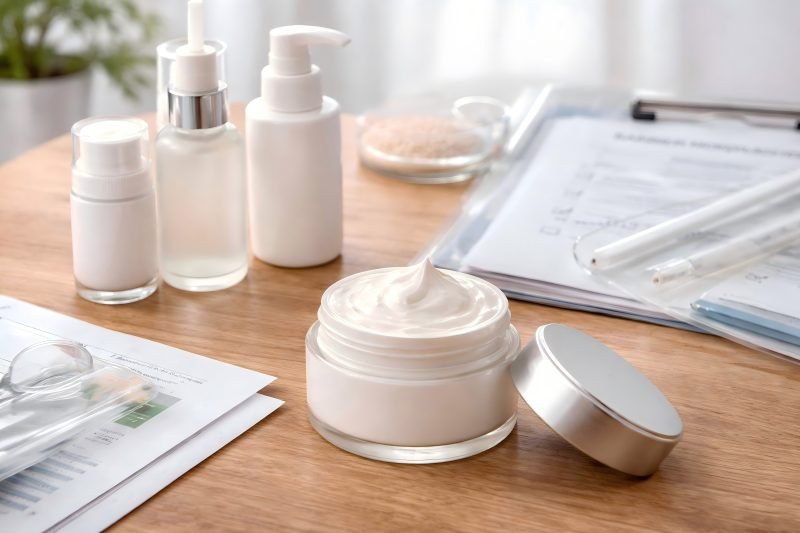
Many people with eczema-prone skin are not only dealing with dryness. Their skin may also feel tight, flaky, easily irritated, and uncomfortable after cleansing, weather changes, over-exfoliation, or strong active skincare. In many routines, the issue is not simply a lack of moisture. It is that the skin barrier is not holding moisture well in the first place. Barrier dysfunction is a core part of atopic dermatitis biology, and dry, sensitive skin often benefits from richer, fragrance-free moisturizers that help reduce water loss.
Ceramide cream can be a very good daily option for eczema-prone skin because ceramides help support the skin barrier and reduce moisture loss. But the better formula is not just “a cream with ceramides.” It usually works best when ceramides sit inside a broader barrier-support story that also considers supporting lipids, low-irritation formulation, and a texture that protects the skin without feeling too heavy or suffocating. Reviews on skin barrier biology and ceramide use in skincare support this broader view.
Why Is Eczema-Prone Skin So Often Dry, Tight, And Reactive?
Eczema-prone skin tends to lose water more easily and react more easily. That is why it often feels dry, tight, rough, and “too sensitive” even when someone is already using moisturizer. In atopic dermatitis, impaired barrier function is not a side issue. It is part of the main problem, and changes in skin lipids, including ceramides, are closely tied to that weakened barrier state.
This is also why lightweight hydration alone often falls short. A quick, watery moisturizer can feel nice for a few minutes, but eczema-prone skin usually needs a formula that helps reduce moisture loss and improves skin comfort over time. That is one reason cream and ointment textures are often favored over very light lotions when skin is especially dry or reactive. The National Eczema Association specifically notes that creams and ointments, because they contain more oil, are usually more effective at keeping moisture in and irritants out.
Common signs the barrier is struggling
- Skin feels tight soon after cleansing
- Flaking returns quickly
- Products sting more than usual
- Weather changes trigger discomfort
- Active ingredients become harder to tolerate
These signs are consistent with the dry, sensitive, barrier-compromised patterns described in dermatology and eczema-care guidance.
What Do Ceramides Actually Do In A Cream?
Ceramides are lipids naturally found in the outer layer of skin. In simple terms, they help the barrier stay better organized and less prone to losing water. That is why ceramides show up so often in barrier creams, dry-skin moisturizers, and products positioned for sensitive or eczema-prone skin. AAD consumer guidance also highlights ceramides as useful ingredients to look for in moisturizers for dry skin.
In a cream, ceramides are valuable because they support the barrier story instead of only creating a temporarily soft feel. Reviews on ceramides in diseased skin and topical skincare describe them as part of the logic behind barrier restoration. More recent reviews on atopic dermatitis also emphasize that ceramide abnormalities are tied to impaired barrier function and that ceramide-dominant emollients can be beneficial as adjunctive barrier repair agents. (PubMed)
In a barrier cream, ceramides help with
- Supporting barrier structure
- Reducing moisture loss
- Improving skin comfort over time
- Making dry skin feel less fragile
These benefits reflect the way ceramides are described in barrier-function reviews and moisturizer discussions, not a promise of medical treatment.
Why Is Ceramide Cream Often Recommended For Eczema-Prone Skin?
Ceramide cream is often recommended for eczema-prone skin because this skin type usually needs more than surface hydration. It needs help holding the barrier together and reducing moisture loss in a more structured way. That is where ceramide creams often make more sense than very light gel creams or heavily fragranced moisturizers that feel elegant but do little for barrier comfort. Reviews on atopic dermatitis and ceramide biology consistently support the importance of barrier-focused moisturization here.
The evidence base is strong enough to matter. A 2023 meta-analysis reported that moisturizers containing ceramides improved SCORAD and transepidermal water loss, and the improvement in SCORAD was superior to other moisturizers in the included data. Other reviews also describe beneficial effects of ceramide-dominant emollients on barrier function in atopic dermatitis. That does not mean ceramide cream replaces medical care, but it does explain why this format keeps appearing in barrier-support routines.
Another reason ceramide creams stay popular is that they fit a simple routine. Eczema-prone skin usually does better with steady, low-drama consistency than with too many exciting actives. A good ceramide cream can become the reliable step that helps the rest of the routine feel less irritating. That is also why fragrance-free and richer cream textures are so often recommended in dry, sensitive skin guidance.
What Ingredients Work Well With Ceramides In A Barrier Cream?
Ceramides rarely work best alone. A stronger barrier cream usually pairs them with other ingredients that support hydration, lipid balance, and skin comfort. This is one reason some creams feel more complete than others even when both say “ceramide” on the front of the package. Reviews and eczema-care product patterns often point toward lipid-supportive and low-irritation combinations rather than one star ingredient alone.
| Ingredient | Why It Fits A Barrier Cream |
|---|---|
| Cholesterol | Supports the lipid-balance story often paired with ceramides |
| Fatty Acids | Helps create a fuller barrier-lipid structure |
| Glycerin | Strong everyday humectant for dry skin |
| Panthenol | Often used to support comfort in dry, tight-feeling skin |
| Colloidal Oatmeal | Commonly used in dry, sensitive-skin care and eczema-friendly products |
| Beta-Glucan | Helps support hydration feel and skin comfort |
| Squalane | Adds softness without always making the formula feel too waxy |
The ceramide + cholesterol + fatty-acid logic is consistent with barrier-lipid discussions and with how many barrier creams are structured in practice. Colloidal oatmeal is also widely used in eczema-oriented moisturizer products and guidance.
A helpful way to think about it is this: ceramides are important, but the surrounding support system matters too. A barrier cream often feels more convincing when hydration, lipid support, and low-irritation choices all point in the same direction.
What Kind Of Ceramide Cream Texture Feels Best On Eczema-Prone Skin?
There is no single perfect texture for everyone with eczema-prone skin. The best texture depends on how dry the skin is, what time of day the product will be used, which part of the body it is for, and whether the climate is dry, cold, or humid. That said, richer formats usually make more sense when the barrier feels weak, flaky, or easily irritated. The National Eczema Association and AAD both lean toward cream or ointment textures for drier skin because they help hold moisture in better than lighter formats.
Texture directions to consider
- Rich cream — a better fit for winter, night use, or very dry skin
- Soft cream-lotion — easier for daytime wear and layering under sunscreen
- Ointment-like balm cream — useful for very dry patches, but often too heavy for full-face daily wear
This texture choice is less about trends and more about whether the product keeps skin comfortable long enough to be used consistently.
For brands, texture matters because “ceramide cream” is not one texture lane. A facial barrier cream, a hand cream, and a body cream for very dry skin may all use ceramides and still need very different sensorial profiles.
What Makes A Ceramide Cream Less Suitable For Easily Irritated Skin?
Ceramide cream is not automatically gentle just because ceramides are in the formula. A product can still feel wrong for eczema-prone skin if other parts of the formula work against the barrier-support story. Public eczema and dry-skin guidance repeatedly points users toward fragrance-free, simple, moisturizer-focused products for exactly this reason.
What can make a barrier cream less suitable
- Strong fragrance load
- Too many actives in one formula
- Daily-use cream positioned around exfoliating acids
- A finish that feels hot, sticky, or suffocating
- A “ceramide” headline with weak barrier support elsewhere in the formula
AAD specifically advises choosing fragrance-free products for dry, sensitive skin and notes that “unscented” is not the same as “fragrance-free.” That is a small detail, but for irritated skin it matters.
This is also where product honesty matters. A cream that uses ceramides but chases too many extra claims can lose the calm, reliable feel that eczema-prone users are often looking for. In this category, restraint is usually a strength.
Can Ceramide Cream Be Used With Retinoids Or Exfoliating Acids?
Yes, ceramide cream is often used alongside retinoids or exfoliating acids because those routines can leave skin feeling drier, tighter, and more reactive. A supportive barrier cream can help make the routine easier to tolerate, especially when the user wants to keep active skincare but reduce the discomfort that sometimes comes with it. Consumer guidance around tretinoin-friendly moisturizers repeatedly highlights ceramides, glycerin, and other barrier-supportive ingredients for this reason.
This does not mean every eczema-prone skin type should use strong actives freely. It means that when a routine includes a retinoid or acid, a barrier-support cream often becomes more important, not less. If the skin is already stinging, cracking, or very inflamed, many people will need to simplify the routine first and get professional guidance rather than keep adding more actives. AAD dry-skin guidance also says to see a dermatologist if dryness becomes painful, cracked, bleeding, or very irritating.
When this pairing often makes sense
- Skin feels tight after retinoid use
- Flaking increases in dry weather
- Exfoliating acids are making skin feel overworked
- The routine needs a stronger recovery step
That is a care-and-comfort point, not a treatment claim. (Allure)
What Should Brands Consider When Developing A Ceramide Cream For Sensitive Or Eczema-Prone Skin?
For brands, a ceramide cream for sensitive or eczema-prone skin should not be built around one ingredient name alone. The stronger product usually comes from how the full formula supports barrier comfort, low-irritation positioning, and repeat use. Research and eczema-oriented moisturizer guidance both point toward a broader barrier-support logic rather than one-ingredient marketing. (Wiley Online Library)
Key development priorities
- Barrier lipid story — ceramides work better when the formula has a fuller lipid-support direction
- Fragrance strategy — fragrance-free or very low-fragrance routes are usually more suitable for easily irritated skin
- Texture fit — day cream, night cream, rich winter cream, and body-use cream may all need different textures
- Tolerance first — avoid turning a barrier cream into an overloaded active cream
- Packaging logic — tubes, airless packs, and jars should match texture, hygiene expectations, and price point
These priorities are an application-focused summary drawn from barrier-function literature, dry-skin guidance, and eczema-oriented moisturizer recommendations. (Wiley Online Library)
The brands that do well in this category usually do not sell “ceramides” alone. They sell a barrier-care experience that feels gentle, reliable, and easy to keep using. That difference matters commercially because people with easily irritated skin tend to stay with products that feel predictable. (National Eczema Society)
Conclusion
Ceramide cream can be a very good daily option for eczema-prone skin because it supports the skin barrier, helps reduce moisture loss, and usually fits dry, tight, easily irritated skin better than lighter moisturizer formats. Reviews on ceramides, barrier function, and eczema-oriented moisturizers support this direction clearly. (PMC)
But the better product is rarely the one that only highlights ceramides on the front label. It is the one that combines ceramides with a stronger barrier-lipid story, a fragrance strategy that respects sensitive skin, and a texture people are happy to keep using. For brands developing a private label ceramide cream, that is the real opportunity: not just a ceramide claim, but a more complete barrier-care formula that feels calm, supportive, and easy to trust. (American Academy of Dermatology)
More Related
Custom Formulations
Custom Brightening Formulations→
Custom Anti-Aging Formulations→
Custom Sunscreen Formulations→
Custom Acne Treatment Formulations→
Custom Sensitive Skin Care Formulations→
Custom Hair Growth Formulations→
Custom Anti Hair Loss Formulations→
Custom Smooth And Shine Hair Formulations→
Custom Anti Frizz Formulations→
Custom Hair Gloss Formulations→
Custom Anti Static Hair Formulations→
Custom Hair Moisturizer Formulations→
Custom Hair Nourishing Formulations→
Custom Hair Strengthening Formulations→
Custom Hair Damage Repair Formulations→
Custom Hair Volumizing Formulations→
Custom Hair Fluffy Formulations→
Custom Curl Defining Formulations→
Hot Private label Hair products
Private Label Hair Growth Oil→
Private Label Anti Dandruff Shampoo→
Private Label Anti Fungal Shampoo→
Private Label Luxury Hair Oil→
Private Label Lightweight Conditioner→
Private Label Peppermint Hair Oil→
Private Label Leave In Conditioner→
Private Label Curl Defining Cream→
Private Label Hair Volume Powder→
Hot ingredients
Custom cosmetic solutions
FAQ Categories
Can't find the answers?
No worries, please contact us and we will answer all the questions you have during the whole process of OEM Cosmetic customization.
Make A Sample First?
If you have your own formula, packaging idea, logo artwork, or even just a concept, please share the details of your project requirements, including preferred product type, ingredients, scent, and customization needs. We’re excited to help you bring your personal care product ideas to life through our sample development process.