Skip to content
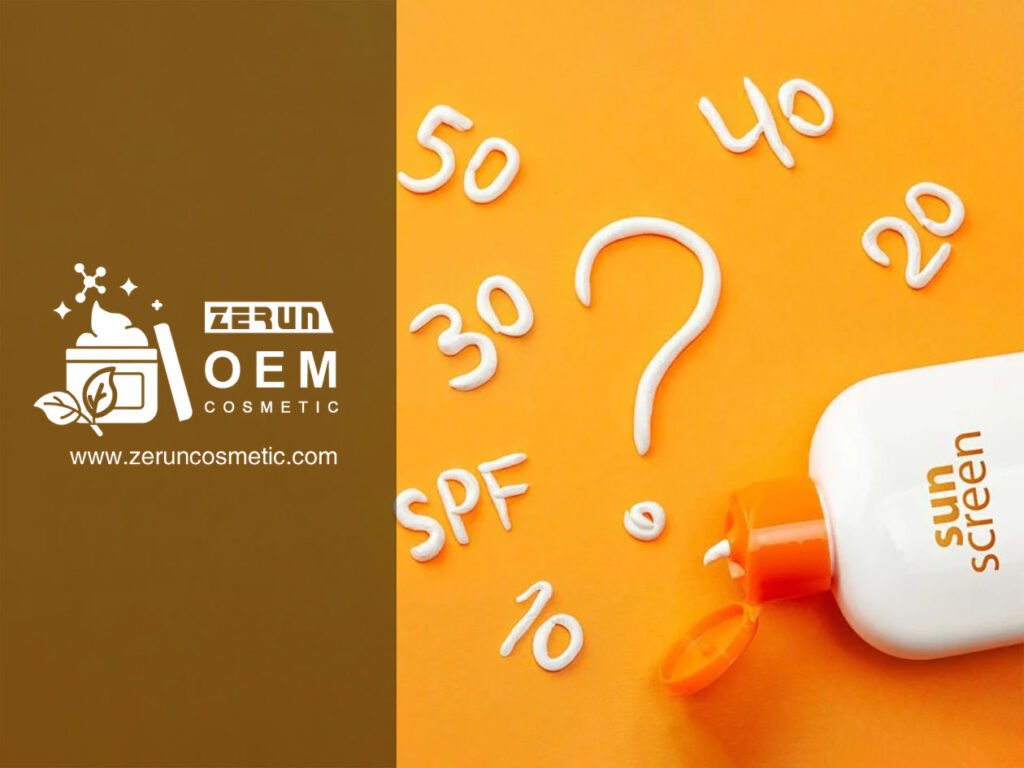
Choosing between SPF 30 and SPF 50 can feel like splitting hairs—until a sunburn, melasma flare, or post-laser hyperpigmentation reminds you the difference is real.
SPF 30 filters about 97% of UVB, while SPF 50 filters about 98%—a relative ~50% reduction in the UVB that still reaches skin. Both require generous application (≈2 mg/cm²; two-finger rule for face/neck) and reapplication every two hours outdoors. Pick SPF 30 for indoor/city days and SPF 50 for high UV, extended sun, water sports, fair or reactive skin, and post-procedure care.
Ready to match SPF to lifestyle, skin goals, and product strategy?
What’s the real protection difference between SPF 30 and SPF 50?
SPF 30 allows ~3.3% of UVB through; SPF 50 allows ~2%. That 1.3 percentage-point gap equals roughly 50% less UVB penetrating skin—meaning cumulatively fewer sunburns, less DNA damage, and better dark-spot control over time. Both depend on correct dose, even film, and diligent reapplication; otherwise the advantage collapses.
SPF math in plain English
SPF is a multiplier of UVB exposure under standardized conditions, not a time measure. If 100 “units” of UVB hit skin with no protection, SPF 30 lets ~3.3 units through, SPF 50 ~2 units. Over hours or months, that compounding difference matters for pigment control (melasma, PIH), photoaging, and immunosuppression risk.
What SPF does not measure
SPF does not directly measure UVA (tanning, deep aging, hyperpigmentation). For that, look to PA/PPD or UVA-PF and broad-spectrum status. A product can be SPF 50 yet weak in UVA if not formulated or tested to regional standards. Always check “broad-spectrum,” PA grade, or the EU UVA logo.
Real-world wildcards
Under-applying to half the required dose can slash real protection (e.g., SPF 50 behaves closer to SPF 7–12). Film disruption (sweat, rubbing, masks), sebum, and missed spots raise risk. Texture and sensory influence how much users apply—products that feel great get used correctly.
UVB transmission and incremental gain
| Label SPF | % UVB Blocked (approx.) | % UVB Getting Through | Relative Reduction vs SPF 30 |
|---|---|---|---|
| 15 | 93% | 7.0% | — |
| 30 | 96.7% | 3.3% | baseline |
| 50 | 98.0% | 2.0% | ~40–50% less UVB vs SPF 30 |
| 50+ | ≥98% | ≤2.0% | similar to SPF 50 (varies by region/testing) |
If your line targets pigment control or post-procedure clinics, consider a hero SPF 50 (or 50+) with robust UVA-PF and elegant finish to drive correct dosing and repurchase.
Which SPF should you choose for daily city wear vs. beach/sports?
For daily city/in-office, SPF 30 broad-spectrum usually suffices if applied correctly and you’re mostly indoors. For beach/sports/high-UV or hyperpigmentation-prone users, SPF 50 with water resistance is smarter. Environment (UV index), time outdoors, skin tone/concern, and reapplication practicality determine the winner.
Daily city & office scenarios
If you commute, sit by windows, or take short walks, SPF 30 broad-spectrum with a comfortable finish works—ideally in textures that promote full-dose use (fluid lotion, gel-cream, serum SPF). For makeup wearers, fast-set, non-pilling bases improve adherence and reapplication with SPF mists/cushions/powder top-ups.
Beach, hiking, and team sports
Here, duration + sweating + water change the equation. Choose SPF 50, water resistant (40/80 min), and film formers that maintain a continuous film. Bring a travel size for reapplication. For scalp/part lines, spray formats help; for noses/ears/shoulders, sticks reduce mess and enhance precision.
Skin concerns and tone nuance
- Melasma/PIH: favor SPF 50 + strong UVA protection.
- Photosensitive meds/conditions: SPF 50 is prudent.
- Deep skin tones: PIH risk is higher; select SPF 50 options that avoid white cast (modern organic filters or nano-optimized mineral blends tuned for low ashy index).
Packaging & usability
To increase correct dosing outdoors, prioritize squeezy tubes, airless pumps, or sticks users can reapply mid-activity. Clear dose prompts on pack (e.g., two-finger rule) improve outcomes.
Quick chooser (environment × skin need)
| Scenario | Time Outside | Water/Sweat | Pigment Concern | Recommended |
|---|---|---|---|---|
| Office commute + windows | Low–Moderate | Low | Low | SPF 30 broad-spectrum |
| Urban errands (UV 8–10) | Moderate | Low | Medium | SPF 50 broad-spectrum |
| Beach/pool/sports | High | High | Medium–High | SPF 50, water-resistant |
| Post-laser/peels | Low–High | Low | Very High | SPF 50 with high UVA-PF |
| Dark-spot routines | Moderate | Low | High | SPF 50, elegant finish |
Offer both: an SPF 30 daily (cosmetically elegant) and an SPF 50 outdoor (water resistant). This covers most use cases and boosts AOV via “day vs activity” pairing.

How do UVA/PA ratings and “broad-spectrum” affect the choice?
SPF alone covers UVB. Ensure broad-spectrum protection with UVA metrics: PA grades (Asia), PPD/UVA-PF (EU), or critical wavelength ≥370 nm (US broad-spectrum claim). For pigment and aging concerns, prioritize higher UVA-PF/PA—ideally UVA-PF ≥ 1/3 of SPF (EU convention).
UVA vs UVB: why it matters
UVB drives burns; UVA penetrates deeper, accelerating photoaging and hyperpigmentation. Windows block UVB more than UVA, so daily commuters still need UVA coverage. For melasma/PIH control, UVA robustness matters as much as SPF.
Understanding PA / PPD / UVA-PF
- PA+ to PA++++: consumer-friendly scale derived from PPD (persistent pigment darkening).
- Approx. mapping: PA+ (PPD ≥2), PA++ (≥4), PA+++ (≥8), PA++++ (≥16).
- EU often expresses UVA-PF, requiring UVA-PF ≥ 1/3 × SPF for the UVA circled logo.
Regional labeling at a glance
| Region | UVA Indicator | Typical Requirement/Note |
|---|---|---|
| US | “Broad Spectrum” + critical wavelength | ≥370 nm critical wavelength; no consumer PA grade on pack |
| EU | UVA “circle” + UVA-PF value | UVA-PF ≥ 1/3 of SPF; PPD/UVA testing common |
| JP/KR | PA+ → PA++++ | Based on PPD; PA++++ most protective on pack |
Formulation levers for higher UVA
Filters like zinc oxide (broad UVA) and modern organic UVA filters (region-dependent) plus photo-stabilizers (e.g., avobenzone stabilization systems) and film formers elevate UVA-PF. Texture must still feel light; otherwise consumers under-apply.
If your brand competes in brightening/anti-aging, target SPF 50 / PA++++ or SPF 50 with high UVA-PF. Validate with region-appropriate test reports for regulatory and retailer onboarding.
Do higher SPFs last longer or still need 2-hour reapplication?
Higher SPF does not extend wear time. Film wear-off, sweat, sebum, and touch degrade protection similarly at SPF 30 or 50. Outdoors, reapply every two hours, and after swimming, sweating, or toweling per label. Water-resistance claims (40/80 minutes) guide use during water exposure, not overall “all-day” protection.
Why reapplication matters
Sunscreen is a film, not a force field. It thins unevenly and gets removed by friction (masks, collars, towels). Even the best filters can’t offset missing coverage. Reapplication restores uniformity, keeping real-life protection closer to the label.
Water resistance & activity
- Water-resistant (40/80 min): the film retains labeled SPF for the stated time while in water—you still reapply after that period or after toweling.
- Non-water-resistant: better for daily comfort and makeup, but less ideal for heavy sweat or swims.
Practical reapplication with makeup
Use SPF sticks on high points (nose, cheekbones, ears), SPF mists/cushions over makeup, or carry a travel tube. For long outdoor events, set a phone reminder and pair with hat, shade, sunglasses—behavior + sunscreen beats either alone.
Dose guidance you can remember
- Two-finger rule (index + middle) for face/neck is a helpful proxy for ~2 mg/cm².
- For body at the each: ~1 shot-glass (30 mL) per full-body application for an average adult.
Add clear reapplication cues, water-resistance icons, and dose infographics. These reduce customer complaints (e.g. “I burned with SPF 50”) and elevate product ratings.

Is SPF 50 better for fair skin, deeper tones, kids, or post-treatments?
Generally yes for higher-risk groups: very fair skin, dark-spot/melasma-prone, children (with gentle systems), and post-laser/peel patients benefit from SPF 50 with strong UVA. For deeper tones, prioritize SPF 50 options tuned to minimize white cast to better prevent PIH while encouraging full-dose use.
Fair and photosensitive skin
Individuals who burn easily (Fitzpatrick I–II), those on photosensitizing meds, or with auto-immune photosensitivity benefit from SPF 50 + high UVA. Pair with wide-brim hats and UV-blocking sunglasses for comprehensive defense.
Deeper skin tones & PIH
Deeper tones rarely burn but are more prone to PIH after acne or irritation. Choose SPF 50 formulas with sheer mineral dispersions or modern organic filters to reduce gray/ashy cast. A pleasant, invisible finish drives proper dosing, which is key to PIH prevention.
Kids & sensitive-skin users
For many families, mineral-forward (zinc/titanium) SPF 50 with simplified preservatives and no fragrance is easier on sensitive skin. Sticks and sprays improve compliance—ensure even rub-in and adequate amount.
Post-procedure (laser/peels/needling)
Derms typically recommend SPF 50, broad-spectrum, fragrance-free, with high UVA performance and soothing excipients (panthenol, allantoin). Avoid harsh alcohols or potentially irritating fragrances until barrier normalizes.
Develop multiple shade-smart finishes (clear gel, serum-fluid, tinted mineral) to cover the full spectrum of skin tones, boosting adoption and reviews.
Are mineral or chemical filters better at SPF 30/50?
Neither is universally “better.” Mineral filters (ZnO/TiO₂) are photostable and gentle; organic (“chemical”) filters offer ultra-sheer textures and high UVA options (region-dependent). At SPF 30/50, pick the system that achieves broad-spectrum, pleasant wear, and reliable testing for your market—and that your customers will apply generously.
Sensory, cast, and stability trade-offs
Mineral systems can leave white cast; modern dispersions, tinting, and silica/elastic gels mitigate it. Organic systems feel lighter and clearer, but some legacy filters need stabilization and may sting sensitive eyes. Hybrids (mineral + organic) often balance finish and performance.
Sport vs daily elegance
For sports, film-formers and water resistance matter more than filter class. For daily wear, elegance and compatibility with makeup drive dose fidelity. A silky SPF 30 worn correctly can outperform a chalky SPF 50 worn too thin.
Region & compliance realities
Filter availability varies by US/EU/Asia. If you sell globally, align formulas with regional positive lists and maintain separate SKUs where needed. Build a claims matrix that’s consistent but legally localized (e.g., PA vs UVA-PF vs “broad-spectrum”).
Offer a mineral-leaning SPF 50 (sensitive/kids/post-procedure) and an ultra-sheer organic SPF 50 (daily elegance) to maximize adoption and reviews across demographics.

How should brands pick SPF 30 vs 50 for formulas, claims, and markets?
Pair SPF 30 for everyday, cosmetically-elegant wear and SPF 50 for high-UV, spot-control, kids/sensitive, and outdoor lines. Build to local UVA rules (PA/UVA-PF/critical wavelength), choose textures that drive full-dose use, and package for easy reapplication. In B2B terms: launch a daily SPF 30 + an outdoor/clinic-grade SPF 50, then localize claims, filters, and shades by region.
A practical decision matrix (channel × audience)
| Channel / Audience | Primary Need | Cast Tolerance | Water/Sweat Need | Recommended Core SKU | Companion SKU |
|---|---|---|---|---|---|
| Mass retail (urban daily) | Makeup-friendly elegance | Low | Low | SPF 30 broad-spectrum, serum/gel-cream | SPF 50 sheer organic for weekends |
| Derm/clinic & post-procedure | Hyperpigmentation control | Medium | Low | SPF 50 high UVA-PF, fragrance-free | Tinted mineral SPF 50 (PIH, redness) |
| Outdoor/sports & travel | Film durability | Medium | High | SPF 50 water-resistant, lotion/stick | Clear gel SPF 30 for reapply on face |
| Kids/family | Gentleness | Medium–High | Medium | Mineral-leaning SPF 50, no fragrance | Easy-glide stick for on-the-go |
| E-commerce APAC (PA culture) | PA++++ expectation | Low | Low–Med | SPF 50 PA++++, ultra-sheer | SPF 30 daily fluid to expand basket |
| EU specialty beauty | UVA logo + elegance | Low | Low | SPF 50 with UVA-PF ≥ 1/3 SPF | Tinted mineral 3-shade set |
Claims & regulatory roadmap (localize early)
- US: “Broad Spectrum” via critical wavelength ≥370 nm; water-resistance 40/80 min where applicable.
- EU: UVA-PF ≥ 1/3 × SPF for UVA circled logo; water-resistant per EU guidance; align INCI and claims substantiation.
- JP/KR/APAC: PA system (aim PA++++ for premium SKUs), local positive lists and ad standards.
- Testing staples to budget: in-vivo SPF (e.g., ISO 24444/ISO 23675 family), UVA-PF/PPD (ISO 24442/24443), water-resistance, photostability, stability (accelerated/real-time), preservative efficacy (ISO 11930), HRIPT, and packaging compatibility.
Formulation architecture (finish first, filters second)
- Daily elegance (adherence driver): light serum-fluids or gel-creams, quick set, non-pilling with makeup; typically SPF 30 or SPF 50 with modern organic filters (region-dependent) and film formers at low sensory footprint.
- Sensitive/clinic: mineral-forward SPF 50 with optimized ZnO/TiO₂ dispersions, micro-tints to offset cast, soothing excipients (panthenol, allantoin).
- Outdoor: robust film formers, sweat/water resistance, stick and spray companions (communicate even application).
Packaging & UX (dose clarity = better reviews)
- Prefer airless pumps or soft tubes with narrow orifices for dose control; UV-safe containers.
- Print two-finger rule, reapply cues, and water-resistance icons.
- Offer travel minis to normalize reapplication; add SPF stick for high points and kids.
Cost, testing, and margin planning (illustrative ranges)
| Item | SPF 30 (Daily Fluid) | SPF 50 (High UVA / Water-Resistant) |
|---|---|---|
| Active filter load & film former cost | $$ | $$$–$$$$ |
| Sensory modifiers (silicones/volatiles/gel network) | $$ | $$–$$$ |
| Typical test bundle budget* | $$ | $$$–$$$$ |
| BOM risk (cast/eye sting) | Low–Medium | Medium |
| MSRP positioning (mass–premium) | $–$$$ | $$–$$$$ |
Portfolio strategy: two SKUs, many finishes
- Anchor SKUs:
- SPF 30 daily (makeup-friendly)
- SPF 50 high-UVA (clinic/outdoor)
- Finish variants: clear gel, serum fluid, lotion, stick, tinted mineral (light/medium/deep).
- Education layer: “SPF 30 vs 50—when to use which,” reapply every 2 hours outdoors, and dosing visuals.
“Which one should my brand lead with?”
Launch both if budget permits; otherwise, choose by core promise:
- Brightening/PIH/clinical tone: lead with SPF 50 high-UVA.
- Beauty/makeup layering daily: lead with SPF 30 ultra-elegant.
- Family/outdoor: lead with SPF 50 water-resistant + stick.
Conclusion
SPF 30 and SPF 50 are not rivals so much as complements: SPF 30 excels at daily elegance that people will apply correctly; SPF 50 shines in high-UV, pigment control, kids/sensitive, and outdoor contexts. The bigger win is not the label, but the film on skin—dose, evenness, reapplication, and UVA strength. For brands, a two-SKU architecture (daily SPF 30 + high-UVA SPF 50) mapped to regional label norms and multiple finishes covers most buyer personas and raises LTV through education-led upsells.
Work with Zerun Cosmetic
Looking to ship retail-ready SPFs with elegant textures, verified UVA/UVB performance, and global-ready claims? Zerun Cosmetic formulates and manufactures SPF 30 and SPF 50 across mineral, organic, and hybrid systems with airless/UV-safe packaging, ISO-grade testing, and low MOQ. We offer free design, fast sampling, and region-specific compliance guidance.