Skip to content
Private Label Anti Aging Serum Manufacturer
Private-label anti-aging serum built for EU/US compliance and rapid lab prototyping. Tailor retinol, retinal, bakuchiol, peptides, and niacinamide with hydration/barrier boosters. Neutral-pH design, antioxidant–chelating defense, and UV-safe airless packs safeguard potency. Sample turnaround in 7–15 days; MOQs start at 1,000.
Custom Anti Aging Serum Details
Build a results-driven serum that smooths texture, softens fine lines, and supports firmness—without sacrificing comfort. Pick vitamin-A routes (retinol/retinal) or gentler bakuchiol; add peptides, niacinamide, and multi-weight hyaluronic acid. Controlled pH and airless, UV-safe packs secure real-world stability.
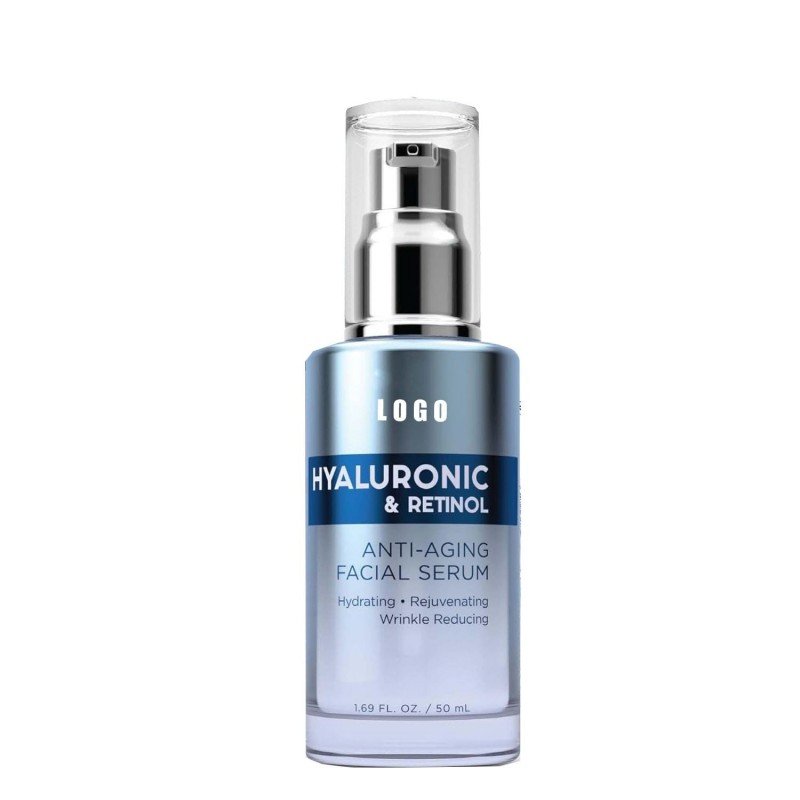
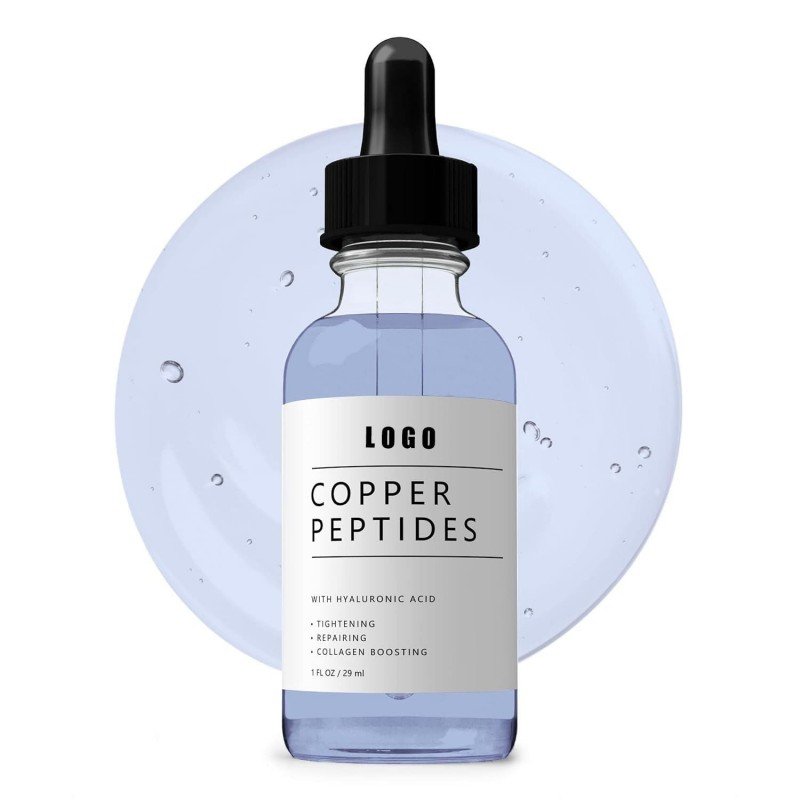
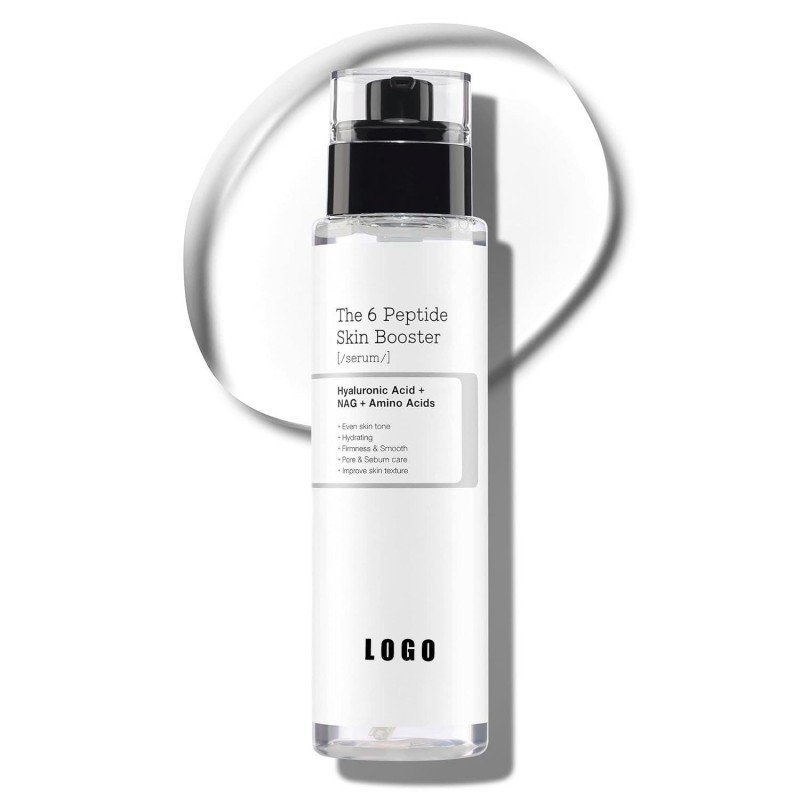
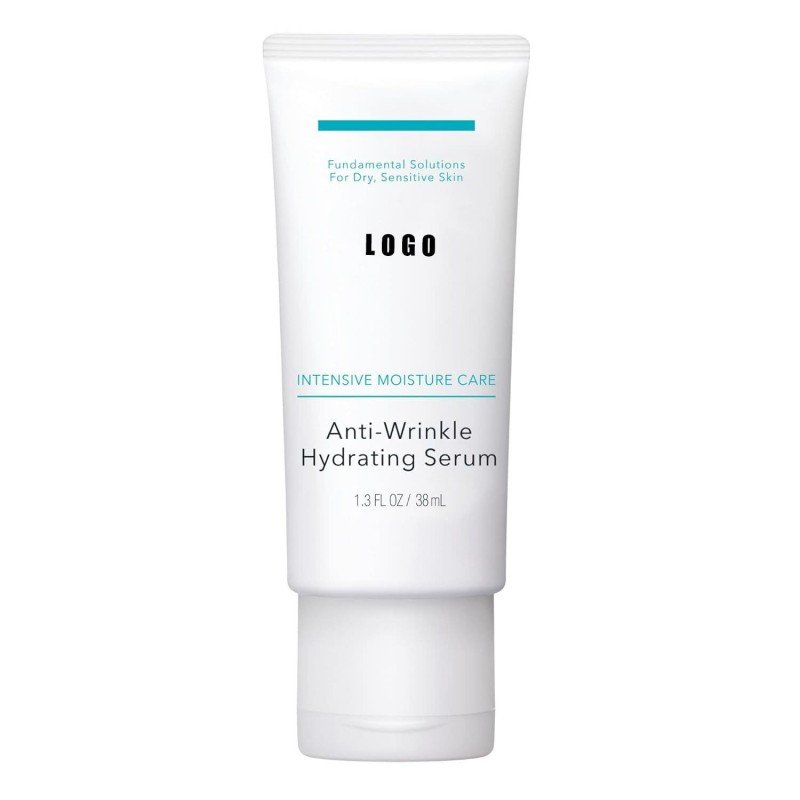
Spec / Parameter Card — Anti Aging Serum (OEM/ODM)
| Field | Options / Recommendations |
|---|---|
| Texture Systems | Water-light serum (day) · Milky emulsion serum (universal) · Oil-in-serum (PM/anhydrous) |
| Core Actives | Retinol 0.1–0.3% • Retinal 0.05–0.1% • Bakuchiol 0.5–1% • Peptides 1–3% (total) • Niacinamide 2–5% • Multi-MW HA 0.1–0.3% • Ceramide complex 0.1–0.3% · (optional VC for serum) THD 3–5% / EAA 1–3% / AA2G 2–5% |
| Support | Antioxidants (tocopherol/derivatives, ferulic), metal chelators, soothing stack (panthenol 0.2–0.5%, beta-glucan 0.1–0.3%); encapsulation for vitamin-A systems |
| pH Window | 5.0–6.0 (retinoids/peptides/B3). Optional AHA/PHA night hybrid ≤10% at final pH ≥3.5. Pure L-ascorbic acid: use a separate low-pH booster (≤3.5) rather than in the neutral serum. |
| Preservation | EU/US-accepted systems; alcohol-free / fragrance-free options; preservative-efficacy (challenge) verified per SKU |
| Color/Fragrance | Clear or milky off-white acceptable; fragrance-free or low-allergen profiles available; manage base odor with AOX/chelators (no heavy perfume needed) |
| Packaging | Micro airless pump 30/50 ml (preferred) · Amber glass dropper 30 ml (with reducer/restrictor) · Opaque/aluminum tube for anhydrous builds · PCR options |
| Stability & QC | Accelerated stability (40 °C/75%RH), freeze–thaw, photostability, micro + challenge test; retinoid/VC potency checks; in-use pump simulation & headspace/OTR assessment |
| Docs | COA, SDS, Stability/Challenge reports; CPSR/PIF/CPNP (EU, if required); IFRA/allergen statement where fragranced; label pack (INCI, PAO, batch/lot, warnings) |
| Sampling & Lead Time | Samples: 7–15 days · Production: 15–30 days after approvals (pack/artwork dependent); custom airless lead time +15–45 days |
| MOQ (typical) | Existing base flexible around ≥500 pcs · New formula ≥1,000 pcs (component MOQs/finishes may apply) |
More Private Label Products
Private Label Anti Aging Serum →
Private Label Anti Aging Eye Cream→
Private Label Anti Aging Lotion→
Private Label Retinol Serum→
Private Label Peptide Serum→
Private Label Collagen Cream→
Private Label Anti Wrinkle Cream→
Private Label Anti Wrinkle Serum→
Private Label Anti Wrinkle Cream→
Private Label Neck Firming Cream→
Private Label Retinol Eye Cream→
Private Label Skin Firming Cream→
Private Label Lifting Serum→
Private Label Skin Tightening Facial Kit→
More customization points you may want to know
Match serum builds to skin behavior: oily, dry, sensitive, melanin-rich, and acne-prone. Balance actives, textures, and soothing stacks to maximize results and tolerance, while preventing pilling under SPF and makeup.
Oily / Acne-Prone
- Texture: Water-light serum; non-comedogenic, fast set.
- Core stack: Niacinamide 3–5%, Peptides 1–2%, Retinol 0.1% (or Retinal 0.05%), HA 0.1–0.2%.
- Notes: Controls shine and the look of enlarged pores; vitamin-A at intro strength to minimize heaviness and pilling under SPF.
Dry / Dehydrated
- Texture: Milky emulsion or oil-in-serum; cushioned slip.
- Core stack: Retinal 0.05–0.1% ± Bakuchiol 0.5–1%, Ceramides 0.1–0.3%, HA 0.2–0.3%, Panthenol 0.3–0.5%.
- Notes: Focus on barrier comfort and long-lasting hydration while delivering visible smoothing; optional peptides 1–2% for firmness.
Sensitive / First-Time Actives
- Texture: Fragrance-free, essential-oil-free; water-light or silky.
- Core stack: Bakuchiol 0.5–1%, Peptides 1–2%, Niacinamide 2–3%, HA 0.1–0.3%, Beta-glucan 0.1–0.3%.
- Notes: Start 2–3×/week → daily; add Retinol 0.1% or Retinal 0.05% later if tolerated. Emphasize gentle onboarding and SPF guidance.
Black Skin / Melanin-Rich
- Texture: Silky, non-greasy; designed to avoid ashiness/pilling under SPF.
- Core stack: Niacinamide 3–5%, Peptides 1–3%, Retinal 0.05% (or Retinol 0.1% encapsulated), optional Tranexamic Acid 2–3% for even-tone support, HA 0.1–0.3%.
- Notes: Prioritize tolerance to reduce the risk of post-inflammatory dark marks; avoid aggressive acids initially—PHA or lactic (low %) only if needed. Always pair with daily SPF.
Acne-Prone Skin
- Texture: Water-light, non-comedogenic; quick dry-down.
- Core stack: Niacinamide 3–5%, Retinol 0.1% (or Retinal 0.05%), Peptides 1–2%, HA 0.1–0.2%; optional Salicylic Acid 0.5–1% or PHA 3–6% (alternate nights).
- Notes: Keep soothing stack to support tolerance; avoid layering strong acids with vitamin-A on the same night; clear IFU for step-up use.
Scale potency and comfort by decade: 20s prevention, 30s texture, 40s firmness, 50s density, 60s resilience. Provide intro/pro strengths, AM/PM routines, and packaging that preserves vitamin A stability and tolerance.
20s — Prevention & Early Care
- Texture: Water-light serum; quick set under SPF/makeup.
- Core stack: Niacinamide 2–3%, Peptides ~1%, HA 0.1–0.2%, antioxidants (THD/EAA).
- Notes: Keep it simple; focus on daily consistency and SPF pairing.
30s — First Lines & Texture
- Texture: Milky emulsion serum; non-pilling.
- Core stack: Retinol 0.1–0.3% or Retinal 0.05–0.1%, Peptides 1–2%, HA 0.1–0.3%, Ceramides 0.1–0.3%.
- Notes: Provide step-up IFU (2–3×/week → nightly) and SPF guidance.
40s — Firmness & Elastic Rebound
- Texture: Milky → richer night oil-in-serum duo.
- Core stack: Retinal 0.1–0.15% or Retinol 0.3–0.5% (encap), Peptides 2–3%, Niacinamide 3–5%, HA 0.2–0.3%.
- Notes: Airless/opaque, AOX + chelators; add soothing stack for tolerance.
50s — Density & Barrier Comfort
- Texture: Richer emulsion or oil-in-serum (PM).
- Core stack: Bakuchiol 0.5–1% ± Retinal 0.05–0.1%, Peptides 2–3%, Ceramides 0.3–0.5%, Cholesterol/FA, Panthenol 0.3–0.5%.
- Notes: Gentle A/B duo (day bakuchiol, night retinal) broadens adoption.
60s — Resilience & Deep Repair
- Texture: Comforting emulsion + PM oil-in-serum; non-greasy finish.
- Core stack: Retinol 0.1–0.2% (encap) or Retinal 0.05%, Peptides 2–3%, Niacinamide 2–4%, HA 0.2–0.3%, Panthenol 0.3–0.5%; optional THD VC 3–5%.
- Notes: Fragrance-free / EO-free variants recommended; clear SPF and onboarding copy.
Amazon Top-Seller Anti-Aging Serum Formula Comparison
Review of Amazon top-seller anti-aging serums shows retinol/retinal, peptide, vitamin C and hyaluronic-acid archetypes. Use this matrix to benchmark core actives, textures, strengths, gaps, then design private-label upgrades with packaging, antioxidant/chelating support, and Intro/Pro strengths to balance stability, tolerance, performance.
| Brand / Product | Core Actives (typical %) | Texture | Strengths | Gaps |
|---|---|---|---|---|
| L’Oréal Revitalift Derm Intensives 0.3% Pure Retinol Night Serum | Retinol up to 0.3%; humectants/soothers | Water-light serum | Clear retinol story; fast-result positioning; strong retail trust | Retinol tolerance needs onboarding; low-pH/SPF messaging required |
| Olay Regenerist Retinol 24 Night Serum (Fragrance-Free) | Retinol/Retinyl Propionate 0.1–0.3%; Niacinamide 2–5% | Silky serum | Fragrance-free variant; B3 synergy; broad mass appeal | Retinoid complex may still sting; verify packaging oxygen control |
| Neutrogena Rapid Wrinkle Repair Retinol Serum | Retinol 0.1–0.3%; HA 0.1–0.2% | Lightweight serum | Dermatologist-recommended; widely available; simple regimen | Potential dryness/peel without step-up; fragrance variants exist |
| RoC Retinol Correxion Line Smoothing Night Serum Capsules | Retinol 0.1–0.3% in oil base; VE | Oil-serum (single-dose) | Dose protection; travel-friendly; strong retinol heritage | Capsule waste concerns; richer feel may not suit oily day use |
| CeraVe Skin Renewing Retinol Serum | Encapsulated Retinol 0.1–0.3%; Niacinamide 2–4%; Ceramides 0.1–0.3% | Milky lotion-serum | Barrier-first story; gentler onboarding; fragrance-free | Slower perceived change vs higher retinol; softer “wow” window |
| The Ordinary Granactive Retinoid 2% Emulsion | HPR (granactive) ~2% equiv; emulsion actives | Milky emulsion | Low-irritation retinoid route; great value; transparent INCI | Pathway education needed (HPR ≠ retinol); results can be gradual |
| Vichy LiftActiv 15% Vitamin C Serum | L-ascorbic acid 10–15%; HA trace | Water-light | Fast brightening/antioxidant narrative; derm-cosmetic branding | Low-pH tolerance; separate from neutral vitamin-A routines |
| L’Oréal Revitalift 1.5% Pure Hyaluronic Acid Serum | HA 1.5% multi-MW; glycerin | Water-light | Immediate hydration/plump feel; makeup-friendly | Lacks remodeling actives; needs PM retinoid companion SKU |
| RoC Multi Correxion Revive + Glow Vitamin C Serum | Vitamin C derivative ~10%; VE; peptides (var.) | Lightweight serum | Radiance + tone angle; strong reviews | Derivative/level clarity varies; stability depends on packaging |
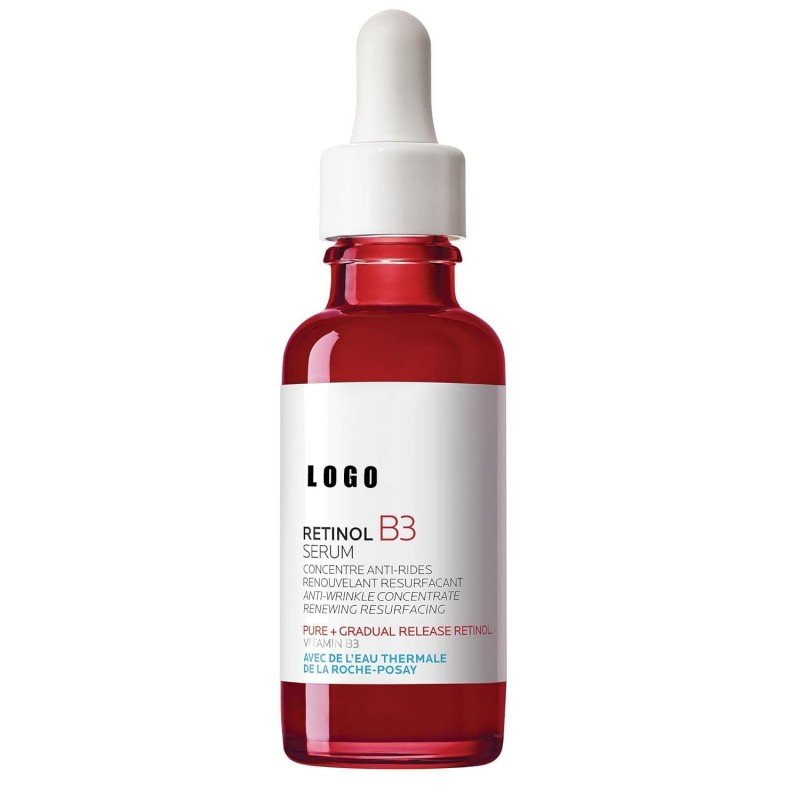
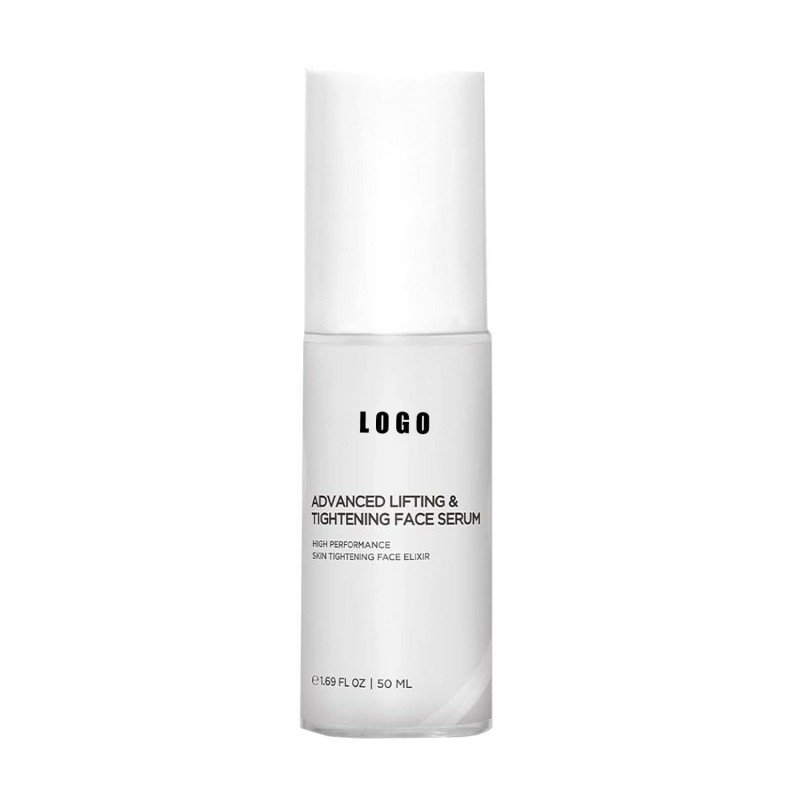
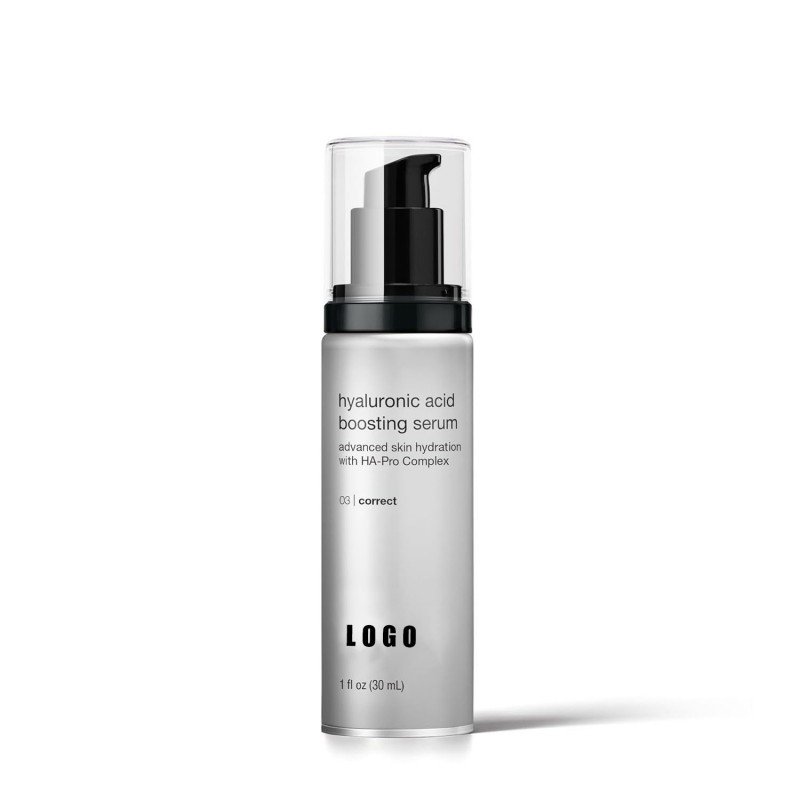
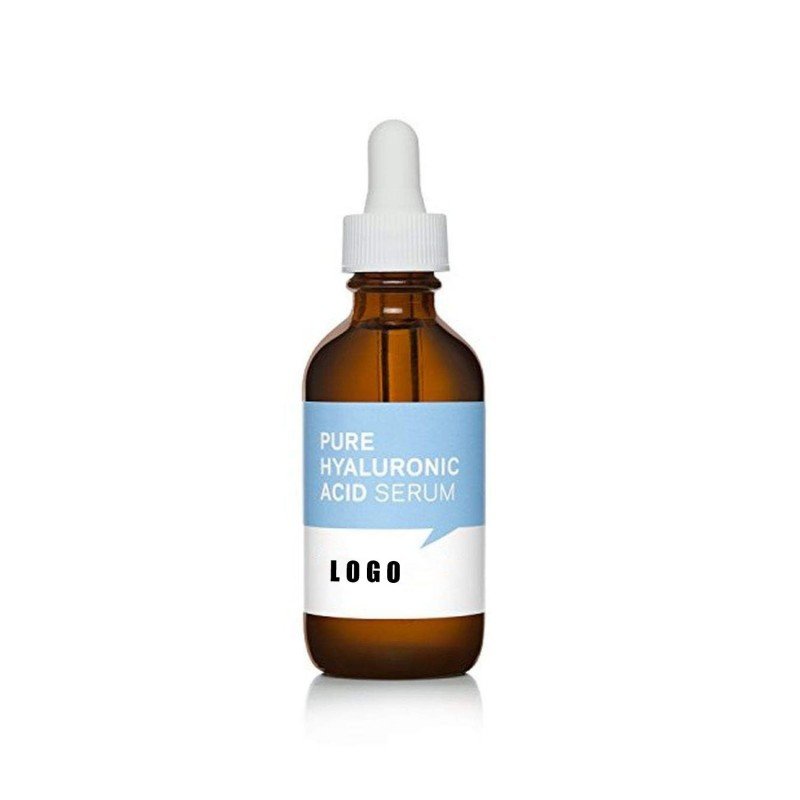

Make A Sample First?
If you have your own formula, packaging idea, logo artwork, or even just a concept, please share the details of your project requirements, including preferred product type, ingredients, scent, and customization needs. We’re excited to help you bring your personal care product ideas to life through our sample development process.
Custom Formulation Recommendations for anti aging Serum
From vitamin-A routes to bakuchiol, peptides, niacinamide, ceramides, and multi-MW HA, pair actives to balance efficacy, stability, and comfort. Start with these ranges; finalize by stability, safety assessment, and market rules.
| Active (Use Range) | Key Features | Suitable Skin Types | Recommended Combinations | Suggested Packaging |
|---|---|---|---|---|
| Retinol (0.1–0.3%) | Classic remodeling; texture smoothing | Normal/Combo/Oily; tolerant Dry | Peptides; B3; AOX; soothing stack | Airless, opaque, UV-safe; consider encapsulation |
| Retinal (0.05–0.1%) | Faster pathway vs retinol | Normal/Combo/Mature | Peptides 1–3%; B3 3–5% | Airless, UV-safe; encapsulated |
| Bakuchiol (0.5–1%) | Gentler, day-friendly | Sensitive/Dry/Combo | Peptides; THD VC 3–5%; ceramides | Pump/airless |
| Peptides (1–3% total) | Firmness/elasticity | All | Retinoids/bakuchiol; B3; HA | Pump/airless |
| Niacinamide (2–5%) | Barrier + tone synergy | All; oily/sensitive friendly | Retinoids; peptides; ceramides | Pump/airless |
| HA (multi-MW 0.1–0.3%) | Hydration cushion | All | B3; peptides; ceramides | Any; pumps/tubes |
| Ceramides (0.1–0.3%) | Barrier support | Dry/Mature/Sensitive | B3; panthenol | Airless jar/pump |
| THD VC (3–5%) | Stable AOX glow | Normal/Dry/Mature | Bakuchiol; peptides | Opaque airless/tube |
| EAA/AA2G (1–3%/2–5%) | Neutral-pH VC | All | B3; ferulic; VE | Airless; chelators |
Custom Serum Texture System & Sensory
Pick three production-ready serum textures—water-light, milky emulsion, and oil-in-serum (PM). Each is tuned for spreadability, quick set time, and non-pilling under SPF/makeup while delivering actives at a stability-friendly pH.
Water-Light Serum (Day)

fast-absorbing, non-sticky, makeup-friendly (≈ 800–3,000 cps).
Milky Emulsion Serum (Universal)

soft-glide, cushioned finish (≈ 3,000–6,000 cps).
Oil-in-Serum (PM)

comforting, glow finish without heaviness (anhydrous/low-water).
Packaging Customization for Anti aging Serum
Airless, opaque, UV-safe packs protect serums with vitamin-A/antioxidants. Offer 30/50 ml micro-airless, amber glass dropper (with restrictor), airless jars for premium, and PCR options. Visual kits show texture + actives to boost retail storytelling.
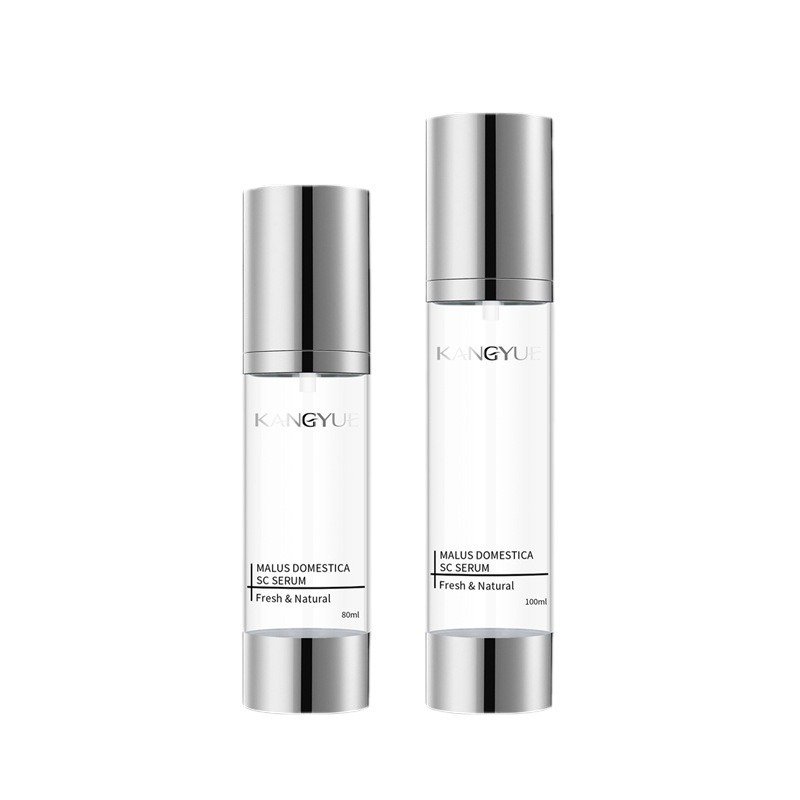
Micro Airless Pump (30/50 ml)
oxygen control, precise dosing
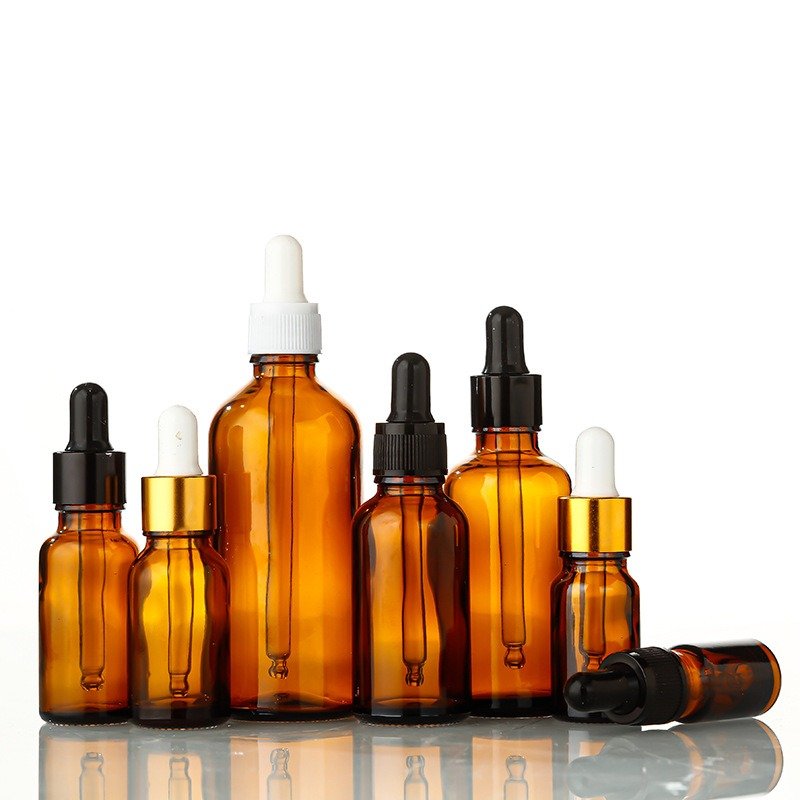
Amber Glass Dropper (30 ml)
UV attenuation, lab-clean aesthetic
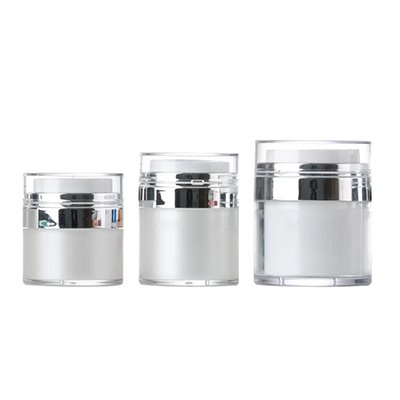
Airless Jar / PCR Options
sustainability narratives
Anti aging serum – Private Label FAQ
These FAQs target PAA long-tail queries to streamline sampling decisions and boost SEO. Answers cover actives, tolerance, textures, packaging, substantiation, timelines, MOQs, and allergen-reduced options—written in compliance-friendly language suitable for private-label anti-aging serums.
1. How should we onboard retinol/retinal serum to minimize irritation?
Begin with a step-up schedule: apply a pea-sized amount 2–3×/week for two weeks, then every other night, moving to nightly as tolerated. Formulate near pH 5.0–6.0 and include a soothing stack (niacinamide 2–5%, panthenol 0.2–0.5%, beta-glucan 0.1–0.3%, ceramides 0.1–0.3%). Consider encapsulated retinol/retinal, antioxidants, and chelators to reduce oxidative by-products. Avoid strong acids initially; add AHA/PHA later on alternate nights. Always pair with daily SPF, and provide printed IFU/onboarding cards to cut returns.
2. Which anti-aging serum texture works best under makeup and SPF?
For daytime layering, choose a water-light or milky emulsion serum that sets in <60 seconds and won’t pill beneath sunscreen or primer. Keep viscosity in a moderate band (≈ 800–6,000 cps) and avoid heavy waxes or gums that interact with silicone filters. Validate with a pilling stress test against five common SPF bases and two primers. Add multi-weight hyaluronic acid for cushion, lightweight emollients for slip, and film-formers that dry down cleanly.
3. Can we position bakuchiol serum for daytime use (sensitive skin friendly)?
Yes. Bakuchiol (0.5–1%) is neutral-pH friendly and generally well-tolerated, making it ideal for day use and sensitive onboarding. Pair with peptides (1–2%), niacinamide (2–3%), and antioxidants (e.g., THD vitamin C 3–5%) for photodamage narratives. Keep fragrance minimal or offer fragrance-free / essential-oil-free variants. Recommend SPF daily. For broader appeal, build a day bakuchiol + night retinal duo so shoppers can escalate results without switching brands.
4. Retinol vs retinal serum: which is better for anti-aging results?
Retinol (0.1–0.3%) is widely recognized and scalable across Intro/Pro strengths; retinal (0.05–0.1%) converts one step closer to retinoic acid and often feels faster, but demands tighter stability and airless, opaque, UV-safe packaging—ideally with encapsulation. Choose retinol for broad tolerance and cost control; pick retinal when your brand wants a next-gen performance story. In both cases, include soothing co-actives and clear onboarding instructions.
5. What packaging best protects vitamin-A serums and extends shelf life?
Use airless, opaque, UV-safe components (micro-airless 30/50 ml, aluminum tubes, or airless jars with inner cups). Combine with antioxidants (tocopherol/derivatives) and metal chelators; consider encapsulation to limit degradation. Avoid wide-mouth jars; if unavoidable, add an inner seal and “close immediately” guidance. Verify with accelerated stability, freeze–thaw, photostability, and in-use simulation (pump strokes, headspace). Schedule potency checks at T0/1/3/6 months to set PAO and shelf-life credibly for retail.
6. How do you substantiate firmness and wrinkle claims for a private-label serum?
We run a cosmetic in-use study (not a drug trial) with n ≥ 30 over 8–12 weeks. Endpoints include 3D profilometry (wrinkle depth/volume; Ra/Rz), Cutometer (R2/R7 elasticity), Corneometer & TEWL (hydration/barrier), standardized photography, expert grading, and tolerability diaries. Output charts and pre-approved copy blocks let you claim “improves the look of firmness” or “reduces the appearance of wrinkles” while staying compliant. We can supply stats, visuals, and a one-page claim map per SKU.
7. How long until I see visible results from an anti-aging serum?
Expect hydration/comfort improvements immediately to 1 week (HA, panthenol, ceramides). Texture smoothness and first fine-line changes often appear around 4–8 weeks with retinol/retinal and peptide stacks. Wrinkle depth/firmness changes typically register 8–12 weeks on instruments. Bakuchiol-led routines may take 6–8+ weeks for visible differences, but are easier to tolerate. Communicate realistic timelines, an AM/PM routine, and a step-up schedule to keep adherence high and returns low.
8. What are typical MOQs and lead times for anti-aging serums in airless packaging?
Plan for samples in 3–7 days, then 15–30 days production after approvals. Airless components add 15–45 days depending on finish, pumps, and PCR options. Typical MOQs: ≥1,000 pcs for an existing base; ≥3,000 pcs for a net-new build (finals vary by component). Artwork proofing takes 3–7 days; regulatory documentation runs in parallel. To avoid stockouts, place a rolling forecast and pre-reserve components. We share a Gantt (lab sample → stability gate → pilot → production → QA → ship) to anchor launch timing.
9. Can you make a fragrance-free and allergen-reduced anti-aging serum?
Absolutely. We offer fragrance-free and essential-oil-free builds, plus low-allergen accords aligned with IFRA and disclosure rules for EU fragrance allergens. To manage base odor in vitamin-A systems, we use antioxidants, chelators, and odor-masking minimalists rather than heavy perfume. We provide INCI, IFRA certificates, and label-ready warnings. For sensitive launches, add patch-test instructions, dermatologist-tested claims (when justified), and optional Intro/Pro strengths to broaden adoption.
10. Is it safe to combine AHA/PHA exfoliants with retinol or retinal serum?
Yes—if scheduled smartly. Keep leave-on AHA ≤10% at pH ≥3.5, and introduce acids on alternate nights to avoid cumulative irritation. Start retinoids first; add lactic/mandelic or PHA later for texture clarity. Always include SPF during the day and pause actives after procedures or sunburn. For sensitive users, prioritize PHA or lower-strength AHA and maintain a rich soothing stack (niacinamide, HA, panthenol, beta-glucan). Clear IFU and a step-up chart reduce dropout and negative reviews.
Ready to Launch Your Custom anti aging Serum?
- Our team will answer your inquiries within 12 hours.
- Your information will be kept strictly confidential.

Launch your anti-aging serum with vitamin-A/bakuchiol + peptide options, stability-first systems, and retail-ready packaging—samples ship in 3–7 days.