Skip to content
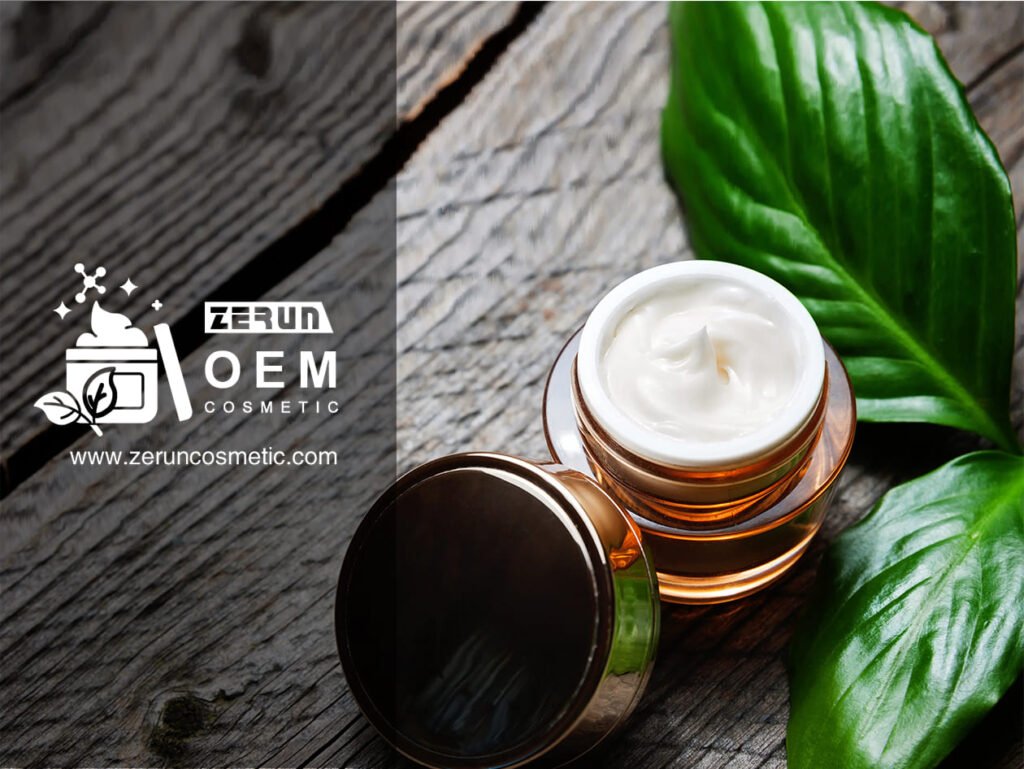
Launching a moisturizer is often where a brand either builds repeat purchase—or loses customers after the first jar. You’re choosing a texture, but you’re really choosing a positioning, an evidence plan, and a supply chain that can scale with demand.
Private label moisturizer means partnering with a manufacturer to customize or white-label ready bases into your branded line. In practice, it combines formula selection/tuning, packaging engineering, testing (stability, preservative efficacy, safety), claims substantiation, and compliant artwork. The fastest routes start with proven base systems you can tailor to skin types (oily, sensitive, dry) and claims (24-hour hydration, shine control), then lock packaging, MOQ, and a Gantt timeline.
We map choices from formula architecture to claims and compliance, including concrete tables and price levers. Keep scrolling for textures that match your brand story, ingredients that perform without clogging pores, and a production plan that hits margin and deadlines.
What is a private label moisturizer?
A private label moisturizer is a finished cream, lotion, gel-cream or gel manufactured by an OEM/ODM partner and branded as your own. It spans two models: catalogue bases (fastest) and custom builds (maximum differentiation). The right pick balances speed, uniqueness, budget, and regulatory constraints.
Private label is not “sticker on a jar.” It is a sequence of technical and commercial checkpoints: choose base → target actives and levels → packaging & compatibility → artwork & regulatory → pilot batch → tests → PO. Success hinges on starting from a robust emulsion platform that tolerates your actives and your markets’ temperature swings and shipping realities.
What are the two main sourcing models?
Catalogue bases let you change fragrance, actives, and packaging with minimal reformulation; custom builds design from first principles. If you have strict texture/claim needs or specialty actives, custom fits; otherwise, bases speed time-to-market.
Bases come with known stability, preset pH and preservation; you adjust color, scent, key actives within validated ranges. Custom builds excite high-end retail and clinical positioning but require longer stability and iteration. For early brands, a staged approach—base now, custom later—often wins.
How do MOQs differ between models?
Bases typically start at 500–1,000 units/sku; customs more often 2,000–5,000+ depending on actives and packaging. Jars/tubes add separate packaging MOQs (caps/pumps often 3,000–10,000).
What risks should you defuse early?
Misfit between claim and test plan; incompatible fragrance with preservative; under-estimating label review time; late artwork. Front-load compatibility checks, write claims before design, and lock dielines by T-5 weeks to line start.
Private label works when you pick the right entry path and sequence decisions to protect stability, compliance, and cash flow.
Which skin types and concerns should your line target?
Start with use-case clarity: oily/combination, dry/dehydrated, sensitive/reactive, mature/uneven tone. Each segment informs water/oil ratio, occlusivity, film formers, and claim language. Don’t try to be “for everyone” with a single SKU—build a tight trio.
Segmenting lets you standardize a chassis and swap actives/ratios for each skin type. This reduces complexity and testing duplication while giving clear shelf messaging.
Which 3-SKU lineup covers 80% of needs?
Gel (oil-free/low oil) for oily/acne-prone; gel-cream for combination/normal; cream for dry/sensitive. Add a fragrance-free variant for clinics and reactive users.
What actives map to each segment?
| Skin Type | Core Targets | Go-To Actives | Notes |
|---|---|---|---|
| Oily/Acne-Prone | Sebum, pores | Niacinamide 2–5%, Zinc PCA 0.3–1%, Saccharide isomerate 2–5% | Prefer gel textures, oil ≤2% |
| Dry/Dehydrated | TEWL, comfort | Glycerin 3–7%, HA 0.1–0.3%, Ceramides 0.1–0.5%, Squalane 3–6% | Cream/gel-cream, richer occlusives |
| Sensitive/Redness | Barrier, stinging | Panthenol 1–3%, Allantoin 0.2–0.5%, Oat/Bisabolol 0.05–0.2% | Fragrance-free, low-acid, low alcohol |
| Mature/Dullness | Texture, tone | Peptides 1–3%, Vitamin C derivatives 2–5%, Ectoin 0.1–0.5% | Stabilize antioxidants, pH compatibility |
Should you always offer fragrance-free?
One fragrance-free SKU avoids losing clinical/derm-led shoppers and reduces allergen review complexity.
Map skin types to actives and textures deliberately; small, clear assortments convert better and are easier to scale.

Which formats and textures fit your brand positioning?
Texture is a positioning tool. Gel signals oil-free clarity and fast absorption; gel-cream balances water-light feel with slip; lotion/cream signal nourishment and protection; balm signals repair. Pick textures that align with channel (retail vs clinic) and climate.
Texture also dictates packaging (airless for oxidation-sensitive builds), drop tests, and fill temperatures. Build your sensorial ladder early to minimize reformulations.
Texture selection matrix
| Format | Oil Phase % (typ) | Feel & Finish | Best For | Packaging |
|---|---|---|---|---|
| Gel | 0–3 | Weightless, fast | Oily/combination, tropics | Tubes, airless |
| Gel-Cream | 3–8 | Cushioned, dewy-matte | Normal, combo, broad appeal | Jars, tubes, airless |
| Lotion | 6–12 | Silky, light gloss | Normal to dry, body | Pumps, bottles |
| Cream | 12–25 | Rich, occlusive | Dry/sensitive, winter | Jars, airless |
| Balm | 0 oil-in-wax | Melt, occlude | Night repair, cold climates | Jars, sticks |
How do climates affect finish?
Hot/humid markets prefer gels/gel-creams with film formers that resist tack; cold/dry markets lean toward creams with ceramides/occlusives. Plan regional finishes if you sell across zones.
When do you need airless?
For oxidation-sensitive systems (vitamin C derivatives, retinoids), minimal preservative headspace, and claim-critical actives. Airless also elevates perceived value.
Choose textures as intentional brand signals and align with climate, channel, and packaging early.
Which ingredients deliver hydration without clogging pores?
Hydration without congestion comes from balancing three classes of ingredients: humectants that pull water into the skin, lightweight emollients that smooth texture, and barrier-support lipids that prevent moisture loss without forming a heavy film. The goal is to keep skin plump and calm while avoiding occlusive overload in pores, especially for oily and breakout-prone users.
A private label moisturizer aimed at oily, acne-prone, or combination skin usually leans on water-binding humectants, ultra-light esters, and biocompatible lipids like squalane instead of heavy butters. For dry skin SKUs, you can increase cushion and slip without fully switching to comedogenic occlusives by controlling oil phase %, viscosity, and film-former type.
Which humectants hydrate without heaviness?
Humectants are water magnets. They draw and hold moisture in the stratum corneum, which helps skin feel fuller, more elastic, and less tight. The most reliable stack for a lightweight daily moisturizer is glycerin + hyaluronic acid + a sugar-derived humectant such as saccharide isomerate or panthenol.
At practical use levels:
- Glycerin (3–7%) is extremely efficient, skin-identical, and proven to increase water content. It’s cost-effective and globally accepted, making it perfect for your “entry” SKU.
- Hyaluronic acid (0.1–0.3%) binds water and gives an instant plump look. Multiple molecular weights can support short-term surface comfort plus longer wear.
- Saccharide isomerate (2–5%) locks to keratin and continues to hydrate over time, even after washing. It’s often marketed as “long-lasting hydration.”
- Panthenol (1–3%) does double duty: humectant + soothing, great for combination/sensitive skin SKUs.
These choices are especially good for oilier skin types because they add water, not oil. If you’re formulating a gel moisturizer marketed as “oil-free hydration,” humectants are your engine.
| Humectant | Typical Use Level | Sensory feel | Good for skin type |
|---|---|---|---|
| Glycerin | 3–7% | Can feel slightly dewy if too high | All, especially dehydrated oily skin |
| Hyaluronic Acid | 0.1–0.3% | Smooth, bouncy | Dull / tired-looking skin |
| Saccharide Isomerate | 2–5% | Silky, long-wear | Combination, post-acid users |
| Panthenol (Pro-Vit B5) | 1–3% | Comforting, soft | Redness-prone / stressed skin |
A useful trick in acne-friendly moisturizers: pair humectants with film-forming polymers or cellulose-derived thickeners. This reduces tack and keeps finish fresh instead of sticky.

Are lightweight emollients safer for acne-prone skin?
Emollients fill gaps between skin cells to improve slip and softness. The mistake many emerging brands make is assuming “moisturizer = oil = breakouts,” so they avoid emollients completely. That creates tight, overstripped skin, which can trigger rebound oil.
The smarter move is to choose modern, fast-spread, low-viscosity emollients that mimic skin’s natural lipids instead of heavy butters.
Key performers:
- Squalane (3–6%): A skin-identical lipid (often olive- or sugarcane-derived) that gives slip without a greasy film. Generally considered low clogging and well tolerated even by breakout-prone users.
- Caprylic/Capric Triglyceride (CCT): A light ester from coconut + glycerin, very common in cosmetically elegant moisturizers. It gives a silky glide and helps disperse oil-soluble actives.
- Coco-Caprylate / Coco-Caprate: Often marketed as a “natural silicone alternative.” Spreads fast, leaves a soft finish, and reads well on “clean beauty” style INCI lists.
- Dimethicone (light grades): A silicone-based skin protectant that reduces friction and transepidermal water loss (TEWL). Contrary to internet myths, dimethicone is non-comedogenic in typical skincare use levels and actually helps limit chafing for irritated or over-exfoliated skin.
Where brands get into trouble is overusing heavier butters (like unrefined shea or cocoa butter) at high percentages in a product marketed as “pore-friendly.” Those materials are amazing for barrier and overnight repair SKUs, hand creams, or winter balms, but they don’t belong in a “shine control” daily face gel-cream.
| Emollient / Lipid | Finish on skin | Typical Use Case | Comedogenic Risk Perception* |
|---|---|---|---|
| Squalane | Soft, satin | Universal daily moisturizer | Low |
| Caprylic/Capric Triglyceride (CCT) | Silky, fast-absorbing | Lightweight gel-cream for combo skin | Low–Moderate (generally well tolerated) |
| Coco-Caprylate | “Dry slip”, elegant | Oil-free / “silicone-free” marketing | Low |
| Dimethicone (low-viscosity grades) | Smooth, protective | Sensitive / redness / post-acid care | Low (in most cosmetic literature) |
| Shea butter (unrefined, high %) | Occlusive, rich | Night repair, elbows, winter barrier | Higher concern for acne-prone faces |
- “Comedogenic Risk Perception” is buyer-facing language. Actual clogging depends on the total formula,not a single ingredient in isolation.
The positioning move here for a private label line is simple: build one SKU around “lightweight non-greasy hydration” and another SKU around “barrier comfort overnight.” You’re not just solving different skin types; you’re solving day vs. night.
Do barrier-repair lipids and occlusives always clog pores?
They must be dosed intelligently. Skin with a damaged barrier (from exfoliants, retinoids, sun, wind, over-cleansing) leaks water quickly. That tight, stingy feeling often leads shoppers to buy thick balms. You can address that need in a more elegant way.
Ceramide + cholesterol + fatty acid blends at low levels (often 0.1–0.5% ceramide complex in the final formula) reinforce the skin’s lipid matrix and reduce TEWL without needing a waxy film. Pairing that with panthenol and bisabolol creates a “comfort cream” that calms visible redness and supports nightly repair, even for people who break out.
For products where you really do want an occlusive shield—like a night recovery cream or a post-treatment calming moisturizer—you can add dimethicone, hydrogenated polyisobutene, or shea fractions in a controlled way. This is perfect as your premium SKU, not necessarily your universal daily one.
Here’s how many smart brands build a 2-step story:
- Day: water-rich gel/gel-cream with humectants + niacinamide for oil balance.
- Night: lipid-repair cream with ceramides, panthenol, soothing botanicals.
This allows you to say “non-greasy daily control” and “intensive overnight comfort” without pretending one product can do both.
Can you support hydration and oil control at the same time?
Niacinamide (typically 2–5%) and Zinc PCA (~0.3–1%) are excellent in moisturizers for oily and acne-prone users. Niacinamide helps regulate visible sebum, supports barrier function, and evens tone over time. Zinc PCA helps reduce the oily shine look through sebum-balancing claims. When combined with a humectant base and a low-oil emollient system, you get a matte-dewy finish instead of a glossy film.
This is the core of an “oil-free moisturizer” positioning: plump skin, less visible shine, no heavy butter feel, and language like “hydrates without clogging pores.”
Hydration without congestion is not magic; it’s architecture. Build water-first formulas with proven humectants, layer in elegant light emollients like squalane or coco-caprylate instead of heavy butters, add barrier lipids in controlled doses, and use niacinamide/Zinc PCA to keep shine in check. This gives you a face moisturizer that feels clean and breathable on oily or breakout-prone skin—and a clear marketing story you can repeat on pack, in ads, and on PDP without promising anything you can’t defend.

SKU architecture and hero claims that convert
Plan your ladder: Core Moisturizer, Oil-Free Gel, Rich Repair Cream. Add one “clinically framed” hero (e.g., 24-hr hydration) and one niche variant (fragrance-free or brightening) to widen reach without bloating SKUs.
Claim planning precedes testing. Decide your top two claims per SKU, then attach the test you’ll run and the data you’ll show on the PDP.
Claims and evidence mapping
| Claim | Typical Evidence | Notes |
|---|---|---|
| 24-hour hydration | Corneometer time-course | Use baseline-adjusted graphs |
| Reduces shine | Sebumeter over 6–8 h | Pair with consumer-use narrative |
| Strengthens barrier | TEWL reduction, tape-strip | Add biomarker story if available |
| Non-comedogenic | Human patch/usage on acne-prone | Avoid heavy butters in formula |
How many SKUs at launch?
Three to four. It simplifies operations and lets you buy packaging at stronger price breaks.
How to price tiers?
Use actives and packaging to step price: gel (entry), gel-cream (core), airless antioxidant cream (premium).
Constrain SKUs, pre-assign claims and tests, and ladder pricing through actives and packs.
Formulation architecture: humectants, emollients, occlusives and actives
Start from a stable emulsion chassis that tolerates your actives and climate. Decide: oil-in-water for most moisturizers, water-in-oil for extreme occlusion. Then layer humectant stack, emollients, occlusive strategy, and featured actives.
Work backwards from claims. For “oil-free hydration,” prioritize multi-weight HA, glycerin, and saccharide isomerate under 3% oil. For “barrier repair,” include ceramide complex with cholesterol and fatty acids and a modest occlusive.
What is a resilient backbone?
Glycerin 3–5% + HA 0.1–0.3% + pentylene glycol 3–5% delivers immediate and durable hydration without stickiness when balanced by film formers and proper rheology.
Where do actives plug in?
- Niacinamide 3–5% for oil control/brightening
- Panthenol 1–3% for comfort
- Ceramides 0.1–0.5% for barrier
- Peptides 1–3% for texture/tone (premium SKUs)
Example configuration table
| Target | Water Phase | Oil Phase | Actives | Finish |
|---|---|---|---|---|
| Oil-Free Gel | Glycerin, HA, saccharide isomerate | ≤2% lightweight esters | Niacinamide, Zinc PCA | Matte-dewy |
| Gel-Cream | Glycerin, HA | 5–8% squalane, CCT | Panthenol, Ceramides | Cushioned |
| Rich Cream | Glycerin | 12–20% squalane + butters | Ceramides, Cholesterol | Protective |
Emulsifiers, rheology and pH/stability tuning
Your emulsifier system and rheology modifiers shape glide, cushion, and stability. pH sets active ionization and preservative efficacy. Tune these three together.
For weightless feels, use modern liquid crystal emulsifiers and polymeric thickeners; for rich creams, blend fatty alcohols with high-HLB/low-HLB co-emulsifiers. Keep pH within the active’s comfort zone and preservative window.
Which emulsifiers fit each texture?
- Gels/gel-creams: polymeric emulsifiers, LC systems for quick break and fresh feel
- Lotions/creams: fatty alcohol + glyceryl/PEG-free natural systems for cushion
How to set pH smartly?
Most moisturizers live at pH 5.0–5.8. Vitamin C derivatives need specific windows; ceramide systems tolerate typical skin-like pH.
Stability checklist (copy/paste)
| Test | Goal | Typical Window |
|---|---|---|
| Accelerated (40/45 °C) | Phase integrity | 4–12 weeks |
| Freeze-thaw | Transport resilience | 3–6 cycles |
| Centrifuge | Early instability screen | 3,000 rpm, 30 min |
| Real-time | Shelf life | Parallel |
Emulsifier choice + rheology + pH are the texture engine; optimize them together for stability and sensorials.

Preservation and microbiology strategy for water-based systems
Water equals life—for microbes. Build a preservative system matched to pH, packaging, and water activity, with a supportive “hurdle” design.
Use broad-spectrum blends, chelators, multifunctionals (glycols), low free water (gels), clean processing, and sanitary packaging lines. Confirm with PET (challenge testing).
Preservation selector
| Scenario | pH Window | Packaging | Strategy |
|---|---|---|---|
| Gel, low oil | 5.0–5.8 | Tube/airless | Organic acids + booster + chelator |
| Gel-cream | 5.0–5.5 | Jar/airless | Broad-spectrum blend + tight GMP |
| Rich cream | 5.0–5.5 | Jar | Stronger system + spatula guidance |
Do you still need PET if ingredients are “self-preserving”?
Claim-critical data and retailer onboarding often require PET or equivalent.
What about fragrance and allergens?
Keep total fragrance low, offer a fragrance-free SKU, and review EU allergen disclosures if selling in Europe.
Pair smart chemistry with hygienic design; then prove it with challenge tests.
Manufacturing, MOQ and lead times
Production success is a choreography of BOM, packaging, testing slots, and line time. Lock these early to avoid idle inventory and missed launches.
Lead time typically flows: sampling (1–3 weeks) → stability/PET (in parallel) → packaging procurement (4–8 weeks) → pilot (1 week) → production (2–3 weeks) → QA release (1 week) → freight.
Typical MOQs and timelines
| Item | Typical MOQ | Lead Time |
|---|---|---|
| Formula (bulk) | 500–1,000 units/sku | 3–5 wks |
| Jar/Tube/Pump | 3,000–10,000 pcs | 4–8 wks |
| Cartons/Labels | 1,000–5,000 | 2–4 wks |
Should your moisturizer line go beyond face into body lotion, hand cream, and after-sun care?
Expanding beyond face is usually worth it when you want higher repeat purchase, bigger baskets, and seasonal stories. Body, hand, and after-sun add distinct use moments without cannibalizing your face SKU. The trade-off is added MOQs, testing, and artwork complexity—so stage the rollout and let data guide the sequence.
Body lotion scales volume through daily, whole-body usage; hand cream captures the “wash/sanitize then moisturize” moment; after-sun answers heat/UV seasonality and travel retail. Together they justify cohesive fragrance systems, giftable kits, and multi-price bundles. Success depends on texture fit (slip vs. tack), pack ergonomics, and clear claims you can evidence.
Will expansion improve revenue and retailer appeal?
Expanding typically raises average order value and improves shelf presence because shoppers expect a coordinated line. Retailers also prefer families they can face out together. The key is a lean core—then add one extension at a time against a calendar and margin plan.
Adding body and hand often boosts kitable SKUs for holidays and travel sizes, while after-sun supports summer endcaps and sun-destination boutiques. Keep COGS disciplined by reusing caps/pumps across sizes and negotiating tiered label runs. Track reorder velocity per format to confirm which becomes your volume workhorse.
Do body, hand, and after-sun need different textures and actives?
They share a hydration logic but differ in oil phase, film formers, and cooling/soothing cues. Hand creams need fast-dry films and wash resilience; body lotions need slip over large areas; after-sun favors gel or gel-cream with calming actives and low tack.
| Format | Typical Oil Phase | Sensory Goal | Key Actives | Packaging Tips |
|---|---|---|---|---|
| Body Lotion | 6–10% | Wide-area slip, no tack | Glycerin, squalane, saccharide isomerate | Pump bottles for speed |
| Hand Cream | 10–18% + film formers | Quick-dry, non-greasy palms | Dimethicone, panthenol, ceramides | 30–75 ml tubes |
| After-Sun | Gel/gel-cream ≤5% | Cooling, light, non-occlusive | Aloe, panthenol, ectoin | Tubes/airless for hygiene |
What extra testing and compliance will you need?
Expect the same stability and preservative-efficacy backbone, but add format-specific checks. Hand creams benefit from rinse-resistance/user wash tests; after-sun claims should stay cosmetic (soothing, hydration) with clear instructions. If selling in the EU/UK, align allergens on larger body usage and maintain a complete PIF.
Build artwork with consistent INCI ordering and harmonized fragrance disclosure. For pumps and larger bottles, confirm drop tests and closure torque. If kits are sold, ensure outer packaging carries all mandatory markings (net quantity, batch, PAO) and that translations match target markets.
When is it smarter to stay focused on one hero SKU?
If cash is tight, packaging MOQs are high, or marketing bandwidth is limited, scale a single hero to repeat purchase first. Add the next format only when you can preserve margin, fund testing, and sustain replenishment without starving ad spend.
A simple filter works: if your hero’s reorder rate is rising and you’ve hit stable CAC/ROAS, schedule body lotion; if sanitizing behavior is a key motif for your audience, prioritize hand cream; if your calendar leans on summer or resort channels, green-light after-sun. Keep the pipeline, but launch in sequence.
Extend beyond face when you can prove pull, protect margin, and maintain quality. Body, hand, and after-sun meet distinct daily and seasonal moments, unlock retailer storytelling, and broaden price ladders—provided you tailor textures, plan tests, and roll out in a controlled, data-led sequence.

Compliance, documentation and claims substantiation by region
Regulatory readiness earns retailer trust. Align your dossier with the markets you sell into and match claims to evidence.
Expect ingredient lists (INCI), SDS, COA, stability/PET, safety assessments, and artwork review. EU/UK require a Product Information File and responsible person; US prioritizes truthful, non-drug claims and MoCRA facility/labeling rules; Middle East may need Halal preferences and Arabic artwork.
Artwork and copy checklist
| Area | What to Check | Tip |
|---|---|---|
| INCI | Order, allergens | Match batch exactly |
| Claims | Truthful, substantiated | Tie to test method |
| Labeling | Net contents, batch/expiry | Retailer format |
| Warnings | Fragrance, actives | Localized text |
How to choose safe claims?
Stay performance-oriented (hydration, softness) with measured endpoints; avoid drug-like language.
What documentation wins retail onboarding?
Complete tech pack: specs, tests, certifications, GMP/ISO, and traceable batch data.
Compliance is a system: documents + artwork + matched claims. Build once; reuse across SKUs
Conclusion
A winning private label moisturizer line blends smart assortment design, a resilient emulsion chassis, targeted actives, and a documentation-first approach to claims and compliance. Start with a tight 3- to 4-SKU ladder mapped to skin types and climates, lock packaging early, and attach every headline claim to a test you’ll actually run. That’s how you launch fast—and scale with confidence.
Ready to turn this blueprint into samples and a launch timeline? Partner with Zerun cosmetic for base selection, rapid customization, packaging, and a clean regulatory handoff. Share your target markets, claims, and budget bands—we’ll return a tailored plan, sample set, and dates you can build a campaign around.