Skip to content
Custom Calming Scalp Formulations Manufacturer
What This Calming Scalp Formula Solves
Scalp odor, visible flakes, redness, and tight or itchy discomfort often reflect microbial imbalance, mineral film buildup, and over-cleansing that destabilizes the barrier. Our system delivers fresh roots + calm comfort by combining microbiome-friendly antimicrobial actives with gentle keratolytics, chelation, and non-occlusive conditioners that keep strands soft. Cationic polymers grant targeted slip at the base without coating the scalp; low-pH rinse care compacts cuticles; zinc salts/niacinamide moderate oil and help maintain a comfortable environment. We tune surfactant strength and solids for oily vs. dry/sensitive types, incorporate cooling sensorials calibrated to avoid sting, and map climates (humid vs. arid) to usage cadence. From antibacterial-balancing shampoos and micro-exfoliating toners to leave-on soothing serums, cooling mists, and overnight elixirs, your line can deliver day-one freshness and day-two revival—silicone-optional, fragrance-flexible, and color-safe. Regulatory paths differ by market; we supply compliant cosmetic copy and region-appropriate active options.


Antibacterial Formula
1.Bioburden Modulation & Odor Reduction (In-Use Microbiology)
Conduct scalp swab CFU counts and GC–MS volatile profiling before/after 2–4 weeks’ use to quantify changes in microbial load and malodor markers. Our microbiome-friendly antimicrobials (e.g., piroctone olamine where permitted) with preservative-boosters (1,2-hexanediol/caprylyl glycol) and chelation curb residue films that trap odor. Report Δ log CFU and panel “freshness longevity” hours vs. control, with guidance to avoid drug claims in restricted markets while communicating cosmetic-level odor-control and cleanliness narratives consumers understand.
2. Comfort & Redness Improvement (TEWL/Colorimetry/Itch VAS)
Track transepidermal water loss, erythema via colorimetry, and itch on visual analog scales across sensitive and oily cohorts. Bisabolol, panthenol, allantoin, Centella fractions, and niacinamide support comfort while low-pH care minimizes sting. Present Δ TEWL decline, Δ redness reduction, and Δ itch score after 1–4 weeks, including fragrance-free panels for sensitive groups. Translate into consumer language—“calm feel, less visible redness”—with multi-wash durability and style compatibility.
3. Flake Appearance & Scalp Smoothness (Imaging & Keratolysis)
Use macrophotography or dermoscopy to grade flake coverage and plate thickness, plus tactile assessments for roughness. Salicylic acid (BHA) or PHA gluconolactone gently releases adherent scales; zinc PCA helps normalize oil to limit re-accumulation; lamellar conditioners keep roots light. Report Δ% flake appearance reduction and time-to-weigh-down vs. control, supporting credible, texture-inclusive claims for humid and hard-water markets.
Key Calming Scalp Actives & Technologies
Microbiome balance + gentle exfoliation + mineral control: Target odor-causing buildup and visible flakes while preserving the barrier. Flexible polymers keep hair manageable at the base; low-pH, chelation, and lightweight carriers maintain shine and root lift.
Key Ingredients & Their Benefits
| Ingredient (INCI) | Role in System | Typical Use Levels | Formulation Notes | Compliance & Market Proof |
|---|---|---|---|---|
| Piroctone Olamine | Microbiome-friendly antimicrobial | 0.2–1% | Cosmetic anti-dandruff/odor narratives (where allowed) | Wikipedia – Piroctone Olamine, EU CosIng (search) |
| Climbazole (where allowed) | Malassezia targeting | 0.1–0.5% | Check regional limits and claims | Wikipedia – Climbazole, EU CosIng (search) |
| Zinc PCA | Sebum moderation & freshness | 0.1–1% | Toners/serums; supports odor-control logic | Wikipedia – Zinc PCA, CosmeticsInfo – Zinc Salts |
| Salicylic Acid (BHA) | Micro-exfoliation (flakes) | 0.2–2% | Pair with soothing agents; pH-appropriate | CosmeticsInfo – Salicylic Acid, Wikipedia – Salicylic Acid |
| Gluconolactone (PHA) | Gentle renewal | 1–4% | Sensitive-friendly alternative to BHA | Wikipedia – Glucono-δ-lactone, EU CosIng (search) |
| Niacinamide | Barrier & comfort support | 1–4% | Balances look/feel; roots stay clean | Wikipedia – Niacinamide, CosmeticsInfo – Niacinamide |
| Panthenol (D-Panthenol) | Comfort + gloss | 0.2–2% | Softness and light return | Wikipedia – Panthenol, CosmeticsInfo – Panthenol |
| Bisabolol | Soothing & anti-redness feel | 0.05–0.3% | Sensitive-friendly comfort; fragrance-flexible | Wikipedia – Bisabolol, CosmeticsInfo – Bisabolol |
| Allantoin | Skin protectant feel | 0.1–0.5% | Comfort narrative; compatibility broad | Wikipedia – Allantoin, CosmeticsInfo – Allantoin |
| Centella Asiatica Extract / Madecassoside | Redness/comfort story | 0.1–0.5% | Pair with BHA/PHA to buffer feel | Wikipedia – Centella asiatica |
| Menthol (low) | Cooling sensorial | 0.05–0.2% | Calibrate to avoid sting; patch-test | CosmeticsInfo – Menthol, Wikipedia – Menthol |
| 1,2-Hexanediol / Caprylyl Glycol | Preservative-boosters | 0.2–1% each | Supports in-use hygiene narratives | CosmeticsInfo – 1,2-Hexanediol, CosmeticsInfo – Caprylyl Glycol |
| Tetrasodium Glutamate Diacetate / Disodium EDTA | Chelation (hard water) | 0.05–0.3% | Binds Ca/Fe/Cu; reduces rough films | Wikipedia – GLDA, Wikipedia – EDTA |
| Tea Tree Oil (optional) | Freshness/clarity story | 0.05–0.5% | IFRA/allergen disclosures; stability checks | Wikipedia – Tea Tree Oil, IFRA Standards |

Salicylic Acid (BHA) — Customization Details for Antibacterial-Calming System (Scalp/Roots) Formulas
INCI & CAS
INCI: Salicylic Acid · CAS: 69-72-7. A lipophilic β-hydroxy acid with keratolytic, desmolytic, and anti-inflammatory properties that helps loosen adherent scales and clear follicular debris—useful where Malassezia-linked flaking and micro-inflammation coexist. (EU CosIng/ECHA identifiers; CIR overview.) (CosIng functions) (ECHA brief profile) (CIR 2019 PDF) (European Commission)
Role in Antibacterial-Calming Efficacy
Scalp de-scaling + micro-inflammation relief + access for antifungals. BHA disrupts corneocyte cohesion to lift flakes, helps unplug follicles, and can reduce pruritus when paired with antifungals (e.g., piroctone olamine, ketoconazole, selenium disulfide), enabling better active deposition in dandruff/SD protocols. (Clinical comparisons and SD/dandruff reviews.) (2000 RCT: 2% SA + 0.75% PO) (2002 RCT: CPO/SA vs. ketoconazole) (SD pathophysiology) (PubMed)
Typical Use Levels (formulation custom guide)
Shampoos/scalp cleansers: 0.5–3% (EU rinse-off limit 3%); pH ~4.5–6 to balance efficacy and comfort.
Leave-on tonics/serums: 0.5–2% (EU leave-on limit 2%; avoid body-lotion positioning ≥0.5% cap).
Masks/co-wash/conditioners: 0.5–2% for scale-softening and root clarity; pair with bisabolol, allantoin, panthenol for comfort.
Notes: Not permitted for children <3 y (except shampoos); keep cosmetic positioning (non-OTC). (SCCS Final/2023 summary page) (Public Health)
Regulatory Sources & Global Compliance
- EU Annex III (restricted substance): Max 3.0% rinse-off, 2.0% leave-on (not body lotion/oral), 0.5% body lotion/oral; not for <3 y (except shampoos); also listed in Annex V as a preservative at 0.5%. Verify label warnings per product type. (EUR-Lex 2019/1966) (SCCS 2023 opinion PDF) (EUR-Lex)
- CIR Expert Panel: Safe as used when non-irritating/non-sensitizing under current practices/concentrations; consider QRA for fragrance co-exposure. (CIR 2019 Final Report) (cir-safety.org)
- ECHA/CLP context: Classified Repr. 2; ensure REACH registration & SDS alignment; monitor ED assessment status. (ECHA brief profile) (echa.europa.eu)
Clinical/Performance Evidence (flakes, itch, comfort)
- Vs. coal tar: 2% SA + 0.75% piroctone olamine shampoo matched coal tar efficacy over 4 weeks; maintained benefit post-treatment. (RCT, 60 subjects) (PubMed)
- Vs. ketoconazole: Ciclopirox/SA regimen showed significant improvements and itch reduction vs. baseline comparable to ketoconazole comparator. (Single-blind trial) (PubMed)
- Modern combos: 1% SeS₂ + 0.9% SA shampoo improved dandruff, erythema, pruritus, greasiness with good tolerance. (2025 study) (PMC)
Safety & Risk Assessment (toxicology highlights)
CIR: Safe as used when formulated to be non-irritating; monitor cumulative exposure across routines. Label and age restrictions apply in the EU; for sprays/mists, control droplet size and avoid inhalation risk. Not for <3 y (except shampoos). (CIR 2019) (SCCS 2023) (cir-safety.org)
Stability & Packaging
pH-managed systems: Target pH 4.5–6.0; SA is poorly water-soluble—use pre-dissolution (e.g., in solvents/surfactant micelles) or encapsulation in leave-ons. Choose opaque/UV-safe packs when co-formulating with photosensitive antifungals; test flake score, itch VAS, sebum/grease indices, and Malassezia endpoints in claims substantiation. (SD/dandruff methodology and microbiome context.) (Comprehensive review) (Microbiome/SD reviews) (PMC)
Cost–Benefit
High-value keratolytic that boosts antifungal access and reduces visible flakes/itch with consumer-familiar labeling; typically more cost-efficient than tars or newer designer keratolytics. Works across formats (therapeutic shampoos, scalp toners, root-clarifying masks) and supports long-term compliance in sensitive, oil-prone scalps. (Regulatory/clinical synthesis.) (SCCS limits) (Key RCTs) (Public Health)
Claims Language (Do/Don’t)
✅ Helps lift visible flakes and clear pores at the roots with gentle BHA micro-exfoliation, supporting a cleaner-looking, calmer scalp. (RCTs and SD reviews.) (PubMed) (PMC review) (PubMed)
✅ Helps enhance antifungal access and reduces itch tightness when used within a multi-active routine (e.g., SA + piroctone olamine/selenium disulfide), measured by flake scores and itch VAS. (PubMed) (2025 data) (PubMed)
✅ Suitable for oily, flake-prone scalps seeking root clarity with cosmetic-level BHA at EU-compliant concentrations. (SCCS limits) (Public Health)
❌ Avoid drug-style disease claims (e.g., “treats seborrhoeic dermatitis”); keep cosmetic positioning and substantiate at the finished-product level (flake count, itch VAS, sebum/grease indices, microbiology with antifungal co-actives). Reference CosIng/CIR/SCCS for INCI, safety and limits. (CosIng) (CIR) (SCCS) (European Commission)

Bisabolol — Customization Details for Antibacterial-Calming System (Scalp/Roots) Formulas
INCI & CAS
INCI: Bisabolol · CAS: 515-69-5 (α-bisabolol; racemate) / 23089-26-1 ((-)-α-bisabolol; Levomenol). A sesquiterpene alcohol known for soothing/anti-inflammatory activity and penetration-enhancing behavior; widely used for sensitive-skin positioning. (CIR re-review; ECHA Levomenol identifiers; CosIng overview is informational.)
Role in Antibacterial-Calming Efficacy
Micro-inflammation down-regulation + comfort support. Bisabolol helps attenuate NF-κB/JNK-mediated cytokines and calm irritation/itch, complementing antifungal actives (e.g., piroctone olamine, selenium disulfide, ketoconazole) in dandruff/SD routines where Malassezia and barrier stress co-exist. (Anti-inflammatory mechanistic/animal-to-clinical data; scalp microbiome/SD context.) (PMC)
Typical Use Levels (formulation custom guide)
Shampoos/scalp cleansers: 0.01–0.1% (adds soothing to keratolytic/antifungal systems; minimal impact on foam).
Leave-on tonics/serums/essences: 0.05–0.5% (pair with panthenol, allantoin, β-glucan; optional encapsulation for sustained comfort).
Masks/co-wash/conditioners: 0.05–0.3% to buffer sting from acids or dandruff actives and improve sensorials.
Notes: Market-reported maxima in leave-ons ~1%; hair non-coloring products typically ≤0.5%. Validate cumulative exposure across routine. (CIR frequency/concentration tables.)
Regulatory Sources & Global Compliance
- EU (CosIng): Ingredient listing and function context (e.g., skin conditioning/soothing). CosIng is informational → rely on CPSR for product-level justification. (European Commission)
- CIR Expert Panel: Safe as used at reported concentrations; negative for mutagenicity; human patch data largely non-sensitizing at cosmetic use levels.
- ECHA/REACH: Levomenol (-)-α-bisabolol dossier available; confirm supplier REACH registration/SDS alignment. (ECHA EU)
Clinical/Performance Evidence (itch, redness, tolerance)
- Anti-inflammatory: Preclinical/clinical evidence shows reduced inflammatory mediators and improved dermatitis endpoints with α-bisabolol (topical formulations), supporting comfort in irritated skin. (PubMed)
- Soothing/brightening ancillary: Human study (0.5% bisabolol cream) indicated tone-evening effect—useful when scalp hyperreactivity co-presents with PIH around hairline.
- Adjunct to dandruff care: Reviews highlight microbiome dysbiosis in dandruff; soothers like bisabolol can improve tolerability of antifungal/keratolytic regimens, supporting adherence. (MDPI)
Safety & Risk Assessment (toxicology highlights)
CIR: Safe as used with typical leave-on ≤1%; negative genotox; photosensitization/sensitization uncommon though case reports exist—monitor in atopic cohorts. For sprays, control droplet size; bisabolol may enhance penetration of co-actives—reflect this in MoE/QRA.
Stability & Packaging
Formulation-friendly, oil-soluble. Compatible across surfactant systems and emulsions; consider antioxidants if high heat exposure during processing. Use opaque/UV-safe packs when co-formulating with photosensitive antifungals; substantiate comfort with itch VAS, erythema scores, and user-perceived sting alongside flake metrics in anti-dandruff builds. (Methodology/SD practice context.) (PMC)
Cost–Benefit
High-perception “calming” signal at low dose, improving user comfort and routine compliance without heavy fragrance load. Works in multi-active systems (e.g., SA/PHA + antifungal + bisabolol) to maintain tolerability while addressing flakes/itch/redness. (Regulatory/clinical synthesis.)
Claims Language (Do/Don’t)
✅ Helps soothe irritated, flake-prone scalps, reducing the feeling of itch/tightness in multi-step routines. (Inflammation/cytokine data; tolerability narratives.) (PubMed)
✅ Supports comfortable use of antifungal/keratolytic systems, aiding routine adherence and user-perceived comfort (itch VAS, redness scores). (Dandruff/SD context.) (MDPI)
✅ Suitable for sensitive-scalp positioning at cosmetic concentrations with product-level safety substantiation. (CIR assessment.)
❌ Avoid drug-style disease claims (e.g., “treats seborrhoeic dermatitis”). Keep cosmetic positioning and substantiate claims at the finished-product level (itch VAS, erythema/comfort, flake count; microbiology if combined with antifungals). Reference CosIng/CIR/ECHA for INCI/safety/regulatory context. (European Commission)

Centella Asiatica Extract — Customization Details for Antibacterial-Calming System (Scalp/Roots) Formulas
INCI & CAS
INCI: Centella Asiatica Extract · CAS: 84696-21-9 · EC: 283-640-5. Botanical extract rich in triterpenes (asiaticoside, madecassoside, asiatic/madecassic acids) positioned for soothing/skin-conditioning and antioxidant support in sensitive-scalp builds. (EU CosIng identifier/context; CIR dossier.) (European Commission)
Role in Antibacterial-Calming Efficacy
Cytokine down-modulation + barrier support + tolerability. Centella actives reduce pro-inflammatory mediators (e.g., TNF-α, IL-1β/IL-6) and promote re-epithelialization/collagen I, helping calm itch/redness and improve comfort when paired with antifungals/keratolytics in dandruff/SD routines. Use as a tolerability buffer to sustain adherence. (Mechanism & wound-healing/anti-inflammatory reviews; scalp microbiome context for SD.) (PMC)
Typical Use Levels (formulation custom guide)
Shampoos/scalp cleansers: 0.1–0.5% standardized extract to offset sting from acids/antifungals without suppressing foam.
Leave-on tonics/serums/essences: 0.2–0.8% (align with CIR-reported leave-on use maxima ≈0.5% for some Centella-derived ingredients; titrate to supplier potency).
Masks/co-wash/conditioners: 0.1–0.5% to ease tightness/itch and support barrier feel.
Notes: Potency depends on triterpene standardization (e.g., madecassoside/asiaticoside). Validate with itch VAS/erythema and hydration (TEWL/Corneometer) endpoints. (CIR survey of use levels; barrier metrics methodology.) (CIR Safety)
Regulatory Sources & Global Compliance
- EU CosIng: Centella-derived ingredients listed primarily as skin-conditioning/soothing; CosIng is informational → product-level CPSR required. (European Commission)
- CIR Expert Panel (2023 update): Centella asiatica-derived ingredients are safe as used in cosmetics when formulated to be non-sensitizing; panel reviewed 9 ingredients across skin/hair uses. (SAGE Journals)
- REACH/SDS: Plant extracts require supplier SDS/technical dossier; confirm REACH status and allergens/solvent residues per market. (Use official dossiers where available.) (biolandes.com)
Clinical/Performance Evidence (itch, redness, tolerance)
- Anti-inflammatory & wound-healing: Reviews and human data show Centella triterpenes reduce inflammatory cytokines, enhance migration/angiogenesis, and support re-epithelialization, correlating with reduced redness/irritation. (PMC)
- Barrier repair/hydration: Madecassoside-containing systems demonstrate barrier-support and anti-inflammatory effects (e.g., improvements in erythema/comfort alongside hydration metrics). (PMC)
- Adjunct in dandruff care: Dandruff/SD involves microbiome dysbiosis and micro-inflammation; soothing co-actives like Centella improve tolerability of antifungal/keratolytic regimens, sustaining consumer adherence. (PMC)
Safety & Risk Assessment (toxicology highlights)
CIR: Safe as used at reported cosmetic concentrations; sensitization uncommon when formulated to be non-sensitizing. Track cumulative exposure and any solvent/allergen carryover from extract media. For sprays, manage droplet size to minimize inhalation. (CIR final/report updates.) (PubMed)
Stability & Packaging
Extract-type dependent. Hydro-glyceric/ethanolic extracts are generally formulation-friendly; protect triterpenes from oxidation/UV with antioxidants and opaque/UV-safe packs—especially in leave-on scalp essences. In claims work, pair flake scores/itch VAS with TEWL/Corneometer and user sting readouts when combined with acids/antifungals. (Stability/testing & SD methodology context.) (PMC)
Cost–Benefit
Low-dose, high-perception “calming” signal that improves comfort and supports barrier feel in multi-active scalp systems (antifungal/keratolytic + Centella). Typically cost-efficient vs. specialty biomimetics; helps reduce dropout in sensitive/oily, flake-prone populations. (Regulatory/clinical synthesis.) (SAGE Journals)
Claims Language (Do/Don’t)
✅ Helps soothe irritated, flake-prone scalps, reducing the feeling of itch/tightness and supporting healthy-looking barrier when used in multi-step routines. (Anti-inflammatory/barrier evidence.) (PMC)
✅ Supports tolerability of antifungal/keratolytic systems, aiding routine adherence with measured improvements in itch VAS, erythema, and hydration. (SD/micro-inflammation & clinical context.) (PMC)
✅ Suitable for sensitive-scalp positioning at cosmetic concentrations with product-level safety substantiation. (CIR assessment.) (PubMed)
❌ Avoid pharmaceutical descriptions (e.g., “treatment of seborrheic dermatitis“). Maintain the cosmetic positioning and provide supporting evidence at the finished product level using flake count, itch VAS, erythroma, and TEWL/Corneometer (microbiological data can be added when co-formulated with antifungals); refer to CosIng/CIR for regulatory context. (European Commission+1)
Custom Calming Scalp Product Applications
Cover antibacterial-balancing wash care, micro-exfoliating toners, soothing serums, cooling mists, overnight elixirs, root-light conditioners, and weekly mineral reset—delivering daily freshness and comfortable roots without weight. Texture-calibrated formats keep strands manageable while protecting color and shine in hard-water regions.


Calming Scalp Market Trends & Target Audiences
Search for antibacterial scalp, scalp serum, itch relief, and scalp odor control is rising. Buyers want visible flake-appearance reduction, long-lasting freshness, and gentle comfort—without drying lengths. “Fragrance-choice,” “silicone-optional,” and “hard-water safe” tags boost click-through and repeat purchase.

Market Overview
Category leaders quantify microbiology/odor shifts, itch/redness comfort, and flake-appearance reduction while offering climate- and texture-specific SKUs. Clean-lean narratives with clear IFRA/allergen handling, fragrance-free options, and color-safe routines meet retailer standards and sustain ratings, subscriptions, and dermatologist/stylist endorsements in humid and hard-water markets.
Key Market Insights:
- Metrics convert: Δ log CFU (in-use), Δ itch VAS, Δ% flake appearance, multi-wash durability.
- Scalp-first systems: toners/serums extend day-two freshness and style longevity.
- Compliance edge: region-appropriate actives/claims accelerate listings and trust.

Target Consumer Segments
Oily or odor-prone scalps seeking credible freshness; sensitive users needing low-fragrance calm; gym/helmet wearers wanting post-activity relief; color/bleach clients requiring root cleanliness without dulling tone; and clean-lean shoppers preferring silicone-optional lines. Salon-home hybrids value simple routines: cleanse, tone/serum, refresh, and weekly mineral reset.
Target Segments after Custom Branding:
- Freshness & Comfort Line: Balancing wash + micro-exfo toner + serum.
- Oil-Control & Active Lifestyle Line: Cooling mist + toner + root-light conditioner.
- Hard-Water Defense Line: Mineral-reset + acidic care + chelation story.
Customization Options for Packaging & Branding
Explore flexible packaging options, bottle types, and private label services. From tube to jar, we match your brand’s tone and market position.
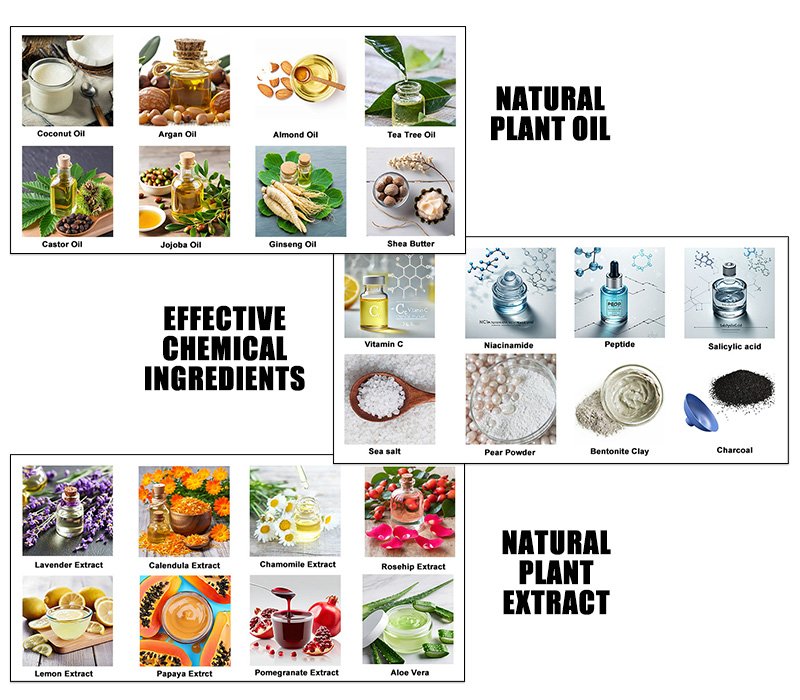
Cosmetic formulation development
Your formula is the soul of your brand. Whether you’re developing a gentle serum for sensitive skin, a high-efficacy anti-aging cream, or a scalp-purifying shampoo, our in-house chemists create custom cosmetic formulations tailored to your desired effect, skin type, region, and ingredient philosophy.
With over 5,000+ proven base formulas and full white-label development support, we help you build a product that meets your performance goals, brand values, and market trends.
Available Services:
Active ingredient sourcing & formulation balancing
Custom texture creation: gel, cream, balm, lotion, foam, oil
Ingredient selection for target concerns: anti-acne, brightening, anti-aging, hydration
Support for natural, vegan, EWG green-level formulations
Regional compliance: USA, EU, AU, JP standards
Custom Cosmetic Packaging Styles
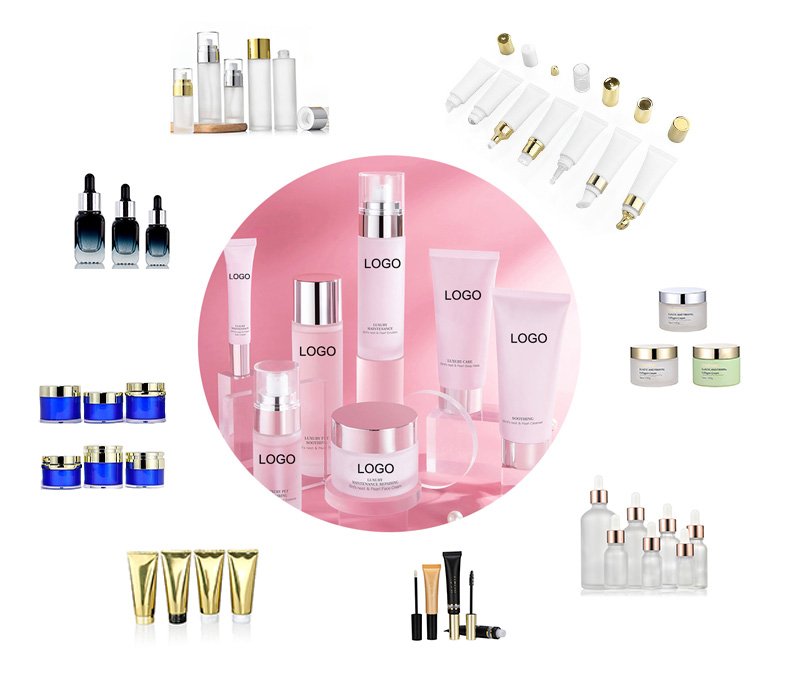
Packaging plays a critical role in how your brand is perceived. Whether you need luxury glass droppers, airless pump bottles, eco-friendly refill pouches, or retail-friendly PET tubes, we provide 3000+ stock and customizable packaging options.
From minimalist matte finishes to glossy foil-stamped designs, our packaging engineers help you select the perfect form and material—whether for prestige skincare, professional haircare, or clean beauty positioning.
Available Options:
Glass, PET, PP, PCR, aluminum, bamboo, and more
Airless pumps, sprayers, jars, tubes, and dropper bottles
Color-matching, texture finishes, and custom mold services
Cosmetic Box, Label Design for skincare brands
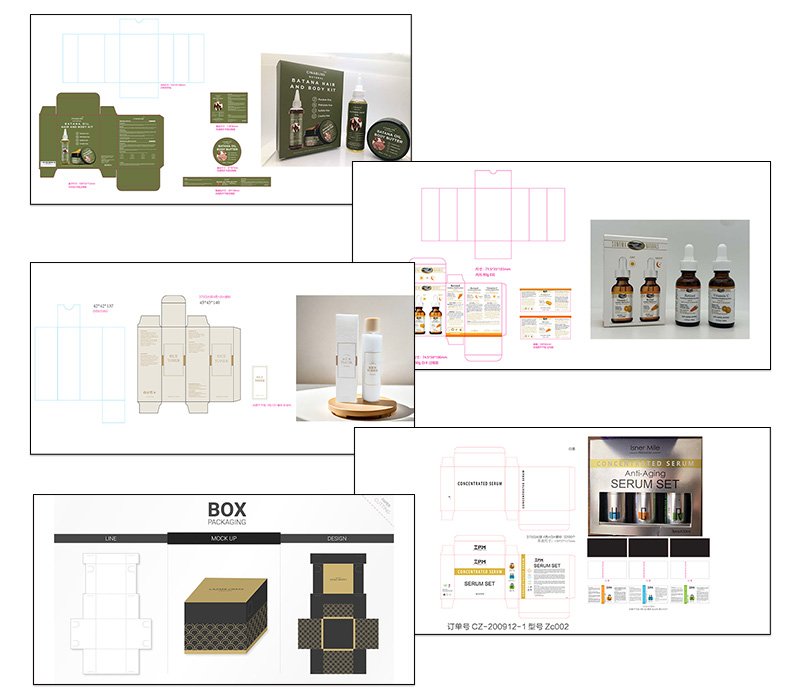
Beyond the bottle, your visual identity sets your product apart. Our in-house design team creates custom label layouts, box designs, and full branding suites—including logo placement, font matching, and barcode compliance.
We also offer waterproof labels, UV spot gloss, embossing, foil stamping, and other premium finishes to ensure your packaging feels as high-end as your formula. Whether you’re building an Amazon FBA product or a salon-grade kit, we help make your product shelf-ready.
Design Services Include:
Free artwork design and dieline support
Amazon & retail barcode setup (FNSKU/UPC)
Custom printing on labels, boxes, pouches, and shrink wraps
Cosmetic Box Customization for Skincare Brands
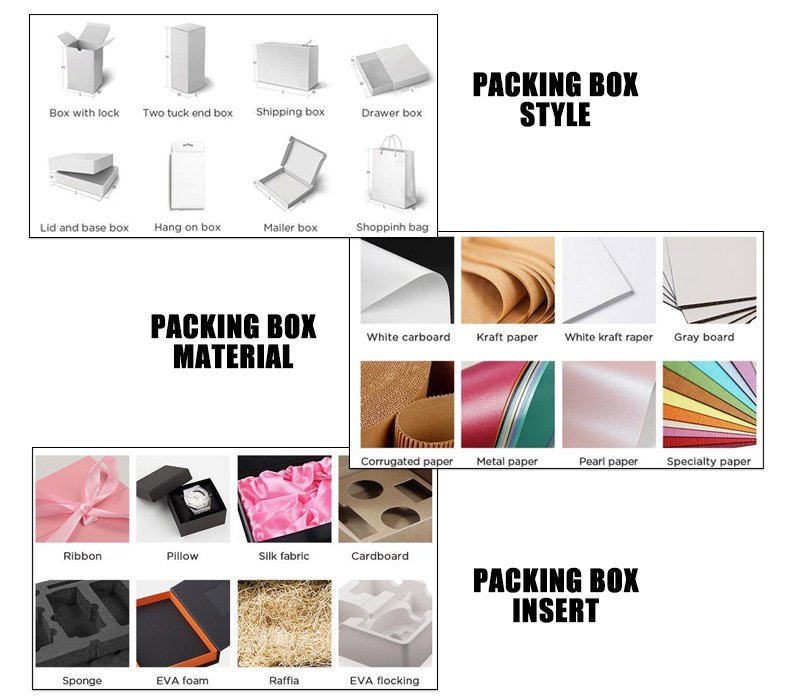
Beyond the bottle, your outer packaging is your first impression. Our team provides custom cosmetic box solutions with tailored box styles, premium cardboard or specialty paper choices, and protective inserts in EVA, molded pulp, or PET.
We also offer specialty printing options, matte or glossy lamination, foil stamping, embossing, and spot UV to create a tactile, luxury feel. Whether for boutique retail, e‑commerce, or professional kits, we ensure your packaging enhances your brand story.
Customization Options Include:
Box style selection: tuck‑end, drawer, magnetic, or folding carton
Material choices: rigid board, kraft, coated paperboard
Insert options: EVA foam, molded pulp, PET, or cardboard
Cosmetic Box Logo Finishing for Premium Branding
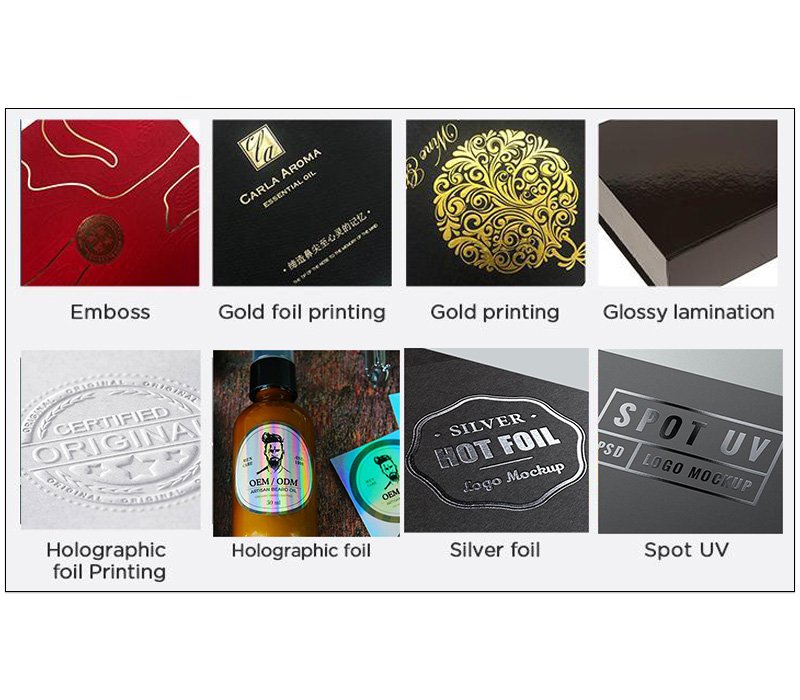
Beyond structure, your logo finish defines your product’s luxury appeal. We offer custom cosmetic packaging logo treatments including emboss, gold foil printing, silver foil, glossy lamination, holographic effects, and spot UV for high-impact shelf presence.
From subtle debossed textures to striking holographic foil, each technique is chosen to enhance your brand story and match your target market positioning. Whether for upscale retail, e‑commerce, or professional use, our finishes help your product stand out.
Finishing Options Include:
Emboss & Deboss logo impressions
Gold, silver, and holographic foil stamping
Spot UV for selective gloss highlights
Glossy or matte lamination for surface protection
Make A Sample First?
If you have your own formula, packaging idea, logo artwork, or even just a concept, please share the details of your project requirements, including preferred product type, ingredients, scent, and customization needs. We’re excited to help you bring your personal care product ideas to life through our sample development process.
More Calming Scalp product customization instructions and FAQs
Formula Efficacy Introduction: The Antibacterial & Calming Scalp formulation is designed to rebalance the scalp’s microbiome and soothe irritation. By inhibiting harmful microbial growth and reducing inflammation, it helps alleviate scalp itching, redness, and dandruff, restoring a healthy scalp barrier. The formula uses gentle cleansing and calming agents to remove excess sebum and impurities without over-drying, thereby helping regulate the scalp’s natural oil balance. Maintaining a well-balanced scalp microbiome is crucial for preventing issues like flaking and irritationdove.com. Overall, this formulation delivers a professional-grade soothing care experience for sensitive or
Core Active Ingredients: This formulation combines multiple potent actives for synergistic antibacterial and anti-inflammatory effects. Natural antiseptics like tea tree oil provide powerful antibacterial and anti-inflammatory benefits to relieve scalp itching and dandruffpurelux-scalpspa.com. Niacinamide (vitamin B3) is included as a key ingredient to soothe irritated scalp skin and regulate sebum production, preventing the scalp from getting overly oily or drydove.com. Botanical soothers such as aloe vera and witch hazel deliver hydration and calming effects, helping repair the damaged scalp barrier. Zinc-based antimicrobials (e.g. zinc PCA or zinc pyrithione) and salicylic acid further support a clean, healthy scalp by reducing microbes and gently exfoliating flakes. The formula is free of harsh irritants, ensuring it remains gentle on the scalp while delivering its effective benefits.
Recommended Products to Develop: For antibacterial and calming benefits, we recommend developing a range of scalp care products to meet diverse market needs. For example, a scalp-balancing antibacterial shampoo can be formulated to gently cleanse daily while inhibiting microbial overgrowth on the scalp. This can be paired with a calming conditioner that reduces scalp irritation and leaves hair soft without residue. Additionally, a leave-in scalp serum or spray infused with concentrated botanical anti-inflammatory agents can provide quick relief and continuous antimicrobial protection when applied directly to problem areas. In the professional line, a scalp purifying tonic or an exfoliating scalp scrub could be offered to remove follicle buildup and reset the scalp environment. By combining these product formats, a brand can deliver a complete antibacterial and soothing scalp care regimen.
Customer Success Story: A European organic haircare brand sought to launch an antibacterial, calming scalp line for sensitive scalps. They collaborated with us to develop a refreshing scalp shampoo infused with tea tree oil and aloe vera, along with a complementary soothing serum spray. The products demonstrated excellent results in trials: after a few weeks of use, testers reported significantly reduced scalp itching and redness, with dandruff greatly diminished. Following the launch, the brand received enthusiastic feedback from end consumers praising the formula’s gentle yet effective action that caused no irritation. Backed by our formulation expertise, the brand successfully established itself as a “scalp care expert” in the market. The product line saw steadily growing sales and secured a strong foothold in its target niche.
Q: Is this antibacterial calming scalp formulation suitable for daily use? Will it dry out my scalp?
A: Yes, the formulation is carefully designed to be gentle enough for daily use. We use a balanced cleansing system plus moisturizing ingredients to ensure that while excess oil and impurities are removed, the scalp is not over-stripped or dried out. Daily use helps keep the scalp consistently clean and healthy, preventing dandruff and follicle blockage without causing dryness.
Q: Are the antibacterial actives in the formula safe, and does it contain any harsh chemicals?
A: The antimicrobial actives we include (such as tea tree oil and zinc complexes) have been safety-tested and are used at effective yet safe levels, causing no irritation to the scalp. The formula is free from common harsh chemicals like sulfates and parabens, greatly reducing the risk of sensitivity. In addition, botanical calming agents are incorporated to further protect delicate scalp skin. Overall, the formulation is very safe and well-tolerated.
Q: How soon can we expect to see improvements in scalp condition when using this formulation?
A: Most users notice visible improvements in their scalp condition after 2–4 weeks of consistent use – for example, reduced itchiness, less redness, and diminished dandruff. Individual results can vary based on one’s initial scalp health and usage frequency, of course. We recommend regular use to build up the benefits over time. Our R&D testing also confirmed that continued use of this formulation yields significant enhancements to scalp health.
Q: Are antibacterial claims allowed for cosmetics?
A: It depends on the market. We frame cosmetic-level antimicrobial/odor-control narratives and provide region-appropriate actives and copy. Drug-class claims or medicated ingredients require specific pathways; we’ll guide compliant positioning and labeling.
Q: Will antimicrobials irritate sensitive scalps?
A: We use microbiome-friendly options at cosmetic levels and pair them with soothing agents (bisabolol, panthenol, Centella) plus low-pH care. Offer fragrance-free SKUs and cadence guidance; validate with TEWL/itch panels and patch tests.
Build Soothing Antimicrobial Scalp Line Today
We customize antimicrobial balance, gentle exfoliation, chelation, and soothing strategies by scalp type and climate, then deliver fast sampling, artwork support, and packaging tuned to your price tiers. From antibacterial-balancing shampoos and serums to cooling mists and mineral-reset care, we help you launch quickly and grow repeat purchase.