Skip to content
Ceramides Ingredient Custom Cosmetics Manufacturer
Discover ceramides’ skin-identical barrier power for TEWL reduction, soothing, and age-support. Explore INCI types, optimal lipid ratios with cholesterol/FFAs, recommended percentages, processing/pH tips, compatible actives, validation testing, and OEM/ODM documentation to build confident, high-performing private-label repair lines.
What Are Ceramides

Ceramides are skin-identical sphingolipids that organize with cholesterol and free fatty acids (FFAs) into lamellar bilayers, forming the core of the stratum corneum barrier. Cosmetic ceramides (e.g., Ceramide NP/NS/AP/AS/EOP/NG) help rebuild barrier structure, reduce TEWL, and improve tolerance across face, body, and scalp care.
INCI: Ceramide NP / Ceramide NS / Ceramide AP / Ceramide AS / Ceramide EOP / Ceramide NG (often supplied as a ceramide complex) · CAS: varies by grade; typically waxy solids or pastes for oil-phase dispersion. (EU CosIng, Wikipedia)
Sources: Usually via biotechnological fermentation to obtain sphingoid bases followed by acylation; also plant-derived or synthetic skin-identical structures.
Solubility/Compatibility: Disperse in oils, alcohols/propylene glycol; often liposomal or glycosylated carriers improve distribution and penetration.
pH & Processing: Best in pH ~4.8–6.2 lamellar systems; co-dose with cholesterol/FFAs (common ranges 1:1:1 to 3:1:1, CER:CHOL:FFA). Limit prolonged high heat and aggressive shear.
Ceramides Benefits: Mechanisms, Results & OEM Formulation
See how ceramides deliver barrier repair, TEWL reduction, soothing, tolerance to strong actives, anti-aging smoothness/firmness, and scalp/body comfort—plus recommended % levels, testing methods, and pairing strategies for private-label launches.

Barrier Repair
Mechanism: Rebuilds intercellular lipid lamellae with cholesterol and FFAs, restoring ordered bilayers and improving corneocyte cohesion and permeability control.
Benefits: Faster barrier recovery, less tightness, and improved comfort in daily wear.
Importance: Foundational claim for sensitive-skin and post-procedure support lines across global markets.
Use level & testing: 0.05–0.5% active ceramides (or 0.1–1% complexes) in lamellar systems; evaluate TEWL (Tewameter), tape-stripping recovery, and cohesion imaging.
Good pairings: Cholesterol, FFAs (C16–C22), panthenol, beta-glucan, squalane.
TEWL Reduction & Long-Lasting Hydration
Mechanism: Increases lamellar density and reduces micro-fissures, limiting passive water loss while synergizing with NMF/humectants for dual-track hydration.
Benefits: Durable moisturization, smoother texture, diminished dehydration lines.
Importance: Drives comfort, adherence, and repurchase; reduces dissatisfaction from dryness.
Use level & testing: 0.1–0.3% in gel-creams/lotions; track TEWL% drop, Corneometer/Skicon hydration curves, 24–72 h wear studies.
Good pairings: Multi-weight HA, polyglutamic acid, glycerin, ectoine, sphingoid bases.


Soothing & Redness Relief
Mechanism: Restored barrier reduces irritant ingress and neurogenic triggers; lipid order dampens low-grade inflammation from environment/cleansing.
Benefits: Calmer look and feel, fewer sting episodes, visible redness (Δa*) improvement.
Importance: Key for daily soothing SKUs, baby-care, and “winter rescue” capsules.
Use level & testing: 0.05–0.2%; assess Δa*, stinging/tolerance panels, expert photo-grading.
Good pairings: Centella actives, bisabolol, oat/beta-glucan, allantoin, niacinamide (low %) .
Anti-Aging Support (Firmness & Smoothness)
Mechanism: Raises water content and lipid order, improving stratum-corneum optics and supporting epidermal mechanics—enhancing perceived firmness/bounce.
Benefits: Softer-looking fine lines, plumper feel, refined surface smoothness.
Importance: Gentle “plump & smooth” path for anti-aging lines without sensitization risk.
Use level & testing: 0.1–0.3% in night creams/masks; profilometry (fine-line depth), Cutometer elasticity, consumer radiance panels.
Good pairings: Peptides, vitamin E, squalane, cholesterol/FFA triads, low-irritancy retinoid systems.


Tolerance Booster with Strong Actives
Mechanism: Strengthened barrier buffers acids, retinoids, azelaic/VC systems, reducing sting/peel while maintaining regimen continuity.
Benefits: Higher tolerance threshold, fewer drop-offs, smoother onboarding to powerful actives.
Importance: Critical for advanced routines and “clinically inspired” ranges.
Use level & testing: 0.05–0.2%; monitor subjective tolerance, sting/tightness diaries, TEWL trajectory during actives escalation.
Good pairings: Encapsulated retinal/retinol, azelaic derivatives, vitamin C derivatives, niacinamide.
Best Product Formats for Ceramides
Explore how Ceramides work across formats—from lightweight serums to rich creams—to serve varied consumer needs.

Ceramide Moisturizer

Ceramide Serum

Ceramide Cream

Barrier Repair Cream

Ceramide Lotion

Ceramide Toner
Ready to Create Your Ceramides Skincare Line?
Speak with our formulation team and receive a 48-hour proposal detailing ceramide grade(s), cholesterol/FFA ratio, base system, and co-actives. We deliver high-performing private-label barrier solutions with full stability and consumer testing.
Ceramides Concentration Options | Custom 0.05–1% Active for OEM/ODM
Select ceramide grade(s) and lipid ratios to tune repair speed, comfort, and sensorial. We engineer pH 4.8–6.2 lamellar systems with validated stability, preservative-efficacy, and perception data.
1. Concentration Range
Typical usage:
0.05–0.5% active ceramides (or 0.1–1% complexes). Pair with cholesterol/FFAs commonly between near-equimolar (1:1:1) and 3:1:1 (CER:CHOL:FFA), then fine-tune by skin type and feel.


2. Typical Use Levels
| Target Use Case | Ceramides % (active) | Best Formats | pH Window | Proof & QA |
|---|---|---|---|---|
| Daily hydration / maintenance | 0.05–0.10% | serum, light lotion | 5.0–6.2 | Corneometer/TEWL, comfort panels |
| Sensitive / redness-prone | 0.10–0.20% | gel-cream, cream | 5.0–6.0 | Δa*, stinging/tolerance tests |
| Intensive barrier repair | 0.20–0.30% | gel-cream, rich cream, mask | 4.8–5.8 | TEWL↓, cohesion, profilometry |
| Post-procedure routine support* | 0.10–0.25% | ointment-like cream, mask | 5.0–5.8 | Comfort diary, TEWL follow-up |
| Scalp/body dry roughness | 0.10–0.50% | scalp essence, body repair cream | 5.0–6.2 | Scaling index, texture grading |
*Final percentage depends on target claim, skin type, and regional compliance.
Ceramides Formulation & Actives Ingredient Customization
Build formulas with cholesterol/FFAs, panthenol, beta-glucan, squalane, niacinamide, HA/PGA, and optionally encapsulated retinoids/Vitamin C derivatives for “repair + advanced” systems. We provide stability & ISO 11930 testing, flexible MOQs, and OEM/ODM documentation.
1. Formulation Systems
2. Ingredient Customization Case

Daily Barrier Serum
Benefits: Fast-absorbing daily repair; reduces tightness and dryness, supports makeup wear and routine tolerance.
Actives: Ceramide NS 0.10% + Cholesterol 0.10% + FFAs 0.10% + Glycerin 4% + Panthenol 2%.

Barrier-Repair Gel-Cream
Benefits: Stronger barrier with TEWL reduction, silk-cushion slip, and all-season comfort for sensitive lines.
Actives: Ceramide NP 0.20% + Cholesterol 0.15% + FFAs 0.15% + Beta-glucan 0.30% + Panthenol 2%.
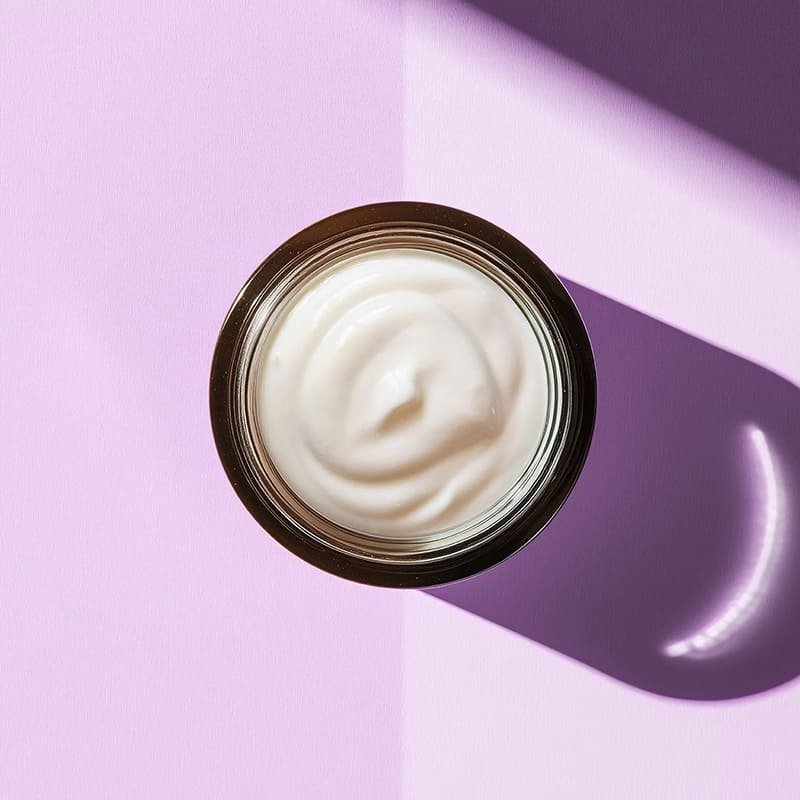
Night Ceramide + Retinal Cream
Benefits: Overnight smoothness and bounce; softens fine-line look while maintaining comfort during retinoid onboarding.
Actives: Ceramide EOP 0.15% + Encapsulated Retinal 0.05% + Squalane 2% + Tocopherol 0.20%.

Oil-Control Barrier Fluid
Benefits: Controls shine yet preserves barrier; non-greasy daily wear for combination and oily skin types.
Actives: Ceramide NP 0.08% + Zinc PCA 0.5% + Niacinamide 4% + HA (LMW) 0.10%.
Body Repair Cream
Benefits: Reduces roughness and flaking appearance on dry areas; long-lasting softness with non-sticky after-feel.
Actives: Ceramide Complex 0.30% + Urea 5% + Shea Ester 2% + Cholesterol 0.10%.

Scalp Soothing Essence
Benefits: Comforts dry, itchy scalp and improves visible flaking; lightweight, residue-free finish at roots.
Actives: Ceramide AP 0.10% + Panthenol 1% + Aloe 0.50% (optional Piroctone Olamine for haircare lines).
Ceramides Global Trends & Regional Analysis
Ceramides are beneficial for the skin as they have properties that act as emollients and increase the effectiveness of the skin’s barrier. This makes them a common ingredient in care products, which increases its demand in manufacturing creams, lotions, serums, and other hair care products.
1. Ceramides Global Trends
The global ceramide market size was valued at USD 360.4 million in 2023 and is projected to grow at a CAGR of 6.8% from 2024 to 2030. The market growth is attributed to the wide range of applications in various industries such as food, pet care, cosmetics, pharmaceutical, and others.


Application Insights
Ceramides have become a top-trending active in sensitive and barrier-repair skincare across global markets, driven by rising awareness of “skinimalism” and microbiome-safe formulations.
Cosmetics applications led the market and accounted for the largest revenue share at 68.7% in 2023, owing to the growing trend of natural and organic beauty, which increases the demand for clean-label ingredients. In addition, diversified products of cosmetics that have ceramides as an ingredient, including skin, hair, and body lotions, are increasing the demand for ceramides for the manufacturers of these industries, thus increasing the market growth.
2. Ceramides Regional Analysis
The North America ceramide market is expected to grow at a CAGR of 7.2% over the forecast period influenced by the supportive government regulations for increasing the utilization of ceramide-based products, expanding applications of ceramides across industries without being limited to skin care, and the rise of sustainability in the beauty industry with surging demand for eco-friendly methods of sourcing ceramides.
U.S. Ceramide Market Trends
The ceramide market in the U.S. dominated the North American market with the largest revenue share in 2023. This growth is driven by the increasing demand of consumers for natural products and plant-based products for skin and healthcare; this leads to heavy investment in R&D, which gives technological advancement and innovative extraction methods for better products, and the growing demand for anti-aging products is directly impacting the ceramides demand thus growing the market in the country.
Canada ceramide market is expected to grow significantly in the North American region over the forecast period attributed to the growing e-commerce platforms, which have eased the process for consumers to avail themselves of ceramide-based products, thus increasing their demand. This has led to large-scale manufacturing and technological advancements in product formulation, propelling the country’s market growth.
Europe Ceramide Market Trends
The ceramide market in Europe is expected to grow significantly over the forecast period owing to the increasing awareness of skin health, leading to rising demand for natural and organic products, including plant-based products such as ceramide. In addition, with a robust cosmetic industry in the region, heavy R&D investments are increasing the number of multifunctional beauty products appealing to consumers, thus driving sales and growing markets in the area.
The UK ceramide market is expected to grow rapidly in the coming years due to an increasing focus on preventive healthcare and not only on appearance. The supportive regulatory environment increases innovations and ensures safety and efficacy in the products, thus increasing sales and growing the market in the country.

More Ceramides product customization instructions and FAQs
Q: Which ceramide types should I choose—NP, NS, AP, EOP, etc.?
A: Select by claim, format, and supplier availability. Ceramide NP/NS are versatile daily-repair choices with broad tolerance. Ceramide EOP (ω-hydroxy profile) supports lamellar order and is favored in intensive repair/night creams. AP/AS/NG provide differentiation and can round out a multi-ceramide spectrum that better mimics native skin. For speed and consistency, many brands deploy a ceramide complex while fine-tuning cholesterol/FFA ratios to hit target sensorial and recovery curves.
Q: What is the optimal ratio with cholesterol and FFAs?
A: Robust practice ranges from near-equimolar (1:1:1) to 3:1:1 (CER:CHOL:FFA). Start with 1:1:1 in lamellar emulsions for comfort and stability, then iterate by skin type (drier → slightly more FFAs; fragile barrier → maintain equimolar) and feel (dewy vs. cushion). Confirm with TEWL reductions, Corneometer curves, microscopy of lamellar order, and consumer diaries. Remember that too little cholesterol may hinder bilayer formation, while excess FFAs can compromise elegance or tolerance.
Q: Can I combine ceramides with acids, retinoids, or vitamin C?
A: Yes—ceramides raise the tolerance ceiling. Use neutral-pH (≈5–6) ceramide systems and time-separate strong acids, or layer ceramides after acids to buffer tightness. With retinoids/retinal, prefer encapsulation and supportive lipids (squalane, vitamin E) to minimize sting. For vitamin C, use derivatives in neutral-pH emulsions, or keep L-ascorbic in a separate low-pH serum and apply a ceramide gel-cream on top. Document outcomes via stinging panels, TEWL trends, and adherence over 4–8 weeks.
Q: How long before consumers see results?
A: 1–2 weeks: comfort improves, tightness and flakiness ease as lamellae reorganize. 4–8 weeks: measurable TEWL↓, higher hydration, and smoother-looking texture; perceived fine-line softening in night-care formats. Outcomes depend on dose (0.05–0.30% active), lipid ratio, regimen synergy (gentle cleansing, humectants), and climate. Use TEWL/Corneometer, profilometry/Cutometer, and standardized photography for claim support.
Q: Any formulation and packaging watch-outs?
A: Ceramides are structure-sensitive: minimize high-shear and prolonged heat; post-add <40 °C after emulsification. Maintain pH 4.8–6.2; include chelators and, where relevant, antioxidants for lipid protection. In water-rich formats, validate ISO 11930 with worst-case inocula; in rich creams, track jar evaporation. Packaging should favor airless pumps/jars or laminated tubes to limit oxygen and water loss; verify valve torque, suck-back, and shipping durability.
Launch Your Custom Cosmetics Line Now!