Skip to content
What is the private label manufacturing process?
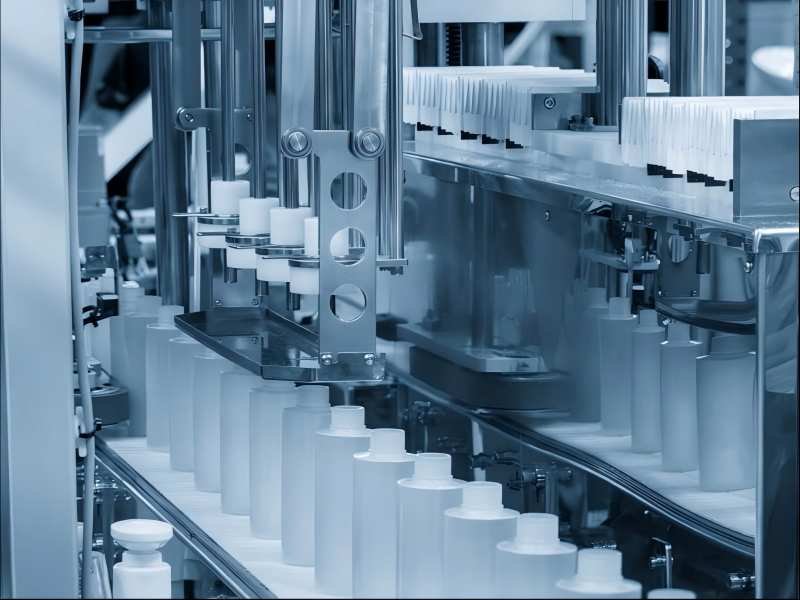
Private label looks simple from the outside: pick a product, add your label, place an order. In cosmetic custom launches, most problems don’t come from “bad formulas”—they come from unclear briefs, late packaging decisions, and approval loops that never end.
A reliable private label manufacturing process keeps you moving by setting early decision gates, turning sampling into a controlled V1→V2→V3 loop, and locking packaging and label copy before the schedule gets fragile—so your first order behaves like the first step of a repeatable reorder system, not a one-time project.
How to start custom cosmetic product?
Start with a simple process map, then choose one of three “best first moves” based on your constraints: channel, speed, or differentiation. Most new brands stall because they start with the wrong first move.
The private label process map
| Stage | What you do | What “done” looks like |
|---|---|---|
| 1) Define | Pick market + channel + hero SKU | A 1-page brief (not a moodboard) |
| 2) Sample | Approve V1/V2/V3 with rules | One “approved standard” sample |
| 3) Lock | Freeze packaging + label copy | Final components + final artwork |
| 4) Verify | Run essential pre-launch checks | Clear pass/fail signals |
| 5) Produce | Batch + fill + QC release | QC data + ship-ready cartons |
| 6) Reorder | Repeat without drift | Specs + change control + rhythm |
Three common starting points:
- If you need speed: start with stock packaging + proven base and design your differentiation through label, scent direction, and a tight texture target. Packaging traps slow you down—browse options early in Custom Cosmetic Packaging.
- If you need channel fit (Amazon vs clinic vs DTC): start with claims boundaries + usage experience (pump vs dropper, foam vs cream, fragrance level, rinse-off vs leave-on). This prevents expensive rework later.
- If you need differentiation: start with a clearer performance brief and a controlled iteration plan inside Formulation Development so “unique” doesn’t become “unstable.”
What do you prepare before contacting a factory?
A factory doesn’t need a 40-page deck. It needs a brief that prevents guessing. The goal is to communicate what success looks like—so you don’t pay for confusion with endless sampling.
The brief checklist (what actually speeds projects up)
| Brief item | What to specify | Why it matters |
|---|---|---|
| Target market + channel | Amazon/DTC/clinic/retail + region | Drives packaging, docs, positioning |
| Product format | Serum/cream/cleanser/mask etc. | Defines process + stability risks |
| Hero benefit | The one benefit you’ll lead with | Prevents “trying to do everything” |
| Sensory targets | Texture feel, finish, fragrance direction | Avoids vague “make it nicer” loops |
| Packaging preference | Bottle type + size range + must-have features | Prevents late packaging surprises |
| “Must-not” list | Claims/ingredients you want to avoid | Saves time and compliance rework |
| Competitor reference | 1–2 references max (no copy request) | Clarifies expectations without clutter |
A simple way to write the brief:
- “We want X format for Y users, sold on Z channel, with one hero promise, and the feel should be A, not B.”
- Add: “Packaging must be pump / dropper / tube with good dispensing and low complaint risk.”
When you’re ready to turn the brief into a controlled development plan, use Formulation Development as the execution route.
How does sampling usually work?
Sampling works best when it has rules. Without rules, “one more tweak” becomes a habit—and timelines evaporate.
A clean V1 → V2 → V3 sampling rhythm
- V1 (baseline fit): confirms the product is in the right category: texture family, fragrance direction, basic look/feel.
- V2 (target tuning): adjusts the most important variables (for example: thickness, slip, finish, foam feel, scent intensity).
- V3 (approval standard): final polish and confirmation—this becomes the reference for production.
How to avoid endless sampling
Set pass/fail criteria before the sample arrives.
Example: “If it pills, it fails.” “If the pump clogs, it fails.” “If scent is too strong, it fails.”
Limit each iteration to 1–2 changes.
Multiple changes at once make it impossible to know what improved or broke.
Approve with a usage routine, not a first impression.
Many “great first impressions” fail after a week of custom use.
If you want sampling to move faster with fewer loops, request a structured plan through Manufacturing Process.
When to lock packaging and labels?
Packaging and labels should be locked earlier than you want to lock them. Most launch delays come from “we’ll finalize packaging later,” then later arrives—and everything depends on it.
A practical rule
- Lock packaging after you’re confident the product format is correct (end of V2), not after everything is perfect (end of V3).
Why?
- Packaging affects dispensing, leakage risk, fill behavior, and lead times.
- Label copy affects print readiness, compliance review, and carton space planning.
What “locked” means in custom cosmetic projects
- Bottle + pump/cap confirmed (with a backup option)
- Size confirmed (and a second size if you plan bundles)
- Label dimensions confirmed
- Final label copy and INCI list aligned (no last-minute rewrites)
If packaging is your bottleneck, start by choosing realistic options in Custom Cosmetic Packaging before you over-invest in a custom look.
What tests matter before launch?
You don’t need “everything” before your first shipment. You do need the right early signals—the ones that prevent recalls, returns, and complaint spikes.
A phased pre-launch testing mindset
- Phase 1 (early risk screen): catch problems that show up fast (separation, weird odor drift, obvious instability, packaging issues).
- Phase 2 (early trend confidence): get directional confidence the product will behave during shipping and normal storage.
- Phase 3 (scale confidence): strengthen your stability story and reduce long-term surprises as you expand channels.
What matters most for first launches
- Micro control approach (basic)
- Accelerated stability direction (trend-focused)
- Packaging awareness (dispensing, leakage, odor absorption, discoloration risk)
For brands selling into more documentation-sensitive channels, align expectations early via Certifications & Logistics.
How to move from first order to reorder?
A smart brand doesn’t treat the first order as the finish line. It treats it as the first test of repeatability.
What makes reorders smooth (and cheap)
- A locked QC spec: pH/viscosity/appearance/odor + fill checks as your repeatability anchors
- A reference sample: your “gold standard” retained for comparison
- A change control mindset: define what can change (and what requires re-approval)
- A reorder rhythm: reorder timing built around component lead time, not panic
The reorder workflow that reduces surprises
- Confirm the spec (not just “same as last time”)
- Confirm components (packaging and raw materials)
- Confirm timeline gates (production slot + release checks)
- Confirm what’s changed (even small substitutions should be visible)
If you want a straightforward system that supports repeat orders, the best starting point is the Manufacturing Process workflow, then move into execution through Formulation Development.
Frequently Asked Questions about private label manufacturing process
1) How long does a private label skincare launch usually take?
A realistic timeline depends on packaging readiness and how many sample rounds you need. Brands that lock packaging early and use clear V1–V3 rules move much faster than brands that keep decisions open.
2) What’s the biggest reason private label projects get delayed?
Late packaging and label decisions. The product can be ready, but if components aren’t locked (or artwork isn’t approved), production can’t start.
3) How do you keep quality consistent between batches?
Consistency comes from measurable specs (pH/viscosity/appearance/odor), retained reference samples, and clear change-control rules—not from “we’ll keep it the same.”
4) What should I send first if I want a fast quote?
Market + channel, product format, target size, packaging preference, and one hero benefit. That’s enough to start scoping without wasting time.
Conclusion to custom your brand:
If you share your target market/channel, product format, and packaging preference, you’ll get a clearer launch checklist and a realistic production timeline for your first SKU set.
- Start with a route map: Solutions Hub
- Move into execution: Formulation Development
- Or align the step gates first: Manufacturing Process
More Related
Most Expensive Skin Whitening Cream: Market Trends→
19 Most Expensive Face Cream Brands: Formula and Cost Guide→
Most Expensive Skin Lightening Cream: Claims Guide For Brand→
16 most expensive face cream in the world: OEM Products Guide→
Most Expensive Face Lotion: OEM Product Guide→
Top 12 Most Expensive Hair Oil In The World: Value Ingredinets Guide→
18 Best Hair Oil Brands: Quality, Ingredients & Value Guide→
Most Expensive Hair Serum: OEM Formulations Guide→
Most Expensive Hair Care Products: OEM Cost Guide→
Most Expensive Hair Gel: Price Guide→
Most Expensive Hair Treatment: Product Function & Value Guide→
Custom Formulations
Hot Private label Beauty products
Hot ingredients
Custom cosmetic solutions
FAQ Categories
Can't find the answers?
No worries, please contact us and we will answer all the questions you have during the whole process of OEM Cosmetic customization.
Make A Sample First?
If you have your own formula, packaging idea, logo artwork, or even just a concept, please share the details of your project requirements, including preferred product type, ingredients, scent, and customization needs. We’re excited to help you bring your personal care product ideas to life through our sample development process.