Skip to content
What is an OPM in cosmetics?
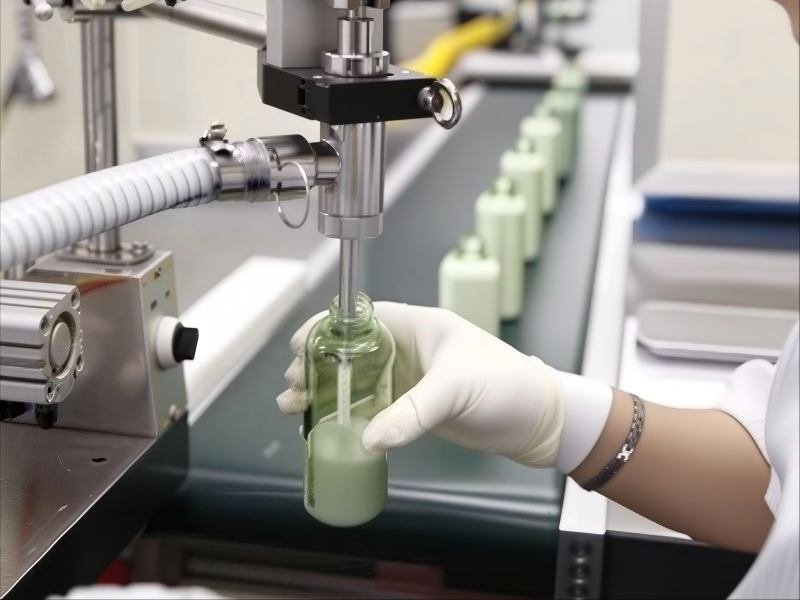
In cosmetics, OPM is commonly used to describe a partner that organizes and manages production on your behalf—coordinating formula, packaging, factories, timelines, and paperwork—so you deal with one accountable “owner” instead of many moving parts. In some industry documents, OPM is also used to mean “Original Product Manufacturer,” describing the party connected to the product’s original production responsibilities. (encyclopedia.pub)
The practical point is the same: an OPM sits between your brand and the production network. If the role is managed well, it saves time and reduces coordination mistakes. If managed poorly, it can become a “black box” where quality, documents, and responsibility get blurry.
What does an OPM do in cosmetics?
An OPM’s value is coordination + accountability across multiple parties: factory, packaging suppliers, testing, and logistics.
OPM responsibilities in cosmetics supply chain
1) Project setup and routing
- Translate your brief into a workable plan (formula route, packaging route, timeline gates)
- Choose or recommend the right factory/factories for the format
- Build a realistic MOQ and lead-time plan based on components and scheduling
A clean brief makes the whole system faster and less error-prone. This page helps structure the brief so fewer decisions bounce back and forth: How to Brief Cosmetic OEM Skincare Line
2) Supplier and factory coordination
- Collect quotes, align packaging specs, and coordinate sampling
- Manage artwork handoffs and packaging lead times
- Track approvals and version changes (so “which sample is the standard?” never becomes a fight)
3) Quality and documentation flow
- Make sure specs are defined (pH/viscosity/appearance/fill checks where relevant)
- Collect standard documents (COA/SDS/specs/testing summaries)
- Ensure batch and release checkpoints are followed (who checks what, and when)
When do you need an OPM in cosmetics?
An OPM makes sense when coordination risk is higher than pure manufacturing difficulty.
When to use an OPM for private label
- You’re launching multiple SKUs quickly and want one owner for timelines and packaging alignment
- Your packaging is complex (pumps/sprayers, custom parts, multiple decorations)
- You’re selling in multiple markets and need disciplined document collection and traceability
- You’re mixing stock options + custom upgrades and want a controlled rollout plan
- You’re working with more than one factory and need consistency rules across sites
When you may not need an OPM
- One simple SKU, stock packaging, and a single factory that already provides full support
- Your team has strong in-house capability to manage packaging, testing, and documentation
- You want direct factory control and you’re prepared to manage every moving part yourself
If your goal is to understand the full route from decisions to shipment (and where coordination usually breaks), this map helps: Cosmetic Manufacturing Process
How is an OPM different from a factory?
A factory makes the product. An OPM manages the system that gets the product made (often using one or more factories).
OPM vs cosmetic manufacturer (responsibility boundary)
| Topic | OPM typically owns | Factory typically owns |
|---|---|---|
| Coordination | timelines, handoffs, version control, multi-party alignment | internal production schedule for their site |
| Packaging sourcing | component routing, vendor follow-up, artwork/print coordination | packaging filling compatibility checks at the line level |
| Production execution | ensures the right factory is booked and ready | batching, filling, in-process checks, final release at site |
| Quality flow | makes sure specs/docs/approvals are collected and consistent | operating QC testing, batch records, line controls |
| Problem solving | cross-party root cause + preventing repeat across sites | site-level CAPA actions and process adjustments |
A good setup removes “gaps” where each side assumes the other is responsible.
Who owns OPM quality and documents in cosmetics?
Even if an OPM manages the work, quality accountability cannot be outsourced away. Your brand is still responsible for what goes to market, so access and control over documents must be clear.
OPM quality and documentation ownership (what must be explicit)
| Document / record | Who creates it | Who must store it | Who must have access |
|---|---|---|---|
| Product specs (pH/viscosity/appearance/fill checks) | factory + OPM + brand approval | OPM + brand (final approved version) | brand + OPM |
| Batch records / production records (anonymized templates during vetting; full records per batch later) | factory | factory (original) + OPM (copy) | brand (upon request or per agreement) |
| COA / SDS for key materials | suppliers / factory | OPM + brand | brand + OPM |
| QC release checklist / release result summary | factory | factory + OPM | brand + OPM |
| Stability / compatibility summaries (as agreed) | factory / lab | OPM + brand | brand + OPM |
| Change log (formula/packaging/version) | OPM | OPM + brand | brand + OPM |
If any of these are “unclear” in the relationship, problems show up later as delays, reorder drift, or blame-shifting.
What are the common risks for cosmetic OPM?
Most OPM problems are not about bad intent—they’re about unclear boundaries and low transparency.
Common failure patterns to watch for
1) Blame-shifting
- When something goes wrong, the OPM says “factory issue,” and the factory says “OPM approved it”
- No single owner can show a clean timeline and decision trail
2) Black-box operations
- You can’t see which factory is producing your SKU
- You can’t get basic records or version history
- You only receive “it’s fine” updates, not measurable checkpoints
3) Multi-factory inconsistency
- Different factories use slightly different raw materials, processes, or packaging specs
- Batch-to-batch feel changes, and no one can explain why
- Reorders drift because the “reference standard” isn’t enforced across sites
4) Hidden MOQ/lead-time inflation
- Packaging minimums or decoration constraints appear late
- The plan changes after you already approved artwork or paid deposits
How to manage an OPM well?
A strong OPM agreement is less about legal language and more about clear responsibility + measurable checkpoints + transparency rights.
How to manage an OPM agreement (contract points that prevent chaos)
Contract points that should be written plainly
- Named factories and disclosure rules: whether the OPM must disclose the producing site(s)
- Quality and document access: what you get, when you get it, and in what format
- Approval authority: who can approve changes, and what triggers re-approval
- Change control: formula substitutions, packaging substitutions, process shifts—what’s allowed vs not
- Audit/visit rights (where applicable): ability to review systems or evidence trails
- Service scope and fees: what is included (sampling, packaging sourcing, testing coordination) vs extra
- Exit plan: how files, specs, artwork, and documentation are handed over if you switch
Checkpoints that keep the relationship healthy
- Factory and component lock checkpoint: named factory + packaging components confirmed early
- Version control checkpoint: V1/V2/V3 (or equivalent) is logged with dated change notes
- Document pack checkpoint: specs + COA/SDS + release flow evidence collected before mass production
- Pre-production checkpoint: packaging arrival + production slot + approval list confirmed
- Post-production checkpoint: release summary + retention approach + reorder change rules confirmed
When these checkpoints are routine, problems become visible early—before they become expensive.
Frequently Asked Questions about OPM in cosmetics
Questions usually come down to responsibility, transparency, and what happens when something goes wrong.
1) Is an OPM the same as a cosmetic manufacturer?
No. A cosmetic manufacturer is the factory that produces and fills the product. An OPM manages the plan and coordinates factories, packaging, approvals, and documentation—often across more than one site.
2) When does using an OPM make the most sense for private label?
When you have multiple SKUs, complex packaging, multiple markets, or more than one factory involved. The coordination load becomes the main risk, so one accountable manager reduces mistakes and delays.
3) Who owns quality if an OPM is involved?
Your brand still owns the outcome in market. The factory owns site execution and records; the OPM should ensure you receive the agreed documents and that approvals and change control are followed.
4) What’s the biggest risk with an OPM?
Lack of transparency: unclear factory identity, unclear document access, and unclear change control. That’s when blame-shifting and reorder drift usually happen.
5) What should always be written into an OPM agreement?
Disclosure rules, document access, approval authority, change control triggers, checkpoints, and an exit plan for transferring specs and files.
CTA: Share your SKU list and packaging direction. Get a clean responsibility map and checkpoint list for an OPM setup.
Conclusion
An OPM in cosmetics is a coordination-and-ownership layer between your brand and the production network. A factory makes the product; an OPM manages the plan—routing suppliers, aligning packaging, controlling versions and approvals, and keeping documents moving so timelines don’t collapse under “small” missing pieces.
The key to making an OPM work is clarity: clear boundaries between OPM vs cosmetic manufacturer responsibilities, clear rules for who owns quality and documentation access, and clear checkpoints for factory lock, version control, document packs, pre-production readiness, and post-production release. When those are written and practiced, an OPM reduces complexity. When they’re vague, the role turns into a black box where blame-shifting and multi-factory inconsistency become inevitable.
Share your SKU list, target markets, and packaging direction. We’ll help you map responsibilities, set checkpoints, and structure an OPM agreement that stays transparent and controllable.
More Related
How to Vet an “FDA GMP” Cosmetics Suppliers →
Cosmetic Good Manufacturing Practice SOPs→
How To Run GMP Cosmetic Manufacturing Audit→
How To Verify A GMP Factory For Cosmetics →
FDA cosmetic compliance Documents Checklist→
Cosmetics Label Requirements Compliance Checklist→
Cosmetic Manufacturing Contract Agreement key clauses →
Custom Formulations
Hot Private label Beauty products
Hot ingredients
Custom cosmetic solutions
FAQ Categories
Can't find the answers?
No worries, please contact us and we will answer all the questions you have during the whole process of OEM Cosmetic customization.
Make A Sample First?
If you have your own formula, packaging idea, logo artwork, or even just a concept, please share the details of your project requirements, including preferred product type, ingredients, scent, and customization needs. We’re excited to help you bring your personal care product ideas to life through our sample development process.