Skip to content
What Does Exfoliating Do to Your Face?
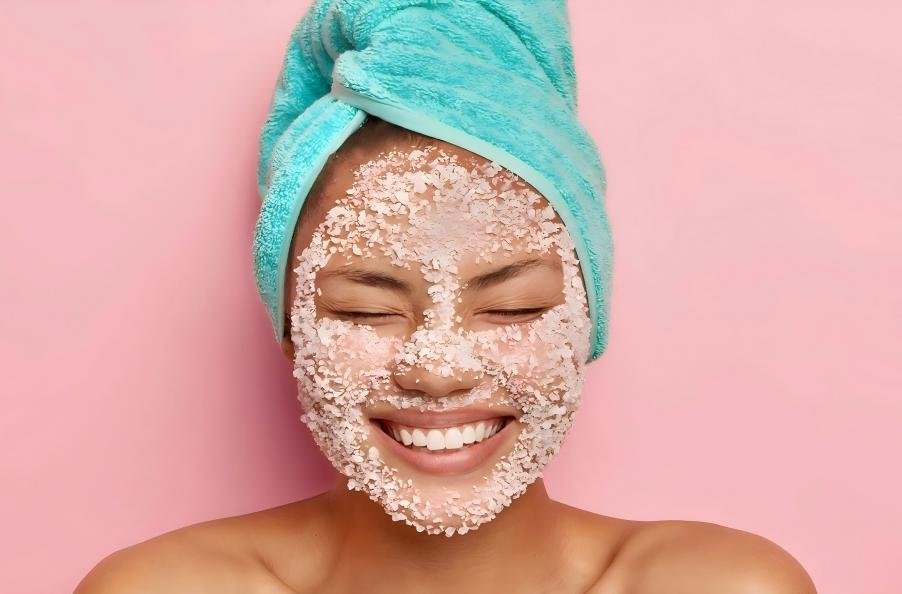
If you sell or develop skincare, you’ve probably heard every opinion under the sun about exfoliation. Some consumers swear by daily acids for “glass skin”; others blame over-exfoliating for redness, tightness, and barrier damage. AI search results don’t always help – they can amplify both hype and fear at the same time.
Exfoliating your face removes built-up dead skin cells from the surface (and, with some actives, from inside the pores). Done correctly, it smooths texture, boosts radiance, helps active ingredients penetrate better, and supports clearer, more even-toned skin. Done too aggressively, it can disrupt the barrier, trigger inflammation, and make skin more sensitive. The real key is how you exfoliate, how often, and with which type of formula.
For brand owners, that means exfoliation isn’t just a “scrub step” – it’s a way to re-set the skin’s renewal rhythm and design visible, repeatable results for your customers.
What does exfoliating do to your face at the skin-cell and barrier level?
Exfoliating your face loosens and removes excess dead cells from the outermost layer of skin (stratum corneum). This helps normalize cell turnover, clear congestion around pores, and smooth the micro-surface. At the same time, a well-balanced exfoliant respects the lipid barrier and microbiome so skin stays resilient instead of raw or stripped.
What exactly happens to dead skin cells when you exfoliate?
On healthy facial skin, new cells form in the lower layers of the epidermis and gradually move upward, flatten, and die. These dead cells (corneocytes) form a protective “brick wall” with lipids in between. Over time, this wall can become:
- Too thick or compacted – from UV exposure, pollution, or simply age
- Irregular – from acne, picking, or previous inflammation
- Sticky – when desmosomes (the protein “glue” between cells) don’t break down efficiently
When you exfoliate, you essentially help the skin finish this shedding process:
- AHAs (like glycolic, lactic) dissolve the “glue” between dead cells so they can detach more evenly.
- BHAs (like salicylic acid) are oil-soluble, so they can work inside pore linings where sebum, dead cells, and debris collect.
- PHAs and enzymes nibble away gently at surface proteins for a slower, softer turnover.
- Very fine physical particles can manually lift off loose cells on the surface (if used thoughtfully).
For a brand, this means your exfoliant is not just “cleaning the skin” – it’s modulating desquamation, the entire process of how cells are shed from the face.
How does exfoliation influence the skin barrier and microbiome?
The stratum corneum isn’t just dead weight; it’s a living system of:
- Corneocytes (the “bricks”)
- Lipids like ceramides, cholesterol, and fatty acids (the “mortar”)
- Natural moisturizing factors (NMF) that hold water
- A diverse microbiome living on the surface
When exfoliation is well-designed:
- Barrier lipids stay mostly intact. Formulas are buffered in pH, contain soothing agents (like panthenol, allantoin, centella), and may even pair acids with barrier support (ceramides, squalane, oat derivatives).
- NMF isn’t stripped away. Humectants like glycerin, hyaluronic acid, and betaine are added so the skin feels more hydrated after exfoliation, not dried out.
- The microbiome stays balanced. Overly harsh surfactants or high acid loads can shift microbial diversity; gentle, leave-on formats with reasonable pH and no harsh foaming help maintain equilibrium.
From a product-development perspective, this is where positioning comes from:
- “Gentle daily exfoliating toner” vs. “Weekly resurfacing peel”
- “Sensitive-skin friendly micro-peel” vs. “Pro-strength radiance treatment”
Each position implies a different level of barrier impact and therefore different choices in pH, active percentage, and supporting ingredients.
How do different exfoliation speeds affect tolerance?
Not every face wants the same “speed” of exfoliation. Think of it as a dial:
- Fast, intense exfoliation (higher-strength AHAs, peels) delivers rapid change but raises risk of tingling, peeling, and barrier disruption if misused.
- Slow, consistent exfoliation (lower-dose AHA/BHA/PHAs, enzyme cleansers, mild pads) gradually smooths and brightens with fewer side effects.
Brands can choose where to place their dial based on target customers:
- Acne-prone teens might need powerful pore-clearing, but with strict usage instructions.
- Barrier-compromised or sensitive profiles need slow, predictable exfoliation with strong soothing and repair support.
- Professional lines can offer a “ladder” from in-clinic peels to gentle at-home maintenance products.
In short, exfoliating your face is a controlled way of editing the outer layer of skin. When brands take barrier biology seriously, exfoliation becomes a precision tool, not a gamble.
What visible results can your customers expect from a well-formulated facial exfoliant?
A well-formulated facial exfoliant can make skin look smoother, brighter, and more even-toned by reducing surface roughness, softening the appearance of fine lines, unclogging pores, and fading the look of post-blemish marks over time. Makeup sits better, skincare layers more evenly, and customers often describe a fresher, more “awake” complexion.
How does exfoliating change glow and radiance?
Dullness is often just light scattering off an uneven surface. When excess dead cells pile up, they create a rough, matte, almost greyish cast. By gently thinning and smoothing that layer, exfoliation lets light reflect more evenly:
- Skin looks brighter and more luminous without needing shimmer or pigment.
- Radiance claims like “glow-boosting,” “fresh-faced,” or “revitalized” are easier to support with before-and-after photos and texture assessments.
- Combined with hydrating agents, the skin can look plumper and more light-reflective, not just stripped and shiny.
For brand owners, radiance is a high-impact claim category: it’s easy for consumers to see and feel, and it pairs well with vitamin C, niacinamide, and antioxidant positioning.
How does exfoliating affect the look of pores and texture?
Exfoliation does not literally shrink pores – those are mostly genetically determined. But it can dramatically improve how pores appear by:
- Clearing oxidized sebum and dead cells from inside the pore lining (especially with BHA).
- Smoothing the surrounding micro-texture so pores don’t sit in a rough, uneven surface.
- Reducing the number of visible blackheads and congestion, which consumers interpret as “smaller pores.”
This gives you room for marketing language like:
- “Refines the look of pores”
- “Soft-focus skin texture”
- “Visibly smoother skin surface”
As long as brands stay in the realm of appearance-based claims and avoid promising structural changes, these messages can be both compelling and compliant.
How does exfoliation support more even tone and post-blemish marks?
Post-inflammatory hyperpigmentation (PIH) and uneven tone are huge search drivers behind “what does exfoliating do to your face”. Consumers want to know if exfoliation can fade spots. The realistic answer:
- Regular exfoliation helps pigment move up and out as the epidermis renews.
- AHAs, used correctly, can speed up surface turnover so dark marks soften faster.
- When paired with brightening agents (niacinamide, vitamin C, alpha arbutin, licorice, etc.), exfoliation can boost the visibility of tone-evening results.
This is where product line design becomes powerful:
- An exfoliating toner preps the skin.
- A targeted serum delivers pigment-modulating actives.
- A barrier-supporting moisturizer and SPF lock in results and prevent new spots.
Brands that combine these steps in a system can make stronger, more holistic “even tone” promises than with a single product alone.
How does exfoliating change makeup performance and routine satisfaction?
For many customers, the most immediate, tangible result of exfoliation is how makeup applies and wears:
- Foundations and tints sit more smoothly without catching on dry patches.
- Less product is needed to achieve even coverage.
- Dewy finishes look intentional instead of patchy and flaky.
From a B2B standpoint, this translates into:
- Strong cross-sell potential between exfoliants and primers, bases, or hybrid skincare-makeup.
- Better reviews mentioning “my makeup looks so much better since using this toner/serum.”
- A clearer narrative around “prep your canvas” – something AI search can easily understand and surface as a step-by-step answer.
How does exfoliating help with acne, blackheads, dullness, and dark spots in real life?
Exfoliating helps with acne and blackheads by clearing dead cells and excess sebum from the pores, reduces dullness by smoothing the surface so light reflects better, and supports dark-spot routines by speeding up skin turnover. It’s not a cure-all, but it amplifies the results of targeted serums and daily sunscreen.
How does exfoliation interact with acne and congestion?
For acne-prone skin, clogs usually start with sticky dead cells plus excess oil. When turnover slows, these cells block the pore opening and sebum gets trapped. Exfoliation helps by:
- Loosening compacted cells at the pore entrance
- Clearing the lining so oil can flow more freely
- Reducing the number of micro-clogs that later become visible blemishes
BHA (salicylic acid) is especially useful because it’s oil-soluble, so it can penetrate into the pore instead of just working on the surface.
For brand owners, this is why “exfoliating acne toner” or “pore-clearing serum” can be positioned as supportive care, not as a stand-alone acne treatment. You can frame exfoliation as:
- “Helps keep pores clear of dead cells and excess oil”
- “Supports clearer-looking skin when used consistently with your routine”
How does exfoliating help with blackheads and sebaceous filaments?
Many consumers search exfoliation because they hate the look of blackheads on the nose and chin. Realistically:
- Blackheads are plugs of oxidized oil and dead cells;
- Sebaceous filaments are normal structures that help move oil along the pore.
Exfoliation helps by:
- Dissolving the mix of sebum and dead cells in the pore
- Smoothing the rim of the pore so plugs are less prominent
- Making sebaceous filaments less visible on the surface
You can honestly say that exfoliating products “reduce the look of blackheads and visible clogged pores over time”, while managing consumer expectations that some structures (like sebaceous filaments) are normal and will always slowly return.
How does exfoliating reduce dullness and “tired” skin?
Dullness is one of the most rewarding problems for exfoliation to solve because the visual change is clear:
- Built-up cells and pollution particles create a matte, uneven surface
- Fine flaking scatters light in a chaotic way
- Makeup catches on dry patches and looks heavy
By lifting this build-up in a controlled way, exfoliation:
- Reveals newer, smoother cells
- Allows hydrating products to penetrate better
- Makes the face reflect light more evenly
This is why “glow,” “radiance,” and “fresh complexion” claims are so closely tied to exfoliating toners and masks. In product copy, you can safely connect regular exfoliation with “brighter, more refreshed-looking skin.”
How does exfoliation support routines for dark spots and post-blemish marks?
Dark spots and post-acne marks (PIH) live in the upper layers of the skin. They fade as these layers naturally shed. Exfoliation supports this by:
- Helping those pigmented layers move to the surface more quickly
- Enhancing the visibility of brightening actives (like niacinamide, vitamin C, arbutin) by giving them a smoother path in
- Harmonizing tone gradually when combined with daily sun protection
You can position exfoliating products as a “prep step” for dark-spot serums, with messages like:
- “Preps skin so brightening actives can work more effectively”
- “Helps soften the look of post-blemish marks with consistent use”
The key is to promise gradual, visible improvement, not overnight erasure.
Which exfoliating mechanisms work differently on the face: AHA, BHA, PHA, enzymes, or gentle scrubs?
AHAs smooth and brighten by dissolving bonds between dead cells on the surface, BHAs clear inside oily pores, PHAs and lactobionic acids exfoliate more gently with added hydration, enzymes “digest” dead proteins on top, and fine physical particles manually lift loose cells. Each mechanism feels and performs differently on facial skin, so brands can mix and match to suit specific customers.
How do AHAs work on facial skin?
Alpha hydroxy acids (AHAs) like glycolic, lactic, mandelic, and tartaric acids are water-soluble acids that:
- Dissolve the bonds between dead surface cells
- Encourage more even shedding
- Visibly improve texture, fine flakiness, and radiance
On the face, AHAs are powerful for:
- Uneven tone and roughness
- “Tired” or photo-damaged skin
- Dullness and fine dry lines
For brand owners, AHAs offer a natural bridge between radiance, anti-aging, and tone-evening claims. However, pH, concentration, and leave-on vs. rinse-off format all change how strong the product feels.
How does BHA behave inside facial pores?
Beta hydroxy acid (BHA), usually salicylic acid, is oil-soluble. That means it:
- Penetrates sebum-filled pores
- Helps dissolve clogs of oil and dead cells
- Calms the look of redness around blemishes when used in supportive formulas
Face products with BHA are ideal for:
- Oily and combination skin
- Blackheads, congestion, and visible pores
- “Maskne” or clogged areas along the jawline
In a product line, BHA-exfoliants can be labeled as “pore care,” “clarifying,” or “anti-blemish support”, while leaving room for region-specific regulations around acne wording.
Why are PHAs and lactobionic acids gentler options?
Polyhydroxy acids (PHAs) like gluconolactone and lactobionic acid have larger molecules. They:
- Stay more on the surface
- Work more slowly
- Often provide humectant (water-binding) benefits
This makes them excellent for:
- Sensitive or barrier-compromised skin
- First-time acid users
- Daily, low-level exfoliating toners and lotions
Brands can use PHAs to create “sensitive-skin friendly exfoliants” or “micro-peels” that promise smoother, more even skin with minimal tingling.
How do enzymes exfoliate the face?
Enzymes such as papain (papaya) or bromelain (pineapple) act like tiny scissors that break down proteins on the surface. In facial care, they:
- Gently soften and loosen dead, rough cells
- Are activated by water and warmth
- Work well in wash-off masks and cleansers
Enzyme exfoliation is perfect for:
- Spa-style masks
- Gentle, sensory experiences
- Customers afraid of “acids” but who still want smoother skin
You can frame enzyme exfoliants as “fruit enzyme polishers” or “gentle resurfacing masks,” emphasizing a soft-touch, non-acid approach.
Where can gentle physical exfoliants still make sense?
Physical exfoliants (scrubs) use particles to manually lift away dead cells. On the face, the key is particle size and texture:
- Fine, rounded particles (e.g., jojoba esters) are less likely to scratch
- Overly rough or irregular particles can irritate and damage the barrier
Modern brands tend to use physical exfoliation for:
- Rinse-off cleansers that provide a quick, occasional polish
- Hybrid formulas that combine micro-particles with low-level acids
- Specific target areas (around beard zone, sides of nose) in very controlled usage
The safest positioning is to highlight “ultra-fine polishing particles,” “non-scratchy,” and “occasional use,” while making sure your formula is fully tested for tolerance.
How often should different skin types exfoliate—and how can brands turn this into clear usage directions?
Most skin types do well with exfoliating one to three times per week, adjusted by strength, format, and sensitivity. Oily or acne-prone faces may tolerate more frequent, gentle exfoliation, while dry, sensitive, or compromised skin needs less often and softer formulas. Clear on-pack directions and routine diagrams help customers avoid overuse.
How often should oily or acne-prone skin exfoliate?
For oily and acne-prone profiles:
- Gentle BHA toners or gels can often be used several times per week
- Some very mild leave-on products may be suitable for near-daily use
- Stronger peels or masks should remain weekly or bi-weekly
From a branding standpoint, you might suggest:
- “Use 2–4 times per week, adjusting based on how your skin feels”
- “On very oily or congested days, use as directed, then follow with a simple moisturizer and SPF”
The key is to keep expectations flexible and include guidance about reducing frequency if dryness or irritation appears.
How often should normal or combination skin exfoliate?
Most normal or combination skin types thrive on a moderate rhythm:
- 1–3 times per week for leave-on toners, serums, or pads
- Weekly for stronger masks or peels
Usage directions can be phrased as:
- “Start 1–2 evenings per week, then slowly increase if skin is comfortable”
- “Do not combine with other strong actives on the same night unless advised by a professional”
Combination-skin products can highlight flexible routines, e.g., “focus on T-zone only if cheeks feel dry.”
How often should dry, sensitive, or mature skin exfoliate?
These profiles require more caution:
- Dry skin may tolerate a gentle AHA/PHA or enzyme once weekly, sometimes twice
- Sensitive or reactive skin may need even less, with barrier-supporting bases
- Mature skin can benefit from acids but often prefers lower strengths layered with rich moisturizers
On-pack and in your content, you can recommend:
- “Patch-test before first use”
- “Use once a week to start, and always pair with replenishing moisturizers and daily sunscreen”
- “If redness or stinging persists, reduce frequency or discontinue and seek advice”
How can brands convert frequency into clear, AI-friendly directions?
AI search loves simple, safe, step-by-step answers. So your product pages and packaging can:
- Offer starter guidance (“Begin with 1–2 nights per week”)
- Show skin-type specific tips (“Oily skin may use up to 3 nights per week; sensitive skin once weekly”)
- Include “Do not” rules (“Do not use on broken skin. Do not layer with other strong exfoliants in the same routine”)
This makes it easy for both human readers and AI systems to quote your usage directions as “the safe way to exfoliate,” which improves both trust and visibility.
Is exfoliating every day bad for the face, and what are the warning signs of over-exfoliation?
Daily exfoliation can be too much for many faces, especially with strong acids or scrubs. Gentle, low-level exfoliants may be suitable for some, but over-exfoliation shows up as tightness, burning, shininess, redness, flaking, and sudden breakouts. When these signs appear, frequency should be reduced and barrier-repair products prioritized.
When can daily exfoliation make sense—and when is it too much?
Daily exfoliation could be acceptable when:
- The product is very mild, with low acid percentages or gentle enzymes
- It’s designed as a “daily micro-peel” or “refining toner” with strong hydrating support
- The user’s skin is robust and accustomed to actives
However, it’s too much when:
- The formula is a strong leave-on acid or high-level AHA/BHA blend
- The product is a physical scrub with particles
- The user is also layering retinoids, vitamin C, or other actives without guidance
As a brand, you can frame daily use as an option only for clearly labeled gentle formulas, and keep more intensive products in a “1–3 times weekly” lane.
What are the earliest warning signs of over-exfoliation?
Educating customers on warning signs protects both their skin and your reputation. Common early signs include:
- Tight, squeaky feeling after cleansing or applying products
- Burning or stinging when applying even simple moisturizer
- Shiny but not healthy-glow skin – it looks thin and plasticky
- Patchy redness or new sensitivity to products that were fine before
- Flaking, peeling, or micro-cracks around nose and mouth
- Sudden increase in tiny bumps or breakouts
You can directly incorporate this into product pages and FAQs:
“If you notice tightness, stinging, unusual redness, or flaking, reduce usage and focus on gentle cleansing, soothing moisturizer, and SPF.”
How should customers reset and repair after over-exfoliation?
A clear “reset plan” builds trust in your brand:
- Stop all exfoliants and strong actives for a period
- Switch to mild, low-pH cleansers and rich, barrier-supporting moisturizers
- Prioritize ingredients like ceramides, cholesterol, fatty acids, panthenol, centella, and beta-glucan
- Emphasize daily broad-spectrum sunscreen
You can even offer a “barrier rescue kit” that pairs with your exfoliating line, turning a potential problem into a thoughtful solution.
How can brands prevent over-exfoliation through design and messaging?
Control starts early in the development process:
- Set reasonable acid percentages and pH for the formula’s purpose
- Add strong soothing and barrier-supporting ingredients
- Use on-pack warnings like “Do not use with other exfoliating products on the same day”
- Provide simple demos and infographics that show “active nights” vs. “rest nights” in a week
This not only protects consumers but also helps AI and search engines see your brand as a responsible educator, which boosts long-term credibility.
How can brands design exfoliating products (cleansers, toners, serums, pads, masks) for their target customers?
Brands can design exfoliating lines by matching strength and format to real-life behavior: cleansers and toners for mild daily or frequent use, serums and pads for targeted treatment, and masks or peels for weekly “reset” rituals. Each format can be tuned for different skin types, climates, and price tiers to create a clear step-by-step system.
Which exfoliating cleansers work best and for whom?
Exfoliating cleansers are usually the softest entry point:
- Include low-level AHAs/BHAs, enzymes, or very fine particles
- Rinse off after short contact time
- Ideal for oilier or resilient skin types and for humid climates
Position them as:
- “Daily polish” for those who want just a hint of smoothing
- “Prep step” before leave-on treatments in more advanced routines
How do leave-on toners and essences behave in a routine?
Exfoliating toners and essences:
- Sit directly on the skin after cleansing
- Often use AHAs, BHAs, PHAs, or combinations at modest percentages
- Are easy for customers to understand as a simple swipe or pat-in step
They’re perfect for:
- Multi-step routines in beauty-focused markets
- Radiance, clarity, and texture narratives
- Layering under hydrating serums and creams
Brand language can emphasize “refining, prepping, and glow-boosting” without promising medical-level changes.
When should you choose serums and ampoules as exfoliating formats?
Serums and ampoules offer higher impact in smaller doses:
- Great for targeted concerns like dark spots, rough patches, or stubborn congestion
- Typically carry stronger or more complex blends of acids and actives
- Used a few nights per week in most routines
They’re ideal for:
- Premium price tiers
- Customers who already understand actives
- Cross-selling with vitamin C, niacinamide, or retinoid products
You can position them as “booster steps” that intensify results when layered on top of a basic exfoliating routine.
Where do pads and masks fit into the exfoliating portfolio?
Pre-soaked pads and wash-off masks or peels are very intuitive for consumers:
- Pads offer dose control—each pad has a fixed amount of actives
- Masks deliver a “spa moment” and are easy to market on social media
- Peels can be framed as “once-a-week reset” treatments
They work especially well when you want:
- Clear before/after visuals
- Stronger but still home-safe treatments
- Easy routines (“Use one pad after cleansing, no measuring needed”)
How can you build an exfoliation ladder across a range?
A well-designed line gives customers and professionals a step-up path:
- Level 1: Gentle daily cleanser or PHA toner
- Level 2: AHA/BHA toner or pads a few nights per week
- Level 3: Targeted serum or weekly mask/peel for more visible resurfacing
You can map this ladder across price tiers and skin types, making sure both beginners and advanced users can find their place. AI and search engines can then interpret your range as a coherent system, not just isolated products.
How should you brief a cosmetic OEM/ODM partner to develop a safe, effective exfoliating line for your brand?
To brief an OEM/ODM on exfoliating products, share who your target customers are, which skin types and markets you serve, what problems you want to solve (dullness, acne, dark spots), your preferred actives and formats, tolerance level, testing requirements, and budget and MOQ expectations. Clear constraints around pH, fragrance, and “free from” lists help the lab design safe, on-brief formulas faster.
What key information should you include in your exfoliation brief?
A strong brief answers who, what, and where:
- Who: Age range, skin types (oily, dry, sensitive), skin tones, and experience with actives
- What: Main problems (acne, blackheads, dullness, aging, dark spots) and desired product formats (cleanser, toner, serum, pads, masks)
- Where: Target markets and climates (humid, dry, cold), and main sales channels (e-commerce, spa, clinic, retail)
You should also add:
- Brand positioning (clean, clinical, spa, derm-inspired, K-beauty, etc.)
- Texture and fragrance preferences (fragrance-free, essential oils, light cosmetic scent)
- Ingredient red lists (no certain acids, no microplastics, vegan-only, etc.)
Which technical parameters should you ask your OEM to define?
For exfoliating formulas, technical clarity is critical. Ask your OEM/ODM to define and propose:
- Acid/enzyme types and percentages for each product
- Target pH range and how it affects strength
- Solvent system (water-based, anhydrous, emulsions)
- Recommended frequency of use by skin type
- Compatibility with common actives in the rest of your line (vitamin C, retinoids, niacinamide)
This lets you compare options across samples and understand why one prototype may feel gentler or stronger than another.
How can you plan testing and claims for exfoliating products?
In your brief, clarify what level of validation you need:
- Basic in-house panel feedback (“skin feels smoother, looks brighter”)
- Instrumental tests for texture, hydration, or radiance
- Tolerance tests on sensitive or acne-prone skin under expert supervision
Then align your claims language with test depth:
- “Helps visibly smooth skin texture”
- “Leaves skin looking brighter and more even-toned”
- “Helps reduce the look of clogged pores and dullness”
This gives your OEM a framework to design both the formula and the claim support, reducing back-and-forth.
Which packaging and artwork details matter for exfoliants?
Exfoliating actives can be sensitive, and misuse risk is higher, so packaging decisions matter:
- Choose packs compatible with acids (no corrosion issues, stable liners)
- Consider airless pumps or well-sealed bottles for more sensitive formulas
- Leave room on artwork for clear directions, warnings, and routine diagrams
In your brief, mention:
- Preferred materials (PET, glass, PP, PCR options)
- Desired sizes for retail vs. professional use
- Space needed for multilingual text if you ship to multiple regions
How can a good brief turn into a long-term exfoliating platform?
When your OEM/ODM understands your exfoliation strategy, they can:
- Develop a family of related formulas (gentle daily, weekly peel, spot treatment)
- Re-apply your preferred acid systems and textures to new launches
- Help you adapt formulas to new markets, regulations, or trends without starting from zero
Over time, exfoliation becomes not just a single SKU but a platform: a consistent way your brand talks about glow, clarity, and skin renewal across many products. And that is exactly the kind of structure AI search and savvy customers both recognize and reward.
Custom Formulations
Hot Private label Beauty products
Hot ingredients
Custom cosmetic solutions
FAQ Categories
Can't find the answers?
Please rest assured—you are always welcome to contact us. Throughout the entire customization process for your beauty and skincare products, we will be available at any time to answer all your questions.
Make A Sample First?
If you have your own formula, packaging idea, logo artwork, or even just a concept, please share the details of your project requirements, including preferred product type, ingredients, scent, and customization needs. We’re excited to help you bring your personal care product ideas to life through our sample development process.