Skip to content
Custom Hair Damage Repair Formulations Manufacturer
Custom Damage-Repair & Split-Ends Solutions for Premium Brands — Build a differentiated line that seals frayed tips, smooths rough cuticles, and reduces breakage without heavy residue. We tailor selective tip-sealing films, protein/peptide reinforcement, and heat/comb protection by hair type and climate, then deliver fast sampling, compliant labeling, and on-brand packaging.
What This Hair Damage Repair Formula Solves
Split ends arise when worn cuticles and fatigued cortex microfibrils lose cohesion, especially under wet combing, heat styling, and hard-water roughness. Our system targets the appearance of splits by selectively sealing tips, polishing lifted scales, and reinforcing weak zones with quat-functional proteins and flexible, humidity-smart films. Low-pH rinse care compacts cuticles; chelators curb mineral deposits that magnify snag and frizz; volatile carriers keep finishes weightless for fine hair. We balance film strength with softness so repaired tips stay touchable and style-ready—no lacquered feel. From daily repair shampoos/conditioners to intensive masks, tip serums, leave-ins, and heat primers, your range can deliver immediate cosmetic mending plus cumulative resilience while remaining silicone-optional, fragrance-flexible, and color-safe. Educate consumers to trim severely split lengths while maintaining ends with consistent, measured repair care.


Hair Damage Repair Formula
1.Split-End Count Reduction
Quantify tip appearance improvement using standardized tress sets. After fixed wash/use cycles, run microscopic scoring (SEM or high-res imaging) to count visible splits per 100 tips and grade severity (Y-shaped, feathered, multi-split). Our tip-sealing films with quat-functional proteins and lightweight esters bind frayed fibers, cutting snag initiation without stiffness. Report % reduction vs untreated control, include multi-wash durability (5–10 washes), plus panel smoothness/manageability scores for credible, texture-inclusive claims.
2. Cuticle Smoothing & Comb-Force Decline
Measure wet/dry comb forces with texture analyzer or Instron comb fixtures to show less friction in damaged zones. Pre-equilibrate tresses, log peak and average stroke force, and link to gloss and surface profilometry. Our low-pH rinse-outs compress scales, chelators smooth mineral buildup, and flexible film formers align lifted plates, giving “less tug, fewer snags, faster detangling.” Test on color-treated, highlighted, and naturally porous hair, and report Δ% comb-force reduction plus user-reported ease of combing so claims speak to retail, salon, and e-commerce.
3. Humidity-Resilient Tip Cohesion & Frizz Control
In high-RH chambers (75–90% RH, 25–30 °C), track halo expansion and tip splay by time-stamped image analysis (T0/T2/T4). Flexible, non-occlusive polymers plus hydrolyzed keratin/HP proteins keep tips coherent and smooth without greasy collapse. Log 60° glossmeter ΔGloss to link polished ends with frizz control. Add post-heat-styling cycles and multi-wash retention, then claim “stays smooth in humidity” with photo evidence for PDP and salon sell-in.
Key Hair Damage Repair Actives & Technologies
Selective tip sealing + flexible reinforcement: Quat-functional proteins, peptides, and humidity-smart films cohere split tips and smooth cuticles; cationic conditioners anchor benefits on damaged sites; low-pH, chelation, and lightweight oils/esters preserve slip and movement while protecting color vibrancy and style feel.
Key Ingredients & Their Benefits
| Ingredient (INCI) | Role in System | Typical Use Levels | Formulation Notes | Compliance & Market Proof |
|---|---|---|---|---|
| Hydrolyzed Keratin | Tip cohesion & film | 0.2–2% | Choose MW for film vs. penetration; boosts smoothness | Wikipedia – Keratin |
| Hydroxypropyltrimonium Hydrolyzed Protein | Quat-protein, targeted deposition | 0.2–1% | Strong on-damage binding; detangling + repair feel | CosmeticsInfo |
| Peptide (e.g., Acetyl Tetrapeptide-XX) | Reinforcement narrative | 0.05–0.5% | Pair with films for elastic support at tips | CosmeticsInfo – Peptides |
| Polyquaternium-55 / -37 | Flexible film former | 0.2–2% | Humidity tolerance; glossy, non-brittle finish | CosmeticsInfo – Polyquaterniums |
| Amodimethicone (optional) | Selective smoothing | 0.5–2% | Targets damaged sites; heat-style compatibility | CosmeticsInfo – Amodimethicone |
| C13-15 Alkane (Hemisqualane) | Featherweight slip | 1–8% | Fine-hair friendly carrier for tip serums | CosmeticsInfo – Alkanes |
| Squalane | Soft gloss & glide | 1–10% | Non-greasy; supports spread and shine | CosmeticsInfo – Squalane |
| Behentrimonium Chloride | Detangling anchor | 0.2–2% (active) | Lamellar gels with fatty alcohols | CosmeticsInfo – BTAC |
| Tetrasodium Glutamate Diacetate / Disodium EDTA | Chelation | 0.05–0.3% | Manages minerals; improves feel/color shine | Wikipedia – GLDA, Wikipedia – EDTA |

Hydrolyzed Keratin — Customization Details for Hair Damage Repair
1. INCI & CAS
INCI: Hydrolyzed Keratin · CAS: 69430-36-0 · EC: 274-001-1 · Water-soluble keratin peptides (typically wool-derived) used as hair conditioning/film-forming agents. (EU ECHA EC inventory; COSMILE Europe functional listing). (ECHA EU)
2. Role in Hair Damage Repair
Mechanism: Penetrating low–mid MW peptides reinforce cortex; higher-MW peptides patch cuticle and form protective films, helping restore tensile strength, reduce breakage, and improve surface smoothness on chemically/UV-damaged hair. (2025 hydrolyzed-keratin tensile study; MW-penetration studies, Int J Cosmet Sci/Wiley). (PubMed)
3. Typical Use Levels (formulation custom guide)
Shampoos/cleansers: 0.5–2% (anti-breakage primer)
Conditioners/masks (rinse-off): 1–5% (cuticle repair, slip)
Leave-ins/serums: 0.5–2% (film-forming, frizz control)
Add to water phase/cool-down ≤40–45 °C; many grades show raw pH ~5–7.5. (MakingCosmetics TDS/spec; Parchem spec; TRI-K product pages). (MakingCosmetics)
4. Regulatory Sources & Global Compliance
EU Cosmetics Regulation (EC) No 1223/2009: ingredient not specifically restricted; product-level safety report required. (EUR-Lex consolidated). CIR Expert Panel (2016; 2021 update): Keratin & hydrolyzed keratin ingredients safe as used in current practice; note: Hydrolyzed Hair Keratin (human origin) is prohibited in EU—not applicable to animal/other sources. ECHA listing confirms EC 274-001-1 / CAS 69430-36-0 identification. (EUR-Lex; CIR PDF & journal; ECHA EC inventory). (EUR-Lex)
5. Clinical/Instrumental Evidence (damage repair)
UV + keratin synergy: keratin-treated hair maintained tensile strength after UV, vs −14.3% strength in untreated fibers. MW-dependent action: low/mid-MW peptides penetrate cortex, high-MW peptides repair surface and reduce breakage (ex vivo on textured/relaxed hair). (PubMed/PMC 2025 study; Int J Cosmet Sci 2021). (PubMed)
6. Safety & Risk Assessment (toxicology highlights)
CIR conclusion: keratin-derived ingredients (incl. Hydrolyzed Keratin) are safe as used; evaluate impurities (e.g., metals/pesticide residues) via supplier COAs. SDS/EU context: typical grades show no classified hazards at cosmetic use; always confirm per SDS. (CIR safety assessment; representative SDS). (CIR SAFETY)
7. Processing, Stability & Packaging
Stability: aqueous peptide solution; add in cool-down, avoid excessive heat; compatible with cationic conditioners/silicones; store cool/dry. Packaging: standard opaque/UV-safe packs for finished formulas per stability data; raw materials often pH 5–7.5. (MakingCosmetics TDS/spec; Parchem spec). (MakingCosmetics)
8. Cost–Benefit
High consumer recognition (“keratin” claims) + visible repair feel at low use levels; widely sourced (multiple suppliers/grades) supporting scalable B2B launches across repair shampoos, masks, leave-ins. (Supplier/product literature). (TRI-K)
9. Claims Language (Do/Don’t)
✅ Helps repair the look of damaged hair and reduce breakage.
✅ Helps smooth lifted cuticles for shinier-looking hair.
✅ Supports tensile strength after chemical/UV stress.
❌ Avoid medical/therapeutic absolutes (e.g., “cures damage/ hair loss”) or jurisdiction-specific approvals in marketing. (Regulatory best-practice; EUR-Lex context). (EUR-Lex)

Hydroxypropyltrimonium Hydrolyzed Protein — Customization Details for Hair Damage Repair
1. INCI & CAS
INCI: Hydroxypropyltrimonium Hydrolyzed [Protein Source] (common commercial variant: Hydroxypropyltrimonium Hydrolyzed Wheat Protein); CAS (wheat example): 156798-11-7. Quaternized peptide derivative; water-soluble, highly substantive. (EU CosIng listing; NICNAS public report; Croda INCI page). (European Commission)
2. Role in Hair Damage Repair
Cationic, film-forming peptides show strong electrostatic adsorption to damaged cuticles, smooth lifted scales, and reduce combing forces, aiding breakage reduction and surface repair after chemical/UV stress. Mechanistic reviews and ex vivo data support conditioning film deposition and tensile recovery with protein hydrolysates and cationic actives. (PMC review; dermocosmetic review; adsorption studies of quats on hair). (PMC)
3. Typical Use Levels (formulation custom guide)
Shampoos/cleansers: 0.5–3% (as is) for combability primers
Conditioners/masks (rinse-off): 1–5% for cuticle smoothing & strength feel
Leave-ins/serums: ~0.5–1% to limit buildup while maintaining slip
Processing: add in cool-down ≤40–45 °C when possible; material is compatible with anionics; many grades show as-is pH ~6.0–7.5. (BASF Gluadin® WQ PP TDS—quaternized wheat protein; supplier pages).
4. Regulatory Sources & Global Compliance
EU Cosmetics Regulation (EC) No 1223/2009: permitted subject to product-level safety assessment (no specific Annex restriction for this INCI). EU CosIng lists Hydroxypropyltrimonium Hydrolyzed Wheat Protein functions (ANTISTATIC/HAIR CONDITIONING/SKIN CONDITIONING). China IECIC (2021): HYDROXYPROPYLTRIMONIUM HYDROLYZED WHEAT PROTEIN appears in NMPA’s official inventory dataset (Excel). (EUR-Lex consolidated text; CosIng; NMPA/IECIC listing). (EUR-Lex)
5. Clinical/Instrumental Evidence (damage repair)
Ex vivo tensile tests on damaged hair show protein hydrolysates (incl. wheat/keratin/collagen) can improve tensile strength vs untreated controls; conditioner systems with such actives lower wet/dry combing forces. Research on quaternized wheat protein hydrolysate reports surface recovery/compactness in shampoos for damaged hair. (IFSCC 2016 & 2014 papers; biotech report on quaternized wheat protein). (UAL Research Online)
6. Safety & Risk Assessment (toxicology highlights)
Raw-material hazard (NICNAS): Skin Irrit. 2 (H315) / Eye Dam. 1 (H318) for Hydroxypropyltrimonium Hydrolyzed Wheat Protein at concentrate; public/worker risk acceptable in intended cosmetic use scenarios with controls. Hydrolyzed Wheat Protein/Gluten generally safe as used when average MW ≤ ~3,500 Da (CIR), a helpful benchmark when selecting the hydrolysate prior to quaternization. Advise patch testing and appropriate labeling per market rules. (NICNAS assessment; CIR final review & PubMed entry). (AU IND CHEM)
7. Processing, Stability & Packaging
Water-soluble quaternized peptides; store 10–40 °C, 24-month shelf life sealed; phenoxyethanol/potassium sorbate often present; potential preservative incompatibility with MI/MCI—verify. Package finished formulas in opaque/UV-safe packs when paired with light-sensitive co-actives; confirm via SKU-level stability (pH drift/viscosity/odor). (BASF Gluadin® WQ PP TDS).
8. Cost–Benefit
Mid-cost, high-perceived value active that marries conditioning performance with “protein repair” story. Multiple suppliers/grades (e.g., Croda Hydrotriticum™ WQ; BASF Gluadin® WQ) support supply flexibility and scalable B2B deployment across repair shampoos, masks, and leave-ins. (Supplier product pages). (Croda Beauty)
9. Claims Language (Do/Don’t)
✅ Helps repair the look of damaged hair by smoothing lifted cuticles.
✅ Helps reduce breakage via improved combability and surface protection.
✅ Improves hair feel, gloss, and manageability after chemical/heat stress.
❌ Avoid medical/therapeutic absolutes (e.g., “cures damage/hair loss”) or jurisdiction-specific approvals in marketing. (Regulatory best-practice; EUR-Lex context). (EUR-Lex)

Peptide — Customization Details for Hair Damage Repair
1. INCI & CAS
INCI: Peptide is a category of cosmetic actives; use specific INCI names on labels (e.g., Copper Tripeptide-1, Palmitoyl Tripeptide-1, Acetyl Tetrapeptide-3). Examples: Copper Tripeptide-1 (CAS 89030-95-5); Palmitoyl Tripeptide-1 (CAS 147732-56-7). (EU CosIng entries; SpecialChem/COSING IDs; Glentham CAS). (European Commission)
2. Role in Hair Damage Repair
Mechanism: Keratin-affine/signal peptides can bind damaged keratin, deposit strengthening films, and lower wet/dry combing forces, aiding cuticle smoothing and tensile recovery post bleach/heat/perm. Emerging research shows engineered keratin-binding fusion peptides improve mechanical/thermal properties of damaged fibers. (IFSCC damaged-hair tensile work; 2025 peptide–keratin interaction studies; review on conditioning/adsorption). (UAL Research Online)
3. Typical Use Levels (formulation custom guide)
Fiber-repair peptides (leave-on/rinse-off): 0.05–1% (many suppliers recommend 0.05–1% for Copper Tripeptide-1). Peptide complexes (peptide in carrier blend): 1–5% of the commercial complex per TDS. Processing: add in cool-down ≤40–45 °C; many peptide solutions show as-is pH ~6–7.5. (SpecialChem usage for Copper Tripeptide-1; Capixyl® tech sheet; supplier TDS handling). (SpecialChem)
4. Regulatory Sources & Global Compliance
EU Cosmetics Regulation (EC) No 1223/2009: peptides are allowed subject to product-level safety assessment; check Annexes per specific INCI. EU CosIng provides function listings (e.g., Copper Tripeptide-1 = skin conditioning; Palmitoyl Tripeptide-1). China IECIC: peptides are managed ingredient-by-ingredient; IECIC 2021 in force with 2025 two-tier update adding List II (graduated NCIs). (EUR-Lex consolidated; CosIng pages; Chemlinked IECIC explainer & 2025 update note). (EUR-Lex)
5. Clinical/Instrumental Evidence (damage repair)
Tensile strength & combing: protein-derived actives (incl. peptide/hydrolysate derivatives) increase tensile strength on bleached/permed/thermally damaged hair and reduce combing force in ex-vivo tests. Keratin-targeting fusion peptides (bio-inspired) show enhanced mechanical recovery on damaged fibers in recent studies. Humidity/volume control: a cosmetic peptide improved volume change >60% at high RH in a controlled study. (IFSCC posters/papers; 2025 fusion-peptide reports; Int. J. Cosmet. Sci. peptide paper). (UAL Research Online)
6. Safety & Risk Assessment (toxicology highlights)
Peptides are INCI-specific. Multiple cosmetic peptides have CIR safety conclusions (e.g., Acetyl Hexapeptide-8/-8 Amide safe as used within reported concentrations). Risk management: confirm impurities/bioburden, MW, residual solvents, and allergen statements per supplier COA; conduct HRIPT/usage tests on finished formulas. (CIR 2020/2021 assessments; 2025 PubMed abstract on Acetyl Hexapeptide-8 Amide). (CIR SAFETY)
7. Processing, Stability & Packaging
Handling: add peptides in cool-down to protect activity; many suppliers recommend ≤40 °C addition. Storage: sealed, cool, protected from light/moisture; observe 24-month typical shelf life per TDS. Packaging: use opaque/UV-safe packs when co-formulating with light-sensitive actives; verify by SKU stability (pH/viscosity/odor). (Supplier TDS for Copper Tripeptide-1 handling). (GenScript)
8. Cost–Benefit
High perceived value at low dose: peptides enable premium “molecular repair/keratin-binding” stories with visible feel/smoothness improvements and brand-differentiating tech claims; broad supplier base (signal peptides, lipopeptides, copper peptides) supports scalable B2B deployment across repair shampoos, masks, leave-ins. (Industry/brand tech coverage; supplier landscape). (Chemical & Engineering News)
9. Claims Language (Do/Don’t)
✅ Helps repair the look of damaged hair by smoothing lifted cuticles.
✅ Helps reduce breakage via improved combability and fiber conditioning.
✅ Improves hair feel, gloss, and manageability after chemical/heat stress.
❌ Avoid medical/therapeutic absolutes (e.g., “cures damage/hair loss”) or jurisdiction-specific approvals; keep claims aligned with instrumental endpoints (tensile strength, combing force). (EU claims context; IFSCC endpoints). (EUR-Lex)
Custom Hair Damage Repair Product Applications
Cover wash care, deep repair, leave-ins, heat primers, and targeted tip serums, enabling daily maintenance and visible split-end appearance mending without heaviness. Texture-calibrated formats for fine to coarse hair deliver detangling, polished ends, and humidity resilience, while low-pH/chelation safeguards color and hard-water shine.


Hair Damage Repair Market Trends & Target Audiences
Search demand for split end repair, damage repair, and bonding treatment is strong across retail and salon channels. Shoppers want visible tip mending, soft movement, and heat-style compatibility. “Silicone-optional,” “color-safe,” and “fine-hair friendly” tags drive CTR and reviews.

Market Overview
Winners pair measurable anti-breakage and split-end counts with detangling and gloss—avoiding stiff, lacquered finishes. Texture-specific SKUs (fine-friendly serums vs. rich masks) and heat primers build baskets. Clean-lean narratives with fragrance options and color-safe systems meet retailer policies while sustaining user delight and repeat purchase.
Key Market Insights:
- Numbers convert: % split-end reduction, Δ comb force, multi-wash durability.
- Tip-first storytelling: Dedicated serums for ends increase regimen adoption.
- Post-salon synergy: Low-pH + chelation + primers align with color/bleach aftercare.

Target Consumer Segments
Heat stylers and color/bleach users; fine hair needing featherweight sealing; curl/coils seeking frizz discipline at ends; busy consumers wanting quick, visible smoothing; and “clean-lean” shoppers preferring silicone-optional lines with fragrance choices. Salon-home hybrids value pro-grade results packaged for simple, daily use.
Target Segments after Custom Branding:
- Split-End & Anti-Breakage Line: Tip serums + weekly masks; credible metrics.
- Texture & Frizz Discipline Line: Cream/balm formats for curl/coils cohesion.
- Pro-Style Defense Line: Heat primers + lightweight end menders for gloss hold.
Customization Options for Packaging & Branding
Explore flexible packaging options, bottle types, and private label services. From tube to jar, we match your brand’s tone and market position.
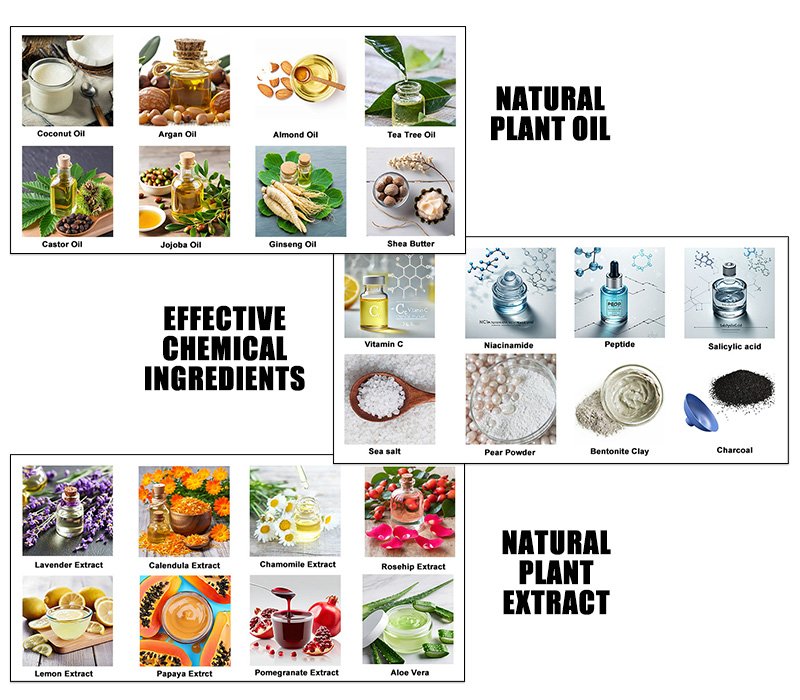
Cosmetic formulation development
Your formula is the soul of your brand. Whether you’re developing a gentle serum for sensitive skin, a high-efficacy anti-aging cream, or a scalp-purifying shampoo, our in-house chemists create custom cosmetic formulations tailored to your desired effect, skin type, region, and ingredient philosophy.
With over 5,000+ proven base formulas and full white-label development support, we help you build a product that meets your performance goals, brand values, and market trends.
Available Services:
Active ingredient sourcing & formulation balancing
Custom texture creation: gel, cream, balm, lotion, foam, oil
Ingredient selection for target concerns: anti-acne, brightening, anti-aging, hydration
Support for natural, vegan, EWG green-level formulations
Regional compliance: USA, EU, AU, JP standards
Custom Cosmetic Packaging Styles
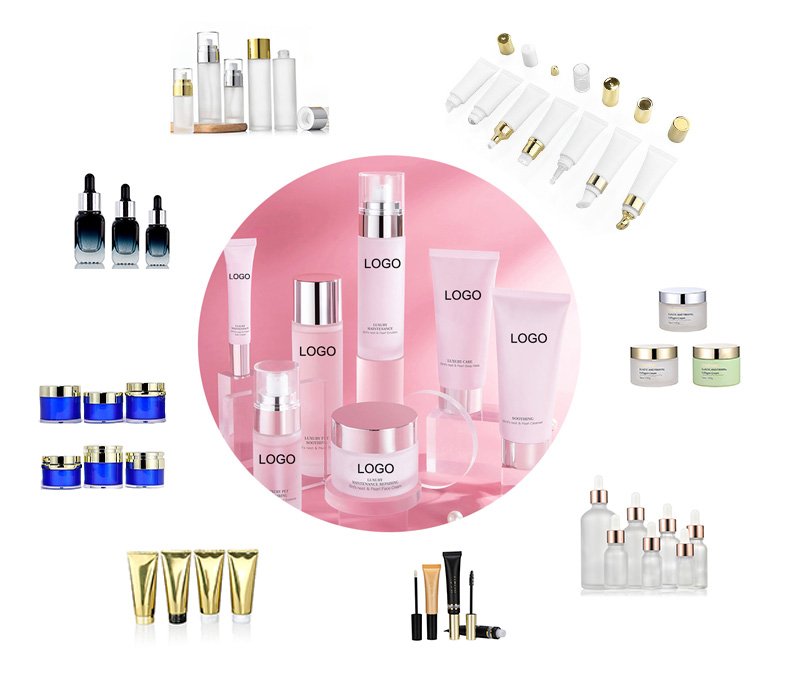
Packaging plays a critical role in how your brand is perceived. Whether you need luxury glass droppers, airless pump bottles, eco-friendly refill pouches, or retail-friendly PET tubes, we provide 3000+ stock and customizable packaging options.
From minimalist matte finishes to glossy foil-stamped designs, our packaging engineers help you select the perfect form and material—whether for prestige skincare, professional haircare, or clean beauty positioning.
Available Options:
Glass, PET, PP, PCR, aluminum, bamboo, and more
Airless pumps, sprayers, jars, tubes, and dropper bottles
Color-matching, texture finishes, and custom mold services
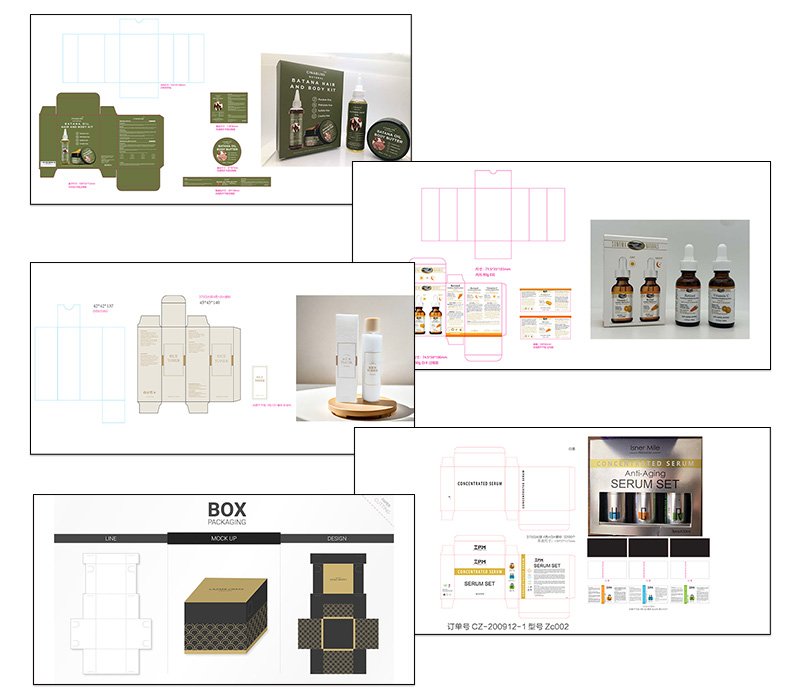
Cosmetic Box, Label Design for skincare brands
Beyond the bottle, your visual identity sets your product apart. Our in-house design team creates custom label layouts, box designs, and full branding suites—including logo placement, font matching, and barcode compliance.
We also offer waterproof labels, UV spot gloss, embossing, foil stamping, and other premium finishes to ensure your packaging feels as high-end as your formula. Whether you’re building an Amazon FBA product or a salon-grade kit, we help make your product shelf-ready.
Design Services Include:
Free artwork design and dieline support
Amazon & retail barcode setup (FNSKU/UPC)
Custom printing on labels, boxes, pouches, and shrink wraps
Cosmetic Box Customization for Skincare Brands
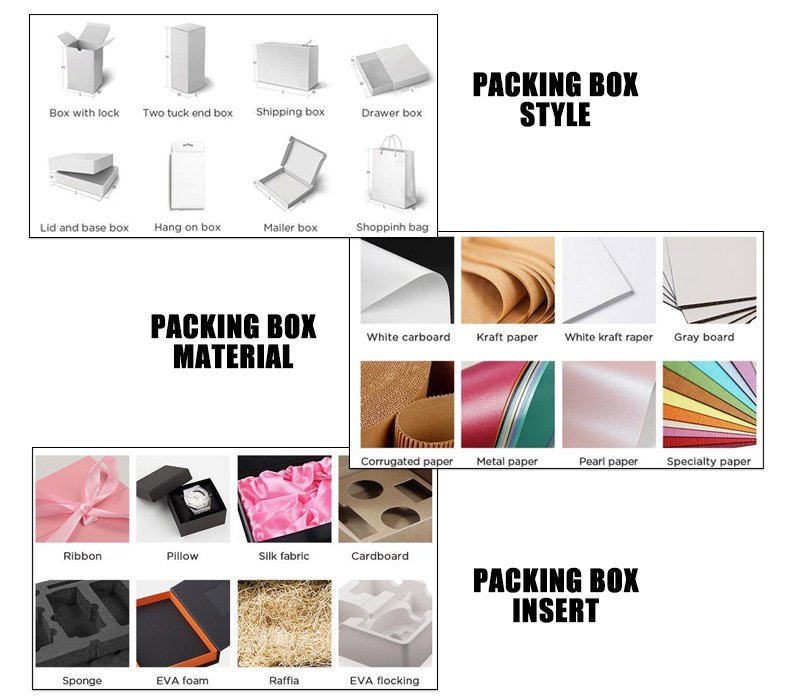
Beyond the bottle, your outer packaging is your first impression. Our team provides custom cosmetic box solutions with tailored box styles, premium cardboard or specialty paper choices, and protective inserts in EVA, molded pulp, or PET.
We also offer specialty printing options, matte or glossy lamination, foil stamping, embossing, and spot UV to create a tactile, luxury feel. Whether for boutique retail, e‑commerce, or professional kits, we ensure your packaging enhances your brand story.
Customization Options Include:
Box style selection: tuck‑end, drawer, magnetic, or folding carton
Material choices: rigid board, kraft, coated paperboard
Insert options: EVA foam, molded pulp, PET, or cardboard
Cosmetic Box Logo Finishing for Premium Branding
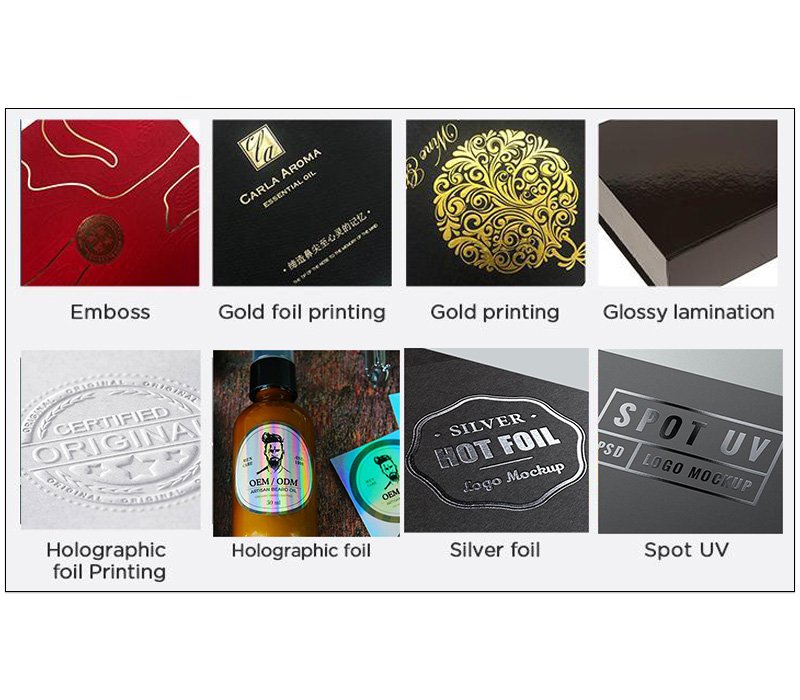
Beyond structure, your logo finish defines your product’s luxury appeal. We offer custom cosmetic packaging logo treatments including emboss, gold foil printing, silver foil, glossy lamination, holographic effects, and spot UV for high-impact shelf presence.
From subtle debossed textures to striking holographic foil, each technique is chosen to enhance your brand story and match your target market positioning. Whether for upscale retail, e‑commerce, or professional use, our finishes help your product stand out.
Finishing Options Include:
Emboss & Deboss logo impressions
Gold, silver, and holographic foil stamping
Spot UV for selective gloss highlights
Glossy or matte lamination for surface protection
Make A Sample First?
If you have your own formula, packaging idea, logo artwork, or even just a concept, please share the details of your project requirements, including preferred product type, ingredients, scent, and customization needs. We’re excited to help you bring your personal care product ideas to life through our sample development process.
More Hair Damage Repair product customization instructions and FAQs
Our formulations: Damage repair formulations target hair that’s been compromised by physical or chemical damage, with a special focus on repairing split ends and smoothing damaged cuticles. Split ends (trichoptilosis) occur when the protective cuticle at the hair’s tip is worn away and the fiber unravels into multiple strands. Once a split end forms, it cannot truly be “healed” back together — only trimmed off — but these products can mend the appearance of split ends temporarily and prevent future splits by strengthening and sealing the hair. The broader “damage repair” aspect refers to improving hair texture that’s rough or porous due to heat styling, coloring, bleaching, etc. Such hair often has chipped cuticles and low moisture retention, so repair products aim to refill and seal the hair shaft to make it smooth and resilient.
Notable damage-repair and split-end-sealing ingredients:
- Film-Forming Polymers (Split End Sealants): One of the primary ways to deal with split ends without cutting them is to glue or seal them down using specialized polymers. Certain products use proprietary polymer blends that act like an adhesive on split ends. For example, an innovative ingredient introduced in 2025 combines a fermented polysaccharide (pullulan), a disaccharide (trehalose), an amino acid (arginine), and lactic acid to form a bioadhesive flexible film that binds split ends togethersofw.com. When applied to damaged ends, such technology fills the cracks and “seals” up to ~97% of split ends immediatelysofw.comsofw.com. The film is uniform and flexible, meaning it moves with the hair (so the hair doesn’t feel stiff), and it resists washing off easily, giving a longer-lasting repairsofw.com. Even if a product doesn’t have that exact complex, many repair serums use similar film-formers (like PVP/VA copolymers or acrylates) to coat and bind split ends, at least until the next shampoo. This results in smoother ends with less visible splitting and snagging.
- Hydrolyzed Protein and Peptides: As mentioned in the strengthening section, proteins play a big role in repair. Hydrolyzed keratin or silk protein is frequently used in damage-repair formulas to patch up the hair cuticle and cortex. They penetrate and reinforce weakened areas, which not only strengthens the hair but also makes the surface smootherclinikally.comclinikally.com. By “filling in” chipped cuticles, proteins reduce the roughness that makes damaged hair frizzy or dull. They can also help bond split ends together in conjunction with the above polymers by providing a matrix inside the crack of the split for the polymer to hold onto. Over time, protein-enriched masks and conditioners noticeably improve hair texture – damaged hair becomes silkier and more aligned.
- Silicones and Conditioning Agents: To immediately improve the feel of damaged hair, conditioning silicones (like amodimethicone) and fatty alcohols/conditioners are used. Amodimethicone, for example, is a silicone that specifically targets damaged portions of hair (it’s an “amine-functional” silicone that sticks more to areas where the cuticle is lifted). These silicones deposit on damaged hair, flattening the cuticle and imparting gloss. They also protect the hair from further damage by forming a barrier against heat or friction. Conditioning agents like behentrimonium chloride complement this by detangling and reducing friction (so less mechanical damage). The end result is split ends that appear smoother (sealed) and overall hair that’s easier to comb and less likely to incur new damage.
- Ceramides and Lipid Replenishers: Healthy hair cuticles are rich in ceramides – waxy lipids that “glue” the cuticle scales together. Damaged hair loses ceramides, so some repair lines (e.g., Kérastase Resistance or L’Oréal Advanced Repair) include ceramide molecules. These help restore the cuticle’s integrity by filling in between the cells with a glue-like lipid, reinforcing the cuticle adhesion. This can both prevent split ends (since splits often start when cuticle layers peel away) and give a smoother feel. Oils like jojoba or grape seed oil can also act as lipid replacements; for example, one split-end mending shampoo uses grape seed oil plus an ionic complex to “provide a long-lasting seal to split hair fibres”ohfeliz.com. By replenishing natural hair oils and ceramides, the hair becomes more flexible and less brittle, reducing breakage and splits.
- Bond Multipliers and Amino Acids: Some damage-repair shampoos and treatments also incorporate bond-multiplying ingredients (similar to those in the strengthening category) to repair internal damage. Additionally, amino acids like arginine are included not just for strength but because arginine can support the hair’s repair processes – it’s known to help with the hair’s resilience and is one of the amino acids the aforementioned polymer complex used to bind splitssofw.com. Arginine in a formula may also help the product attach better to damaged areas (damaged hair is more negatively charged, arginine is basic/positive). In essence, it complements other actives to maximize adhesion to damaged sites and promote repair.
For Customize: It’s important to manage expectations: sealing split ends is usually temporary, and truly “fixed” splits will reappear after a while or with subsequent stress. Therefore, these products are best used continuously and paired with regular trims for long-term hair health. However, they are excellent for immediately improving the look and feel of frazzled ends. Users of damage-repair ranges often report that their hair, which was once rough, tangled, and prone to splitting, becomes smoother, shinier, and stronger. The hair’s porosity is reduced, meaning it retains moisture and color better as well. By repairing the cuticle and fortifying the hair fiber, these formulations allow even heavily damaged hair to regain some vitality and appear healthier and more uniform from root to tip.
Q: Can products truly repair split ends?
A: Cosmetically, yes—by sealing the appearance of splits with flexible films and protein deposition that cohere frayed tips. For severely split lengths, trimming is best; maintenance with daily sealing and weekly masks helps prevent re-splitting and keeps ends visibly smooth.
Q: How long do results last, and does humidity undo them?
A: Effects persist across washes when films and proteins are balanced for durability. Humidity-smart polymers limit re-splay under high RH, and heat primers protect during styling. Communicate multi-wash performance and advise reapplication on high-friction days for consistent finishes.
Q: Will tip serums weigh down fine hair?
A: Use hemisqualane-based, low-viscosity serums with micro-dose films. Keep oil phases modest and target only mid-lengths to ends. Parallel SKUs—featherweight serum vs. richer balm—let consumers choose by texture and climate, maintaining movement and root lift.
Q: Are repair systems color-safe?
A: Yes—when formulated with low-pH rinse-outs, chelators to manage mineral dullness, and color-safe surfactants. Avoid alkaline drift and add antioxidants as needed. Message “color-safe repair” and back it with gloss/comb metrics post-color to earn trust.
Q: How should we differentiate from bonding claims?
A: If not using bond chemistries, lead with measurable split-end reduction, comb-force decline, and humidity-resilient tip cohesion. This creates a globally deployable, compliant story focused on visible results consumers can feel and see, without overpromising mechanisms.
Launch Your Split-Ends Repair Line Fast
We customize selective tip sealing, flexible reinforcement, and heat protection by hair type and climate, then deliver fast sampling, artwork support, and packaging aligned to your price tiers. From intensive masks to featherweight end menders, we help you launch quickly and grow repeat purchase.