Skip to content
Custom Hair Dyeing Formulations Manufacturer
What This Hair Dyeing Formula Solves
Uneven lift, fast wash-fade, brassiness, and harsh odor come from uncontrolled alkalization, hard-water metals, and brittle films that roughen cuticles. Our system delivers target-true shade + long-wear vibrancy via optimized alkalizers, precise developer pairing, mineral control, and flexible post-color sealing. Low-sulfate cleansers and acidic care reduce dye leach; antioxidants and optional UV filters protect chromophores; heat primers limit thermal yellowing. We calibrate for permanent, demi, semi, direct, and lightening needs across fine to coarse textures, supporting gray coverage, dark-to-light transitions, fashion vivids, and gloss refresh. From cream colors and clay lighteners to toners, sealers, and anti-brass maintenance, your range achieves salon-grade results while remaining silicone-optional, fragrance-flexible, and compliant across markets.


Hair Dyeing Formula
1.Shade Accuracy & Gray Coverage
On standardized swatches, quantify ΔE* vs. target swatch after color service and report % gray coverage at roots and lengths. Our optimized alkalizer/developer matrix (ammonia or MEA with calibrated H₂O₂) enables predictable lift and deposition, while chelation reduces metal-catalyzed variance. Include panel grading for uniformity, scalp feel, and odor perception; communicate “target-true results” with confidence intervals across levels 3–10 and resistant gray segments.
2. Fade Resistance & Tone Stability
Track Lab* changes over 5–10 washes and under UVA/heat exposure (blow-dry/iron cycles). Acidic post-color sealing compacts cuticles; anti-fade films limit dye diffusion; antioxidants/optional UV filters reduce oxidation. Report ΔE* improvement vs. control plus 60° gloss retention and halo reduction to link smoother surfaces with brighter tone in real humidity and hard water conditions.
3. Fiber Integrity After Dyeing
Assess tensile strength, wet/dry comb force, and tip cohesion pre/post service and after multiple washes. Lamellar conditioners, quat-functional proteins, and light carriers (hemisqualane) preserve slip while avoiding reweighting. Present Δ comb-force decline and % strength retention; emphasize “strong, smooth feel” compatible with frequent styling and color-refresh regimens.
Key Hair Dyeing Actives & Technologies
Controlled alkalization + precise oxidation + color lock: Alkalizers swell the cuticle for dye entry; H₂O₂ develops oxidative dyes; couplers/precursors form chromophores; chelators manage metals; acidic sealing + flexible films reduce leach; antioxidants/UV filters (where allowed) protect tone; conditioners restore glide.
Key Ingredients & Their Benefits
| Ingredient (INCI) | Role in System | Typical Use Levels | Formulation Notes | Compliance & Market Proof |
|---|---|---|---|---|
| Ammonium Hydroxide / Monoethanolamine (MEA) | Alkalization/lift | Q.S. to pH | Ammonia = strong lift/odor; MEA = lower odor, slower | Wikipedia – Ammonia, Wikipedia – Monoethanolamine, CosmeticsInfo – Ammonium Hydroxide |
| Hydrogen Peroxide | Developer/oxidant | 1.9–12% (6–40 vol) | Pair to desired lift; stabilize; packaging critical | Wikipedia – Hydrogen peroxide, CosmeticsInfo – Hydrogen Peroxide |
| p-Phenylenediamine (PPD) / p-Toluenediamine (PTD) | Dye precursors | Q.S. per shade | Consider PPD-free/PTD-only or low-PPD options | Wikipedia – PPD, Wikipedia – p-Toluenediamine, U.S. FDA – Hair Dyes |
| Resorcinol / Alternatives | Couplers | Q.S. per shade | Explore resorcinol-reduced or alt-coupler palettes | Wikipedia – Resorcinol, CosmeticsInfo – Resorcinol |
| Persulfates (Bleach) | Oxidative lightening | Q.S. | Powder/clay/cream systems; dust control, scalp care | Wikipedia – Ammonium persulfate, CosmeticsInfo – Persulfates |
| Polyquaternium-55 / -11 | Anti-fade film | 0.2–2% | Humidity tolerance; gloss boost | Wikipedia – Polyquaternium, CosmeticsInfo – Polyquaternium-11 |
| Tetrasodium Glutamate Diacetate / Disodium EDTA | Chelation | 0.05–0.3% | Binds Ca/Fe/Cu; stabilizes tone/feel | Wikipedia – GLDA, Wikipedia – EDTA |
| Panthenol; Hydrolyzed Proteins | Slip/feel/shine | 0.2–2% / 0.2–1% | Post-color softness and light return | Wikipedia – Panthenol, Wikipedia – Keratin |
| Violet/Blue Direct Dyes | Anti-brass toning | Q.S. | Blonde/brunette neutralization in care lines | Wikipedia – Direct dye, Wikipedia – Acid dyes |
| Tocopheryl Acetate & Antioxidants | Oxidation defense | 0.05–0.5% | Protects chromophores; heat/UV synergy | Wikipedia – Tocopheryl acetate, CosmeticsInfo – Tocopheryl Acetate |
| Fragrance (IFRA-compliant) | Odor management | Q.S. | Low-odor profiles for at-home kits | IFRA – Standards, IFRA – Consumer Info |

Monoethanolamine (MEA) — Customization Details for Hair Dyeing (Permanent/Oxidative) Formulas
INCI & CAS
INCI: Ammonium Hydroxide (CAS 1336-21-6) / Ammonia (CAS 7664-41-7); Monoethanolamine (Ethanolamine, MEA) (CAS 141-43-5). Alkalizing agents that raise pH to swell cuticle, promote dye precursor penetration, and activate peroxide for color formation; MEA is a lower-odor ammonia alternative. (CIR safety assessments; EU regulatory context.) (cir-safety.org)
Role in Hair Dyeing Efficacy
Cuticle lift + dye formation kinetics. Ammonia/Ammonium Hydroxide provides fast, volatile alkalization for uniform gray coverage and high lift; MEA provides slower, less volatile alkalization useful for odor-reduced systems but may reside longer in fiber. Choice affects shade depth, lift, and post-wash feel; chelators (e.g., EDTA/HEDP) and surfactant micelles tune performance. (Mechanism & comparative studies.) (PMC)
Typical Use Levels (formulation custom guide)
Ammonium Hydroxide (in ready-to-use mix): typically 0.5–6% (as solution; often referenced ≤6% upper design target in RTU oxidative dyes).
MEA (in colorant or alkalizer part before mixing): commonly 3–15% in alkalizer component to reach ~1–5% in RTU mix, depending on desired pH (~9.0–10.5).
pH targets: ~9–10.5 for permanent color; adjust for developer strength and substrate. Validate fiber swelling, shade ΔE, and gray-coverage %.
Notes: Real-world ranges vary by system; many authorities and templates cite ammonium hydroxide ≤6% RTU; MEA usage in hair colors can be higher pre-mix but remains rinse-off. (UK CPNP template; patent and CIR usage data.) (submit.cosmetic-product-notifications.service.gov.uk)
Regulatory Sources & Global Compliance
- EU Cosmetics Reg. Annex III (hair colorant labelling): mandatory warnings (e.g., wear suitable gloves, mixing ratio, not for eyelashes/eyebrows, allergy risk text). Check the specific hair dye substances in the formula against Annex III limits; alkalizers support these systems. (UK Leg)
- CIR Expert Panel: Ammonia/Ammonium Hydroxide are safe as used in hair dyes when formulated to be non-irritating; MEA (ethanolamine) safe for rinse-off cosmetics when non-irritating and not used in contexts where nitrosamines may form. (cir-safety.org)
- Regional annexes (ASEAN examples): reinforce Annex III hair dye warnings and limits for oxidative dye substances; follow local wording and PAA text. (HSA)
Clinical/Performance Evidence (coverage, damage, sensorials)
- MEA vs Ammonia (fiber damage): Controlled testing (FTIR cysteic acid, SEM, protein loss) showed higher cumulative damage with MEA-based systems vs ammonia (up to ~85% in extreme cases) due to residency/reactivity differences. (PubMed)
- MEA odor/profile: Ammonia-free permanent dyes using MEA report reduced odor with acceptable performance in clinical/user assessments when systems are optimized. (Wiley Online Library)
- Color depth vs alkalizer strength: Higher ammonium hydroxide in model systems correlated with darker shades at constant conditions, illustrating alkalizer-driven kinetics. (PMC)
Safety & Risk Assessment (toxicology highlights)
Irritation/corrosivity is pH- and dose-dependent. Formulate to be non-irritating; for aerosols/sprays, control droplet size/inhalation. For MEA, avoid nitrosating agents; ensure nitrosamine levels are as low as reasonably achievable and follow regional guidance (many Annex III dye entries cap ≤50 µg/kg for nitrosamines). Strictly rinse-off use for MEA. (CIR; regional Annex III examples.) (cir-safety.org)
Stability & Packaging
Two-part systems (alkalizer + developer). Use vented caps/compatible resins (e.g., HDPE/PP) tolerant to high pH and peroxide; maintain chelators to minimize metal-catalyzed shade drift. Validate shade repeatability, viscosity, peroxide stability, pH hold, and stress (heat/transport). Include consumer directions aligned with Annex III warnings. (Regulatory templates & mechanism reviews.) (UK Leg)
Cost–Benefit
Ammonia: High lift/coverage, volatile (rinses/vents out) but odor-noticeable; generally efficient at lower use-levels. MEA: Lower odor marketing, potentially smoother feel initially, but may require higher dosage/longer contact, with risk of greater cumulative fiber damage if not optimized—thus chelator/surfactant design and post-dye care are key. (Comparative data + mechanism.) (PubMed)
Claims Language (Do/Don’t)
✅ Helps open the hair cuticle to deposit color precursors for even, long-lasting color when used with peroxide developers, validated by gray-coverage and shade ΔE testing. (Mechanism/kinetics literature.) (PMC)
✅ Supports salon-grade results with controlled alkalization (ammonia or MEA) and optimized chelation/surfactants, balancing lift, tone accuracy, and fiber feel. (Formulation/CPNP template guidance.) (submit.cosmetic-product-notifications.service.gov.uk)
✅ Lower-odor options using MEA can improve user sensorials without sacrificing coverage when systems are correctly engineered. (Clinical/user evaluation.) (Wiley Online Library)
❌ Avoid medical-grade or misleading statements (such as “zero-damage hair dyeing” or “no risk of allergies“). Maintain a cosmetic positioning; adhere to Annex III hair product labeling (such as gloves, mixing ratio, non-eyelash/eyebrow use, allergy warnings), and support this with finished product testing (gray hair coverage, ΔE, combing strength/breakage, scalp comfort questionnaire). (UK Leg)

Hydrogen Peroxide — Customization Details for Hair Dyeing (Permanent/Oxidative) Formulas
INCI & CAS
INCI: Hydrogen Peroxide · CAS: 7722-84-1. Core oxidizing agent/developer in oxidative hair color that drives melanin oxidation and dye-polymer formation; listed in CosIng with functions including OXIDISING (and ANTIMICROBIAL/ORAL CARE in other categories). (CosIng ingredient entry; Annex reference III/12.) (European Commission)
Role in Hair Dyeing Efficacy
Developer for lift + dye coupling. In the alkaline color system, H₂O₂ (stabilized) permeates the fiber, lightens melanin and oxidizes primary intermediates/couplers into large chromophores. Kinetics depend on developer strength (vol%), pH, alkalizer (ammonia/MEA), chelators, and time/temperature—impacting gray coverage, lift, and fastness. (Mechanism overviews; kinetic/structure–damage literature.) (PubMed)
Typical Use Levels (formulation custom guide)
Developer strengths (RTU): ~3% (10 vol) toning/deposit; 6% (20 vol) standard permanent & gray coverage; 9% (30 vol) lift; 12% (40 vol) high-lift/bleach.
pH targets (system): typically ~9.0–10.5 with alkalizer; mix ratios 1:1–1:2 (colorant:developer) by brand system.
Performance validation: track ΔE/CIELAB, gray-coverage %, wash fastness, breakage/comb force vs. developer strength.
Notes: 12% H₂O₂ represents the upper “as applied” level in many jurisdictions for hair care dye/lightener systems; verify local Annex III text. (CIR concentration survey; ASEAN/EU Annex exemplars.) (cir-safety.org)
Regulatory Sources & Global Compliance
- EU Cosmetics Reg. Annex III (Entry 12): Hydrogen peroxide and compounds releasing it—restricted with use-area limits, “as applied” max levels and label warnings (e.g., wear gloves, mixing ratio, not for eyelashes/eyebrows). Eyelash coloring discussions cap ≤2% H₂O₂ under specific professional conditions. (EUR-Lex 2017/237; 2013 amendment; SCCS opinions.) (EUR-Lex)
- CosIng notice: database is informational; rely on product-level CPSR and Annex III compliance. (European Commission)
- CIR Expert Panel (2018 & 2024): Hydrogen Peroxide is safe in cosmetics under present practices of use and concentrations; hair-dye uses up to ~12% reported. (cir-safety.org)
- ASEAN alignment: Annex III mirrors EU entry, listing H₂O₂ and H₂O₂-releasing compounds with hair-care “as applied” up to 12% and standard hair-colorant warnings. (ASEAN/NPRA exemplars.) (npra.gov.my)
Clinical/Performance Evidence (lift, damage, fastness)
- Oxidative damage correlates with developer strength/time: human hair studies show cysteine→cysteic acid formation, protein/lipid loss, and cuticle/cortex degradation increasing with stronger peroxide/lightening. (PubMed)
- Scalp/hair impairment reviews: peroxide-mediated oxidation diminishes fiber strength; careful process control and post-care mitigate breakage. (PMC)
- Practice guidance (developer “volumes”): common technical ranges align with the lift/coverage use cases noted above. (Savvy & Shine)
Safety & Risk Assessment (toxicology highlights)
Irritation/corrosivity is pH- and dose-dependent. Formulate to be non-irritating; avoid ocular exposure and manage rinse-off thoroughly. For aerosols/foams, control droplet size to reduce inhalation risk. Follow Annex III labels (e.g., gloves, mixing ratio, age warnings, not for eyelashes/eyebrows). CIR supports safety as used; comply with stabilizer/SDS handling. (cir-safety.org)
Stability & Packaging
Stabilized aqueous developer. Use stabilizers and chelators; avoid metal contamination; select compatible HDPE/PP packs and vented closures. Validate peroxide assay over shelf-life, pH hold, viscosity, mixing uniformity, and transport/heat stress. (Industry/peroxide handling context; regulatory templates.) (active-oxygens.evonik.com)
Cost–Benefit
Predictable, efficient oxidant enabling lift + polymeric color build with strong consumer recognition. Higher strengths increase processing speed/lift but raise damage risk—optimize with bond builders, lipid/protein repair, time/temperature control, and post-care to sustain shade quality and fiber integrity. (Damage/bleach literature; regulatory/market synthesis.) (PubMed)
Claims Language (Do/Don’t)
✅ Helps oxidize natural pigment and activate dye precursors for even, lasting color/lift when used with alkaline colorants, as shown by ΔE, gray-coverage %, and wash-fastness tests. (Mechanism & practice literature.) (PubMed)
✅ Supports salon-grade results via controlled developer strength (3–12%) and precise mixing ratios, balanced for coverage, lift, and fiber feel. (Annex labeling & technical guidance.) (EUR-Lex)
✅ Formulated to be safe as used within Annex III and CIR parameters, with clear directions/warnings and rinse-off. (CIR/EUR-Lex.) (cir-safety.org)
❌ Avoid absolute or medical-grade statements (such as “zero-damage bleaching” or “permanent and fade-free“). Maintain a cosmetic positioning; support your claims with finished product-level data (ΔE, gray hair coverage, combing power/breakage, user comfort); strictly adhere to Annex III labeling (gloves, mixing ratio, do not use on eyelashes/eyebrows, age warning). (EUR-Lex)

p-Toluenediamine (PTD) / p-Toluenediamine Sulfate (PTDS) — Customization Details for Hair Dyeing (Permanent/Oxidative) Formulas
INCI & CAS
INCI: Toluene-2,5-diamine (p-Toluenediamine, PTD) · CAS (free base): 95-70-5 · INCI: Toluene-2,5-diamine sulfate (PTDS) · CAS (sulfate): 615-50-9 (1:1) / 6369-59-1 (1:x). EC: 202-442-1 (free base), 210-431-8 / 228-871-4 (sulfate). Primary oxidative hair dye intermediate used with couplers under alkaline/peroxide conditions. (SCCS identity section; Annex III context.) (European Commission)
Role in Hair Dyeing Efficacy
Primary intermediate for shade build + gray coverage. In alkaline pH with H₂O₂, PTD/ PTDS oxidizes and couples to form larger chromophores, enabling natural-looking browns/darks, gray coverage, and tone direction. Performance depends on alkalizer (ammonia/MEA), developer strength, chelation, and process time/temperature. (Mechanism/kinetics overviews; regulatory dossiers.) (European Commission)
Typical Use Levels (formulation custom guide)
On-head (after mixing, oxidative conditions): up to 2.0% (as free base) or 3.6% (as sulfate) in many jurisdictions.
Colorant part (before mixing): higher nominal % to reach on-head max after mixing with developer (e.g., 1:1–1:2 mix ratios).
System targets: pH ~9.0–10.5 with alkalizer; validate ΔE/CIELAB, gray-coverage %, wash fastness, and scalp comfort.
Notes: Limits are “as applied to hair” after mixing; always verify local Annex text and warnings language. (European Commission)
Regulatory Sources & Global Compliance
- EU Cosmetics Regulation — Annex III (Entry 9a): Toluene-2,5-diamine / sulfate permitted only in oxidative hair dyes; after mixing max 2.0% (free base)/3.6% (sulfate); not for eyelashes/eyebrows; include glove and other standard hair-color warnings. (EUR-Lex)
- ASEAN Annexes (e.g., SG/HSA consolidated text): mirrors EU Entry 9a including max levels and warning statements. (HSA)
- CIR Expert Panel: PTD/PTDS safe as used in hair dyes within present practices/concentrations; extreme skin sensitizer; avoid non-hair color uses. (journals.sagepub.com)
Clinical/Performance Evidence (coverage, allergy, cross-reactivity)
- Allergic contact dermatitis risk: SCCS labels PTD an extreme skin sensitiser; consumer/hairdresser allergy remains a safety concern. (European Commission)
- Cross-reactivity with PPD: Patch-test analyses show most PTD reactors also react to PPD (≈ 5 in 6 cases), limiting alternatives for PPD-allergic users. (PubMed)
- Under-recognition of PTDS allergy: 2025 review highlights PTDS as “Allergen of the Year”, noting under-screening in many panels. (liebertpub.com)
Safety & Risk Assessment (toxicology highlights)
SCCS systemic-safety conclusion at lower max: Using toxicokinetics-based MoS, on-head 2.0% (free base) / 3.6% (sulfate) is safe for systemic toxicity; however sensitization potency remains high. Ensure rinse-off, no eyelash/eyebrow use, glove use, and robust PIF/CPSR. (Consider nitrosamine controls only as relevant to amines in broader systems.) (European Commission)
Stability & Packaging
Two-part oxidative systems: keep PTD/PTDS in the alkaline colorant separate from peroxide developer; specify chelators (EDTA/HEDP) to reduce metal-catalyzed drift; use HDPE/PP with vented caps; validate shade repeatability, pH hold, viscosity, peroxide compatibility, and transport/heat stress. Follow Annex III directions and IFU specifics. (EUR-Lex)
Cost–Benefit
Workhorse primary intermediate enabling broad brown/dark shade maps and high gray coverage with predictable kinetics. Marketing as “PPD-alternative” must be balanced: PTD/PTDS show significant cross-reactivity with PPD; any tolerability gains are user-dependent. Optimize with bond-builders, lipid/protein repair, and after-care to manage oxidation damage perceptions. (PubMed)
Claims Language (Do/Don’t)
✅ Helps develop long-lasting oxidative color by forming chromophores with couplers under peroxide/alkaline conditions, delivering consistent gray coverage (validated by ΔE, gray-coverage %, wash-fastness). (SCCS mechanism context.) (European Commission)
✅ Engineered within Annex III limits (≤2.0% free base / 3.6% sulfate on-head) and clear directions/warnings (wear gloves, mixing ratio, not for eyelashes/eyebrows). (Regulatory text.) (EUR-Lex)
✅ Compatible with ammonia or MEA systems, chelators, and care polymers to balance lift, tone accuracy, and post-feel. (Formulation practice.) (EUR-Lex)
❌ Avoid misleading or medical terminology (such as “low allergenicity/no allergenic risk” or “can replace PPD and is suitable for people with PPD allergies“). Maintain the cosmetic positioning; support the finished product with indicators such as ΔE, gray hair coverage, combing power/breakage, and user comfort; and align with Annex III in terms of allergy/patch testing and label warnings. (European Commission)
Custom Hair Dyeing Product Applications
Cover salon kits and at-home lines—permanent creams, demi glosses, direct masks, lighteners, toners, sealers, root touch-ups, and anti-brass care—delivering target-true shade, predictable lift, and long-wear tone. Texture-calibrated formats ensure even deposit, smooth combing, and gloss in hard-water and humid regions.


Hair Dyeing Market Trends & Target Audiences
Search interest in ammonia-free, PPD-free, gray coverage, balayage, and at-home color kits remains high. Consumers want salon-level accuracy, low odor, and scalp-friendly sensorials, alongside anti-brass maintenance and gloss refresh. “Clean-lean,” “color-safe care,” and “low-drip cream” drive CTR and repeat purchase.

Market Overview
Category winners quantify ΔE* accuracy, coverage %, and multi-wash fade while offering shade maps and routine bundles (color + sealer + anti-brass + primer). Texture-specific guidance and low-odor stories improve conversions. Retailers favor compliant labeling, clear patch-test instructions, and recyclable, mess-minimized packaging for at-home users and salon take-home kits.
Key Market Insights:
- Metrics convert: ΔE* to target, gray coverage %, 10-wash fade.
- Low-odor & clean-lean: ammonia-reduced/MEA systems with compliant language.
- Maintenance ecosystems: toners, sealers, anti-brass and UV/heat primers.

Target Consumer Segments
Gray-coverage clients; blonding/balayage users seeking tone control; vivid-fashion users wanting durable chroma; at-home kit shoppers needing clear instructions; fine-hair clients requiring lightweight feel; and clean-lean buyers preferring ammonia-reduced or PPD-alternative stories. Salon-home hybrids value easy ritual maps that maintain shade between services.
Target Segments after Custom Branding:
- Coverage & Confidence Line: Permanent cream + sealer + anti-fade care.
- Blonde & Tone Control Line: Lightener + toner + anti-brass system.
- Vivid & Shine Refresh Line: Semi/direct masks + gloss + UV/heat primer.
Customization Options for Packaging & Branding
Explore flexible packaging options, bottle types, and private label services. From tube to jar, we match your brand’s tone and market position.
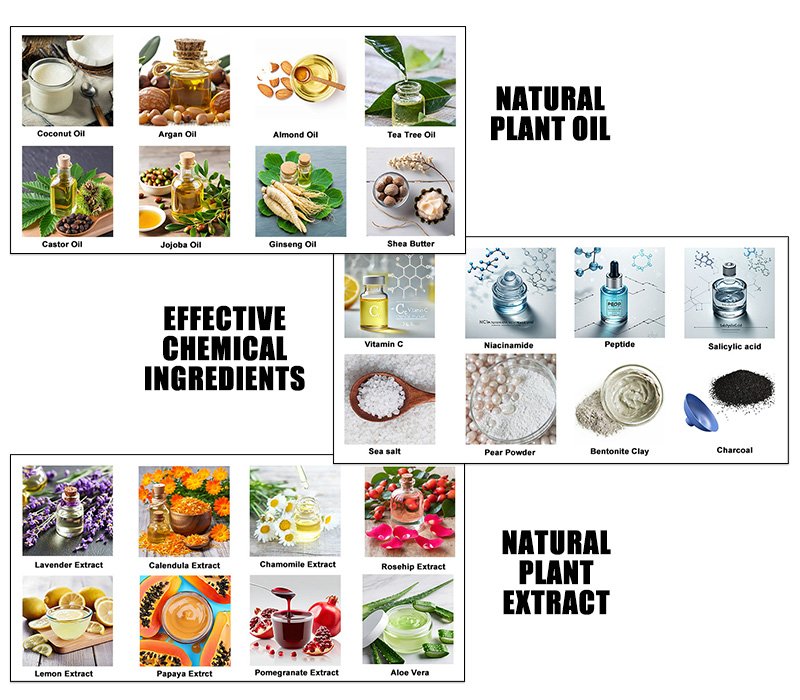
Cosmetic formulation development
Your formula is the soul of your brand. Whether you’re developing a gentle serum for sensitive skin, a high-efficacy anti-aging cream, or a scalp-purifying shampoo, our in-house chemists create custom cosmetic formulations tailored to your desired effect, skin type, region, and ingredient philosophy.
With over 5,000+ proven base formulas and full white-label development support, we help you build a product that meets your performance goals, brand values, and market trends.
Available Services:
Active ingredient sourcing & formulation balancing
Custom texture creation: gel, cream, balm, lotion, foam, oil
Ingredient selection for target concerns: anti-acne, brightening, anti-aging, hydration
Support for natural, vegan, EWG green-level formulations
Regional compliance: USA, EU, AU, JP standards
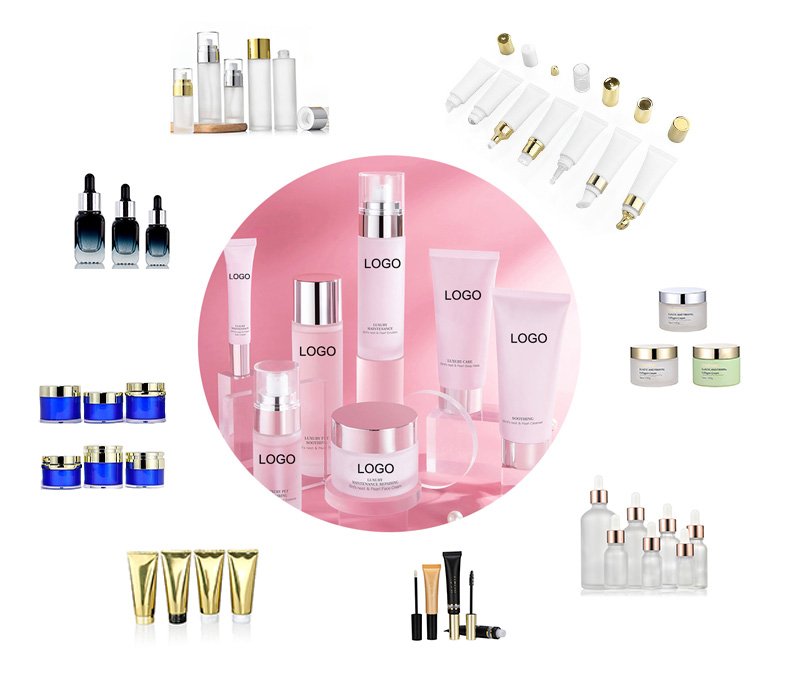
Custom Cosmetic Packaging Styles
Packaging plays a critical role in how your brand is perceived. Whether you need luxury glass droppers, airless pump bottles, eco-friendly refill pouches, or retail-friendly PET tubes, we provide 3000+ stock and customizable packaging options.
From minimalist matte finishes to glossy foil-stamped designs, our packaging engineers help you select the perfect form and material—whether for prestige skincare, professional haircare, or clean beauty positioning.
Available Options:
Glass, PET, PP, PCR, aluminum, bamboo, and more
Airless pumps, sprayers, jars, tubes, and dropper bottles
Color-matching, texture finishes, and custom mold services
Cosmetic Box, Label Design for skincare brands
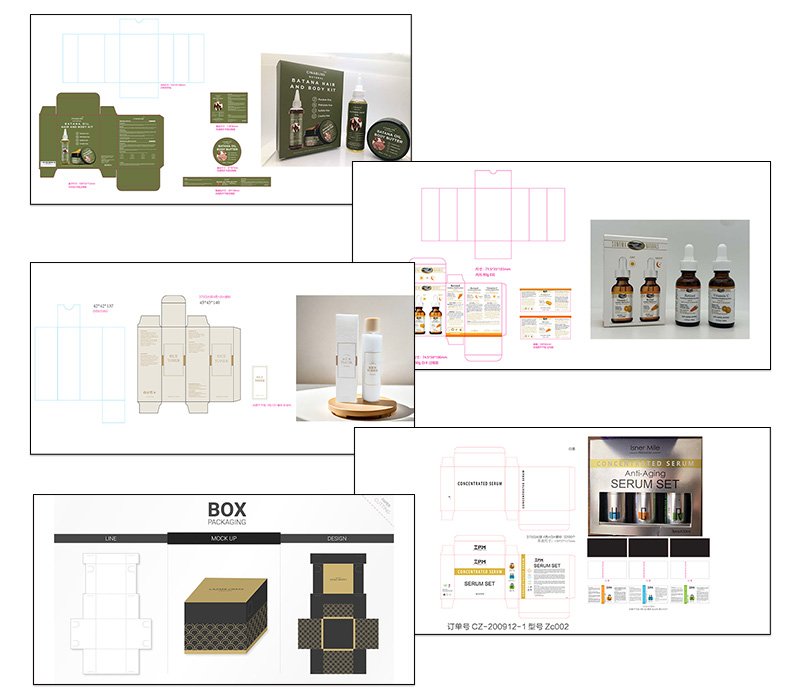
Beyond the bottle, your visual identity sets your product apart. Our in-house design team creates custom label layouts, box designs, and full branding suites—including logo placement, font matching, and barcode compliance.
We also offer waterproof labels, UV spot gloss, embossing, foil stamping, and other premium finishes to ensure your packaging feels as high-end as your formula. Whether you’re building an Amazon FBA product or a salon-grade kit, we help make your product shelf-ready.
Design Services Include:
Free artwork design and dieline support
Amazon & retail barcode setup (FNSKU/UPC)
Custom printing on labels, boxes, pouches, and shrink wraps
Cosmetic Box Customization for Skincare Brands
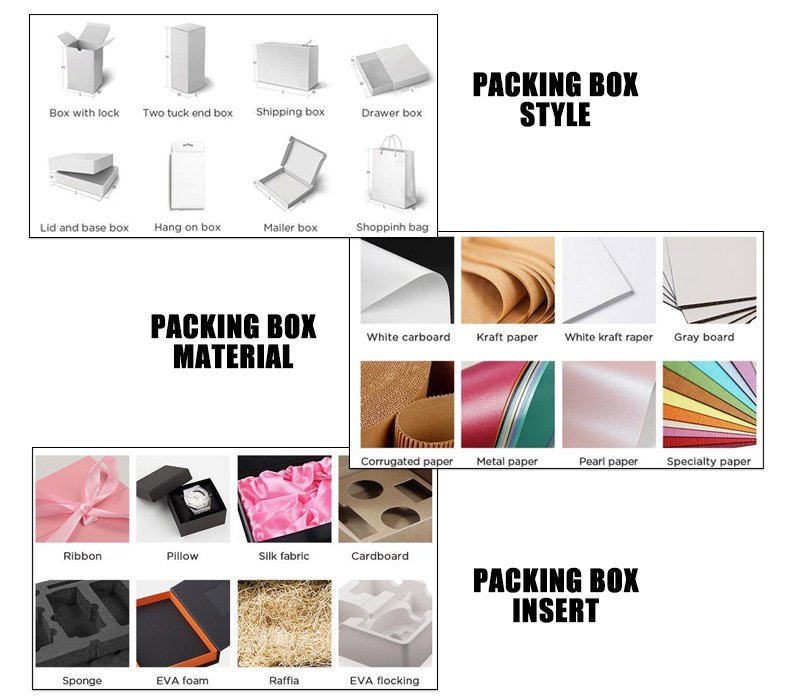
Beyond the bottle, your outer packaging is your first impression. Our team provides custom cosmetic box solutions with tailored box styles, premium cardboard or specialty paper choices, and protective inserts in EVA, molded pulp, or PET.
We also offer specialty printing options, matte or glossy lamination, foil stamping, embossing, and spot UV to create a tactile, luxury feel. Whether for boutique retail, e‑commerce, or professional kits, we ensure your packaging enhances your brand story.
Customization Options Include:
Box style selection: tuck‑end, drawer, magnetic, or folding carton
Material choices: rigid board, kraft, coated paperboard
Insert options: EVA foam, molded pulp, PET, or cardboard
Cosmetic Box Logo Finishing for Premium Branding
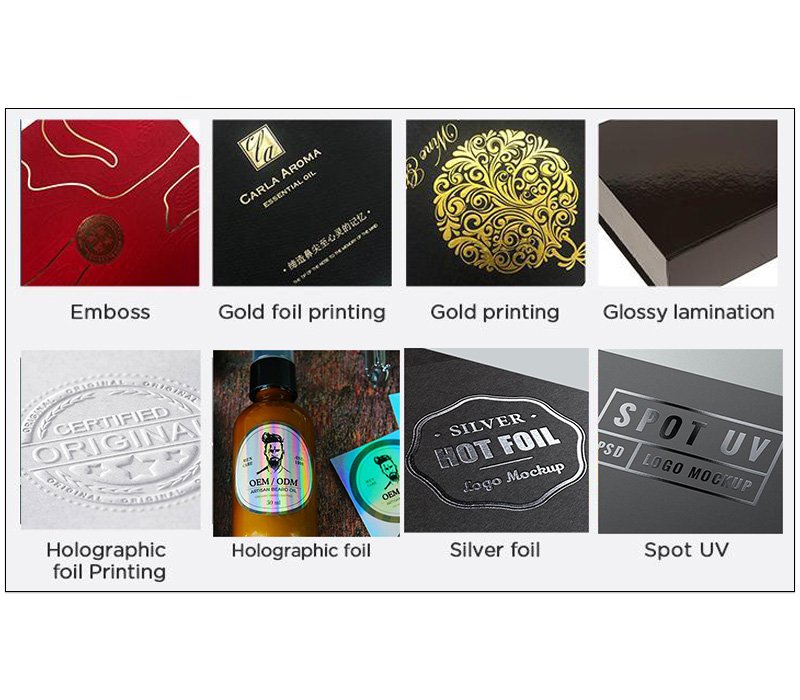
Beyond structure, your logo finish defines your product’s luxury appeal. We offer custom cosmetic packaging logo treatments including emboss, gold foil printing, silver foil, glossy lamination, holographic effects, and spot UV for high-impact shelf presence.
From subtle debossed textures to striking holographic foil, each technique is chosen to enhance your brand story and match your target market positioning. Whether for upscale retail, e‑commerce, or professional use, our finishes help your product stand out.
Finishing Options Include:
Emboss & Deboss logo impressions
Gold, silver, and holographic foil stamping
Spot UV for selective gloss highlights
Glossy or matte lamination for surface protection
Make A Sample First?
If you have your own formula, packaging idea, logo artwork, or even just a concept, please share the details of your project requirements, including preferred product type, ingredients, scent, and customization needs. We’re excited to help you bring your personal care product ideas to life through our sample development process.
More Hair Dyeing product customization instructions and FAQs
Formula Efficacy Introduction: Our hair dye formulation portfolio spans both natural hair coloring and permanent hair dyeing to meet diverse market and consumer needs. From gentle, plant-derived coloring solutions to high-performance permanent color technology that penetrates the hair, we focus on delivering vibrant results while maintaining hair health. The natural hair coloring formulas offer a safe, low-irritation coloring experience that nourishes the hair even as it covers gray, whereas the permanent dye formulas prioritize outstanding color longevity and coverage, achieving a complete color change from the roots with long-lasting effects. With carefully balanced formulation strategies, our hair coloring solutions not only impart the desired shades and shine to hair but also minimize damage, allowing consumers to attain beautiful color without compromising hair integrity. For brands, this means the flexibility to launch products emphasizing natural safety or high efficacy, and succeed in both segments of the hair color market.
Key ingredients and technologies for anti-frizz care:
- Natural Hair Coloring: Our natural hair coloring formulations center on a clever blend of plant-based dyes and herbal extracts. The primary coloring agents are botanical powders such as henna and indigo, which contain natural pigments (like lawsone in henna) that bind to the hair’s surface to impart semi-permanent color in a gentle mannerphcogres.com. To enrich the hue and efficacy, we often include extracts like coffee, tea, or chamomile – these not only help deepen or adjust the shade but also provide antioxidant and conditioning benefits. A host of Ayurvedic herbs (e.g. amla, sappan wood, hibiscus) may be incorporated as well to promote scalp health and strengthen the hair. These purely herbal formulations contain no para-phenylenediamine (PPD) or peroxide, resulting in very low irritation. Consumers can thus color their hair while enjoying botanical nourishment – our natural dyes not only change hair color but also act as treatments that stimulate growth and provide nutritional reinforcement to the hairphcogres.com.
- Permanent Hair Dyeing: Our permanent hair dye formulations leverage advanced chemical coloring systems to achieve deep, long-lasting color changes. The core components are small oxidative dye precursors (such as p-phenylenediamine, PPD, or its alternatives) which, in the presence of an alkalizing agent in the formula (usually ammonia or monoethanolamine), open the cuticle and then react with a developer (hydrogen peroxide) to form large color molecules inside the hair cortextheorganicsolution.wordpress.com. This oxidation dye mechanism gives permanent hair color its excellent gray coverage and resistance to fading. Equally, we place great importance on gentleness: we mitigate irritation and allergy risks by measures like using MEA instead of ammonia and formulating with PPD-free dye derivatives when possiblepubmed.ncbi.nlm.nih.govpubmed.ncbi.nlm.nih.gov. Nourishing additives (e.g. plant oils, amino acids, keratin) are included to protect the hair structure during the coloring process, minimizing dryness or breakage. Overall, the active ingredient system in our permanent dyes strikes a balance between vibrant, enduring color and hair safety, ensuring gorgeous results with minimal damage to the hair and scalp.
Recommended Products to Develop: In the hair coloring category, we advise brands to develop two lines of products: a natural herbal dye range and a professional permanent dye range. For natural coloring, you can launch all-natural plant dye powders or creams – for example, a henna/indigo herbal hair dye kit that consumers mix and apply at home. Such kits can include gloves and a cap for convenience. Additionally, a ready-to-use herbal color cream could be developed, pre-blending botanical dyes with a nourishing base, touting claims like “no chemical additives” and safe for pregnant women. Complement this with a post-color herbal conditioner or hair mask to lock in color and impart extra care. For permanent coloring, consider developing a salon-grade hair color cream line offering a wide palette of shades (dozens of tones) along with matching developers of various strengths (e.g. 6%, 9% peroxide) to accommodate different coloring needs. This line should come with a standardized shade chart and detailed usage instructions for professional stylists. You may also introduce a consumer-friendly permanent color kit containing the color cream, developer, gloves, and instructions – emphasizing low-ammonia formulas and hair-conditioning ingredients to appeal to safety-conscious users. With both the natural and permanent dye product lines, your brand can cover the full spectrum of market needs, from gentle tinting to dramatic color transformation.
Customer Success Story: We have helped clients succeed in both segments of the hair dye market. One client, an organic beauty brand, wanted to launch a natural plant-based hair coloring product to appeal to eco-conscious consumers. We collaborated to develop an herbal dye kit that used henna, indigo, and other botanicals to effectively cover light gray hairs. Free of any synthetic dyes or harsh chemicals, the product was very well received after launch – many users reported that their hair felt soft and glossy after coloring, with no scalp irritation. Thanks to its gentle, authentic reputation, this company successfully carved out a niche in the natural hair color market. In another case, an international salon chain sought to upgrade its permanent hair dye line to reduce client irritation complaints. We provided a custom ammonia-free, low-sensitization dye formula, replacing ammonia with MEA, utilizing PPD alternative dyes, and adding conditioning agents like aloe vera and keratin. This upgraded formula delivered the same vibrant color results while dramatically cutting down on odor and scalp irritation. After trialing it in select salons, the feedback was that the coloring process felt more comfortable and client satisfaction improved. The salon brand rolled out the new dye line across its global locations, marketing it as “gentle yet high-performance.” This not only enhanced the brand’s professional image but also boosted customer loyalty.
Q: Can natural hair dyes really cover gray hair, and how long do the colors last?
A: Natural dyes can provide good coverage for light or early-stage grays. Formulations using henna and indigo, for example, impart shades like auburn or dark brown that blend and camouflage a moderate amount of gray. However, since they don’t contain strong oxidizers, natural color is generally semi-permanent – it typically lasts about 4–6 weeks in the hair and will gradually fade with washing. Regular touch-ups are recommended to maintain vibrancy. For a high percentage of gray hair, multiple applications might be needed to achieve the desired depth of coverage.
Q: Do permanent hair dyes severely damage the hair? How do you reduce harm to hair quality when coloring?
A: Traditional permanent dyes can cause some damage, since components like ammonia and PPD may lift the cuticle and weaken the hair or irritate the scalppubmed.ncbi.nlm.nih.gov. But our formulations use improved technologies to greatly minimize these effects. We use low-ammonia or ammonia-free systems (substituting harsh ammonia with gentler MEA) and gentler dye precursors, plus we infuse protective nutrients to condition the hair during coloring. Thus we achieve long-lasting color while keeping hair damage to a minimum. In our tests, hair retains good strength and shine after using our dyes, and proper post-color care can further ensure the hair stays healthy.
Q: How many color options can you provide, and can we customize unique shades?
A: Our permanent dye range can be offered in a wide spectrum of shades – typically each major color family (black, brunette, blonde, red, etc.) includes multiple levels and tonal variations, totaling dozens of standard colors. For your brand, we also support creating custom signature shades. Our lab has the capability to formulate and test new color blends; you can provide target color samples and we will adjust the dye mix to precisely achieve that hue, all while meeting safety standards. Whether you need off-the-shelf shades or exclusive custom colors, we can flexibly accommodate your requirements.
Q: How can we prove long-wear color?
A: Run ΔE* colorimetry across 5–10 washes and UVA/heat cycles, plus 60° gloss and comb-force. Present swatch photos and statistics on PDPs and salon sheets to translate lab data into consumer benefits.
Q: What packaging improves stability and user experience?
A: Developer-safe bottles, oxygen-barrier tubes, dual-chamber sachets for toners, and low-drip creams with precision nozzles. Add shade maps, gloves, and clear patch-test/processing instructions for at-home kits. Use PCR and recycle cues to support “clean-lean” positioning.
Launch Salon-Grade Hair Color With Us
We customize alkalizer/developer matrices, dye palettes, toners, and post-color sealing by hair type, shade target, and climate, then deliver fast sampling, artwork support, and packaging tuned to your price tiers. From gray-coverage creams and clay lighteners to glosses, sealers, and anti-brass care, we help you launch quickly and grow repeat purchase.