Skip to content
Best shampoo for extensions: Formula Guide
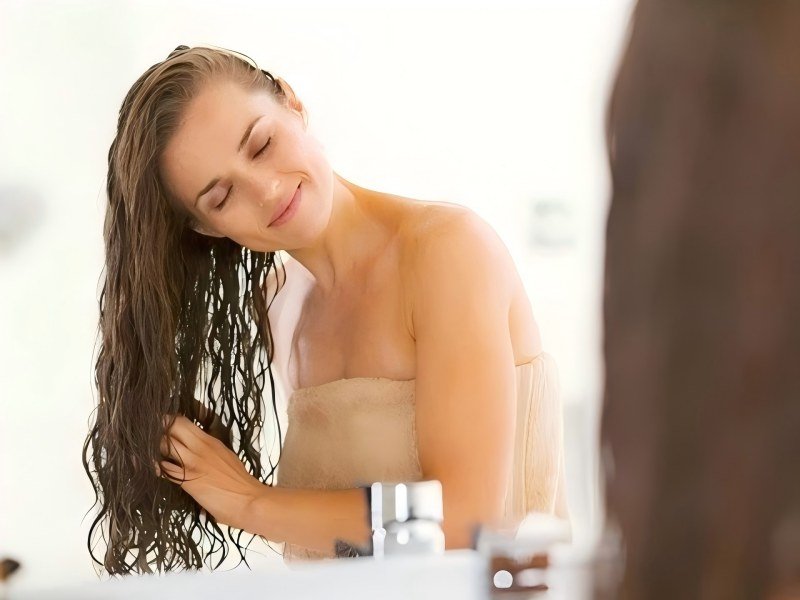
Hair extensions don’t behave like natural hair. The extension fiber doesn’t receive scalp sebum the same way, so it dries out faster, tangles more easily, and shows friction damage sooner. At the same time, attachment areas (tape, bonds, wefts, clips) can fail early when product residue, heavy oils, or aggressive scrubbing builds up where it shouldn’t.
“The best shampoo for extensions” doesn’t mean “most popular shampoo brand” but means a shampoo that: (1) cleanses the scalp effectively, (2) rinses clean with low residue, (3) avoids over-stripping that makes extensions stiff and knotty, and (4) fits a moisture system that keeps mid-lengths and ends soft without loading product onto attachment points. Many extension aftercare guides repeat the same priorities: gentle cleansing (often sulfate-free), avoid drying alcohols, and keep conditioners/oils away from bonds—especially for tape-ins.
What “extension-safe shampoo” means?
A good extension shampoo is built around three outcomes:
Clean rinse, low residue
Extensions tangle when product film accumulates. The best shampoos rinse clean and don’t leave a waxy feel that attracts more styling buildup.
Low stripping, lower friction
Extensions are more sensitive to harsh cleansing. If the hair feels “squeaky,” it’s often a sign the wash is too aggressive for long-term extension wear, increasing dryness and tangling risk.
Attachment-point mindful
Your wash routine should protect the attachment zone: avoid heavy oils near tape/bonds, avoid scrubbing directly on attachments, and keep slippery conditioners where they help most (mid-lengths and ends).
First decide the extension type
Tape-in extensions
Tape is the most “bond-sensitive” to oily buildup and product placement near the adhesive. Many tape-in care guides recommend waiting before the first wash so the adhesive can set—commonly 48 hours, and some guidance says 48–72 hours.
Practical rules that reduce slippage complaints:
- Keep shampooing focused on scalp; avoid rubbing directly on the tape panels.
- Keep oils and conditioners away from the tape bonds.
Keratin bond / fusion extensions
The common failure mode is friction plus residue at the bond area.
- Prioritize a low-residue shampoo that rinses fully.
- Keep rich masks, oils, and heavy leave-ins off the bond zone to reduce buildup.
Sew-in / weft extensions
The biggest enemy is dryness + tangling from friction.
- A gentle cleanser is still important, but the moisture plan matters more (conditioner/mask on lengths, not at the base).
- Detangling “slip” is a high priority to reduce breakage during wash day.
Clip-in / halo (removable)
The attachment itself is removable, so the “bond” concern is lower.
- You can use a very gentle, moisturizing cleanse, but still avoid residue that makes the hairpiece feel heavy or sticky.
- Focus on minimizing friction and maintaining softness.
Ingredient-first checklist: what to choose vs what to avoid
What to choose in an extension-safe shampoo
- Gentle cleansing base (often positioned as sulfate-free in extension care content), especially for frequent washing.
- Low-residue “clean rinse” design: the hair should feel clean but not coated after rinsing.
- Light humectants for feel (helps reduce that dry, scratchy extension sensation).
- If slip is needed: a small, controlled amount of detangling support can reduce wash friction (but the shampoo should still rinse clean).
What to avoid, or keep away from attachment areas
- Strong sulfates (commonly flagged in extension care guidance as drying and tangling-promoting over time).
- Drying alcohols (often listed as ingredients to avoid in extension product advice).
- Heavy oils, butters, and thick conditioning films near tapes/bonds: many tape-in guides specifically warn against oils/conditioner around the adhesive area.
- If a medicated or anti-dandruff shampoo is required for scalp health, keep it targeted to scalp and minimize contact with tape zones; some tape-in care guides caution that certain products can contribute to slippage.
Extension-safe shampoo rules by goal
| Goal | Choose | Avoid / keep off attachments | Best for |
|---|---|---|---|
| Keep extensions soft, reduce tangling | Gentle cleansing base; low stripping | Over-harsh cleansing that leaves hair “squeaky” | All types |
| Prevent slippage (tape/bonds) | Clean-rinse shampoo; scalp-focused application | Oils/conditioners on tape/bond zone | Tape-in, keratin |
| Reduce “coated” feel and dullness | Low-residue rinse; occasional reset if needed | Heavy films that accumulate over time | All, especially fine hair |
| Maintain scalp comfort without stressing bonds | Targeted scalp cleansing; thorough rinse | Over-applying rich masks at the root | All types |
How to wash extensions so they last longer?
Brush before washing
Several tape-in guides recommend gently detangling before showering to prevent knots from tightening once wet.
Use lukewarm water, keep water flow downward
This reduces friction and tangling compared to flipping hair and scrubbing in all directions.
Shampoo the scalp first, not the lengths
Apply shampoo to the scalp and let it rinse through the lengths. For tape-ins, avoid rubbing directly over tape panels.
Rinse thoroughly (then decide if a second cleanse is needed)
If styling products are heavy, a second gentle shampoo pass can clean without needing a harsher formula.
Condition mid-lengths to ends only
Many tape-in care guides explicitly say to avoid conditioner near tape bonds and keep it on lengths/ends.
Blot dry, don’t aggressively rub
Pat with a towel to reduce friction. Drying technique is one of the fastest ways to reduce “matted” extension complaints.
If dryness or frizz is the problem, upgrade the moisture system
A common mistake is “buying a stronger shampoo” when the real issue is extension dryness and friction. A smarter setup is a 3-piece moisture system that stays away from attachment points:
Routine A: Gentle daily shampoo + weightless conditioner + light leave-in (ends only)
Best for: fine hair, everyday wear, minimal buildup.
Routine B: Gentle shampoo + richer mask weekly (ends only)
Best for: very dry extensions, wefts/sew-ins, heat-styled lengths.
Routine C: Clean-rinse shampoo + anti-frizz leave-in on humidity days
Best for: frizz flare-ups without making roots slippery.
If buildup becomes the issue (extensions feel sticky or coated), add a controlled clarifying cadence instead of escalating daily cleansing. Clarifying shampoos are commonly described as deep-cleansing and best used periodically; some guidance suggests no more than weekly for many people, depending on styling habits and dryness risk.
Frequently Asked Questions about best shampoo for extensions
Most questions come down to three things: dryness, tangling, and attachment slippage.
- Should shampoo be sulfate-free for hair extensions?
- Many extension care guides recommend sulfate-free cleansing to reduce dryness and tangling over time.
- What matters most is “gentle + clean-rinsing,” not marketing terms.
- If hair still feels coated, add a periodic reset step rather than using a harsh daily shampoo.
2. What ingredients are most commonly listed as “avoid” for extensions?
- Extension advice frequently flags drying alcohols and harsh cleansers as tangling/drying risks.
- Heavy oils and conditioners should be kept away from tape/bond areas.
- Thick, residue-prone routines often shorten the “fresh, soft” window.
3. How long should the first wash wait after tape-in installation?
- Many tape-in guides recommend waiting before the first wash; 48 hours is common, and some advise 48–72 hours.
- This helps adhesive fully set before exposure to water and friction.
- Follow the installer’s instructions if they differ.
4. Can clarifying shampoo be used with extensions?
- Clarifying shampoo is designed to remove buildup from oils, styling products, and minerals, and is generally positioned as periodic—not daily—use.
- For extensions, keep it targeted to scalp and rinse thoroughly to avoid drying lengths.
- Follow with a conditioner/mask on mid-lengths and ends only.
5. Why do extensions feel dry right after washing?
- The cleanser may be too stripping for extension fiber; dryness increases friction and tangling.
- Conditioner may be too light (or not left on long enough) for the mid-lengths/ends.
- Towel rubbing and high-heat drying can amplify dryness quickly.
6. What’s the safest way to use conditioner with tape-ins?
- Apply conditioner from mid-lengths to ends and avoid the tape bonds.
- Rinse thoroughly so no slippery film sits near the adhesive.
- Use a leave-in only on ends if needed.
Conclusion
The best shampoo for extensions is gentle, low-residue, and attachment-point mindful. Clean the scalp without over-stripping the lengths, rinse thoroughly, and keep heavy oils and conditioners away from tape/bond zones—those moves prevent most tangling and slippage complaints. For an extension-safe moisture system (shampoo + conditioner + leave-in) designed to keep hair soft longer please refert to Custom Hair Moisturizer Formulations
More Related
Top 12 Most Expensive Hair Oil In The World: Value Ingredinets Guide→
18 Best Hair Oil Brands: Quality, Ingredients & Value Guide→
Most Expensive Hair Serum: OEM Formulations Guide→
Most Expensive Hair Care Products: OEM Cost Guide→
Most Expensive Hair Gel: Price Guide→
Most Expensive Hair Treatment: Product Function & Value Guide→
Custom Formulations
Custom Brightening Formulations→
Custom Anti-Aging Formulations→
Custom Sunscreen Formulations→
Custom Acne Treatment Formulations→
Custom Sensitive Skin Care Formulations→
Custom Hair Growth Formulations→
Custom Anti Hair Loss Formulations→
Custom Smooth And Shine Hair Formulations→
Custom Anti Frizz Formulations→
Custom Hair Gloss Formulations→
Custom Anti Static Hair Formulations→
Custom Hair Moisturizer Formulations→
Custom Hair Nourishing Formulations→
Custom Hair Strengthening Formulations→
Custom Hair Damage Repair Formulations→
Custom Hair Volumizing Formulations→
Custom Hair Fluffy Formulations→
Custom Curl Defining Formulations→
Hot Private label Hair products
Private Label Hair Growth Oil→
Private Label Anti Dandruff Shampoo→
Private Label Anti Fungal Shampoo→
Private Label Luxury Hair Oil→
Private Label Lightweight Conditioner→
Private Label Peppermint Hair Oil→
Private Label Leave In Conditioner→
Private Label Curl Defining Cream→
Private Label Hair Volume Powder→
Hot ingredients
Custom cosmetic solutions
FAQ Categories
Can't find the answers?
No worries, please contact us and we will answer all the questions you have during the whole process of OEM Cosmetic customization.
Make A Sample First?
If you have your own formula, packaging idea, logo artwork, or even just a concept, please share the details of your project requirements, including preferred product type, ingredients, scent, and customization needs. We’re excited to help you bring your personal care product ideas to life through our sample development process.