Skip to content
Custom Hair Styling Formulations Manufacturer
Custom Hair-Styling Solutions for Premium Brands — Build a differentiated line that delivers brushable hold, humidity-smart control, and signature finishes (matte to mirror) without flake or tack. We tailor flexible resins, texture systems, and heat/UV compatibility by hair type and climate, then provide fast sampling, compliant labeling, and on-brand packaging.
What This Hair Styling Formula Solves
Crunchy, flaky, or collapsing styles happen when brittle resins, heavy waxes, and sebum reweighting fight humidity and heat. Our system delivers brushable control + signature finish with elastic films, humidity-tolerant resins, and featherweight carriers that set shape while keeping touch soft. Cationic polymers give targeted grip on damaged zones; micro-texturizers create separation for volume; low-pH care compresses cuticles for shine instead of grease. We calibrate solids and volatility for fine vs. dense hair, build “cast-to-soft” logic in gels and foams, and design aerosols and propellant-free sprays in parallel for retailer compliance. From flexible hairsprays and primers to clays, creams, mousses, and texturizing powders, your range can deliver day-one definition and day-two refresh—silicone-optional, fragrance-flexible, and color-safe.

Hair Styling Formula
1.Humidity Hold Retention & Shape Memory
Quantify curl-drop or bend-angle retention on standardized tresses at 50–90% RH, capturing height/area at T0/T2/T4 hours. Our elastic film networks (acrylates + pullulan + polyquats) maintain shape without helmet rigidity; report Δ% retention vs. control and panel “brushable hold” scores to prove real-climate performance for sprays, gels, and mousses.
2. Flake Control, Low Tack & Re-Brushability
Use flake grading after 50–100 brush strokes, probe-tack measurements, and dry comb-force to verify clean finish that revives on restyle. Flexible resins plus featherweight carriers (hemisqualane) and micro-texturizers (starch/silica) prevent dusting and stick. Translate metrics into consumer phrasing—“no white flakes,” “soft to touch,” “re-workable”—to boost PDP conversion.
3. Heat/UV Compatibility & Finish Integrity
Run blow-dry/iron cycles and solar-simulated exposure to assess gloss (60°), tone change (for colored hair), and film integrity. Heat-primers and anti-fade films protect style and shine while staying brushable. Present Δ gloss units and restyle cycles without buildup, reinforcing “heat-styled, still soft” and “photo-ready finish” claims.
Key Hair Styling Actives & Technologies
Elastic film + targeted grip + texture control: Flexible resins and polyquats set shape and memory; starch/silica add airy separation; hemisqualane keeps glide without weight; low-pH and chelation stabilize feel and shine for matte-to-mirror finishes.
Key Ingredients & Their Benefits
| Ingredient (INCI) | Role in System | Typical Use Levels | Formulation Notes | Compliance & Market Proof |
|---|---|---|---|---|
| VP/VA Copolymer / PVP | Classic fixative/hold | 0.5–6% | Blend for humidity tolerance; avoid brittleness | CosmeticsInfo – PVP, Wikipedia – PVP |
| AMP-Acrylates Copolymer | Humidity-resistant hold | 0.5–4% | Neutralize for clarity; sprays/mousses/gels | CosmeticsInfo – Acrylates |
| Polyquaternium-11 / -55 | Cationic film & memory | 0.2–2% | Brushable hold; gloss & anti-fade synergy | CosmeticsInfo – Polyquaterniums |
| Pullulan | Elastic, reworkable film | 0.1–1% | Soft cast; great in mists/foams | Wikipedia – Pullulan |
| Polyurethane Fixatives (generic) | Flexible strong hold | 0.3–2% | Adds springy control; minimal flake | CosmeticsInfo – Polyurethanes |
| Hydroxypropyl Starch Phosphate | Featherweight texture | 0.5–3% | Micro-separation; airy fullness | CosmeticsInfo – Starches |
| Silica (spherical) | Dry lift/matte | 0.5–2% | Powders/pastes; manage dusting | Wikipedia – Silica |
| Kaolin / Bentonite | Matte clay texture | 1–10% | Define with grip; test rinse-off | Wikipedia – Kaolin, Wikipedia – Bentonite |
| Carnauba / Beeswax | Structure & definition | 1–8% | Pastes/pomades; blend for spread | Wikipedia – Carnauba wax, Wikipedia – Beeswax |
| C13-15 Alkane (Hemisqualane) | Ultra-light carrier | 1–8% | Non-greasy slip; fine-hair friendly | CosmeticsInfo – Alkanes |
| PEG-40 Hydrogenated Castor Oil | Solubilizer/clarity | 0.2–1% | Propellant-free mists; fragrance carry | CosmeticsInfo – PEG-40 HCO |
| Tetrasodium Glutamate Diacetate / Disodium EDTA | Chelation | 0.05–0.3% | Hard-water shine; feel stability | Wikipedia – GLDA, Wikipedia – EDTA |
| Panthenol | Smooth feel & gloss | 0.2–2% | Enhances light return; care story | Wikipedia – Panthenol |

Polyurethane Fixatives (Generic) — Customization Details for Hair Styling Formulas
INCI & CAS
INCI: Examples include Polyurethane-14, Polyurethane-48, Polyurethane-39, and polyurethane–acrylate hybrids (nomenclature varies by supplier) · CAS: polymeric/supplier-dependent. High-performance film formers providing flexible, humidity-resistant hold with low tack and good gloss—suited to sprays, mousses, and gels. (EU CosIng entries; supplier technical pages.) (ec.europa.eu) (Nouryon DynamX®)
Role in Styling Performance
Flexible, lasting hold + humidity resistance. Polyurethane networks deliver shape memory, frizz control, and restyleability without brittleness. In curls/waves, they enhance definition and bounce; in sleek looks, they maintain alignment and shine. Blending with VP/VA, PVP, or polyquaterniums tailors feel and combability. (Patents & polymer performance reviews.) (patents.google.com) (Cosmetics & Toiletries)
Typical Use Levels (formulation custom guide)
Aerosol / non-aerosol sprays (hydroalcoholic): 1–8% polymer; optimize plasticizer/propellant and solid content for hold vs. flake resistance
Mousses/foams: 0.5–3% for elastic control with airy feel
Gels/primers/cream stylers: 0.5–5% (use co-solvents/rheology for clarity and even film)
Notes: some grades are carboxyl-modified and benefit from AMP/TEA neutralization; for tropical RH, co-use with acrylates or polyquats. Validate HHCR, loop deformation, and 60° gloss. (Method papers & supplier notes.) (Cosmetics & Toiletries) (Nouryon DynamX®)
Regulatory Sources & Global Compliance
- EU Cosmetics Regulation / CosIng: Multiple polyurethane entries listed with Hair Fixing / Film Forming functions; CosIng is informational → product-level CPSR required. (ec.europa.eu)
- CIR Expert Panel (context): Acrylates/film-forming polymer families have been reviewed as safe as used when impurities are controlled; suppliers of polyurethane hybrids typically provide safety dossiers to support CPSR. (cir-safety.org)
- ECHA/REACH: Consult substance information/dossiers for specific polyurethane fixatives; verify registration/tonnage and SDS. (echa.europa.eu)
- Microplastics note: Track (EU) 2023/2055 communications; soluble/film-forming polymers may require justification statements depending on format/particles. (single-market-economy.ec.europa.eu)
Clinical/Performance Evidence (hold, humidity, feel)
- High-Humidity Curl/Style Retention (HHCR): Polyurethanes show superior retention vs. VP/VA alone at 75–90% RH; hybrid systems (polyurethane + acrylic/polyquat) further improve metrics. (Cosmetics & Toiletries)
- Flexible hold + memory: Supplier datasets (e.g., Polyurethane-14 (and) AMP-Acrylates Copolymer, DynamX®) demonstrate durable, flexible hold, curl definition, and frizz reduction. (Nouryon DynamX®)
- Low tack / clear films: Patent literature reports crystal-clear films with low tack and good gloss at optimized solids/neutralization. (patents.google.com)
Safety & Risk Assessment (toxicology highlights)
Supplier-supported safety: cosmetic polyurethanes are fully reacted polymers; control residual monomers/solvents (e.g., isocyanate traces should be ND in finished polymer). For aerosols/pump sprays, assess inhalation exposure (droplet size distribution) and solvent system (EtOH/water). Include sensitization/HRIPT references as needed in CPSR. (CIR framework; supplier SDS/PSDs; aerosol best-practice notes.) (cir-safety.org) (echa.europa.eu)
Stability & Packaging
Hydroalcoholic preference for sprays (fast dry, clarity). Verify valve/orifice and can corrosion compatibility; for gels/creams, employ co-solvents/rheology modifiers for uniform film laydown. Include HHCR, 60° gloss, flake scoring, comb friction, plume mass/spray pattern, and multi-wash durability in validation. (Method compendia & supplier guides.) (Cosmetics & Toiletries) (Nouryon DynamX®)
Cost–Benefit
Premium, salon-grade performance with excellent humidity resistance, elastic control, and consumer-preferred feel. Typically higher cost than VP/VA/PVP but enables strong claims and format versatility (sprays, foams, gels). Optimize usage via hybrid blends to balance cost, hold, and sensory. (Market/tech synthesis + supplier data.) (Nouryon DynamX®) (ec.europa.eu)
Claims Language (Do/Don’t)
✅ Helps deliver long-lasting, flexible hold and humidity-resistant style control in polyurethane-based styling systems. (Cosmetics & Toiletries)
✅ Helps reduce frizz and collapse in high humidity, verified by HHCR and loop deformation testing in finished products. (Cosmetics & Toiletries)
✅ Contributes to clear, low-tack films with natural shine, supported by 60° gloss and panel sensory data. (patents.google.com)
❌ Avoid drug-style claims (e.g., “treats hair loss”); keep cosmetic positioning and substantiate at the finished-product level (HHCR, frizz imaging, multi-wear). Use CosIng for INCI context and CIR/ECHA for safety principles and dossiers. (ec.europa.eu) (cir-safety.org) (echa.europa.eu)

Kaolin / Bentonite — Customization Details for Hair Styling (Matte/Texture) Formulas
INCI & CAS
INCI: Kaolin · CAS: 1332-58-7; Bentonite (smectite clay, e.g., sodium/calcium montmorillonite) · CAS: 1302-78-9. Mineral particulates used as absorbent, bulking, viscosity-increasing, opacifying agents; plate-like morphology provides matte light-scatter and grippy texture for styling. (EU CosIng entries; CIR clay minerals safety review.) (ec.europa.eu) (cir-safety.org)
Role in Styling Performance
Instant matte separation + workable grip. Kaolin imparts a soft, non-greasy matte and mild oil-mopping for light separation/volume; Bentonite swells to form thixotropic networks that add hold, density, and “clay” grip in pastes/pomades. Together they reduce slip, lift roots, and delay collapse in humid conditions when paired with fixatives. (Patents and rheology/data overviews.) (patents.google.com) (Cosmetics & Toiletries)
Typical Use Levels (formulation custom guide)
Clay pomades/pastes/putties: Kaolin 5–25%, Bentonite 3–15% (pre-swell Bentonite in water/glycols; shear-disperse Kaolin for uniformity)
Dry shampoos & texture powders: 1–10% (blend particle sizes to limit chalkiness)
Powder-in-mist / texture sprays (aerosol or pump): 0.2–3% (stabilize with suspending systems; verify nozzle delivery)
Cream-gels/primers: 1–5% (co-use with VP/VA, PVP or polyurethane for controlled hold)
Notes: Target D50 ~1–15 µm for low grit; sodium Bentonite swells more than calcium; electrolytes and low pH reduce swelling—adjust rheology accordingly. (Supplier/industry notes; patents.) (Cosmetics & Toiletries) (patents.google.com)
Regulatory Sources & Global Compliance
- EU Cosmetics Regulation / CosIng: Kaolin and Bentonite listed with functions ABSORBENT/BULKING/VISCOSITY-INCREASING/OPACIFYING; CosIng is informational → product-level CPSR still required. (ec.europa.eu)
- CIR Expert Panel: Clay minerals (incl. Kaolin and Bentonite) are safe as used in cosmetics when formulated to avoid irritation and with impurity controls. (cir-safety.org)
- ECHA/REACH: Substance information/dossiers available for Kaolin and Bentonite; verify supplier registration/tonnage and SDS specifications. (echa.europa.eu)
- Inhalation & particles: For fine powders/aerosols, reference EU guidance on particle/nanomaterial safety in CPSR where applicable. (health.ec.europa.eu)
Clinical/Performance Evidence (matte, lift, feel)
- Sebum take-up & matte optics: Kaolin/Bentonite reduce surface gloss and improve matte, clean look—supporting visible texture and volume claims. (Cosmetics & Toiletries)
- Thixotropic hold: Smectite clays exhibit shear-thinning/structure recovery, translating to workable styling that sets after application. (PMC)
- Volume/texture patents: Hair patents document dose ranges and root-lift/diameter increase models using clays or clay-polymer systems. (patents.google.com)
Safety & Risk Assessment (toxicology highlights)
CIR: safe as used for Kaolin/Bentonite; ensure low heavy-metal/respirable crystalline silica contaminants via supplier specs. For powders/sprays, control inhalation exposure through particle sizing and delivery (avoid respirable fractions). Include irritation/HRIPT references as needed in CPSR. (CIR assessments; ECHA dossiers.) (cir-safety.org) (echa.europa.eu)
Stability & Packaging
Disperse & protect: Hydrate/swelling control for Bentonite (order of addition, shear, time); maintain suspension with co-thickeners (xanthan/CMC) and avoid electrolyte shocks. Pack pastes in jars/tubes with good water vapor barriers; validate powder flow, shake stability, valve/nozzle compatibility for sprays. Test ΔGloss (60°), oil uptake, panel “grit”, comb friction, and photo root-lift. (Method overviews & supplier guides.) (Cosmetics & Toiletries)
Cost–Benefit
Low-cost, high-impact mattifiers that deliver instant texture, grip, and oil control with strong consumer familiarity. Trade-offs include potential dry feel/white cast/build-up at high loads—mitigate via spherical silica blends, surface-treated clays, smaller dosages, and conditioning/fixative co-systems. (CosIng functions + technical literature.) (ec.europa.eu) (Cosmetics & Toiletries)
Claims Language (Do/Don’t)
✅ Helps create a matte, textured finish with workable grip and root lift, supporting airy separation without greasiness. (Cosmetics & Toiletries)
✅ Helps reduce oil-induced collapse between washes; substantiate with oil-uptake, ΔGloss (60°), and photo root-lift measurements. (PMC)
✅ Contributes to flexible, non-flaking hold when clays are paired with film-forming polymers (e.g., VP/VA, polyurethane), verified by HHCR and comb friction tests. (Cosmetics & Toiletries)
❌ Avoid drug-style claims (e.g., “treats hair loss”); keep cosmetic positioning and substantiate at the finished-product level (root-lift imaging, HHCR, multi-wear durability). Use CosIng for INCI context and CIR/ECHA for safety principles. (ec.europa.eu) (cir-safety.org) (echa.europa.eu)

Carnauba / Beeswax — Customization Details for Hair Styling (Hold/Texture/Gloss) Formulas
INCI & CAS
INCI: Copernicia Cerifera (Carnauba) Wax · CAS: 8015-86-9; Cera Alba (Beeswax) · CAS: 8012-89-3. Natural structuring waxes providing film formation, viscosity increase, slip modulation, and gloss control; carnauba = high-melting, hard; beeswax = plastic, adhesive. (EU CosIng entries; CIR safety assessment for beeswax.) (ec.europa.eu) (cir-safety.org)
Role in Styling Performance
Buildable hold, matte-to-satin finish, and fiber separation. Carnauba reinforces high set point/edge definition in pomades and sticks; beeswax adds tack/adhesion for piecey texture and frizz control. Together they create workable grip, humidity buffering, and shape memory—especially when co-used with fixatives (VP/VA, polyurethane) or powders (silica/clays). (Styling patents; processing notes.) (patents.google.com)
Typical Use Levels (formulation custom guide)
Clay/wax pomades & pastes: Beeswax 5–25%, Carnauba 1–10% (boosts stiffness/temperature resistance)
Sticks/wax bars/edge control: Total wax 10–30% (balance with oils/esters and low-polarity emollients)
Cream-gels & primers: 0.5–5% (micro-dispersed wax for light texture control)
Aerosol powder-in-mist: 0.2–2% micronized wax (check nozzle/suspension)
Notes: Melt ranges—Carnauba ~80–86 °C; Beeswax ~62–65 °C. Plasticize with isododecane, hydrogenated polyisobutene, light esters; add film formers to limit wax whitening/flaking. (Supplier techs; patent examples.) (patents.google.com)
Regulatory Sources & Global Compliance
- EU Cosmetics Regulation / CosIng: Carnauba/Beeswax listed with Film Forming, Viscosity-Increasing, Emollient functions; CosIng is informational → product-level CPSR required. (ec.europa.eu)
- CIR Expert Panel: Beeswax is safe as used in cosmetics (final report). Carnauba wax widely used; consult supplier dossiers for impurity controls. (cir-safety.org)
- ECHA/REACH: Substance information available for Beeswax and Carnauba; verify registration/tonnage and SDS (pesticide/heavy-metal specs for natural waxes). (echa.europa.eu)
- Labeling notes: Allergen/propolis traces possible in beeswax; align with EU label and brand policy (vegan claims). (CIR + regulatory guidance.) (cir-safety.org)
Clinical/Performance Evidence (hold, humidity, feel)
- Panel sensory & comb metrics: Wax-rich stylers show higher break force, improved frizz discipline, and matte/satin optics; combine with fixatives to stabilize style under 75–90% RH. (Cosmetics & Toiletries)
- Thermal integrity/shape memory: High-mp carnauba maintains structure at elevated temps, improving style longevity vs. soft waxes alone. (Patent data.) (patents.google.com)
- Spread/adhesion balance: Beeswax ester profile delivers cohesion and pliability, reducing powdery feel in clay systems. (CIR background + supplier notes.) (cir-safety.org)
Safety & Risk Assessment (toxicology highlights)
CIR: safe as used (beeswax). Control pesticide residues, PAHs, and heavy metals via supplier COAs; for sprays/powders, assess inhalation exposure (droplet/particle sizing). Address contact allergy potential from propolis residues in CPSR; consider alternatives for vegan SKUs. (CIR report; REACH dossiers.) (cir-safety.org) (echa.europa.eu)
Stability & Packaging
Process & crystallinity control: Heat to full melt, cool with shear to prevent graininess; use antioxidants (mixed tocopherols) to limit odor drift. Pack pastes in tins/jars with good barrier; for sticks, verify syneresis and sweating. Validate ΔGloss (60°), flake/whitening, comb friction, panel grip/drag, and high-RH style retention (with fixatives). (Method overviews & patents.) (Cosmetics & Toiletries) (patents.google.com)
Cost–Benefit
Low-to-moderate cost natural structurers with strong consumer familiarity and clean-label appeal. Deliver instant texture, edge control, and finish control; trade-offs include potential build-up/drag and whitening at high load—solve by plasticizers, surface-treated powders, and polymer co-systems. (CosIng functions + performance literature.) (ec.europa.eu) (Cosmetics & Toiletries)
Claims Language (Do/Don’t)
✅ Helps create matte-to-satin texture and workable grip for piecey separation and edge control in wax-based stylers. (patents.google.com)
✅ Helps reduce frizz and style collapse when paired with film-forming fixatives and verified by HHCR and panel sensory testing. (Cosmetics & Toiletries)
✅ Contributes to higher temperature resistance and hold (carnauba) and pliable control (beeswax), supported by break-force/comb friction and ΔGloss (60°) data. (patents.google.com)
❌ Avoid drug-style claims (e.g., “treats hair loss”); keep cosmetic positioning and substantiate at the finished-product level (style-retention under RH, multi-wear durability). Use CosIng for INCI context and CIR/ECHA for safety principles. (ec.europa.eu) (cir-safety.org) (echa.europa.eu)
Custom Hair Styling Product Applications
Cover flexible hairsprays, working mists, defining gels, airy mousses, matte clays, sleek creams, texturizing powders, and heat primers—delivering daily control and reworkable styles without residue. Texture-calibrated formats for fine to coarse hair provide lift, definition, and humidity resilience, while chelation safeguards shine in hard water.


Hair Styling Market Trends & Target Audiences
Search demand for brushable hairspray, matte clay, texturizing spray, and humidity hold is strong. Shoppers want soft-touch control, reworkable styles, and clean-feel finishes. “Propellant-free,” “silicone-optional,” and “no-flake” tags drive clicks, with repeat purchase tied to humidity seasons and second-day styling.

Market Overview
Winners pair measurable hold-retention and no-flake data with sensory claims—soft feel, low tack, easy restyle. Texture-specific SKUs (fine-friendly mists vs. dense-hair clays) and second-day revival tools (powders/primers) increase cart size. Clean-lean narratives, VOC-compliant aerosols, and fragrance options satisfy retailers while protecting star ratings and subscriptions.
Key Market Insights:
- Metrics convert: hold retention %, flake grade, tack/comb-force, restyle cycles.
- Finish clarity: matte, satin, gloss—label it, prove it, keep it clean-feel.
- Parallel builds: aerosol + propellant-free to cover regulatory and channel needs.

Target Consumer Segments
Fine/limp hair needing lift without stiffness; thick/texture-rich hair seeking high control with pliability; humidity-prone regions; color clients wanting shine-safe styling; and clean-lean shoppers preferring silicone-optional, low-residue formats. Salon-home hybrids value brushable control, day-two revival, and clear finish labels that make mixing products intuitive.
Target Segments after Custom Branding:
- Brushable Hold & Humidity Defense Line: Flexible spray + mousse + primer.
- Matte Texture & Second-Day Line: Clay/paste + texture mist + powder.
- Sleek & Gloss Control Line: Cream/pomade + anti-frizz primer + working spray.
Customization Options for Packaging & Branding
Explore flexible packaging options, bottle types, and private label services. From tube to jar, we match your brand’s tone and market position.
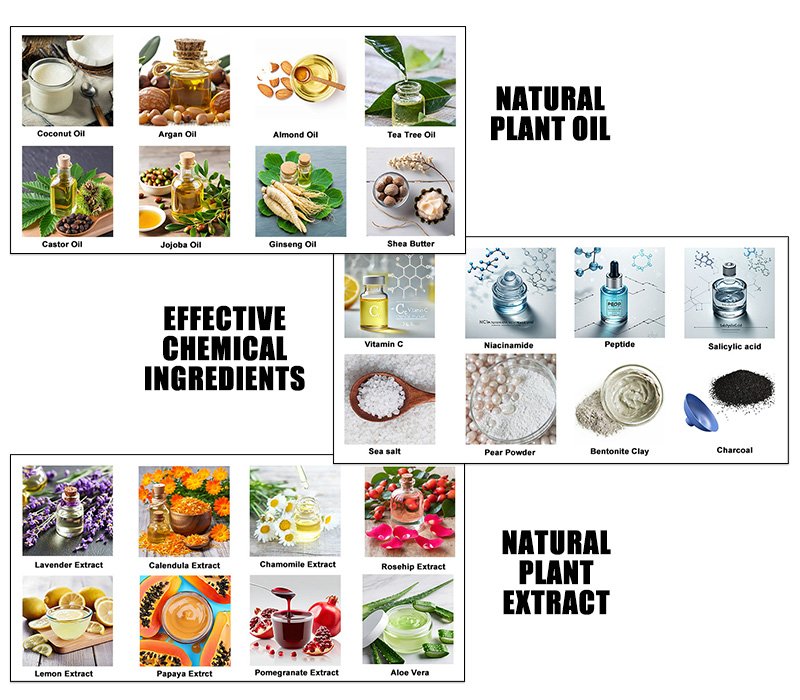
Cosmetic formulation development
Your formula is the soul of your brand. Whether you’re developing a gentle serum for sensitive skin, a high-efficacy anti-aging cream, or a scalp-purifying shampoo, our in-house chemists create custom cosmetic formulations tailored to your desired effect, skin type, region, and ingredient philosophy.
With over 5,000+ proven base formulas and full white-label development support, we help you build a product that meets your performance goals, brand values, and market trends.
Available Services:
Active ingredient sourcing & formulation balancing
Custom texture creation: gel, cream, balm, lotion, foam, oil
Ingredient selection for target concerns: anti-acne, brightening, anti-aging, hydration
Support for natural, vegan, EWG green-level formulations
Regional compliance: USA, EU, AU, JP standards
Custom Cosmetic Packaging Styles
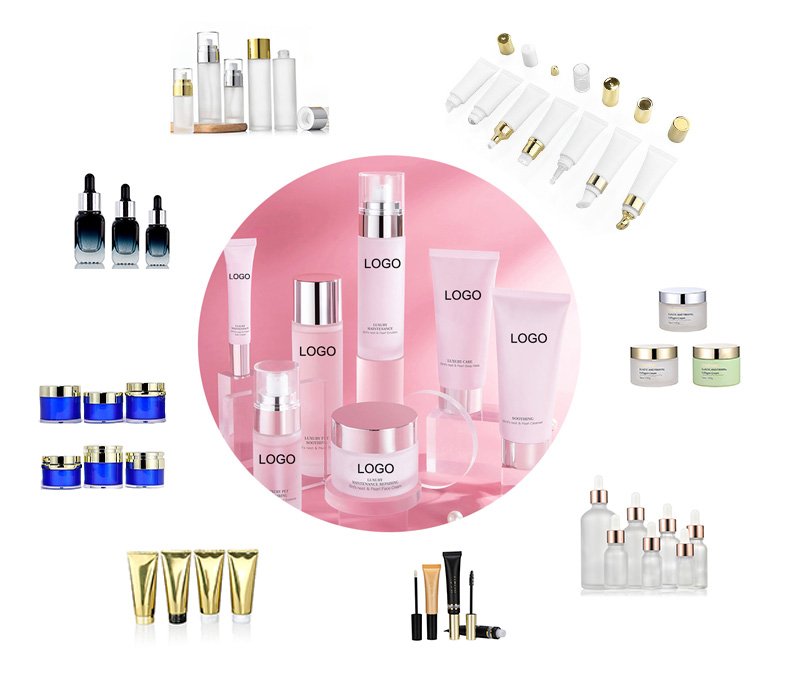
Packaging plays a critical role in how your brand is perceived. Whether you need luxury glass droppers, airless pump bottles, eco-friendly refill pouches, or retail-friendly PET tubes, we provide 3000+ stock and customizable packaging options.
From minimalist matte finishes to glossy foil-stamped designs, our packaging engineers help you select the perfect form and material—whether for prestige skincare, professional haircare, or clean beauty positioning.
Available Options:
Glass, PET, PP, PCR, aluminum, bamboo, and more
Airless pumps, sprayers, jars, tubes, and dropper bottles
Color-matching, texture finishes, and custom mold services
Cosmetic Box, Label Design for skincare brands
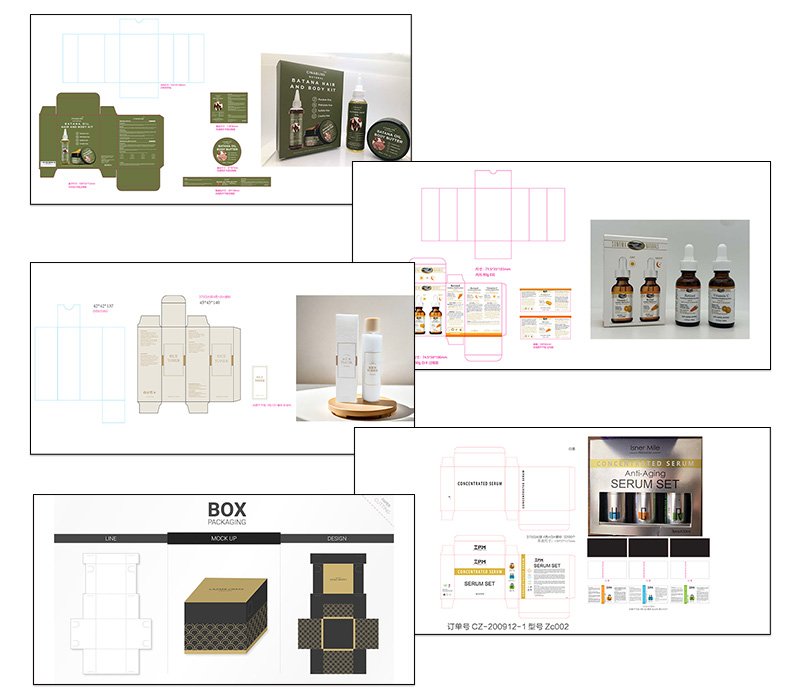
Beyond the bottle, your visual identity sets your product apart. Our in-house design team creates custom label layouts, box designs, and full branding suites—including logo placement, font matching, and barcode compliance.
We also offer waterproof labels, UV spot gloss, embossing, foil stamping, and other premium finishes to ensure your packaging feels as high-end as your formula. Whether you’re building an Amazon FBA product or a salon-grade kit, we help make your product shelf-ready.
Design Services Include:
Free artwork design and dieline support
Amazon & retail barcode setup (FNSKU/UPC)
Custom printing on labels, boxes, pouches, and shrink wraps
Cosmetic Box Customization for Skincare Brands
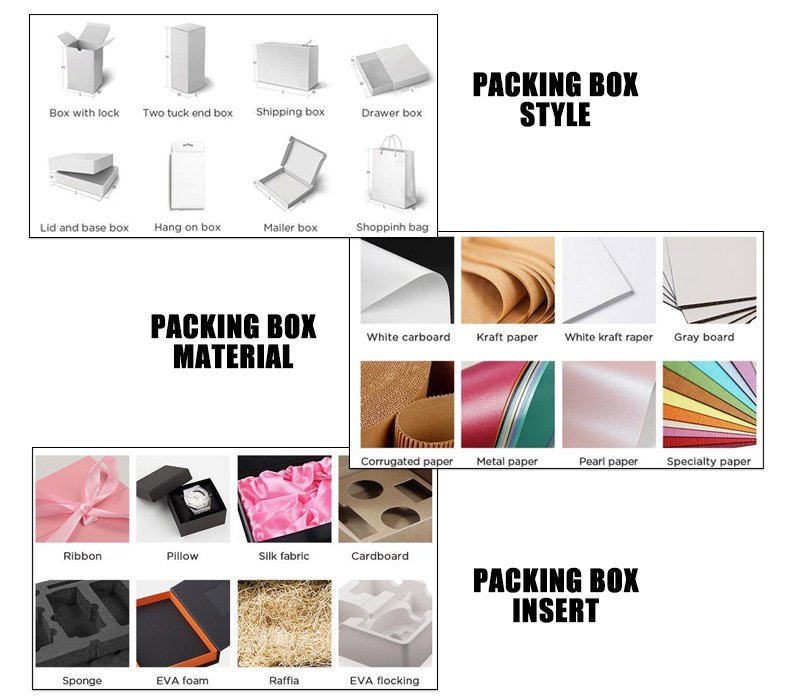
Beyond the bottle, your outer packaging is your first impression. Our team provides custom cosmetic box solutions with tailored box styles, premium cardboard or specialty paper choices, and protective inserts in EVA, molded pulp, or PET.
We also offer specialty printing options, matte or glossy lamination, foil stamping, embossing, and spot UV to create a tactile, luxury feel. Whether for boutique retail, e‑commerce, or professional kits, we ensure your packaging enhances your brand story.
Customization Options Include:
Box style selection: tuck‑end, drawer, magnetic, or folding carton
Material choices: rigid board, kraft, coated paperboard
Insert options: EVA foam, molded pulp, PET, or cardboard
Cosmetic Box Logo Finishing for Premium Branding
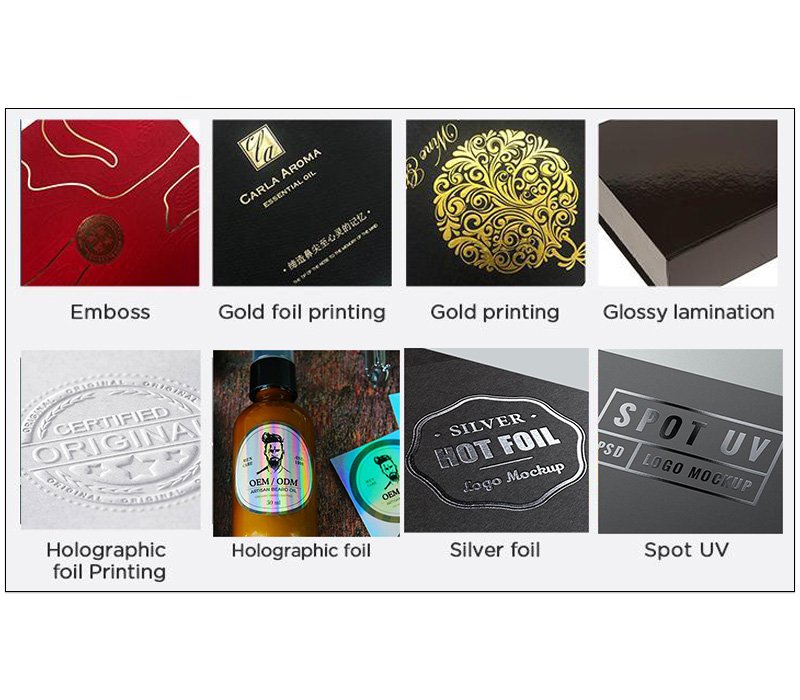
Beyond structure, your logo finish defines your product’s luxury appeal. We offer custom cosmetic packaging logo treatments including emboss, gold foil printing, silver foil, glossy lamination, holographic effects, and spot UV for high-impact shelf presence.
From subtle debossed textures to striking holographic foil, each technique is chosen to enhance your brand story and match your target market positioning. Whether for upscale retail, e‑commerce, or professional use, our finishes help your product stand out.
Finishing Options Include:
Emboss & Deboss logo impressions
Gold, silver, and holographic foil stamping
Spot UV for selective gloss highlights
Glossy or matte lamination for surface protection
Make A Sample First?
If you have your own formula, packaging idea, logo artwork, or even just a concept, please share the details of your project requirements, including preferred product type, ingredients, scent, and customization needs. We’re excited to help you bring your personal care product ideas to life through our sample development process.
More Hair Styling product customization instructions and FAQs
Our formulations: Products in this category focus on controlled, brushable hold with clean restyleability, long-wear shape memory, and humidity resistance—without flakes, stickiness, or greasy collapse. These styling systems support sleek blowouts, defined curls, textured lifts, and precision edges across dry winters and tropical summers. The goal is to create flexible films, engineered grip, and heat glide so styles set fast, resist reversion, and remain touchable with natural movement and shine. Formats include alcohol or water-based sprays, gels, mousses/foams, fiber creams, pomades/waxes, putties/clays, heat/iron primers, and edge controls—each tuned by hair type (fine/normal/coarse), style target (sleek/voluminous/defined), and climate with salon-grade sensorials and retail readiness.
Key ingredients and technologies for hair styling:
- Fixative Polymers & Plasticizers: VP/VA, PVP, octylacrylamide/acrylates, and modern polyurethane/acrylate hybrids form elastic, high-clarity films that lock shape while moving with the fiber. Plasticizers and neutralization (AMP/amine) tune stiffness, setting time, and humidity tolerance, balancing crunch versus flex for brushable, flake-free hold.
- Texture Builders & Volume Networks: Pullulan, film-forming polyquats, and lightweight networks (starch/silica spheres, polyamide micro-fibers) create separation and root lift without grit. They add “grab” for braids and updos, or airy expansion for blowouts, while matte/gloss ratios are customized via silica level, micas, and emollient choice.
- Shine, Slip & Heat Glide (Silicone & Silicone-Free): Dimethicone, phenyl trimethicone, and amodimethicone provide cuticle leveling, thermal slip, and mirror gloss with selective deposition. For “clean” briefs, hemisqualane, C13-15 alkane, isoamyl laurate, and gloss esters deliver lightweight slip, fast flash-off, and camera-ready shine without build-up.
- Humidity Shields & Anti-Reversion: VP/DMAPA acrylates, octylacrylamide systems, and cationic films (Polyquaternium-69/4/11) reduce water uptake and frizz rebound, preserving alignment and curl definition between washes. Pair with low-tack resins for touchable memory and with anti-static agents to keep silhouettes disciplined in high RH.
- Rheology, pH & Flake Control: Carbomer and acrylates/C10-30 alkyl crosspolymers set spread and pick-up; xanthan or gellan add cueing in mousse/cream. pH is tuned (~6–7 for neutralized gels; ~4.5–6 for cationic creams) to stabilize resins and conditioners. Anti-flake strategies include compatible resin blends, proper neutralization, and optimized solids. Waxes (beeswax/candelilla/microcrystalline) and oil gellants craft pomade structure with clean breakdown for re-workable styles.
For Customize: By integrating elastic fixatives, micro-networks for grip and lift, precision shine systems (silicone or silicone-free), robust humidity shields, and disciplined rheology/pH control, these builds deliver fast set, long-wear hold, and effortless restyleability. Hair feels controlled yet touchable, heat tools glide smoothly, flyaways stay minimized, and finishes range from soft-matte texture to high-gloss polish—supporting premium positioning, strong PDP storytelling, and repeat purchase across e-commerce and salon channels.
Q: How do we avoid flaking while keeping hold?
A: Blend elastic resins with polyquats/pullulan, optimize solids, and avoid high-Tg-only systems. Validate with flake grading after aggressive brushing and show panel “clean shoulders” ratings.
Q: Aerosol or propellant-free—which should we launch?
A: Both. Aerosols deliver classic performance and salon theatrics; propellant-free mists win “clean-lean” and regulatory gates. Keep finish parity where possible and document VOC compliance by region.
Q: Will styling products dull color or feel sticky?
A: Use hemisqualane for slip, low-wax builds, and chelation to prevent mineral film. Flexible films keep shine high; verify with gloss and tack metrics on color-treated tresses.
Q: How do we make gels soft, not crunchy?
A: Design a cast-to-soft break: elastic resins + plasticizer balance, lower glass transition, and scrunch-out guidance. Pair with panel feel tests and restyle cycles.
Q: Can we map holds and finishes clearly for e-commerce?
A: Yes—use a numeric hold scale, explicit finish (matte/satin/gloss), and “brushable vs. firm” tags. Back with humidity and flake/tack data for trust and faster decisions.
Launch Brushable, Humidity-Smart Styling With Us
We customize elastic resins, texture systems, and heat/UV strategies by hair type, finish target, and climate, then deliver fast sampling, artwork support, and packaging tuned to your price tiers. From flexible sprays and gels to clays, creams, mousses, and powders, we help you launch quickly and grow repeat purchase.