Skip to content
Hair Growth Serum Vs Scalp Oil: Which Format Should Brands Choose?
- Many brands entering the scalp care category face the same early decision: should the hero product be a lightweight hair growth serum or a richer scalp oil? The answer shapes everything from texture and routine frequency to packaging, positioning, and repeat purchase potential.
- In most cases, a hair growth serum is the better fit for daily scalp support, lightweight feel, and faster absorption. A scalp oil is usually the stronger choice for nourishment, massage rituals, and dry-scalp care positioning. For some brands, the best launch strategy is not choosing one over the other, but building a two-step routine with both.
Which Format Fits Your Target User More Easily?
This quick guide helps brands choose the more suitable direction before sampling starts. It is not about which format is universally better. It is about which format fits the scalp type, routine, and positioning more naturally.
Quick Decision Guide For Hair Growth Serum Vs Scalp Oil
| Target Need | Better Format | Why It Usually Fits Better | Suggested Positioning |
|---|---|---|---|
| Oily scalp | Hair Growth Serum | Lighter finish and easier daily wear | Fresh scalp routine |
| Fine or flat hair | Hair Growth Serum | Lower risk of heavy residue at the roots | Weightless root care |
| Sensitive users who dislike greasy feel | Hair Growth Serum | Cleaner, faster-absorbing experience | Gentle daily scalp support |
| Dry, tight, or flaky-feeling scalp | Scalp Oil | Better comfort and massage feel | Nourishing scalp care |
| Botanical or natural positioning | Scalp Oil | Easier to support with plant-oil storytelling | Herbal scalp ritual |
| Premium treatment routine | Scalp Oil | More sensorial and treatment-like | Night scalp therapy |
| Universal daily routine | Hair Growth Serum | Easier for repeated use | Everyday scalp serum |
| Premium two-step line | Both | Clear role split and bundle value | Daily serum + weekly oil |
The difference is not only about thickness. The more important difference is routine role. Current scalp-care content commonly positions serums as lighter, faster-absorbing, and better suited to frequent scalp-focused use, while oils are more often associated with nourishment, massage, and richer treatment routines.
What Is The Real Difference Between Hair Growth Serum And Scalp Oil?
The difference is not only about thickness. The more important difference is routine role. Current scalp-care content commonly positions serums as lighter, faster-absorbing, and better suited to frequent scalp-focused use, while oils are more often associated with nourishment, massage, and richer treatment routines.

Usually lighter in texture and easier to absorb
Better suited to frequent or daily scalp routines
Easier to position around scalp-targeted active delivery
More natural fit for clean, modern, treatment-style branding

Usually richer and more massage-friendly
Better suited to dry-feeling scalp or pre-wash care
Stronger fit for botanical, herbal, or ritual positioning
Easier to use as a
premium add-on or treatment SKU
For many brands, the decision is less about “which one works better” and more about “which one fits the user’s habit better.” A product that matches routine behavior is usually easier to repeat, recommend, and repurchase.
Which Users Usually Fit A Hair Growth Serum Better?
Serum is usually the easier format when the goal is daily scalp care with a lighter finish. It fits best when the user wants scalp support without a heavy after-feel. This aligns with common scalp-serum positioning in current beauty content, where serums are framed as ongoing scalp-care products rather than richer treatment oils.

Oily Scalp Users
These users usually prefer a cleaner finish and are less tolerant of heavy root residue. A serum is easier to wear during the day.
Fine Hair Users
Fine hair often loses volume quickly when formulas are too rich. A lighter serum helps protect the “weightless” user experience.
Daily Routine Buyers
If the product needs to fit morning or nightly use with minimal mess, serum is usually the easier format to keep consistent.
Science-Led Brands
Serums fit well with a more technical scalp-care story, especially when the brand wants a cleaner active-delivery identity.
Which Users Usually Fit A Scalp Oil Better?
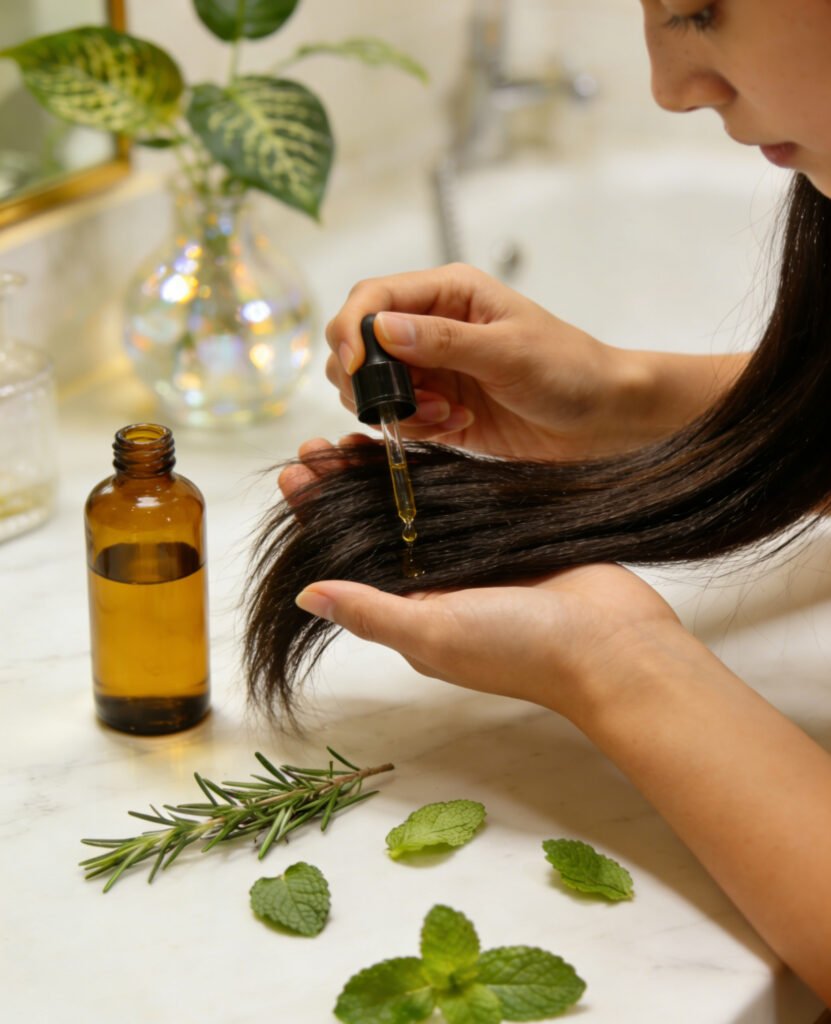
Scalp oil is often the stronger option when the brand wants to sell a richer care experience. Current product education around oils often emphasizes massage, overnight use, and deeper nourishment rather than lightweight daily wear.
Dry Or Tight-Feeling Scalp
A richer oil texture can feel more comforting during application and support a more nourishing routine.
Massage-Oriented Users
If the product story includes scalp massage, slow-care rituals, or spa positioning, oil creates a more natural format match.
Daily Routine Buyersdjwiaodjw
If the product needs to fit morning or nightly use with minimal mess, serum is usually the easier format to keep consistent.
Premium Treatment Lines
Scalp oil works well as a treatment SKU in premium kits, especially when the goal is to increase perceived value and add ritual depth.
Should Brands Launch One SKU Or A Two-Step System?
The best answer depends on the brand stage, budget, target user, and routine complexity. For many brands, choosing the right launch structure matters as much as choosing the formula itself.
- Best for startup brands, oily-scalp users, fine-hair users, and daily-use positioning.

- Best for botanical lines, dry-scalp users, premium ritual products, and slower-care positioning.

- Best for brands that want a full routine story, stronger bundling, and higher average order value.

- Often the most balanced route. The serum acts as the easy-entry hero SKU, while the oil expands the line later.

How Should Brands Design The Formula Direction For Each Format?
The format should follow the user behavior, not just the ingredient list. A strong launch formula is one that fits the target scalp need, the routine habit, and the packaging style at the same time.
- Define The Main Scalp Need.
Start with one clear priority: oily scalp balance, dry scalp nourishment, sensitive scalp comfort, or fuller-looking hair positioning.
- Match The Format To The Routine.
Choose serum when the goal is fast, light, frequent use. Choose oil when the goal is richer feel, massage slip, and treatment depth.
- Balance Performance And Repeat Use.
A formula can sound impressive, but if it feels sticky, heavy, or hard to wash out, repeat use often drops.
- Check Sensory, Stability, And Packaging Together.
Texture, oxidation risk, dosing control, and packaging fit should be checked early, not after the formula story is finalized.

Make A Sample First?
If you have your own formula, packaging idea, logo artwork, or even just a concept, please share the details of your project requirements, including preferred product type, ingredients, scent, and customization needs. We’re excited to help you bring your personal care product ideas to life through our sample development process.
Which Texture Directions Work Best For Hair Growth Serum And Scalp Oil?
Texture often decides whether the product feels “right” from the first use. A formula that is too rich for the target scalp type can reduce routine compliance even if the ingredient concept looks strong.


| Format | Texture Direction | Typical Feel | Best For | Packaging Fit |
|---|---|---|---|---|
| Hair Growth Serum | Watery Scalp Tonic | Very light, fast spread | Oily scalp, humid markets, frequent use | Nozzle bottle, dropper |
| Hair Growth Serum | Gel Serum | Slight body, controlled flow | Daily treatment routines | Dropper, pump |
| Hair Growth Serum | Milky Lightweight Serum | Softer, more cosmetic feel | Premium scalp care | Pump, airless bottle |
| Scalp Oil | Dry Oil | Smoother and less greasy than classic oils | Fine hair, lighter oil positioning | Dropper, pump |
| Scalp Oil | Classic Botanical Oil | Richer slip and massage feel | Dry scalp, ritual use | Glass dropper bottle |
| Scalp Oil | Overnight Treatment Oil | Fuller, longer-lasting richness | Weekly or night care | Boxed treatment set |
What Packaging And Claim Direction Work Best?
Packaging should match both formula behavior and user expectation.
Recommended Packaging By Format
| Product Type | Better Packaging Options | Why It Works |
|---|---|---|
| Hair Growth Serum | Dropper bottle | Familiar treatment format |
| Hair Growth Serum | Precision nozzle bottle | Easy scalp-line application |
| Hair Growth Serum | Airless pump | Cleaner premium look |
| Scalp Oil | Glass dropper bottle | Strong botanical identity |
| Scalp Oil | Treatment pump bottle | Easier larger-area application |
| Scalp Oil | Premium set packaging | Better treatment presentation |


For U.S. market positioning, brands should plan website copy, label copy, and product concept together. FDA states that claims such as restoring hair growth can move a product into drug territory, so cosmetic projects usually need safer wording focused on scalp care, cosmetic appearance, and routine support.
Safer Cosmetic Positioning Vs High-Risk Claim Language
| Better For Cosmetic Positioning | Use With Caution In The U.S. |
|---|---|
| Supports a healthier-looking scalp | Restores hair growth |
| Helps reduce the look of dryness | Treats hair loss |
| Lightweight scalp nourishment | Prevents hair loss |
| Helps hair look fuller | Regrows hair |
| Supports a balanced scalp routine | Stimulates hair growth |
Frequently Asked Questions About Hair Growth Serum Vs Scalp Oil
Brands often ask this comparison question because the answer affects the whole product roadmap. These are the most common decisions that come up before sampling.
1.Can a brand sell both serum and scalp oil in one routine?
- Yes. This is often one of the strongest premium strategies because each product has a clear role: serum for frequent scalp use and oil for deeper weekly or overnight care.
2.Is serum usually better for oily scalp users?
- In many cases, yes. A lighter serum is usually easier to wear regularly and less likely to leave the roots feeling heavy.
3.Is scalp oil too heavy for fine hair?
- It can be, depending on viscosity and dose. A dry-oil direction is often a better fit for fine-hair positioning.
4.Which format is easier for startup brands?
- Serum is often the easier first SKU because it fits a wider range of users and supports a more universal daily-use story.
5.Which format is stronger for a botanical brand image?
- Scalp oil usually gives the brand a more natural and ritual-led visual story, especially when hero oils are part of the concept.
6.Can a scalp oil still support a fuller-looking hair story?
- Yes, but the positioning should stay within safer cosmetic wording and focus on scalp nourishment, healthy-looking roots, and care routine support.
How Can Zerun Cosmetic Help You Choose The Right Scalp Format?
We help brands compare serum and oil directions before sampling starts, so the project is built around the target user, the texture goal, the packaging style, and the claim strategy from the beginning.
我们从您的目标头皮用户开始。
我们比较血清、油剂或双SKU途径
我们帮助协调质地、包装和日常角色
我们支持更实际的抽样方案。