Skip to content
How can I build a modern men’s grooming line that doesn’t feel generic?
A modern men’s grooming line comes from sharp positioning, problem-focused formulas, clean design, and an OEM partner who understands how men actually shop and use products.
Men’s care is full of look-alike black bottles and “for men” stickers. Real buyers want simple routines that work, not just darker labels. This page walks you step by step from idea to launch so you can brief one OEM partner and build a focused, distinctive men’s line.
Which men’s care OEM problems does this page help me solve?
This page helps you decide what to launch, how to position it, which formulas and packages to choose, and how to plan MOQs and phases with one OEM partner.
Too many overlapping SKUs
Risk and Solution
Copy-paste “for men” branding
Risk and Solution
Unclear male skin and hair priorities
Risk and Solution
Texture and fragrance mismatches
Risk and Solution
Channel and routine confusion
Risk and Solution
MOQ and long-term roadmap stress
Risk and Solution
How it works?
Step 1 – How should I segment my men’s grooming line and target users?
You should segment by real-life problems and usage occasions—face, beard, scalp, body and shower—aligned with where men discover and buy your products.
- Decide on core segments: face, shaving, beard, hair & scalp, body.
- Define who you serve first: students, professionals, athletes, barbershop clients.
- Map problems: oiliness, breakouts, ingrown hairs, dryness, dandruff, odour.
- Align with channels: Amazon, barbershops, salons, gyms, pharmacies.
Other issues you need to consider at this step:
What key grooming problems do my male customers want solved?
You should focus on a few high-friction problems men actually complain about, using direct, simple language instead of vague “freshness” or generic “care”.
- Face: oiliness, shiny T-zone, breakouts, rough texture, tired-looking skin.
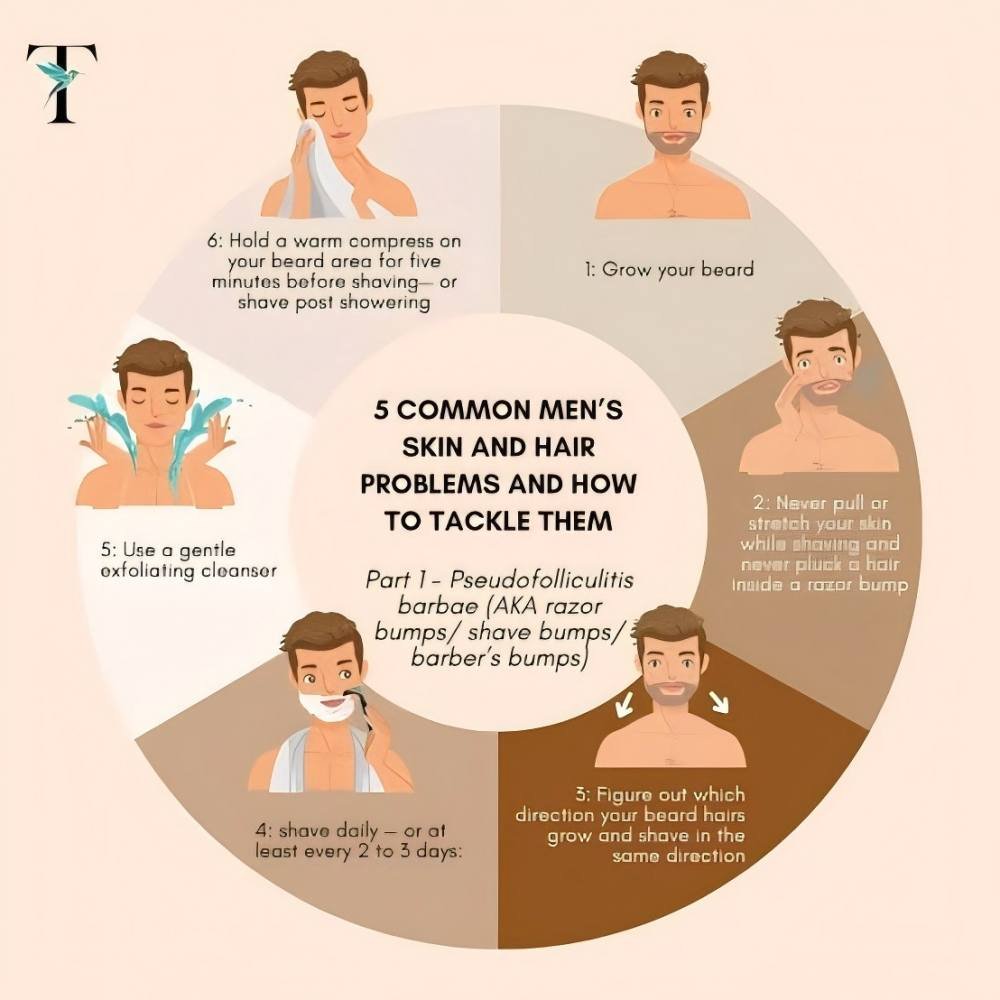
- Shaving: razor burn, bumps, redness, cuts, dryness after shaving.
- Beard: itch, beard dandruff, dry skin under beard, coarse hair.
- Body & scalp: odour, sweat, flaky scalp, dry elbows and knees.
- Choose 2–3 headline problems for your first SKUs.
| Segment | Main Concerns | Key Products to Start With | Tone & Style |
|---|---|---|---|
| Oily / breakout-prone | Shine, blocked pores, occasional breakouts | Oil-control face wash, light gel moisturiser | Clean, direct, “controls shine, keeps skin clear” |
| Shaving-focused | Razor burn, bumps, redness | Pre-shave wash, shave gel, post-shave balm | Comfort, closeness, less irritation |
| Beard-focused | Itch, beard dandruff, dry skin underneath | Beard wash, beard oil or balm | Groomed, soft, itch-free beard |
| Gym / active | Sweat, odour, convenience | 2-in-1/3-in-1 wash, body spray | Simple, efficient, locker-room friendly |
How do different channels shape my first men’s product line-up?
Channels influence how simple routines must be, how much education is possible, and how many SKUs you can realistically support at launch.
- Amazon / DTC:
- Hero products and clear bundles (“oily-skin starter kit”, “beard kit”).
- Needs sharp titles, comparison to unisex options, strong visuals.
- Barbershops & salons:
- Value back-bar sizes, styling and beard products, simple narratives.
- Retail take-home formats linked to in-chair experience.
- Pharmacies / mass retail:
- Require clear shelf segmentation (face, beard, hair, body).
- Prefer straightforward, problem-and-solution messaging.
Step 2 – What benefit and claim style works best for men’s grooming?
You should use direct, credible language about visible results and routine simplicity, avoiding over-technical jargon and exaggerated promises that feel like hype.
- Lead with problem–solution headlines: oil control, comfort after shaving, anti-dandruff, odour control.
- Use simple, concrete benefits over long buzzword lists.
- Match tone to channel: clinical, barbershop, lifestyle or sporty.
- Keep claims supportable with formula and test data.
Other issues you need to consider at this step:
Which problems can I safely claim to solve as a cosmetic OEM line?
You can focus on cleansing, oil control, hydration, comfort, smoothness, scalp and hair appearance, and beard softness, without promising medical treatment.
- Safer claim areas:
- Reducing excess sebum and shine.
- Helping remove dirt, sweat and pollution.
- Soothing and hydrating freshly shaved skin.
- Improving look and feel of beard and hair.
- Avoid explicit medical language around disease or long-term conditions.
How should I talk about age, performance and “masculine” positioning?
Your language should respect different ages and lifestyles, using strength and performance metaphors carefully, without stereotypes or unrealistic “miracle” framing.
- For age: “tired-looking”, “dull” or “fine lines” rather than “erase years”.
- For performance: focus on efficiency and routine simplicity.
- Keep “masculine” cues to scent, design and naming, not clichés.
- Adapt tone if targeting unisex partners buying for men.


Step 3 – How do I design textures and fragrances that men actually enjoy using?
You should design light, fast-rinsing, non-sticky textures with intuitive usage and modern, balanced fragrances men can wear daily without overwhelming themselves or others.
- Prioritise easy rinse-off for washes and shampoos.
- Keep face products non-greasy, non-heavy, even in winter.
- Use fragrance levels that fit office, gym and social settings.
- Offer fragrance-free or low-scent options for sensitive users.
Other issues you need to consider at this step:
Which base textures work best for men’s face, beard and body care?
Base textures should feel quick and clean: gels, light creams, milks and lotions usually work better for men than very heavy, slow-absorbing products.
- Face:
- Gel or gel-cream cleansers; light gel-cream moisturisers.
- Beard:
- Non-stripping washes; conditioning oils or light balms.
- Body & scalp:
- Rich foam that rinses easily; non-waxy body lotions.
- Keep instructions simple: 1–3 clear steps per routine.
| Zone | Preferred Texture Type | Reasons for Preference | Formulation Notes |
|---|---|---|---|
| Face | Gel, gel-cream, light lotion | Non-greasy, fast absorption, no residue | Oil-control, non-comedogenic, low stickiness |
| Beard | Light oil, soft balm, gentle wash | Soften hair, reduce itch, easy rinse | Non-stripping surfactants, conditioning agents |
| Body | Rich foam wash, light lotion | Strong clean feel, fast rinse, no tackiness | Good foam, quick rinse, all-over safety |
| Scalp | Clear shampoo, scalp tonic | Cleanness, dandruff control, freshness | Dandruff actives (where allowed), mild bases |
How should I brief fragrance and “fresh but not overpowering” scent profiles?
You should brief scent families, intensity and no-go notes, so the OEM can design masculine-leaning scents that still feel modern, wearable and category-appropriate.
- Define profiles: citrus, woody, aquatic, herbal, clean musk.
- Decide strength: lighter for face, moderate for body and hair.
- List “no-go” directions (too sweet, too powdery, very heavy cologne).
- Consider offering a fragrance-free sensitive-skin option.
Step 4 – How do I turn men’s grooming insights into routines, formats and packaging?
You should build simple routines and kits that fit real life—shower, sink, gym bag—using packaging that looks clean and masculine without being cliché.
- Map step-by-step routines: wash → shave / beard → hydrate → style.
- Pick formats: tubes, pumps, jars, sticks, sprays, depending on usage.
- Design packs that work in showers, gyms and travel.
- Keep on-pack instructions and icons very clear.
Other issues you need to consider at this step:
What product and routine structures work best for new men’s brands?
You should offer one or two simple “systems” (e.g. oily-skin face system, beard system) rather than a long list of standalone products.
- Oily-face system:
- Oil-control face wash, toner or essence, light moisturiser.
- Shave & soothe system:
- Pre-shave wash, shave gel/cream, post-shave balm.
- Beard system:
- Beard wash, beard oil or balm, optional styling product.
- Gym-friendly body system:
- 2-in-1 or 3-in-1 wash, deodorising spray, quick body lotion.
| Channel | Typical Kit Structure | Pack Size Focus | Extra Elements Needed |
|---|---|---|---|
| Amazon / DTC | Face system, beard kit, gym kit | Value sets, bundles | Comparison images, review focus |
| Barbershop | In-chair products + retail mini routines | Back-bar + 100–150 ml retail | Service-linked leaflets, shelf stands |
| Pharmacy | Simple “problem-solution” pairs (face + balm) | 50–150 ml | Clear claims, doctor-style explanations |
Which packaging choices fit barbershops, gyms and e-commerce?
You should choose packaging that feels premium but robust enough for wet environments and travel, with sizes and closures tuned to each main channel.
- Barbershops:
- Larger back-bar formats, pumps and clear volume labels.
- Gyms and travel:
- Smaller, leak-resistant tubes and bottles.
- E-commerce:
- Bottles and tubes that photograph well; easy to bundle in sets.
- Use consistent bottle families for brand recognition and MOQ efficiency.


Step 5 – How do we choose hero SKUs, MOQs and a men’s care roadmap?
You should choose a few clear hero SKUs, agree on realistic MOQs, and plan rollouts in phases instead of launching a full barbershop + face + body line at once.
- Identify 2–4 hero SKUs for your first launch.
- Agree formula and packaging MOQs with your OEM early.
- Phase additional SKUs by segment and channel success.
- Build a roadmap for year 1, year 2 and beyond.
Other issues you need to consider at this step:
Which hero SKUs are best to start a men’s grooming line?
Your hero SKUs should be obvious problem-solvers that can live alone or in simple kits, and that do not depend on very complex consumer education.
- Typical starting heroes:
- Oil-control face wash or everyday cleanser.
- Post-shave or aftershave comfort balm.
- Beard oil or beard balm for brands with strong beard focus.
- 2-in-1 or 3-in-1 gym-friendly wash.
- Check which of these fits your brand story and channel best.
How do I phase in advanced or niche men’s products over time?
You can add more specialised products—serums, masks, scalp tonics, anti-fatigue eye care—once your core heroes are proven and you understand real user feedback.
- Phase 1: core face, shave/beard and body basics.
- Phase 2: targeted solutions like eye gels, anti-fatigue serums, scalp care.
- Phase 3: more niche items (peels, masks, fragrance add-ons, limited editions).
- Always link new SKUs back to your core problem narratives.
What else do buyers usually ask about men’s care OEM projects?
Buyers often ask whether men really need separate formulas, how unisex bases can be adapted, which scents work, and how to balance simplicity with upsell opportunities.
Q1: Do men really need separate formulas, or just different branding?
A: Some formulas can be shared across genders, but textures, fragrance and problem focus often need adjustment if you want men’s products to feel truly tailored.
- Face and body chemistry is similar; habits and expectations differ.
- Men usually favour lighter, faster textures and clear results.
- Brand, scent and packaging strongly influence acceptance and use.
Q2: Can we adapt our unisex or women’s formulas for men’s care?
A: Yes, you can adapt existing formulas, but you should check texture, fragrance, oiliness and claims to make sure they match men’s expectations and habits.
- Re-assess viscosity, after-feel and foaming behaviour.
- Adjust scent and intensity to fit men’s daily use.
- Reframe claims to focus on simple problem solving.
Q3: What fragrance families work best for men’s grooming?
A: Fresh, clean, woody, citrus and light aromatic profiles often work best, while overly sweet or heavy perfume-like scents can feel dated or polarising.
- Examples: citrus-wood, aquatic, herbal-musk, clean woods.
- Avoid extremes that clash with office or gym contexts.
- Consider one signature scent plus a sensitive/unscented option.
Q4: How can I keep routines simple but still allow upsell?
A: You can design a core two-step or three-step routine, then add optional boosters and weekly treatments for more engaged users and higher-value customers.
- Core: cleanser + moisturiser, or wash + balm.
- Optional: serum, eye gel, scrub, mask.
- Bundle core + one booster in curated sets.
Q5: How do I handle men with sensitive skin or shaving irritation?
A: You should offer at least one sensitive-skin path with fragrance-free or low-scent formulas and soothing actives, clearly labelled for reactive or newly shaved skin.
- Use gentle surfactants, humectants and barrier-support ingredients.
- Limit fragrance and potential irritants.
- Emphasise comfort, softness and reduced tightness post-shave.
Q6: Can you benchmark famous men’s grooming brands on texture and feel?
A: We can create “inspired-by” concepts that echo the texture, slip, foam and after-feel of leading men’s products without copying proprietary formulas or brand language.
- Benchmark cleansers, shave foams, balms and beard oils.
- Match usage experience and routine flow, not every detail.
- Build in your own visual identity and key ingredient story.
Q7: How do we approach anti-ageing and fatigue claims in men’s care?
A: Use straightforward language about tired-looking skin, dullness and fine lines, supported by familiar actives, without promising dramatic or medical-level changes.
- Focus on hydration, smoothness and healthier-looking skin.
- Use known actives like niacinamide, peptides, vitamin C derivatives.
- Provide simple claims: “skin looks fresher, smoother, more even”.
Q8: What is a realistic timeline from brief to first men’s care shipment?
A: Many men’s care projects move from brief to first shipment in a few months if heroes, textures, packaging and tests are decided efficiently.
- Brief and segmentation alignment.
- Lab samples and texture/scent refinements.
- Packaging selection and basic compatibility checks.
- Stability testing, scale-up and production.
Q9: Can you support barbershop-only or salon-exclusive men’s lines?
A: Yes, you can build barbershop or salon-exclusive formats and sets that share formulas with retail SKUs but differ in volume, labelling and merchandising.
- Back-bar sizes and pro branding for service use.
- Smaller retail packs with storytelling and shelf appeal.
- Kits tied to specific services (shave, beard shape, facial).
Make A Sample First?
If you have your own formula, packaging idea, logo artwork, or even just a concept, please share the details of your project requirements, including preferred product type, ingredients, scent, and customization needs. We’re excited to help you bring your personal care product ideas to life through our sample development process.
How does Zerun support private label men’s grooming brands for the long term?
- Our team will answer your inquiries within 12 hours.
- Your information will be kept strictly confidential.
Zerun supports men’s grooming brands with focused segmentation, texture design, scent strategy, packaging selection and phased launch planning so you can grow a line that men actually use.
- We start from your reality:
- Target age groups, channels, regions and price levels.
- We co-develop formulas and routines:
- Face, shave, beard, hair and body products mapped to real problems.
- We help plan tests and documents:
- Stability, compatibility and basic safety support for your markets.
- We think in roadmaps, not one-offs:
- Hero products first, then deeper systems and pro formats.
If you already have reference products or ideas, share:
- Links or photos of men’s products you want to benchmark or improve.
- Your target markets, channels and preferred brand tone.
- Your initial volume expectations and ideal launch timing.
Based on this, we can propose a clear men’s care development roadmap and sampling plan.
Use the contact form, email or WhatsApp on this site to start your private label men’s grooming project with Zerun.