Skip to content
How to choose EU/US-compliant cosmetic OEM?
Choosing an EU/US-compliant cosmetic OEM isn’t about the lowest MOQ or the prettiest sample—it’s about whether the factory can prove compliance with a traceable evidence chain from formula version to batch records, testing, and label review. This page gives you a practical screening system: what to request in a Compliance Proof Pack, what to ask in a 30-minute capability call, and which validation gates keep samples aligned with mass production. By the end, you’ll know exactly what to do next and what documents to collect before you commit.
Can't find the answers?
No worries, please contact us and we will answer all the questions you have during the whole process of OEM Cosmetic customization.
Frequently Asked Questions
Q1. What does “EU/US-compliant OEM” actually mean?
- The OEM can provide traceable records (date, version, batch/lot IDs, sign-offs), not just certificates.
- Testing and documentation are linked to the final formula version and final packaging spec.
- Changes are controlled with written triggers and approval rules before production moves forward.
Q2. Which documents should I request first to screen an OEM?
- A structured Proof Pack: Quality records, Traceability, Tests, Label/Claim review examples.
- At least one filled example per area (not blank templates).
- Evidence of linkage once: formula version → test sample → packaging spec → batch/release record.
Q3. How can I tell if a Proof Pack is “real” or just templates?
- Look for four fields on real examples: Date, Version ID, Batch/Lot ID, Sign-off.
- Check whether at least one report references a sample ID and a formula version.
- Confirm release criteria and hold/rework logic exist (not “we will handle it”).
Q4. When should I lock claims and label wording?
- Draft claim boundaries early (Allowed / Avoid / Needs proof plan) before artwork starts.
- Confirm the OEM has a label/claim review checklist and a sign-off moment.
- Keep final wording aligned to the frozen version snapshot to prevent late rework.
Q5. What usually causes “sample approved but bulk differs”?
- Uncontrolled changes (raw materials, fragrance, packaging components, process, production line).
- No measurable acceptance criteria for the approved sample (pH/viscosity/odor/appearance).
- Weak release control (no clear standards, no hold/rework triggers, incomplete batch records).
Q6. Do I need stability and packaging compatibility checks for every product?
- You need checks that match your product risk lane and packaging risk (pump/spray/leak sensitivity).
- Compatibility must be run on the final formula version in the final packaging spec/SKU.
- Any packaging component change (pump/gasket/spring) should trigger re-check rules.
Q7. What are the biggest red flags when choosing an EU/US OEM?
- They can’t provide real record examples or avoid sharing any version-linked evidence.
- They have no written change-control triggers or re-sample rules.
- They can’t explain who signs labels, who releases batches, and what records prove decisions.
Q8. What should I send to get an accurate compliance quote and plan?
- Your product list and formats (leave-on vs rinse-off) plus target markets (EU/US) and channels.
- Your claim direction (conservative vs ambitious) and packaging direction (type + constraints).
- Any reference products and your timeline, so the OEM can map gates, tests, and documentation scope.
How can you tell if an OEM is truly EU/US-compliant?
A great sample isn’t enough for EU/US compliance—what matters is whether the OEM can keep formula, testing, labels, and batch records aligned at scale. This page shows a proof-based way to screen OEMs and avoid costly rework.
Part 1 — The real pain isn’t manufacturing—it’s mismatch
- Your sample looks perfect, but the final formula version used in production quietly changes.
- Your test reports reference an earlier sample or a different packaging set-up.
- Your label copy and claims drift into higher-risk wording after artwork is already moving.
- Result: re-testing, re-labeling, re-approvals, delayed production, and higher total cost.
Part 2 — “We’ll fix it later” is the hidden timeline killer
- Early discussions focus on MOQ, price, fragrance, and lead time.
- Critical compliance decisions get postponed: claim boundaries, label review ownership, packaging compatibility checks, and change-control rules.
- When these decisions arrive late, even small changes become slow and expensive because packaging and artwork are already committed.
Part 3 — A great sample can still fail at scale
- Without defined acceptance criteria, the “approved sample” becomes a moment—not a controlled baseline.
- Common breakpoints when scaling:
- Odor drift (raw material or fragrance variance)
- Viscosity shift (process or material variability)
- Pump/leakage issues (packaging compatibility)
- Silent substitutions (same INCI, different performance)
- These create both compliance risk and customer-complaint risk.
Part 4 — The new standard: choose with proof, not promises
- A compliance-ready OEM can show real records, not just certificates or templates.
- You should be able to verify a traceable chain: formula version → raw materials → tests → label review → batch release.
- This page gives you a buyer workflow: define your lane, request the Proof Pack, run a capability call, lock claim guardrails, and use validation gates so sample-to-bulk stays consistent.
Step-by-Step — How to choose an EU/US-compliant cosmetic OEM
Follow these steps to screen OEMs with proof: define your lane, request the Proof Pack, confirm capability, lock claim guardrails, run validation gates, and shortlist with a scorecard.
Step 1 — Define your compliance lane
Start by locking three decisions. Keep it practical and specific:
Product risk profile (what you’re actually making)
Higher-risk usually means you need tighter evidence, stronger change control, and clearer release criteria. Examples of “treat as higher-risk” situations include: eye/lip products, baby/child products, sprays/mists, intimate-use products, strong leave-on actives (acid-style, retinoid-style), and anything with heavy fragrance/essential oil load. Lower-risk is typically basic rinse-off and conservative leave-ons with mild claims.
Claim intensity (what you want to say)
This is the biggest “hidden scope” driver. Keep your claims in one of these lanes:
- Low: cleanse, hydrate, soften, refresh, comfort
- Medium: “helps improve the look of…”, “supports a healthy-looking…”, “reduces the appearance of…”
- High: acne/dandruff/eczema-like language, medical-style outcomes, “clinically proven” without a plan
Channel reality (where it will be reviewed)
Marketplace listings and retail partners punish ambiguity differently. If you’re selling on Amazon or through strict retail, assume you’ll need cleaner documentation discipline, clearer claim boundaries, and faster complaint-response capability.

Step 2 — What “EU/US-compliant OEM” really means
A practical definition of “EU/US-compliant OEM” is a factory that can show you five verification areas, with real examples:
Quality system you can see in records (not just certificates)
You should be able to review examples of batch records (filled, not blank), release criteria, hold/rework decisions, deviation handling, complaint handling, and retention sample rules. If the OEM can’t show real records, you can’t rely on repeatability.
Traceability from raw materials to finished batches
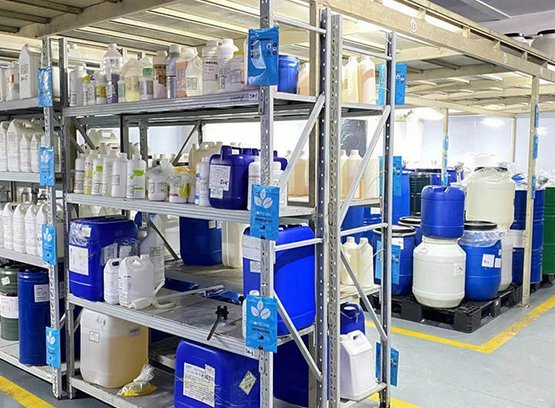
A compliant factory can show how raw material documentation connects to incoming batch records, how those batches link to finished-goods batch records, and what happens when a supplier changes grade or specification.
Safety and testing evidence tied to the final version
The key word is “tied.” Reports should reference the version being tested (formula version and packaging spec), not generic “similar product” evidence. If you can’t trace reports to the final version, you’ll re-test later.
Label and claim review workflow
You’re looking for a consistent internal method: who reviews, what checklist they use, how risky wording gets rejected or rewritten, and how label copy stays aligned to the final formula version.
Change control (the real differentiator)
This is where many “good factories” fail. You need to know what triggers re-approval: raw material changes, fragrance changes, packaging changes, production line changes, supplier substitutions. A compliant OEM can show the rules and the record trail.


Step 3 — Lock formula direction and texture targets
The Proof Pack is the fastest screening tool. If an OEM can’t provide it cleanly—dated, versioned, traceable—they’re not ready for EU/US work at the level you need.
🏷️Folder A — GMP & Quality records (examples, not claims)
Ask for:
- Batch record sample pages (filled fields, not templates)
- Finished goods release criteria and COA format (what triggers “hold”?)
- One deviation/CAPA example (redacted is fine)
- Complaint handling example + retention sample policy
What to verify:
- Visible batch number, dates, signatures/approvals
- A decision trail (pass/hold/rework)
- Clear release standards (not “looks OK”)
🏷️Folder B — Traceability (raw materials → batch)
Ask for:
- COA + SDS examples for key raw materials
- How incoming batches are recorded (what data is captured)
- Substitution rules: what changes require re-approval and re-sampling?
What to verify:
- Incoming batch IDs and linkage to production usage
- Supplier identity and spec references
- A written substitution rule (not “we’ll inform you”)
🏷️Folder C — Safety & testing evidence (version-linked)
Ask for:
- Micro test report examples and the schedule logic
- Stability approach and example report format
- Packaging compatibility approach and what is recorded when issues occur
What to verify:
- Reports reference the tested version (formula + packaging direction)
- Dates and sample identifiers exist
- Failures show actions (hold/rework/retest), not silence
🏷️Folder D — Label & claim review pack
Ask for:
- Internal label review checklist
- Claim boundary rule-set (how risky wording is handled)
- Sign-off record format (who approves what and when)
What to verify:
- An actual review process exists (not “our team will check”)
- Claim boundaries are written down
- Sign-off happens before artwork finalization
Step 4 — Proof Pack Review — Pass, Fix, or Fail
A 15-minute review flow (so you don’t get stuck reading everything)
📒Integrity check (5 minutes)
Pick 1–2 files from each folder (Quality / Traceability / Tests / Label & Claims) and confirm four fields exist on real examples (not blank templates):
- Date
- Version ID
- Batch/Lot ID
- Sign-off (name/role)
If these fields are missing across multiple folders, your Proof Pack is not “audit-ready.”
📒Linkage check (7 minutes)
Try to prove ONE complete chain. You only need one successful linkage to know the OEM can run a traceable system:
- Formula version → Test sample ID → Packaging spec/SKU → Batch record (or release COA format)
If the test report can’t be tied to a sample ID/version, or the batch record has no clear identifiers, your compliance evidence won’t hold under real scrutiny.
📒Ownership check (3 minutes)
Confirm there is an owner and a moment of sign-off for:
- Label/claim review
- Batch release decision
- Change-control approvals (what triggers re-sampling)
This is the fastest way to spot “we’ll fix it later” factories.

Pass / Fix / Fail rules (keep it strict)
Pass
- All four key fields exist on real examples.
- You can link one chain end-to-end (version → test → pack → batch).
Fix
- Documents are real, but 1–2 critical links are missing (most common: test report not version-linked, or no written re-sample triggers, or no signed label review).
- Proceed only after the missing items are provided and verified.
Fail
- Mostly templates, missing IDs/sign-offs, or no way to link version → test → pack → batch.
- Expect re-testing and label rework later.
Proof Pack Closure Requests
| Gap You Found | Send This Direct Request | Why It Matters |
|---|---|---|
| Release control unclear | “Please share one filled release record/COA showing batch ID, release criteria, and approver.” | Proves batch release is controlled, not informal |
| Test evidence not version-linked | “Please share one test report that clearly references sample ID and formula version.” | Prevents re-testing when the version changes |
| No written re-sample triggers | “Please share your written re-sample triggers (raw material / fragrance / packaging / process / supplier) and who approves.” | Stops silent changes that break compliance |
| Label/claim review not owned | “Please share your label/claim review checklist and one signed review example (redacted is fine).” | Prevents late claim rewrites and listing issues |
| Traceability not closed | “Please show how raw material lot IDs map into finished batch records (one example is enough).” | Confirms traceability under EU/US scrutiny |
| Packaging spec not referenced | “Please share the packaging spec/SKU reference used in testing and how it ties to the approved packaging.” | Avoids pump/leakage and compatibility surprises |
Step 5 — Sample approval → bulk lock (key parameters)
Label and claim rework is painful because it hits late—after artwork, testing, and sometimes production planning. This step locks guardrails early so your project doesn’t drift into avoidable risk.
The practical goal is not “perfect legal wording.” The goal is preventing obvious high-risk patterns while keeping your marketing intent intact.
High-risk patterns to control early
- Disease/treatment language: “treats,” “heals,” “cures,” “anti-inflammatory,” “antibacterial” (when used as a medical outcome)
- Guaranteed outcomes: “permanent,” “works for everyone,” “no side effects”
- “Clinically proven” without a defined evidence plan
- Sensitive categories with strong language: acne, baby, eye area, scalp conditions, intimate products
Safer alternatives that keep you in a lower-risk lane
- Instead of “treats acne” → “helps support blemish-prone skin” or “helps reduce the appearance of blemishes” (with an evidence plan)
- Instead of “heals skin” → “supports a healthy-looking skin barrier”
- Instead of “anti-inflammatory” → “helps soothe the look of redness and discomfort”
- Instead of “whitens” → “brightens the look of dullness” / “evens the look of tone”

Step 6 — Validation gates (minimum evidence + tests before scaling)
Testing and sampling should not be separate conversations. A gated workflow prevents late surprises by requiring minimum evidence at each step. If a gate isn’t met, you don’t move forward.
Version freeze (define what you’re approving)
This gate defines what “the product” actually is—so testing, labels, and production all point to the same target.
Create a single “Version Snapshot” that includes: formula version ID, key raw materials (especially preservatives, fragrance, key actives), and any allowed adjustment ranges (so the OEM can’t “tune” silently later).
Lock the packaging direction at least to container + dispenser type (e.g., airless pump vs lotion pump vs fine mist) and list any non-negotiables (PCR requirement, opaque vs clear, metal spring restrictions, etc.).
Write the earliest claim boundary draft (Allowed / Avoid / Needs proof plan). You’re not finalizing marketing—you’re preventing the project from drifting into higher-risk wording that forces rework later.
Define “change triggers” at a high level: what changes require written approval before samples or bulk can proceed (raw material grade, fragrance, packaging components, production line).

Sample Approval with measurable criteria
This gate turns a “nice sample” into a reproducible benchmark with measurable acceptance criteria.
Approve using a short acceptance sheet: appearance, odor range, pH range, viscosity range, and a few sensorial must-matches (slip, finish, foam feel, rinse feel).
Tie the approved sample to IDs: sample ID, formula version ID, and (if possible) bench batch record or lab log reference.
Capture simple “do-not-change” notes that often cause drift: fragrance level, key texture modifiers, and any special processing notes the OEM mentions (mixing order, temperature window).
If you’re evaluating multiple variants, label them as A/B/C with clear selection criteria so the OEM doesn’t merge attributes later.

Packaging compatibility + stability-critical checks
This gate confirms your final formula is stable and workable in your final packaging—not “stable in theory.”
- Pair the final formula version with the final packaging spec/SKU and run compatibility checks focused on real failure modes: leakage, pump performance, clogging, phase separation, discoloration, odor drift, label smearing, and stress from shipping temperature swings.
- Require that any report or internal record references all three: sample ID + formula version + packaging spec/SKU. If one of these is missing, the evidence is hard to defend later.
- Treat component changes as meaningful: a “same bottle” with a different pump/gasket/spring can change compatibility. Put these components on your trigger list.
- If you plan multiple channels (Amazon vs retail), note the packaging stress difference: warehouse heat, longer storage, and higher return exposure typically demand stricter leakage and stability discipline.

Mass production readiness + release control
This gate ensures the factory can reproduce the approved sample reliably, and that every batch can be released with defendable records.
- Define release criteria and actions: what triggers hold, rework, or rejection (pH out of range, viscosity shift, odor deviation, micro fail, fill weight deviations). “What happens next” must be written, not improvised.
- Confirm batch record completeness: critical process parameters captured (mixing time, temperature window, fill conditions), in-process checks, and sign-off points. This is what supports repeatability.
- Lock retention sample rules: how many samples, how labeled, how long held, and how quickly records can be pulled if there’s a complaint.
- Confirm the change-control workflow for post-approval changes (supplier change, raw material grade change, packaging component change) and how it ties back to Gate 1–2 re-checks.

Step 7 — Responsibility Boundary RACI
Many timeline delays are ownership problems disguised as compliance problems. A simple responsibility map prevents “assumed tasks” and ensures every decision has an owner.
Define responsibility across these roles (as applicable): Brand, OEM, third-party lab, EU Responsible Person / US responsible person.
Cover these tasks explicitly:
- Formula risk review and approvals (who signs “version freeze”?)
- Raw material documentation collection and traceability records
- Testing orders, schedules, and version-linked reports
- Label/claim review, rewriting, and final sign-off
- Batch release criteria ownership and release sign-off
- Retention samples and complaint handling workflow
- Change-control approvals and re-sampling triggers
- Post-launch response readiness (what records can be produced quickly)
Simple rule: if a task affects label, claims, safety evidence, or release criteria, it must have a named owner and a record trail.

When does “EU/US-compliant” still fail in real projects?
The most common failure point is simple: the Proof Pack exists, but the evidence chain is not actually linked end-to-end—so you move forward on “documents” instead of “proof.”
What this looks like in practice
- Test reports exist, but they don’t reference the exact sample ID or formula version you plan to scale.
- Packaging is “confirmed,” but compatibility checks don’t reference the final packaging spec/SKU (or key components like pump/gasket).
- Batch/release records exist, but they don’t show release criteria and sign-off tied to the same version snapshot.
- Label/claim review exists, but there’s no signed moment that locks wording before artwork and packaging are committed.
Why it becomes expensive later
- Claims and labels drift, then get rewritten late to stay within guardrails.
- Packaging gets ordered, then leakage/pump issues force re-checks and delays.
- Bulk differs from the approved sample, and you can’t diagnose the root cause because the trail is broken.
How to avoid it (one strict rule)
- Before you lock claims, artwork, or packaging, prove ONE chain: formula version → test sample ID → packaging spec/SKU → batch/release record.
- If you can’t prove that chain, pause and close the missing link first.

Why choose Zerun Cosmetic to complete this project?
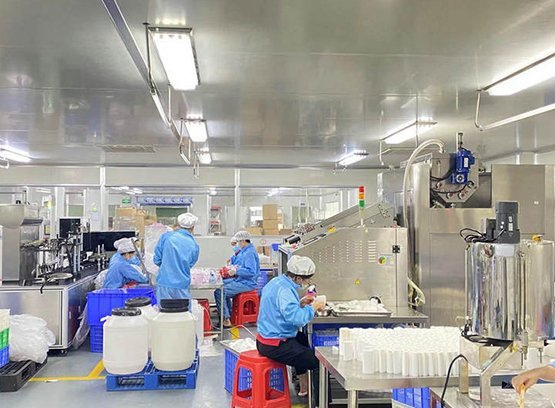
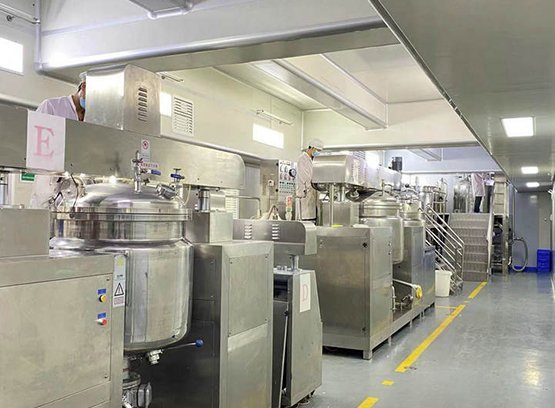
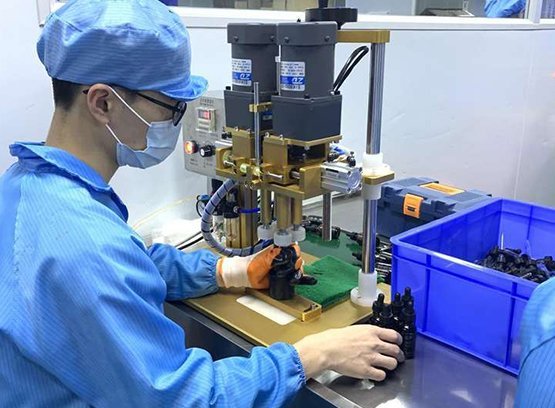
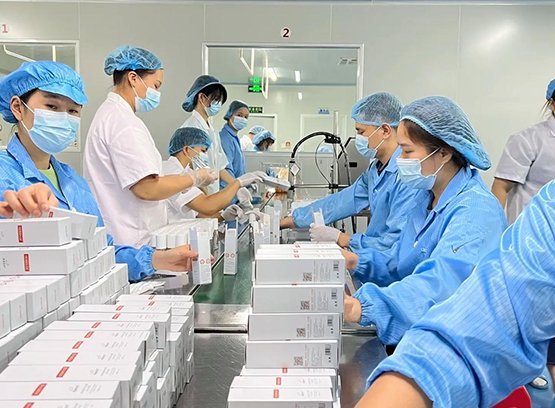
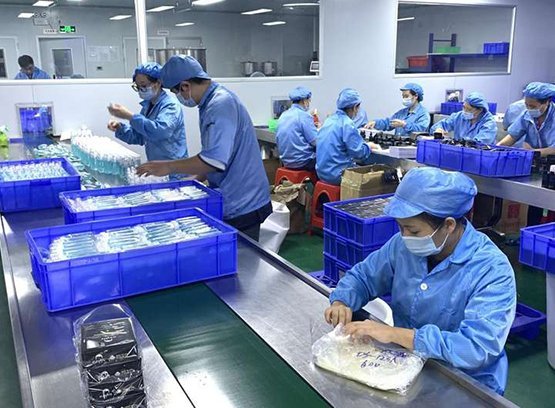
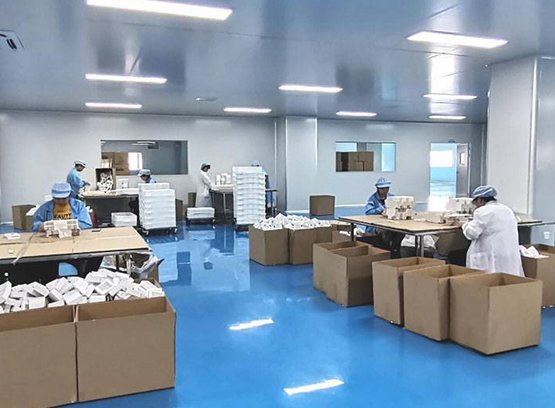
Zerun was chosen because it delivers EU/US-compliant products with verifiable proof—traceable documents, controlled change rules, and a repeatable sample-to-bulk validation workflow.
What makes Zerun different for this positioning
Active-first product development: formulas are built around outcomes and tolerance, then optimized for texture, finish, and layering in real routines.
Clean policy flexibility: fragrance-free and low-irritant lanes can be developed without making products feel bland or “too basic.”
Stability and compatibility discipline: early checks reduce the classic failures—separation, discoloration, odor drift, pump clogging, and active performance drop.
Range consistency at scale: shared base systems and standardized packaging components help keep reorders consistent across batches and markets.
Where buyers see the advantage most clearly
Faster decision-making: clear sample iterations with controlled variables (active level, texture, finish, fragrance policy).
Better channel readiness: packaging sourcing and packaging design services support make it easier to land a premium look without custom-mold overreach.
Documentation mindset: structured ingredient, safety, and quality information that supports compliant labeling and smoother market entry planning.



Make A Sample First?
If you have your own formula, packaging idea, logo artwork, or even just a concept, please share the details of your project requirements, including preferred product type, ingredients, scent, and customization needs. We’re excited to help you bring your personal care product ideas to life through our sample development process.
How Does Zerun Support EU/US-Compliant OEM Buyers?





- Our team will answer your inquiries within 12 hours.
- Your information will be kept strictly confidential.
We start from your reality:
- Clarify your market lane (EU/US, channel, product risk, claim level) and define what “compliant” must include for your project.
- Review your reference products and packaging direction to identify likely failure points (leakage, compatibility, version drift).
- Set a clear definition of success: what must match from sample to bulk (pH/viscosity/odor/appearance, packaging performance).
We co-develop formulas, formats and routines:
- Build a version-controlled formula plan with measurable acceptance criteria, not “sample vibes.”
- Align formula with packaging early, including dispenser selection and compatibility considerations.
- Structure sampling as gates (Version Freeze → Sample Approval → Compatibility/critical stability → Production readiness) to prevent late surprises.
We help plan claims, tests and documentation:
- Provide a Proof Pack-style evidence set and help buyers verify traceability fields (date/version/batch/sign-off).
- Set claim guardrails (Allowed/Avoid/Needs proof plan) before artwork and listings get locked.
- Define re-sample triggers and release controls so changes don’t happen silently.
If you already have reference products or ideas, share:
- Your product list (leave-on/rinse-off), target markets and channels, and claim direction.
- Packaging preferences (container + dispenser), material constraints (PCR, opacity), and label style references.
- Any test expectations, timelines, and past issues you want to avoid.