Skip to content
How do I create a trusted tattoo aftercare line with an OEM manufacturer?
A strong tattoo care line comes from barrier-support formulas, non-irritating ingredients, realistic claims, smart packaging, and an OEM partner who understands both artists and end consumers.
Tattoo care sits between beauty and post-procedure skin care: people expect comfort, colour protection and hygiene, while brands fear complaints, infections and regulation. This page walks you step by step so you can brief one OEM partner instead of guessing between “healing balm” and regular body lotion.
Which tattoo care OEM problems does this page help me solve?
This page tackles confusion around fresh vs healed tattoo care, safe claims, ingredient choices, packaging for studios and retail, testing, MOQs and long-term product roadmaps.
Fresh vs healed tattoo confusion
Risk and Solution
Fear of “healing” and infection claims
Risk and Solution
Heavy textures and occlusive bases
Risk and Solution
Colour fade and long-term care
Risk and Solution
Studio workflow and hygiene
Risk and Solution
MOQ and brand roadmap stress
Risk and Solution
How it works?

Step 1 – Which tattoo stages, users and channels should my line cover first?
You should define whether you serve studios, consumers or both, and which tattoo stages you cover first: immediate aftercare, early days or long-term colour care.
- Clarify primary customers: artists, studios, e-commerce shoppers, retailers.
- Decide which stages of tattoo life you want to serve first.
- Match SKUs to channels: studio back-bar, retail take-home, online.
- Choose whether your brand tone is clinical, lifestyle or art-driven.
Other issues you need to consider at this step:
What tattoo situations and timelines should my line cover?
You should choose a clear set of moments—fresh ink, first week, healed tattoos and long-term colour care—so each product has a defined role in the routine.
- Possible stages:
- Immediately post-session: very fresh, compromised skin.
- First days: light peeling, tightness, sensitivity.
- Healed phase: normal skin with ink, needs comfort and cosmetic care.
- Long term: hydration and UV-related colour maintenance.
- Decide where you will start and what can wait for phase two.
| Tattoo Stage | Skin Status | Recommended Product Types | Messaging Focus |
|---|---|---|---|
| Immediately post-session | Red, tight, compromised | Gentle wash, protective cream / balm | Comfort, hydration, support for skin feel |
| Days 2–7 | Peeling, dryness, sensitivity | Balm/cream, non-stripping cleanser | Moisturised, comfortable tattooed skin |
| Healed tattoos | Normal skin, colour maintenance | Daily lotion, gentle wash | Smooth feel, appearance of vibrant tattoos |
| Long-term colour care | Sun exposure, ageing, dryness | Body lotion, separate SPF project | Hydration, glow, “respect your ink” routine |
How do tattoo studios, e-commerce and retail influence my line-up?
Channels shape product formats, pack sizes and education depth, so planning line-up by channel helps you avoid over-complication and SKU chaos from day one.
- Tattoo studios:
- Need hygienic, larger formats and sometimes single-use sachets.
- Expect simple, clear instructions to give clients.
- E-commerce / DTC:
- Favour story-driven sets: “aftercare kit”, “colour-care kit”.
- Require strong visuals and clear routine steps.
- Pharmacies / specialty retail:
- Prefer more clinical tone and documented safety.
- Value simple shelf organisation by tattoo stage.
Step 2 – How do I stay cosmetic and compliant with tattoo aftercare claims?
You must design products and language that focus on comfort, hydration and appearance of tattooed skin, avoiding strict healing or infection-treatment claims.
- Understand how tattoo aftercare is classified in your markets.
- Avoid promising to treat, cure or prevent infections or disease.
- Focus on comfort, moisturisation and appearance of inked skin.
- Align claims, usage and warnings with local regulatory advice.
Other issues you need to consider at this step:
When is tattoo aftercare still considered a cosmetic product?
Tattoo aftercare is more likely to remain cosmetic when you talk about cleansing, moisturising and supporting comfort of already tattooed or compromised-looking skin, without medical promises.
- Emphasise:
- Gentle cleansing and hydration.
- Support for comfort and skin feel.
- Cosmetic appearance of tattooed areas.
- Avoid claiming to replace medical ointments or professional advice.
- Always recommend following artist or medical guidance where relevant.
Which claims are risky around healing, infection and scarring?
Strong claims about wound healing, infection prevention or scar reduction can push products toward medicinal status, so they should be avoided or reframed carefully.
- Risky:
- “Prevents infection”, “heals wounds faster”, “treats scarring”.
- Safer cosmetic direction:
- “Helps keep tattooed skin comfortable and moisturised”.
- “Supports the look of smooth, comfortable tattooed skin”.
- Add clear language:
- “Does not replace professional medical treatment or advice”.
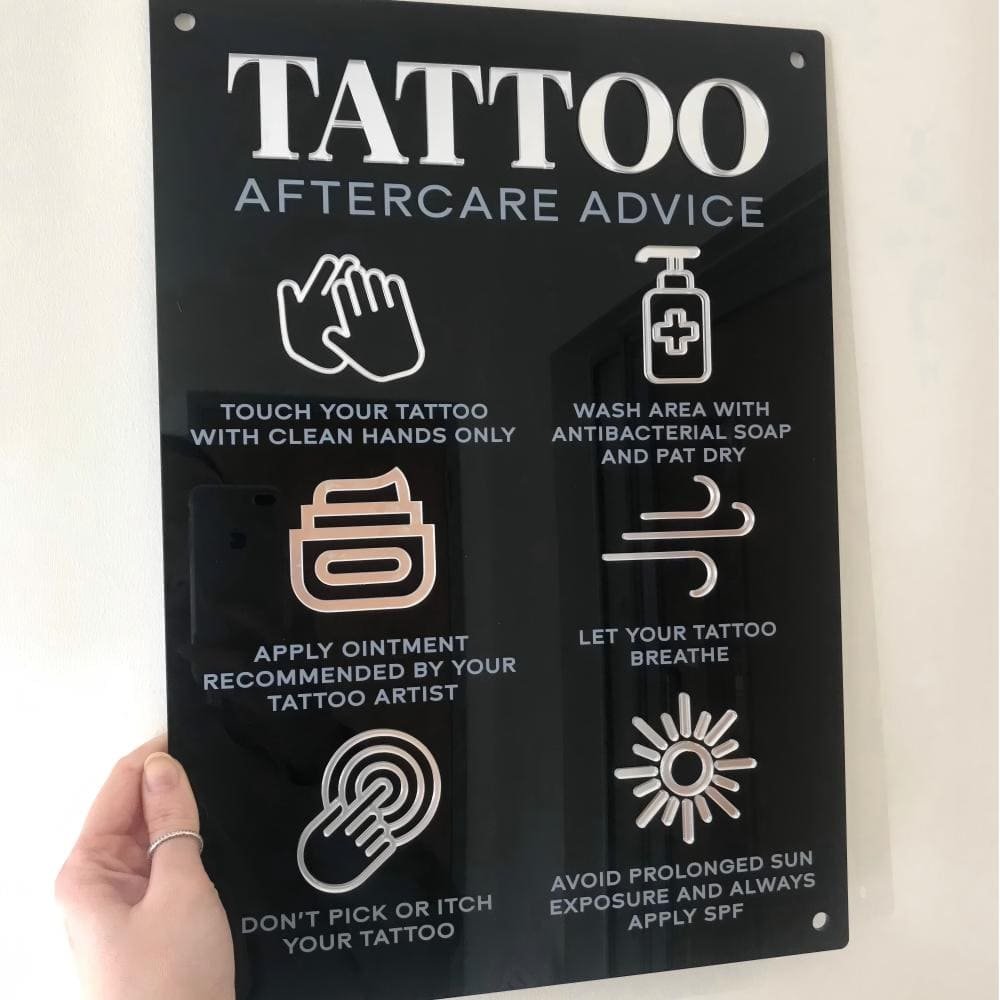

Step 3 – Which ingredients and textures work best for tattooed and sensitive skin?
You should select barrier-support and soothing ingredients in breathable bases, with low fragrance and colour, designed for sensitive, newly tattooed or heavily inked skin.
- Focus on barrier lipids, humectants and soothing actives.
- Keep formulas fragrance-free or very low-fragrance.
- Avoid strong acids, scrubs or heavy irritants.
- Match texture to stage and body area.
Other issues you need to consider at this step:
Which ingredients support comfort and colour without over-claiming healing?
Comfort and appearance can be supported with humectants, emollients and soothing agents that hydrate and reduce dryness without making medicinal promises.
- Useful humectants and emollients:
- Glycerin, hyaluronic acid, light esters, plant oils.
- Soothing actives:
- Panthenol, bisabolol, oat derivatives, centella extracts.
- Barrier-support:
- Ceramides, cholesterol, fatty acids in balanced systems.
- Avoid strong exfoliants or retinoids in core tattoo aftercare.
How do I choose textures for fresh vs long-term tattoo care?
Fresh tattoos may need more protective, cushioning textures, while long-term colour care can use lighter lotions or gels that fit daily body-care habits.
- Early stages:
- More protective balms or rich creams, non-sticky if possible.
- Simple INCI with few potential irritants.
- Healed and long-term:
- Light, fast-absorbing lotions or gels for large areas.
- Optional added benefits like brightening or smoothing claims.
- Consider separate face vs body textures for heavily tattooed areas.
| Base Type | Best Stage / Use | Pros | Watch-outs |
|---|---|---|---|
| Balm (occlusive) | Early days, small/medium tattoos | Strong protection, familiar feel | Can be too heavy for large or oily areas |
| Cream | Early–mid stage, most body areas | Balanced comfort, easy spread | Check for pore-clogging on acne-prone skin |
| Lotion | Healed tattoos, daily body care | Light, large-area usage | Less “protective” feel than balms |
| Gel-cream | Hot climates, combination skin | Cooling, fast absorption | Needs good humectant + lipid balance |
Step 4 – Which packaging formats support hygiene and professional workflow?
You should choose formats that are hygienic for studio use, practical for consumers, and visually consistent with your brand’s tattoo identity.
- For studios, prefer tubes, pumps or sachets, not open jars.
- For retail, use user-friendly tubes, airless bottles or sticks.
- Align designs with tattoo culture, art or minimal clinical looks.
- Keep labelling clear about stage, usage and warnings.
Other issues you need to consider at this step:
What packaging works best for studios and home users?
Studios need hygienic dispensing and good grip during sessions, while home users need packs that fit bathroom routines, bags and travel without leaking.
- Studio formats:
- Medium to large pump bottles.
- Single-use sachets for immediate aftercare.
- Home formats:
- Tubes or small pumps for easy dosing.
- Compact products for aftercare kits and travel sets.
- Avoid heavy glass where breakage is a concern.
| Customer Type | Format & Size Needs | Branding Priority | Documentation / Tools Needed |
|---|---|---|---|
| Tattoo studios | 250–500 ml pumps, single-use sachets | Practical, professional look | Simple protocol cards, hygiene instructions |
| Retail / e-commerce | 30–150 ml tubes, kits | Lifestyle + tattoo culture aesthetics | Routine diagrams, FAQ, ingredients explained |
| Clinics / derm offices | Similar to retail, more clinical | Clean, medical-adjacent design | Safety summaries, sensitive-skin positioning |
What testing and documents reassure tattoo artists and retailers?
Artists and retailers feel safer when you provide stability, compatibility and safety summaries tailored to tattooed skin, plus clear instructions they can share with clients.
- Useful tests:
- Stability and packaging compatibility.
- Basic tolerance or patch tests on sensitive skin.
- Key documents:
- Product data sheets and full INCI lists.
- Safety assessments and quality statements.
- Clear, shareable client instruction leaflets are highly valued.


Step 5 – How should I structure SKUs, MOQs and a realistic tattoo care roadmap?
You can structure a roadmap around stages of tattoo life, sharing bases where possible and launching in phases so you do not over-commit to too many niche SKUs at once.
- Define core stages you will cover in phase one.
- Share base formulas across sizes or packs when practical.
- Align MOQs around key formats, not every minor variation.
- Add new SKUs as feedback reveals real demand.
Other issues you need to consider at this step:
How many SKUs make sense for a first tattoo care launch?
A lean first launch often includes two to four SKUs covering immediate aftercare and early days, with long-term colour-care products following once the brand is established.
- Example starter set:
- Gentle wash for tattooed skin.
- Comfort balm or cream for early days.
- Light daily lotion for healed tattoos.
- Later additions:
- More targeted textures, kits and region-specific variants.
How can I phase in colour-care, SPF and extended body products?
You can add colour-care lotions and separate SPF products in later phases, treating sunscreens as a specialised project with their own regulatory and testing requirements.
- Phase 1: aftercare wash and balm / cream.
- Phase 2: daily tattoo body lotion and colour-care positioning.
- Phase 3: dedicated SPF and advanced body-care concepts.
- Treat SPF development as a separate, compliance-heavy step.
What else do buyers usually ask about tattoo care OEM projects?
Buyers often ask whether one formula can serve all stages, how natural they can go, how to handle fragrance, regulations in different regions, and how to benchmark famous tattoo balms.
Q1: Can one product cover both fresh and healed tattoos?
A: One product can sometimes cover both, but it usually forces compromises on texture and claims; splitting stages often gives better performance and clearer messaging.
- A single product risks being too heavy for long-term or too light for early days.
- Consider at least two textures for core stages.
- Keep messaging clear about when each product should be used.
Q2: Do I need fragrance-free formulas for tattoo care?
A: Fragrance-free formulas are safest for early-stage use, but lightly scented options can work in long-term colour-care products if they are well-tolerated and clearly labelled.
- Early aftercare: often best fragrance-free.
- Healed tattoos: consider low-allergen, soft scents.
- Always label fragrance presence and avoid heavy perfume.
Q3: Should I avoid petrolatum and mineral oils in tattoo balms?
A: Petrolatum-based balms are common and can work well, but some brands prefer lighter or more “natural” bases; your choice should consider performance, brand story and user preference.
- Petrolatum offers strong occlusivity and familiarity.
- Plant-based systems can feel lighter and support “natural” stories.
- You can offer both options or choose one consistent direction.
Q4: How do regulations treat tattoo aftercare vs wound-care products?
A: Regulators usually differentiate between cosmetic aftercare and medical wound-care; claiming to treat wounds or infections can push your products into higher regulatory categories.
- Cosmetic aftercare: focus on comfort and appearance.
- Medical products: governed by separate, stricter rules.
- Always confirm classification with local regulatory advice.
Q5: Can you benchmark well-known tattoo balms and aftercare creams?
A: We can create “inspired-by” concepts that match general feel, speed of absorption and cosmetic benefits, without copying proprietary formulas or identical branding.
- Benchmark texture, occlusivity, shine and absorption.
- Place your line in a similar benefit territory with differentiation.
- Use your own visual identity and tattoo culture story.
Q6: How do I avoid formulas that clog pores or feel too greasy?
A: You can adjust oil balance, wax levels and emulsifier systems to reduce greasiness while keeping enough protection and slip for tattooed skin.
- Use a mix of lighter and richer emollients.
- Control wax content to avoid a heavy film.
- Test feel on different skin types and tattoo sizes.
Q7: How can I support long-term tattoo colour without overclaiming?
A: You can support long-term colour by focusing on hydration, barrier care and sun-aware routines, but you should avoid promising permanent protection or reversal of fading.
- Emphasise hydration and comfort of tattooed skin.
- Encourage consistent moisturising routines.
- If you add SPF, follow full suncare regulations and testing.
- Avoid promising to “restore” old tattoos to original colour.
Q8: Can you help create full aftercare kits and education materials?
A: We can support you in designing product sets, usage flows and basic educational leaflets that tattoo artists and retailers can share with clients.
- Define kit structure by stage or routine.
- Provide clear, simple step-by-step usage guidance.
- Align artwork, icons and language with your brand.
Make A Sample First?
If you have your own formula, packaging idea, logo artwork, or even just a concept, please share the details of your project requirements, including preferred product type, ingredients, scent, and customization needs. We’re excited to help you bring your personal care product ideas to life through our sample development process.
How does Zerun support long-term growth for private label tattoo care brands?
- Our team will answer your inquiries within 12 hours.
- Your information will be kept strictly confidential.





Zerun supports tattoo care brands with barrier-support formulation, sensitive-skin thinking, packaging solutions and phased roadmaps that fit both studio workflows and retail growth.
- We start from your reality:
- Target tattoo styles, channels, markets and price points.
- We co-develop formulas and formats:
- Balms, creams, lotions, washes and kits mapped to tattoo stages.
- We help plan tests and documents:
- Stability, compatibility and basic tolerance support for tattooed skin.
- We think in stages, not one-offs:
- Immediate aftercare, early days, long-term colour care and eventual SPF projects.
If you already have reference products or ideas, share:
- Links or photos of tattoo balms, creams, washes or kits you like.
- Your target markets, channels and brand tone.
- Your initial volume expectations and preferred launch window.
Based on this, we can propose a clear tattoo care development roadmap and sampling plan.
Use the contact form, email or WhatsApp on this site to start your private label tattoo care project with Zerun.