Skip to content
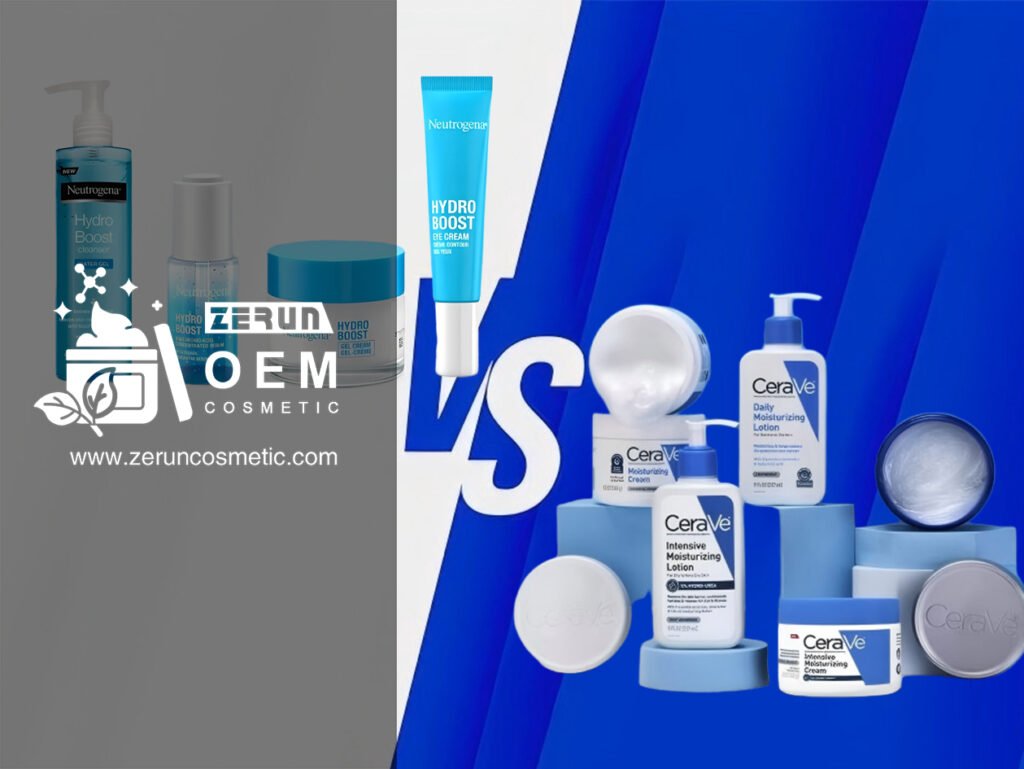
Neutrogena and CeraVe sit in the same “safe choice” zone on drugstore shelves—trusted names, dermatologist-adjacent reputations, and routines that millions of people reach for when skin is acting up. But beyond the label, they’re built for slightly different wins: cleanser feel after rinse, barrier comfort over weeks, sunscreen layering behavior, and how forgiving a formula is when your skin is oily, dry, reactive, or acne-prone.
So which one is better? The practical answer is: it depends on the role you need filled. If the goal is a cleanser that doesn’t leave that tight “too clean” feeling, a moisturizer that supports calm, steady barrier comfort, and a sunscreen that won’t pill or turn shiny by noon, the smarter move is to compare Neutrogena vs CeraVe by decision standards—texture, irritation tolerance, fragrance choices, layering compatibility, and category strengths—not by popularity.
Ready to dive into how Neutrogena and CeraVe compare in brand philosophy, ingredient strategy, cleanser feel, moisturizer performance, and sunscreen layering—so the right routine choice becomes obvious? Let’s get started.
How Do Neutrogena and CeraVe Differ in Brand Positioning and “Skin Feel” Philosophy?

Before comparing single products, it helps to compare the “promise” each brand is built to deliver on your face. Neutrogena tends to win when shoppers want a clean, modern feel—light textures, quick absorption, and routines that don’t slow down daily life. CeraVe tends to win when shoppers want consistency and comfort—products that feel reliable during dry seasons, after irritation, or when skin is simply tired of being “worked on.”
That difference sounds subtle, but it decides most carts. One brand often feels better in the moment (fresh, weightless, invisible). The other often feels better over time (steadier, calmer, less reactive). If you know which feeling your skin is asking for right now, the rest becomes much easier.
What each brand is trying to optimize (comfort, simplicity, actives, layering)
Neutrogena’s shelf identity is “everyday performance with a cosmetic elegance.” Many of its popular items are designed to feel lightweight and disappear fast—especially in routines where people hate heaviness, hate stickiness, and need products that play nicely under makeup or sunscreen. In practice, that means shoppers often reach for Neutrogena when they’re optimizing for:
- A clean finish that doesn’t feel like skincare is “sitting on top”
- Quick layering in the morning (less waiting, less tackiness)
- A routine that feels modern, not clinical
- “I want it to work, but I also want it to feel good immediately”
CeraVe’s shelf identity is “daily skin basics with barrier-first logic.” The brand is most associated with straightforward, repeatable routines—products that don’t surprise your skin. The textures may feel more “basic,” but the goal is long-haul comfort, especially when skin is dry, reactive, or inconsistent. In practice, shoppers often reach for CeraVe when they’re optimizing for:
- Barrier comfort and steadiness (less stinging, less fluctuation)
- Simple routine architecture (cleanse → moisturize → protect)
- A forgiving baseline that can support actives without drama
- “I don’t want a miracle; I want my skin to stop acting up”
A reminder that saves a lot of regret: “lightweight” and “barrier-supportive” are different wins. Lightweight routines often feel amazing in humid weather and oily skin weeks. Barrier-supportive routines often feel amazing in winter, after over-exfoliation, or when redness and tightness show up. Picking the wrong “win” is how people end up calling a well-made product “overrated.”
Who usually prefers each brand (oily vs dry vs sensitive vs acne-prone)
Most people don’t prefer a brand forever—they prefer it during a specific skin season. If you map preference by real-life skin situations, the pattern is clearer:
- Oily or combination skin (especially in humid climates): Neutrogena often feels easier to live with.
- The appeal is the finish: lighter, less heavy, less “coated”
- Great when sunscreen is non-negotiable and pilling is your biggest fear
- Works well for people who stop routines because they hate the feeling of product layers
- Dry or tight skin (especially in dry winter or indoor heating): CeraVe often feels safer.
- The appeal is comfort: less “my face feels smaller after washing”
- Better when your skin needs a stable baseline more than a sensory wow factor
- Often preferred by people who are tired of cycling through “hydrating” products that never truly calm tightness
- Sensitive or reactive skin (stinging, redness, easily irritated): CeraVe is commonly chosen as the “reset brand.”
- The appeal is predictability: fewer surprises, fewer dramatic swings
- Useful when you need a boring, supportive routine for 7–14 days
- Especially helpful if you’re already using strong actives and just need the base routine to behave
- Acne-prone skin: the preference usually depends on what type of acne week you’re having.
- If breakouts are paired with oiliness and heaviness triggers, a lighter-feel routine (often the Neutrogena direction) tends to be easier
- If breakouts are paired with irritation, flaking, or over-treatment, a steadier barrier-first baseline (often the CeraVe direction) tends to recover faster
Here’s the key psychological trap: acne makes people chase “stronger,” but strong doesn’t help if your skin is irritated. When irritation is driving breakouts, the best acne routine feels almost too gentle.
The quickest way to avoid buying the “wrong role” from the right brand
The fastest way to stop guessing is to shop by role, not by logo. Treat Neutrogena and CeraVe like two toolkits, then pick the tool you need today:
Step 1: Decide your current “skin priority” in one sentence.
- “I feel greasy and heavy by noon.” (finish + layering priority)
- “I feel tight, stingy, or flaky.” (comfort + barrier priority)
- “My sunscreen keeps pilling.” (texture matching priority)
- “Actives are making me sensitive.” (low-irritation base priority)
Step 2: Assign the brand role before you pick the product.
- If your priority is lightweight comfort and easy layering, Neutrogena often fits as the “morning routine brand.”
- If your priority is barrier steadiness and calming support, CeraVe often fits as the “baseline routine brand.”
Step 3: Use one quick reality check in front of the shelf.
Ask: “Will this product make my next step easier—or harder?”
- If you already struggle with pilling, avoid anything that feels tacky or heavy in a tester texture.
- If you already struggle with tightness, avoid cleansers that promise an ultra-squeaky finish.
- If you’re in an irritation week, choose the routine that feels boring and safe, not exciting.
This is the simplest mistake-proof mindset: the “right” brand can still be the wrong pick if it’s filling the wrong role in your routine. Once you match role first, the Neutrogena vs CeraVe debate stops being emotional—and starts being obvious.
Ready to dive into the ingredient and formula design differences that create these real-life “skin feel” outcomes? Let’s move on.
Which Ingredients and Formula Design Choices Separate Neutrogena vs CeraVe in Daily Use?
From online website record, both brands looks “derm-friendly.” In real life, the difference is usually not one magic ingredient—it’s the formula philosophy: what the product is built to feel like on skin, how it layers, and how forgiving it is when your skin is stressed. Once you learn a few label cues, Neutrogena vs CeraVe stops feeling like a guess and starts feeling like pattern recognition.
Barrier-support vs “lightweight performance” cues (what to look for on labels)
Think of this as two different jobs.
Barrier-support formulas are built to make skin feel calmer and more stable over days and weeks. Lightweight-performance formulas are built to feel comfortable immediately and layer cleanly (especially under sunscreen and makeup).
Here are the label cues that usually signal “barrier-support” direction:
- Skin-identical lipid language: ceramides, sometimes paired with cholesterol and fatty acids (this is the classic “barrier lipid” story).
- Comfort-first helpers: niacinamide, panthenol, soothing agents, and a richer emollient/occlusive backbone (you’ll often see things like petrolatum, heavier emollients, or a more cushiony silicone feel).
- “This feels like it stays with you” textures: creams/lotions that reduce that tight post-wash feeling and make actives easier to tolerate.
And here are the cues that often signal “lightweight performance” direction:
- Hydration + slip without weight: glycerin, hyaluronic acid, gel-cream bases, and a lot of “glide” from lightweight silicones.
- Fast-dry, layer-friendly structure: film formers and texture modifiers that help a product disappear quickly (great for people who hate tackiness).
- “Oil-free / gel / water-gel” style positioning, where the promise is comfort without heaviness.
A reminder that saves regret: a product can be “hydrating” and still not be “barrier-supportive.” If skin is tight, stingy, or flaky, chasing only hydrating buzzwords often leaves you stuck in the same loop.
Fragrance choices, irritation tolerance, and why “unscented” can confuse buyers
Fragrance is where a lot of Neutrogena vs CeraVe debates become emotional—because people remember the time their skin reacted and they don’t want to repeat it.
Three quick truths make label-reading easier:
- “Fragrance-free” is a clearer signal than “unscented.” “Unscented” can still include masking components designed to neutralize odor, and sensitive skin can react to those too.
- “No perfume smell” doesn’t mean “no fragrance ingredients.” Some formulas smell “clean” because the fragrance level is low or the base ingredients are doing the scent work.
- Irritation tolerance changes by skin season. A product you love in summer can suddenly feel harsh in winter, after travel, after over-exfoliation, or during retinoid ramp-up.
Practical shelf checks:
- If you’re reactive, look for wording like fragrance-free, and scan for fragrance/parfum and sometimes essential oil names (even when the product feels “natural” or “fresh”).
- If you’ve ever had stinging around the nose or cheeks, don’t treat fragrance as a small detail. It’s often the difference between “works fine” and “why is my face burning?”
“Reminder-style authority” rule: if a routine keeps failing, don’t keep swapping actives. First remove the most common irritant levers (fragrance, over-cleansing, too many layers). Skin often improves faster from subtraction than addition.
The one dealbreaker dimension that should override everything else
If you only choose one decision filter to override the rest, make it this:
How forgiving is the formula for your current irritation risk?
Because when your skin barrier is stressed, even “great” products can start behaving badly—stinging, redness, tightness, sudden breakouts, or a sunscreen that pills because the base layers are fighting.
Use this simple override:
- If you’re in a calm, stable skin phase and your biggest pain is texture, shine, or pilling, you can prioritize lightweight performance and layering elegance.
- If you’re in a reactive phase (stinging, redness, flaking, “everything feels spicy”), prioritize barrier comfort + low-irritation choices first—even if the texture feels less exciting.
This is the difference between buying what sounds right and buying what will actually stay in your routine long enough to work.
Next, we’ll apply these formula cues to the first step that makes or breaks everything: cleanser choice—because the wrong cleanser can sabotage even the best moisturizer and sunscreen.
Which Cleanser Is the Better Fit: Neutrogena or CeraVe for Your Skin Situation?

Cleansers are where Neutrogena vs CeraVe feels most “immediate,” because the feedback is instant: tight or comfortable, squeaky or balanced, clean or irritated. And this is where a lot of people accidentally create the exact skin problems they’re trying to solve—by choosing a cleanser that wins the short-term “super clean” feeling but loses the long-term stability game.
A helpful mindset: a good cleanser should leave skin feeling clean and calm, not “polished.” If your cleanser makes you rush to moisturize to stop the discomfort, it may be working against you.
The tightness test and rebound-oil trap (how to tell you picked too strong)
Here’s the fastest way to tell whether a cleanser is too strong for your current skin season.
The 3-step tightness test (takes one wash)
- Wash as usual, pat dry, and do nothing for 10 minutes.
- Notice the “mouth and nose zone” first—those areas complain earliest.
- If you feel tight, itchy, or “my skin is shrinking,” that’s not “deep clean.” That’s your barrier asking for less aggression.
Now the rebound-oil trap (the reason many oily-skin routines fail)
If you feel very clean right after washing but get noticeably oilier by midday than before, it often means your cleanser is stripping. Your skin isn’t “dirty.” It’s over-correcting.
The common mistake: people respond by buying an even stronger cleanser. That usually creates a loop:
Stripping → tightness → more oil → stronger cleansing → irritation → breakouts.
Reminder-style authority: if oiliness worsens after a “stronger” cleanser, don’t escalate. Step back. Choose gentler cleansing and adjust frequency before changing everything else.
Best match by skin situation: oily/congested, dry/tight, sensitive/reactive, combo
Instead of asking “Which brand makes the best cleanser?” ask “Which brand’s cleanser style fits what my skin is doing today?” Here’s the simplest mapping.
- Oily / congested (clogged pores, heavy feeling, sunscreen daily)
You want a cleanser that removes sunscreen and excess sebum without leaving that stripped finish.
- Best fit tends to be whichever option feels thoroughly rinsed but not squeaky.
- If you’re oily and acne-prone, the “winner” is the cleanser you can use twice a day without tightness.
- A clean-rinsing feel matters, but comfort still matters more than “strong.”
In many routines, Neutrogena is often preferred here because shoppers like the lighter feel and the sense of cleanliness that doesn’t necessarily feel heavy afterward. But the decision should be based on your after-feel test, not the brand name.
- Dry / tight (flaky patches, tight after washing, skin feels “small”)
You want a cleanser that feels almost boring: gentle, non-stripping, comfortable.
- If your face feels tight even before moisturizer, that cleanser is not your friend.
- Look for cleansers that leave skin feeling cushioned, not squeaky.
- In dry seasons, switching to a gentler cleanser often improves skin faster than changing your moisturizer.
CeraVe-style cleansers are commonly chosen in this phase because the brand tends to align with comfort-first, barrier-friendly basics. Again, it’s the comfort outcome that matters.
- Sensitive / reactive (stinging, redness, easily irritated, “everything burns”)
You want maximum forgiveness.
- Avoid the “deep clean” chase.
- Prioritize fragrance-free, low-irritation formulas, and lower cleansing frequency if needed.
- If water alone feels irritating, you’re not in an “optimize performance” phase—you’re in a “calm down” phase.
In this situation, CeraVe is often the safer starting point as a routine reset, simply because the brand philosophy leans toward predictable barrier comfort. But the real test is whether your skin feels calmer after three days, not whether the cleanser feels fancy.
- Combination skin (oily T-zone, tight cheeks)
This is where people overcorrect and end up with both problems at once.
- Use the tightness test on your cheeks, not your T-zone.
- If cheeks feel tight, choose the gentler cleanser and adjust oil control elsewhere (lighter moisturizer, better sunscreen texture).
- If T-zone feels congested but cheeks are fine, you may need better sunscreen removal rather than stronger daily cleansing.
The secret for combo skin is consistency: a cleanser that’s “good enough” for oil while still kind to the dry zones beats a cleanser that’s perfect for the T-zone but punishes the cheeks.
If using acids/retinoids: which cleanser traits reduce stinging and flaking
When you’re using exfoliating acids or retinoids, cleanser choice becomes a tolerance tool. Many people blame their active when the cleanser is actually making the active feel harsher.
Prioritize these cleanser traits:
- Low “squeaky” finish: if your cleanser leaves skin tight, retinoids will sting more.
- Minimal irritation levers: fragrance-free is often the safest choice during ramp-up.
- Gentle daily use: the best cleanser for actives is the one you can use consistently without creating inflammation.
Simple pairing rules that prevent flaking spirals:
- If you’re newly starting retinoids, avoid pairing with a harsh cleanser and hot water—those two amplify irritation.
- If you’re flaking, don’t add stronger cleansers “to remove flakes.” That usually worsens the problem. Support the barrier first, then resume actives more slowly.
- If you’re using acne actives and still breaking out, check irritation first. Inflamed skin breaks out more easily.
Bottom-line cleanser rule: in Neutrogena vs CeraVe, the “better cleanser” is the one that cleans sunscreen and sweat while leaving your skin calm enough that you don’t dread your next step.
Next, we’ll compare moisturizers—where the biggest confusion happens: hydration vs barrier support, and why the wrong texture can sabotage both comfort and sunscreen layering.
Which Moisturizer Performs Better: Neutrogena vs CeraVe for Barrier Comfort and Layering?
Moisturizer is where Neutrogena vs CeraVe becomes less about “what feels nice” and more about “what keeps the routine from breaking.” A moisturizer can be perfectly good on its own—and still be the reason sunscreen pills, makeup slides, or pores feel congested. It can also feel a little plain, yet quietly fix the tightness and sensitivity that made everything else sting.
A useful way to compare these two brands is to separate two jobs people often lump together: adding water and supporting the barrier. One brand’s popular moisturizers often shine at lightweight hydration and fast layering. The other is often chosen when the skin needs a more forgiving baseline and longer-lasting comfort. Knowing which job your skin needs today is the difference between “this is amazing” and “why is this not working?”
Hydration vs barrier support—what people confuse (and how that ruins results)
Hydration is about water content and humectants: skin feels plumper, less dull, less “papery.” Barrier support is about reducing water loss and improving comfort signals: less tightness, less sting, less reactive redness.
The confusion usually looks like this:
- Skin feels tight → people buy “hydrating” gel products → skin still feels tight → they assume the product is weak. What’s happening: tightness is often a barrier problem, not just a hydration problem.
Or the opposite:
- Skin feels greasy and congested → people buy a rich barrier cream → skin feels heavy → they assume barrier products “cause acne.” What’s happening: the barrier support may be fine, but the texture and occlusion level are wrong for that person’s climate and pore behavior.
How this plays out in Neutrogena vs CeraVe routines:
- Neutrogena-style moisturizers are often loved when the main goal is “hydrated but not coated,” especially for people who hate heaviness and need a product that disappears quickly.
- CeraVe-style moisturizers are often loved when the main goal is “my skin needs to stop feeling irritated and unstable,” especially in dry seasons, after over-cleansing, or during active-treatment weeks.
Reminder-style authority: if a moisturizer feels great for 10 minutes but you still feel tight an hour later, it’s often missing the barrier-support job. If a moisturizer feels comforting but you suddenly get pilling and shine, it may be doing the barrier job but fighting your layering structure.
Texture and climate: humid summer vs dry winter vs makeup-friendly daytime
Texture isn’t a preference—it’s a climate strategy.
- In humid summer (or oily skin weeks)
You’re often fighting shine, heaviness, and that “my face can’t breathe” feeling.
- Lighter gel-cream textures often perform better and feel more wearable.
- The best moisturizer is the one that lets sunscreen sit smoothly without turning greasy by noon.
- If you live in humidity, a “less is more” moisturizer usually outperforms a rich cream, even if your skin is technically dehydrated.
This is where many people gravitate toward Neutrogena’s lightweight-feel direction, because it often aligns with “daily wearability” and quick absorption.
- In dry winter (or dry indoor heating)
You’re often fighting tightness, flaking, and sensitivity.
- Richer lotions/creams that reduce tightness are not “too much”—they’re often the reason skin becomes stable again.
- If your skin stings when you apply products, comfort-first textures are usually the right move.
- In this season, the moisturizer is not just a layer—it’s a tolerance tool that keeps actives and sunscreen from feeling harsh.
This is where many people gravitate toward CeraVe’s barrier-comfort direction, because it tends to behave like a supportive baseline.
- Makeup-friendly daytime vs night repair
A simple rule: daytime moisturizers should help layers behave; nighttime moisturizers should help skin recover.
- Daytime: prioritize fast-absorbing, low-tack, low-pilling textures.
- Night: prioritize comfort, reduced tightness, and “wake up less irritated” performance.
If your current moisturizer is great at night but pills under sunscreen, don’t declare it a bad moisturizer. It may simply be a night role, not a day role.
Pilling prevention: order, amount, wait time, and the “too many layers” problem
Most “this moisturizer pills” complaints are not really about the moisturizer alone. They’re about stacking: too many layers, incompatible textures, or rushing the steps.
Here are the fastest pilling fixes that work in almost any Neutrogena vs CeraVe routine.
- Fix the order first (thin to thick) Apply watery layers first (toner/essence/serum), then moisturizer, then sunscreen. If you’re using multiple serums, consider dropping one for a week. Pilling often disappears when the routine becomes simpler.
- Cut the amount (most people use too much) If your moisturizer feels like it’s sitting on the surface, you’re likely over-applying. Use a smaller amount and spread it thinly. A thin, even layer usually performs better than a thick layer that never fully settles.
- Add a real wait time (30–120 seconds changes everything) Give the moisturizer time to set before sunscreen. If you’re rushing, your sunscreen is more likely to “roll” the layer underneath.
- Check texture conflicts (gel-on-gel is not always your friend) Some gel textures + certain sunscreen bases are a classic pilling combo. If pilling happens, change one variable: switch the moisturizer texture (gel to lotion, or cream to lighter lotion) before you blame the sunscreen.
- Respect the “too many layers” problem If you’re doing cleanser → toner → essence → two serums → moisturizer → sunscreen, pilling is not a mystery. It’s physics. The simplest fix is not a new product. It’s removing one layer.
Reminder-style authority: when pilling shows up, don’t panic-buy a new sunscreen immediately. First reduce layers, reduce product amount, and add a short wait time. If that doesn’t fix it, then your moisturizer texture is likely the mismatch.
Next, we’ll compare sunscreens—because daily wear comfort and real reapplication behavior are where routines either become effortless… or quietly fail.
Which Sunscreen Choice Works Best: Neutrogena vs CeraVe for Daily Wear and Reapplication?

Sunscreen is the step that turns a “nice routine” into a routine that actually protects your skin. It’s also the step most likely to get abandoned—because it pills, looks shiny, feels heavy, or breaks you out. That’s why Neutrogena vs CeraVe sunscreen comparisons shouldn’t start with SPF numbers alone. They should start with one practical question: will you still want to wear this at 10 a.m., 2 p.m., and on the days you’re rushing?
In general, many people reach for Neutrogena when they want sunscreen to feel invisible and wearable. Many people reach for CeraVe when they want sunscreen to feel gentle and routine-friendly. But the best choice is the one that matches your day: city wear vs outdoor wear, makeup vs bare skin, oily summer vs dry winter.
The three sunscreen dealbreakers (pilling, shine, white cast) and why they happen
If sunscreen fails, it almost always fails in one of these three ways. The good news: each failure has a reason—and a fix.
Dealbreaker 1: Pilling (the “little flakes” problem)
Why it happens:
- Too many layers underneath (serums + moisturizer + sunscreen = rolling risk)
- Texture mismatch (some moisturizers don’t “set” well under certain sunscreen bases)
- Too much product rubbed too long (friction creates roll-up)
- Not enough wait time between layers (wet-on-wet = pilling)
Fast fixes:
- Simplify the base: one serum or none, then moisturizer, then sunscreen
- Use less moisturizer in the morning, and let it set 60–120 seconds
- Apply sunscreen in thin sections and press/softly spread—don’t aggressively rub
- If pilling is constant, switch the moisturizer texture before switching the sunscreen
Reminder-style authority: when pilling shows up, don’t assume “bad sunscreen.” It’s often a routine-structure problem first.
Dealbreaker 2: Shine (the “greasy by noon” problem)
Why it happens:
- Your base layers are too rich for your climate or skin week
- Sunscreen film formers + heavy moisturizers can stack into a glossy finish
- Over-application (using far more than needed because it feels comforting)
Fast fixes:
- In humid heat, treat moisturizer as optional or use a thinner layer
- Choose a quicker-setting, lighter-feel sunscreen for daytime
- Apply in two thinner passes instead of one thick layer (better set, less slip)
- Blot at midday and reapply—don’t keep stacking thick layers without removing oil
Dealbreaker 3: White cast (the “ghost face” problem)
Why it happens:
- Mineral filters can leave visible residue depending on skin tone and formula
- Thick application makes the cast more noticeable
- Not letting the base layer dry can amplify patchiness
Fast fixes:
- Use thin, even layers and let skincare set first
- If cast is your #1 dealbreaker, choose formulas designed for clearer finish or tint options
- Don’t judge cast in a dim bathroom—check in natural light
The key takeaway: Neutrogena and CeraVe both have options people love, but your “dealbreaker” should choose for you. If you hate shine, pick for shine control. If you hate pilling, pick for layering behavior. If you hate cast, pick for finish.
City daily wear vs outdoor wear (what should change in your selection rules)
Most shoppers try to find one sunscreen for everything—and then wonder why they quit. City wear and outdoor wear are different jobs.
- City daily wear (commuting, office, errands)
Your selection rules should prioritize:
- Wearability: you’ll actually apply enough and reapply when needed
- Layering: works under makeup or over moisturizer without pilling
- Comfort: low eye-sting risk, not heavy, not sticky
The best city sunscreen is the one that disappears into your day. If you dread the feel, you’ll under-apply or skip it—which defeats the purpose.
- Outdoor wear (beach, sports, sweating, long sun exposure)
Your selection rules should prioritize:
- Staying power under sweat and friction
- Practical reapplication (you’ll do it without hating it)
- A routine that supports removal at night (because outdoor sunscreens can be more tenacious)
In outdoor situations, a “perfect finish” matters less than consistent protection and the ability to reapply. That often means accepting a slightly heavier feel in exchange for reliability.
A simple rule that keeps routines realistic:
- If sunscreen is mainly for daily life, optimize for comfort + layering.
- If sunscreen is for sustained sun exposure, optimize for durability + reapplication behavior.
If breakouts happen after sunscreen: what to adjust first (before you quit SPF)
Sunscreen breakouts are one of the most common reasons people give up. But “sunscreen broke me out” isn’t one problem—it’s usually one of three.
- Occlusion overload (too heavy for your skin/climate) What it feels like:
- Small bumps or congestion, especially in oily zones
- Skin feels smothered by midday
What to adjust first:
- Reduce morning layers: lighter moisturizer or skip it
- Choose a lighter-feel sunscreen for daily wear
- Use less product underneath and avoid stacking rich textures
- Incomplete removal (residue left behind) What it feels like:
- Breakouts that show up after several days, not immediately
- Congestion around hairline, jaw, or nose
What to adjust first:
- Improve your nighttime cleansing strategy (gentle but thorough)
- Consider double cleansing on heavy sunscreen days (especially outdoor wear)
- Don’t “scrub harder”—that can worsen inflammation
- Irritation masquerading as acne (sensitivity-driven bumps) What it feels like:
- Redness + bumps, stinging, or a sudden “everything reacts” phase
What to adjust first:
- Switch to a lower-irritation base routine for a week
- Pause extra actives temporarily and stabilize barrier comfort
- Choose fragrance-free options and reduce friction during application/removal
Reminder-style authority: if breakouts appear after adding sunscreen, don’t quit SPF first. First change one variable—texture heaviness, layer count, or cleansing—then reassess for 7–14 days. Sunscreen is rarely the only culprit; it’s often the way it’s layered and removed.
Next, we’ll talk about value—because “best” isn’t just price. It’s how often you repurchase with confidence, how often the routine fails, and how much product gets wasted when pilling and irritation force you to stop.
How Do Neutrogena and CeraVe Compare on Price, Value per Use, and “Regret Risk”?
Price is the easiest part to compare—and the least useful. Neutrogena vs CeraVe decisions rarely fail because one was “too expensive.” They fail because the product didn’t fit the routine role, so it created waste: pilling that forces you to wipe off and reapply, a sunscreen you under-use because you hate the finish, a cleanser that triggers tightness so you start over, or a moisturizer that never layers well so it sits in the cabinet.
That’s why the smarter comparison is value per use plus regret risk. Value per use is what it costs you to get a routine outcome you’ll actually repeat every day. Regret risk is how likely that purchase is to create friction—shine, irritation, breakouts, pilling—that makes you quit.
How to compare value without chasing constantly changing prices (cost per ml + waste)
Retail pricing moves too much to anchor on a single number. Sales, bundles, store brands, and regional pricing make “which is cheaper” a moving target. Instead, compare these two things:
- Cost per ml (or per oz) in your cart
- Divide the price by the bottle size.
- Do this for products in the same role (cleanser vs cleanser, moisturizer vs moisturizer).
- You’ll instantly see which “deal” is actually a smaller bottle with a better sticker price.
- Waste rate (the hidden cost most people ignore) Waste is not just “I didn’t finish it.” Waste also includes:
- Reapplying because sunscreen pilled and rolled off
- Using extra product because it doesn’t spread well
- Over-layering to fix tightness caused by a harsh cleanser
- Stopping early because irritation starts, then buying replacements
A simple way to score waste risk before you buy:
- If you already struggle with pilling, avoid routines that require heavy layering.
- If you already struggle with shine, avoid pairing rich moisturizers with glossy sunscreens in humid weather.
- If you already struggle with sensitivity, prioritize low-irritation choices even if they cost slightly more per ml—because restarting routines is the most expensive outcome.
Reminder-style authority: the cheapest product is the one you finish happily. The most expensive product is the one that triggers a routine reset.
What “value” means: consistency, repurchase confidence, fewer routine failures
In daily skincare, value is mostly about how boringly reliable the product is. A product can be popular and still be low-value for you if it creates friction that makes you skip steps.
High-value routine products share three traits:
- They are easy to use the same way every day (no drama, no special handling).
- They reduce decision fatigue (“I know this won’t mess me up this week”).
- They make the next step easier (cleanser makes moisturizer feel better; moisturizer makes sunscreen behave; sunscreen doesn’t force you to compromise).
How this tends to show up in Neutrogena vs CeraVe buying:
- Neutrogena often wins value for shoppers who prioritize wearability and finish—people who stick to routines only when products feel light, fast, and easy under sunscreen or makeup. If a routine feels invisible, it gets used.
- CeraVe often wins value for shoppers who prioritize stability—people who repurchase the same basics because their skin stays calmer and fewer “bad skin weeks” happen.
Neither is universally better. The value question is: which brand reduces your routine failures?
If your failures are mostly cosmetic (shine, heaviness, pilling), value often comes from lighter textures and better layering behavior.
If your failures are mostly biological (tightness, stinging, redness, irritation breakouts), value often comes from barrier comfort and forgiveness.
When paying less costs more (pilling → wasted product, irritation → stopped routine)
Here are the most common “paid less, lost more” scenarios—because they look like small issues until you add up the days.
- Pilling creates invisible waste When sunscreen pills, you don’t just waste sunscreen. You waste the time and layers underneath it.
- You wipe off, reapply, or use less than you should.
- That leads to under-protection or quitting sunscreen entirely.
- The real cost is not the product—it’s the failed habit.
- Irritation triggers a routine reset A slightly cheaper cleanser or scented product can become expensive fast if it triggers:
- Tightness that makes you over-moisturize
- Stinging that makes you stop actives
- Breakouts that make you buy new treatments
- A cycle of trial-and-error purchases
If you’ve ever had to “start over” after one wrong product, you already know the true cost.
- “Good price” can encourage the wrong routine structure People buy more steps because each item seems affordable. Then the routine becomes: serum + serum + moisturizer + sunscreen → pilling/shine → frustration → quitting. Sometimes the better value move is fewer products that behave well together.
A simple value rule that works in almost every cart:
- If your skin is stable and your biggest pain is finish, optimize wearability and layering.
- If your skin is reactive and your biggest pain is comfort, optimize forgiveness and barrier support.
- If you don’t know which you are this month, choose the lower-regret option: the product most likely to keep you consistent.
Next, we’ll make this concrete with copy-paste routine bundles—cleanser + moisturizer + sunscreen sets for oily, dry, sensitive, acne-prone, humid summer, and winter heating situations—so you can stop comparing forever and just run a routine that works.
Which Neutrogena vs CeraVe Routine Bundles Work Best for you?
This is the section most people wish existed on page one: not “what’s better,” but “what should I actually buy and use together without drama?” The best Neutrogena vs CeraVe routine is usually a mix of roles—one step optimized for lightweight wearability, another step optimized for steady comfort, and a sunscreen that behaves with your layering style.
A quick rule before you copy-paste any bundle: change one step at a time if your skin is reactive. If your skin is stable, you can switch the full trio. Either way, keep the routine boring for 7–14 days before you judge it.
Table 1: Fast select by skin type/condition
| Skin situation | Cleanser pick cues | Moisturizer pick cues | Sunscreen pick cues | Neutrogena vs CeraVe “best role” |
|---|---|---|---|---|
| Oily + clogged pores | Clean-rinsing, no tightness after 10 minutes; avoid squeaky-clean | Lightweight lotion/gel-cream; thin layer | Low-shine, low-pilling, easy to reapply | Neutrogena often fits “wearability”; CeraVe works if kept light and non-greasy |
| Combo (oily T-zone, tight cheeks) | Choose for the cheeks (no tightness); don’t over-cleanse for T-zone | Light layer on T-zone, slightly more on cheeks | Layer-friendly finish; avoid heavy base layers | Mix often wins: gentle baseline + wearable SPF |
| Dry + tight + flaky | Ultra-gentle, comfort after rinse; consider once-daily cleansing | Barrier-comfort cream/lotion; night can be richer | Even spread, comfortable on dry patches | CeraVe often fits “baseline stability”; Neutrogena can work if texture stays comfortable |
| Sensitive + stinging/reactive | Lowest irritation levers; minimal fragrance; low friction cleansing | Fragrance-free, barrier-supportive; keep routine simple | Low sting around eyes/cheeks; gentle application | CeraVe often best as “reset baseline”; mix later if needed |
| Acne + using acids/retinoids | Gentle daily cleanser (no tightness) to reduce sting/flaking | Buffering support without heaviness; adjust AM vs PM amount | Must be wearable (or routine collapses); reapply-friendly | Choose the most forgiving base; pick SPF for daily compliance (often where Neutrogena-style wearability helps) |
| Humid summer + daily SPF | Balanced cleanse (not harsh); focus on PM cleansing quality | Micro-layer or skip if SPF is comfortable | Set-and-go finish; low shine; low pilling | Neutrogena often wins daytime feel; keep CeraVe for night comfort if needed |
| Cold winter + indoor heating | Gentle, avoid hot water; reduce frequency if tight | Barrier maintenance (comfort > lightness) | Comfortable film; don’t emphasize dry patches | CeraVe often wins comfort; Neutrogena can serve as lighter daytime layer if pilling/shine is controlled |
Oily + clogged pores: the “clean, light, steady” bundle (cleanser + moisturizer + SPF)
Goal: remove sunscreen and oil without stripping, keep moisture light, keep SPF wearable enough to reapply.
Cleanser
- Choose a gel or foaming cleanser that rinses clean but passes the 10-minute tightness test.
- If you feel squeaky or tight, it’s too strong for daily use—oil control will backfire.
Moisturizer
- Pick a lightweight lotion or gel-cream that disappears fast.
- Use less than you think you need; oily skin often needs thinner layers, not no moisture.
Sunscreen
- Prioritize a finish you’ll wear daily: low shine, low pilling, comfortable around eyes.
- Apply in two thin passes instead of one thick layer to reduce slip and shine.
Quick fix rule: if congestion increases after adding SPF, reduce moisturizer heaviness first before you blame the sunscreen.
Dry + tight + flaky: the “repair first, actives later” bundle
Goal: stop the tightness spiral, calm flaking, and make sunscreen feel comfortable again.
Cleanser
- Choose a gentle, non-stripping cleanser (avoid the squeaky finish).
- If you wake up tight, consider cleansing only once daily and using lukewarm water.
Moisturizer
- Choose a barrier-comfort moisturizer (the kind that makes you feel calmer within minutes).
- Night: use a fuller layer. Morning: use a thinner layer so sunscreen can sit well.
Sunscreen
- Prioritize comfort and even application over “perfect finish.”
- If pilling happens, simplify: moisturizer → sunscreen only (skip extra serums).
Reminder-style authority: when skin is dry and flaky, adding more “active hydration” rarely fixes it. Repair comfort first; actives work better later.
Sensitive + stinging: the “calm-down week” bundle
Goal: reduce irritation fast by removing common triggers and lowering friction.
Cleanser
- Go as gentle as possible. If skin stings, cleanse once daily and keep water lukewarm.
- Avoid aggressive scrubbing, exfoliating tools, and hot showers hitting the face.
Moisturizer
- Choose a fragrance-free, barrier-supportive moisturizer.
- Keep it simple: one moisturizer, no “stacking” products that complicate the reaction.
Sunscreen
- Choose a low-irritation option you can tolerate around eyes and cheeks.
- Apply with minimal rubbing—press and smooth gently.
7-day rule: if your skin feels calmer by day 3–4, you’re on the right track. Don’t add new actives yet—stability first.
Acne + using acids/retinoids: the “low-irritation support” bundle
Goal: keep actives effective by preventing the irritation that makes acne worse.
Cleanser
- Choose a gentle cleanser that doesn’t leave tightness—actives will sting more if you strip first.
- If you’re flaking, do not increase cleansing strength to “remove flakes.” That usually escalates irritation.
Moisturizer
- Choose a supportive moisturizer that reduces stinging and dryness without feeling overly occlusive.
- If you’re acne-prone and fear heaviness, use a thinner layer in the morning and a slightly richer layer at night.
Sunscreen
- Choose a sunscreen that layers without pilling, because retinoid routines fail when sunscreen becomes annoying.
- Reapply is non-negotiable; pick the one you won’t hate at noon.
Reminder-style authority: the goal isn’t “strongest active.” It’s “most consistent routine.” Consistency clears skin faster than intensity.
Humid summer + daily SPF: the “no-shine, no-pilling” bundle
Goal: survive heat and sweat without turning into a glossy, sticky mess.
Cleanser
- Choose a clean-rinsing daily cleanser that doesn’t over-strip (tightness leads to rebound oil).
- If you sweat a lot, focus on evening cleansing quality, not harsher morning cleansing.
Moisturizer
- Treat moisturizer as a micro-layer. Some days you can skip it if sunscreen is comfortable enough.
- If you do moisturize, pick the lightest texture that stops dehydration, not the richest texture you can tolerate.
Sunscreen
- Choose a set-and-go daily sunscreen finish: less slip, less shine, fewer reapplication excuses.
- Apply in thin sections and let it set before you touch your face or apply makeup.
Fast pilling fix: cut one layer (usually an extra serum) and add 60 seconds of wait time before sunscreen.
Cold winter + indoor heating: the “barrier maintenance” bundle
Goal: stop winter tightness, reduce irritation, keep skin stable under dry air.
Cleanser
- Choose gentle cleansing. Consider cleansing once daily if you’re not oily.
- Avoid hot water—heat is a silent barrier disruptor.
Moisturizer
- Choose barrier comfort as the priority. Night is your repair window—use a fuller layer.
- If you’re waking up tight, your moisturizer is likely too light for winter.
Sunscreen
- Choose a comfortable, even-spreading sunscreen that doesn’t emphasize dry patches.
- If your sunscreen pills, reduce morning moisturizer amount slightly and let it settle longer.
Reminder-style authority: winter routines fail when people keep using summer textures. Climate changes the rules.
Minimalist 3-step routine: the “busy days” bundle
Goal: the simplest routine that still covers the essentials.
Morning
- Gentle cleanse (or rinse if your skin is dry and stable)
- Lightweight moisturizer (optional if sunscreen feels comfortable)
- Sunscreen (this is the non-negotiable step)
Night
- Cleanse thoroughly (especially if you wore sunscreen)
- Moisturize enough to wake up comfortable
The winning minimalist routine is the one you’ll do even on your worst day. If your routine requires five steps to “work,” it usually won’t work for long.
Travel/flight routine: the “small but safe” bundle
Goal: prevent tightness and irritation from dry cabin air, schedule disruption, and friction.
Cleanser
- Bring a gentle cleanser that doesn’t leave tightness.
- If your skin is dry, cleanse once daily; over-cleansing during travel often triggers flaking.
Moisturizer
- Bring a barrier-comfort moisturizer you trust.
- Apply a thin layer before boarding and a supportive layer at night.
Sunscreen
- Bring a comfortable daily sunscreen you won’t skip.
- If you’ll be outdoors at destination, plan for reapplication (small size, easy texture).
Travel reality check: flights can make skin feel “suddenly sensitive.” When that happens, don’t add new products on the trip—use your calm-down basics.
Next, we’ll cover the mistakes that make people think a brand “didn’t work”—purging vs irritation, tight-but-oily loops, and how to fix pilling fast without rebuilding your entire routine.
What Are the Most Common Mistakes When Switching Between Neutrogena and CeraVe?
Most “Neutrogena didn’t work for me” or “CeraVe broke me out” stories aren’t really about the brand being bad. They’re about switching too fast, changing too many variables, or misreading what the skin is actually saying. The good news is you don’t need a new routine every time something goes wrong—you need a faster way to diagnose the problem and change the right lever first.
A reminder that saves money and skin: when a routine fails, fix the structure before you blame the product. Most failures are caused by irritation, over-layering, or cleansing that’s mismatched to your climate and actives.
Purge vs irritation vs occlusion (how to tell quickly)
People often call any breakout “purging,” but purging is actually specific—and uncommon unless you introduced a product that increases cell turnover or actively exfoliates.
Here’s the quick way to tell the difference.
- Purge (most likely when you introduced an exfoliating active)
What it looks like:
- Breakouts in your usual breakout zones (same map as before)
- Mostly small, consistent blemishes that come and go faster than usual
- Starts within about 1–2 weeks of introducing a true exfoliating/turnover product
What to do:
- Don’t add more new products.
- Keep the base routine gentle and consistent.
- If irritation is also present (stinging, redness), treat it as irritation, not purge.
- Irritation (the most common “it broke me out” cause)
What it looks like:
- Stinging, redness, tightness, or burning sensations
- Breakouts that are more inflamed, scattered, and unpredictable
- Skin feels worse after washing or after applying products
What to do:
- Reduce cleansing strength/frequency.
- Remove obvious irritant levers (fragrance, harsh scrubs, extra actives).
- Run a “calm-down week” baseline routine before reintroducing extras.
- Occlusion / congestion (too heavy, too many layers, or wrong texture for climate)
What it looks like:
- Small bumps or clogged-feeling texture, especially on forehead, chin, or sides of face
- Feels worse in humid weather or under makeup/sunscreen
- Often shows up after you add a richer moisturizer or stack layers
What to do:
- Lighten the morning routine first (thinner moisturizer or fewer layers).
- Keep sunscreen wearable but reduce the “under layers.”
- Improve nighttime cleansing (gentle but thorough), especially if you wear sunscreen daily.
Reminder-style authority: if your skin is burning or tight, it’s not purging. It’s irritation. Treat it like irritation and your skin usually settles faster.
Tight after cleansing but oily later—what it means and what to change
This is one of the most common routine failure patterns, and it creates endless “buy stronger” mistakes.
If you feel tight right after cleansing but get oily by midday, it often means your cleanser is too stripping for your skin season. Your skin isn’t “dirty.” It’s over-correcting.
What to change first (in the right order):
- Reduce cleanser intensity or frequency
- Switch to a gentler cleanser or cleanse once daily if you’re not very oily.
- Avoid hot water; heat makes stripping feel worse.
- Fix the “dryness panic” response
- People often respond to tightness by applying too much moisturizer in the morning.
- That can cause shine and congestion—then they blame the moisturizer or sunscreen.
- Use a thinner layer of moisturizer, then let sunscreen do the protective film job.
- Stop chasing “mattifying everything”
- Over-mattifying can worsen rebound oil if the barrier is stressed.
- Choose balanced comfort first, then fine-tune oil control with texture changes.
Quick self-check: if your cheeks feel tight but your T-zone is oily, shop for the cheeks. Combo skin fails when you shop for the T-zone.
Pilling under sunscreen: 6 causes and the fastest fix
Pilling is rarely random. It’s usually one of these six causes—and you can fix it without replacing everything.
Cause 1: Too many layers
Fast fix: remove one step for a week (usually an extra serum). Keep it cleanser → moisturizer → sunscreen.
Cause 2: Too much product
Fast fix: use half the moisturizer amount in the morning. Apply sunscreen in two thin passes instead of one thick layer.
Cause 3: Not enough wait time
Fast fix: give moisturizer 60–120 seconds to set before sunscreen. This alone fixes a lot of pilling.
Cause 4: Friction during application
Fast fix: apply sunscreen in sections and press/smooth gently. Aggressive rubbing rolls product off.
Cause 5: Texture mismatch (base layer never “sets”)
Fast fix: switch the moisturizer texture before switching the sunscreen.
- If you’re using a gel, try a light lotion.
- If you’re using a rich cream, try a thinner cream/lotion in the morning.
Cause 6: Powder/makeup timing issues
Fast fix: let sunscreen set fully before makeup. If needed, blot lightly before reapplying or setting.
The fastest pilling fix sequence (do this in order):
- Reduce layers
- Reduce amounts
- Add wait time
- Change moisturizer texture
- Only then consider changing sunscreen
Reminder-style authority: if you change sunscreen first, you often repeat the same mistake with a new product. Fix the routine structure and most sunscreens suddenly become “good.”
Next, we’ll answer the strategic question: is it smarter to stay within one brand, or mix Neutrogena + CeraVe to use each one’s strengths without creating conflicts?
Is It Better to Stick to One Brand or Mix Neutrogena + CeraVe?
If you’re choosing between Neutrogena and CeraVe, the most practical answer is often: you don’t have to. For many people, the best routine is a smart mix—one brand for the step where it performs best for your lifestyle, the other brand for the step where your skin needs more forgiveness.
Sticking to one brand can feel simpler, and simplicity is powerful. But “single-brand loyalty” doesn’t automatically mean better results. What matters is whether the routine behaves as a system: comfortable cleansing, a moisturizer that supports your skin season, and sunscreen that layers and re-applies without turning into a daily fight.
Table 2:Decisions Regarding Single-brand vs. Mixed Use
| Decision trigger | Stick to one brand when… | Mix Neutrogena + CeraVe when… | Mixing backfires when… | Safest move |
|---|---|---|---|---|
| Your #1 issue is irritation/tightness | You want a boring reset baseline and fewer variables | You keep the baseline step stable but swap only the “problem step” | You change cleanser + moisturizer + SPF together | Change 1 step only, run 7–14 days |
| Your #1 issue is pilling | Your current products already layer well | You keep what works, swap the texture that causes roll-up | You stack too many layers across brands | Reduce layers + cut amounts + add wait time first |
| Your #1 issue is shine/heaviness | Climate is dry/cold and richer textures behave | You use lighter daytime roles + barrier comfort at night | You combine rich AM moisturizer + glossy SPF in humidity | Make AM routine lighter before blaming SPF |
| You’re using acids/retinoids | Your routine is stable and irritation-free | You keep a forgiving cleanser/moisturizer baseline and pick SPF for compliance | You accidentally overlap actives across steps | Lock base routine first; change sunscreen last |
| You’re a “busy routine” person | You want the simplest repeatable set | You pick the best-in-role step from each to reduce friction | You keep experimenting weekly | One change per 7–14 days, track 4 signals |
When mixing is the smartest strategy (category strengths without conflict)
Mixing is usually the smartest move when you’re trying to solve a routine system problem—especially texture, layering, or barrier comfort—without making the routine complicated.
Common “smart mix” situations:
- You love a lightweight feel in the morning but need deeper comfort at night. Morning: lighter, fast-layering moisturizer style Night: barrier-comfort moisturizer style
- Your cleanser needs to be gentle, but your sunscreen needs to be more wearable. Cleanser: the one that passes the tightness test Sunscreen: the one you’ll actually apply enough and reapply
- Your skin is acne-prone, but irritation makes breakouts worse. Base routine: choose the most forgiving cleanser + moisturizer Daytime protection: choose the sunscreen that doesn’t pill or shine, so you stay consistent
Think of it like this: many people use CeraVe as the “baseline stability” step and Neutrogena as the “wearability” step. That doesn’t mean it’s always the right pairing—it’s just a useful pattern. The best mix is the one that reduces your routine’s failure points: tightness, shine, congestion, pilling, or stinging.
Reminder-style authority: the best routine is the one you can repeat without friction. Mixing is worth it when it removes friction.
When mixing backfires (overlapping actives, texture clashes, too many changes)
Mixing only backfires when it increases variables—more layers, more actives, more texture conflict, or a faster switching pace than your skin can handle.
The three most common mixing mistakes:
- Overlapping actives without realizing it This is how people accidentally build an “irritation routine.”
- Multiple products each contain exfoliating acids, retinoids, or strong acne actives.
- Each step is “mild,” but together they become harsh. If your skin gets stingy or flaky after mixing, actives overlap is a prime suspect.
- Texture clashes that trigger pilling or shine Mixing brands can accidentally create the worst pairing:
- A tacky moisturizer base + a sunscreen that rolls over tacky bases
- A rich morning moisturizer + a glossy sunscreen in humid weather
- Too many gel layers that never fully set If pilling appears right after mixing, it’s usually a texture system issue, not a brand issue.
- Changing too many things at once This is the fastest route to confusion.
- New cleanser + new moisturizer + new sunscreen = no way to identify the trigger.
- If breakouts happen, you’ll blame the wrong step and start over again.
Reminder-style authority: mixing is not the risk—changing too fast is the risk.
The safest switching plan (one change at a time, 7–14 day observation windows)
If you want to mix Neutrogena + CeraVe (or switch from one to the other), use a plan that gives you clear feedback.
Step 1: Lock two steps, change one
Choose one step to test first:
- If your biggest issue is tightness or irritation, start with the cleanser or moisturizer.
- If your biggest issue is pilling/shine, start with sunscreen or the morning moisturizer texture.
Keep the other two steps unchanged for the test window.
Step 2: Use a 7–14 day observation window
- For comfort and tightness: you often see improvement within 3–7 days.
- For congestion and breakouts: give it closer to 10–14 days unless there’s obvious irritation.
Step 3: Watch the right signals (not just “breakouts”)
Track a few simple signals:
- Tightness 10 minutes after cleansing
- Stinging/redness during application
- Midday shine and how often you want to blot
- Pilling frequency under sunscreen
- New congestion pattern (where and what kind)
Step 4: Only change the next step after the first one is stable
Once one step is clearly behaving, then test the next.
This is how you end up with a routine you trust—not a cabinet of half-used experiments.
A simple safe order for many people:
- Cleanser (stability foundation)
- Moisturizer (comfort and barrier behavior)
- Sunscreen (layering and daily wearability)
Next, we’ll close with the simplest decision recap and a “do this today” checklist—so you can stop comparing and start running a routine that actually fits your skin and your day.
How Should You Choose Between Neutrogena and CeraVe?
If you’ve read this far, you’ve probably noticed the pattern: Neutrogena vs CeraVe isn’t a single winner decision—it’s a routine role decision. When people feel “stuck,” it’s usually because they’re trying to force one brand to do every job in every season. The smarter approach is to pick the routine role that matches your current skin situation, then keep it simple long enough to see real feedback.
A one-paragraph decision recap (who tends to do better with which routine role)
Neutrogena tends to work best for shoppers who prioritize lightweight performance: clean-rinsing feel, quick absorption, and routines that layer smoothly under sunscreen or makeup—especially in humid climates, oily/combination skin weeks, and when shine or pilling is the main reason sunscreen gets skipped.
CeraVe tends to work best for shoppers who prioritize steady comfort: barrier-first basics that feel forgiving when skin is dry, tight, reactive, or stressed—especially during winter, indoor heating seasons, post-over-cleansing phases, or active-treatment weeks when irritation is the biggest risk.
If your routine keeps failing because of finish (shine, heaviness, pilling), choose the option that improves wearability; if your routine keeps failing because of biology (tightness, stinging, redness, irritation breakouts), choose the option that improves forgiveness and barrier comfort. And if you’re torn, mixing often wins: use the brand that feels wearable for the step you tend to skip (usually sunscreen), and the brand that feels steady for the step that stabilizes everything else (cleanser or moisturizer).
For brands and retailers looking to turn these “routine roles” into clear, repeatable hero SKUs—lightweight daily cleansers, barrier-comfort moisturizers, and wear-friendly sunscreens—reach out to Zerun Cosmetic. 12 years of experiences with end-to-end OEM/ODM cosmetic formulation R&D, stability and compatibility testing, packaging selection, sampling, scalable manufacturing, and quality control, we help you build private label skincare lines that feel great on skin, layer cleanly, and stay market-ready under your brand.