Skip to content
Oily Skin Skincare Formulation Guide | OEM cosmetic manufacturer
Oily-skin skincare needs oil-control, non-comedogenic formulas with pore care minimizing benefits. This B2B guide from ZeRun OEM manufacturer maps actives %, pH targets, textures, and packaging to help private-label brands launch dermatologist-friendly products fast—compliant, scalable, and market-ready.
Understanding Oily Skin: Definition & Key Characteristics
Oily skin overproduces sebum, creating shine, enlarged-looking pores, and breakouts. Understanding its biology lets private-label brands choose oil-control, non-comedogenic, pore-minimizing systems that balance without stripping—and support the skin barrier.

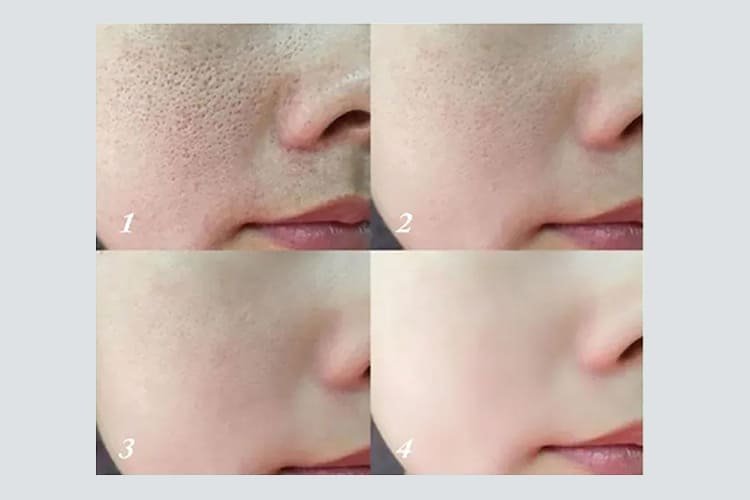
What “oily skin” means for formulation :
Oily skin is driven by hyperactive sebaceous glands and a faster keratinization cycle. Excess sebum mixes with corneocytes to clog pores, amplifying blackheads, whiteheads, and inflammatory lesions. Triggers include androgen activity, genetics, humid climates, heavy/occlusive cosmetics, and harsh alkaline cleansers that cause rebound oil. Consumers report persistent T-zone shine, makeup slippage, and a desire for matte, lightweight, fast-absorbing textures that don’t sting or feel tight.
Formulation Goals for Oily Skin Care
Build oil-control, non-comedogenic systems that deliver a long-lasting matte finish, reduce pore appearance, and prevent breakouts—while protecting the skin barrier with balanced hydration, tolerant pH, and lightweight textures.
Primary performance goals
- Sebum regulation & shine control: measurable 2–24h oil-control (Sebumeter®), matte optics compatible with makeup.
- Pore-appearance minimization: steady keratolysis and micro-surface smoothing without over-exfoliation.
- Breakout prevention: non-comedogenic base (emollients/emulsifiers chosen for low clog potential) plus anti-inflammatory support.
- Barrier friendliness: reduce irritation cycles; maintain NMF and lipids to avoid rebound oil.
- Lightweight sensorials: oil-free gels/gel-creams, fast-absorbing light emulsions, non-sticky film formers.
Guardrails & targets
- pH: daily leave-on systems aim ~5.0–5.5; exfoliating toners (leave-on) within local regulatory limits (many brands target pH ~3.5–4.0; safety review required).
- Base design: avoid heavy occlusives (e.g., high-myristic, high-palmitic triglycerides); select non-comedogenic emollients, lightweight esters, and shear-thinning emulsions.
- Surfactants: favor mild amphoteric/non-ionic blends for cleansers to prevent rebound sebum.
- Fragrance/allergens: low-allergen or fragrance-free options; EU allergen disclosure ready.
System architecture
- Good (Mass): Niacinamide 3–4% + Zinc PCA 0.3–0.5%; film-forming mattifier; gel-cream at pH 5.2–5.6.
- Better (Masstige): + Salicylic Acid 0.5–1% (per region) or PHA for gentler turnover; Green Tea/EGCG + Panthenol 1–2% for calming.
- Best (Prestige/Clinical-leaning): add multi-pathway actives (e.g., azelaic-derivative, peptide/biopolymer mattifier, ectoin for stress) with airless/UV-safe packaging and upgraded sensorials.
Testing endpoints & claims support
- Sebumeter® kinetics (T-zone); gloss imaging for shine; pore-appearance scoring; TEWL for barrier; HRIPT and non-comedogenic panels.
- Documentation pack: INCI, COA, MSDS/SDS, allergen list; EU PIF where applicable.
- What buyers can promise to retail: durable oil-control, non-comedogenic comfort, pore-minimizing look, and matte, lightweight wear—delivered with compliance-ready data and scalable OEM/ODM execution.
Recommended Ingredients (Typical Use Levels & Synergy for B2B)
Choose oil-control, non-comedogenic actives with smart pairings: BHA/PHAs for turnover, niacinamide + zinc PCA for sebum, and soothing antioxidants to protect the barrier—at compliant percentages and pH targets.

Salicylic Acid (BHA)
- Use level: 0.5–2% leave-on (region-dependent); rinse-off can vary by market.
- Pairs with: Niacinamide, zinc PCA, clays, film-forming mattifiers.
- Format notes: pH-dependent availability (toners/serums often pH ~3.5–4.0); consider solvents/neutralization strategy.
- Why: Lipid-soluble keratolysis + pore decongestion; visible shine reduction.
LHA (Capryloyl Salicylic Acid)
- Use level: 0.2–0.5%.
- Pairs with: PHA, green tea/EGCG, panthenol for gentler regimens.
- Format notes: Works well in gel-serums and oil-free gel-creams; milder, surface-focused exfoliation.
- Why: “Soft” keratolysis with good tolerability for daily use.


Niacinamide
- Use level: 2–5% (watch for flushing >5% in sensitive users).
- Pairs with: zinc PCA, TXA/AA derivatives for tone, panthenol/ceramides for barrier.
- Format notes: Broad pH tolerance (~5.0–7.0); easy to incorporate across formats.
- Why: Sebum regulation, pore-appearance minimization, redness moderation—cornerstone for oily skin.
Zinc PCA
- Use level: 0.3–1%.
- Pairs with: niacinamide, BHA/LHA, humectants to counter tightness.
- Format notes: Great for daily serums, toners, oil-free moisturizers.
- Why: Sebum-normalizing + antimicrobial support without dryness.


Azelaic Pathway (Azelaic Acid / Potassium Azeloyl Diglycinate)
- Use level: Azelaic Acid 5–10% (cosmetic context; check region); PAD 3–6%.
- Pairs with: niacinamide, PHA/LHA (alternating days), green tea.
- Format notes: Azelaic acid benefits from dispersion systems; PAD is water-soluble and easier for gel-serums.
- Why: Keratolytic/brightening support + visible texture and tone refinement.
PHAs (e.g., Gluconolactone)
- Use level: 4–10% (leave-on, region-dependent).
- Pairs with: LHA/BHA (staggered), panthenol, ectoin for tolerance.
- Format notes: Osmoprotective, gentler than AHAs; good for daily refining toners.
- Why: Smooths micro-texture while maintaining hydration—ideal for oily-sensitive users.


Green Tea / EGCG (Standardized)
- Use level: 0.1–0.5% actives equivalent (depending on standardization).
- Pairs with: niacinamide, caffeine, panthenol, zinc PCA.
- Format notes: Antioxidant systems benefit from airless/UV-safe packaging.
- Why: Anti-inflammatory, antioxidant, helps temper irritation from acids.
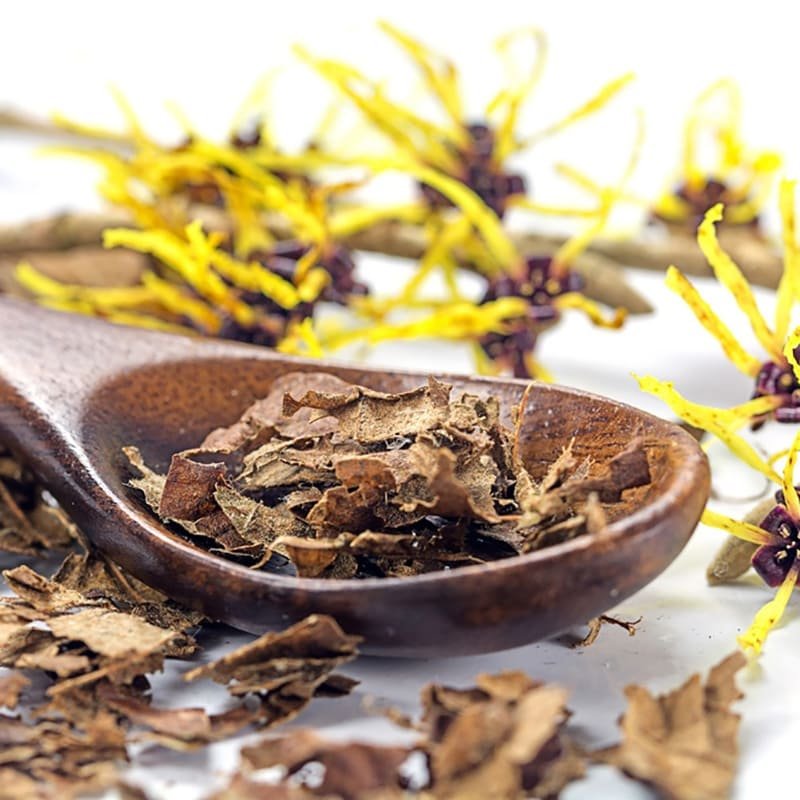
Witch Hazel (Alcohol-Free Distillate)
- Use level: 2–10%(alcohol-free).
- Pairs with: aloe, allantoin, beta-glucan for mild astringency + soothing.
- Format notes: Prefer alcohol-free to avoid rebound oil/irritation.
- Why: Lightweight astringency for instant pore-appearance refinement.

Panthenol (Pro-Vitamin B5)
- Use level: 1–3%.
- Pairs with: niacinamide, ceramides, beta-glucan; offsets dryness from exfoliants.
- Format notes: Universal across gel-serums/gel-creams; boosts feel and glide.
- Why: Barrier-supporting hydration without greasiness.
Mattifying/Blurring Powders (Silica, PMSSQ, Starches)
- Use level: 1–3% (leave-on); higher in wash-off masks.
- Pairs with: film formers (PVP/acrylates), BHA, zinc PCA.
- Format notes: Control shine optics; ensure uniform suspension (rheology).
- Why: Immediate matte finish and soft-focus effect for makeup compatibility.


Clays (Kaolin/Bentonite)
- Use level: 5–20% in wash-off masks/cleansers.
- Pairs with: BHA/LHA, zinc salts; add humectants to prevent overdrying.
- Format notes: Keep rinse-off; manage slip and spread with co-thickeners.
- Why: Adsorptive oil control and detox feel consumers expect.
Ectoin / Betaine / Hydroxyethyl Urea (Tolerability Boosters)
- Use level: Ectoin 0.1–0.3%, Betaine 0.5–3%, HEU 1–3%.
- Pairs with: Acid systems (BHA/LHA/PHA) and niacinamide to maintain comfort.
- Format notes: Improve barrier feel and reduce stinging without heaviness.
- Why: Allow higher-performing oil-control stacks with better tolerance.

More skin Types Solutions
Oily Skin Care→
Dry Skin Care→
Sensitive Skin Care→
Acne-Prone Skin Care→
Dull Skin Care→
Asian Skin Care→
Black Skin Care→
White Skin Care→
Teen Skin Care→
Men’s Skincare→
Mature Skin Care→
Custom Beauty Trends
Scalp Skincare Growth Opportunities→
The Future of Sustainable Formulation→
Preservative-Free Formulas: Possibilities and Pitfalls→
Adaptogens and Botanical Trends in Skincare→
Skincare Innovations & Sourcing Tips→
What’s Trending in U.S. Skincare Retail→
Emerging Skincare Trends in the Middle East→
Key Cosmetic Buying Trends in Europe→
Asia-Pacific Personal Care Trends→
Men’s Personal Care Growth Trends→
Speed to Market: How Leading OEMs Help Brands Launch in 60 Days→
Custom Formulations
Hot Private label Beauty products
Hot ingredients
Salicylic Acid→
Hyaluronic Acid→
Vitamin E→
Ceramides→
Squalane→
Glycolic Acid→
Centella Asiatica Extract→
Custom cosmetic solutions
FAQ Categories
Can't find the answers?
No worries, please contact us and we will answer all the questions you have during the whole process of leather goods customization.
Make A Sample First?
If you have your own formula, packaging idea, logo artwork, or even just a concept, please share the details of your project requirements, including preferred product type, ingredients, scent, and customization needs. We’re excited to help you bring your personal care product ideas to life through our sample development process.
Best Product Types
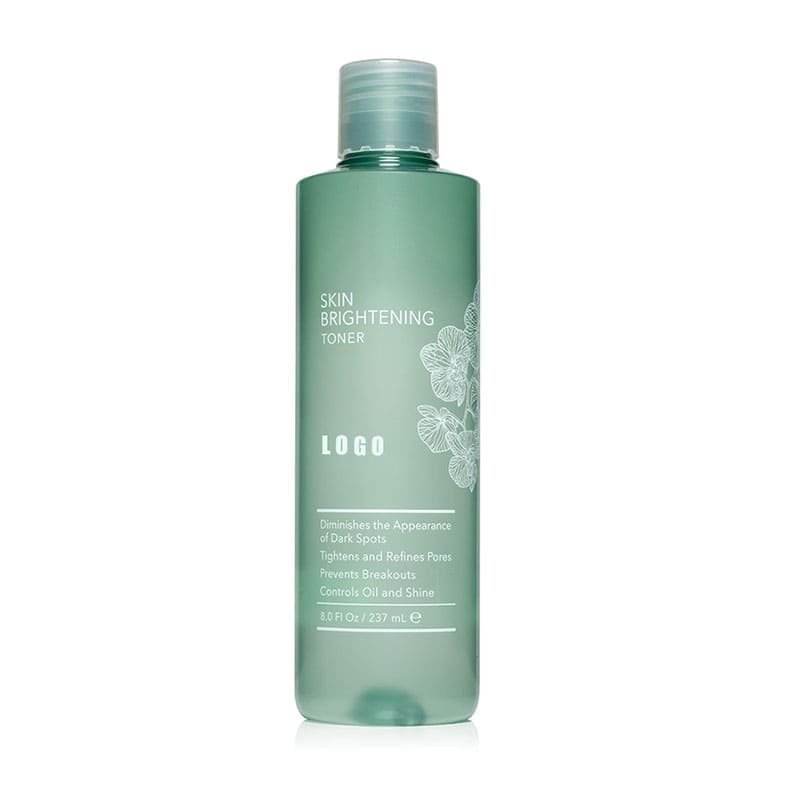
Feature lightweight, non-comedogenic formats shoppers actively search: gel cleansers, pore-refining toners, niacinamide/zinc serums, matte gel-creams, BHA clay masks, oil-control SPF, and spot gels. Use the keyword-rich product names below to boost discoverability while staying true to oily-skin needs and retail claims.
Quick Spec Sheet: Actives %, pH & Wear Mode
Use this at-a-glance spec table to brief private-label oily-skin SKUs. It aligns actives percentages, pH targets, and wear mode with high-intent keywords like oil control, non-comedogenic, and pore-minimizing—so your team can choose the right gel/gel-cream textures and packaging without guesswork.
Quick Spec Sheet Actives pH & Wear Mode
| SKU / Use Case (SEO Name) | Actives & Typical %* | Format | Target pH | Wear Mode |
|---|---|---|---|---|
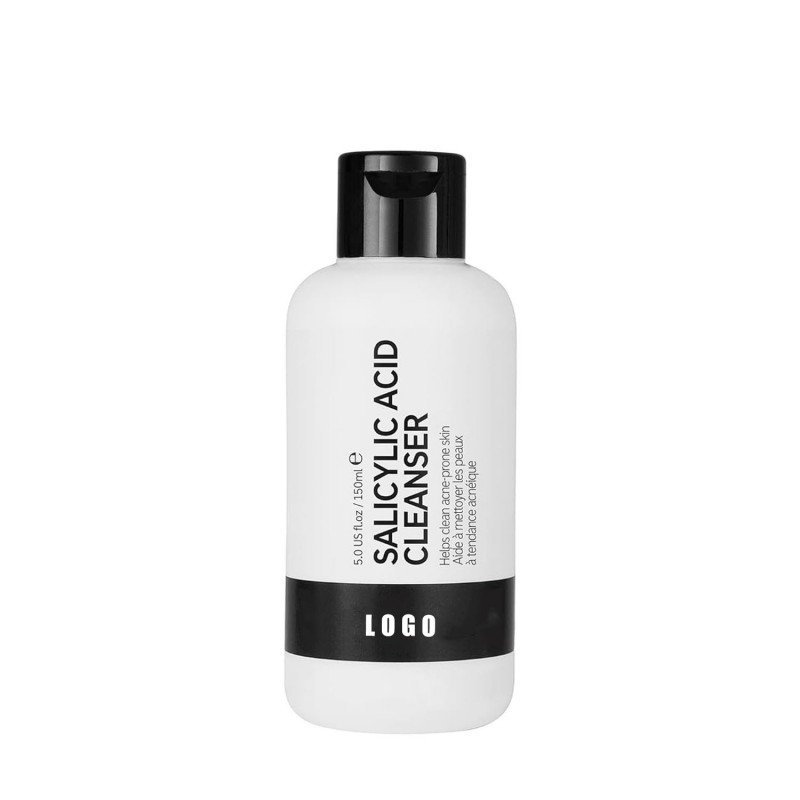
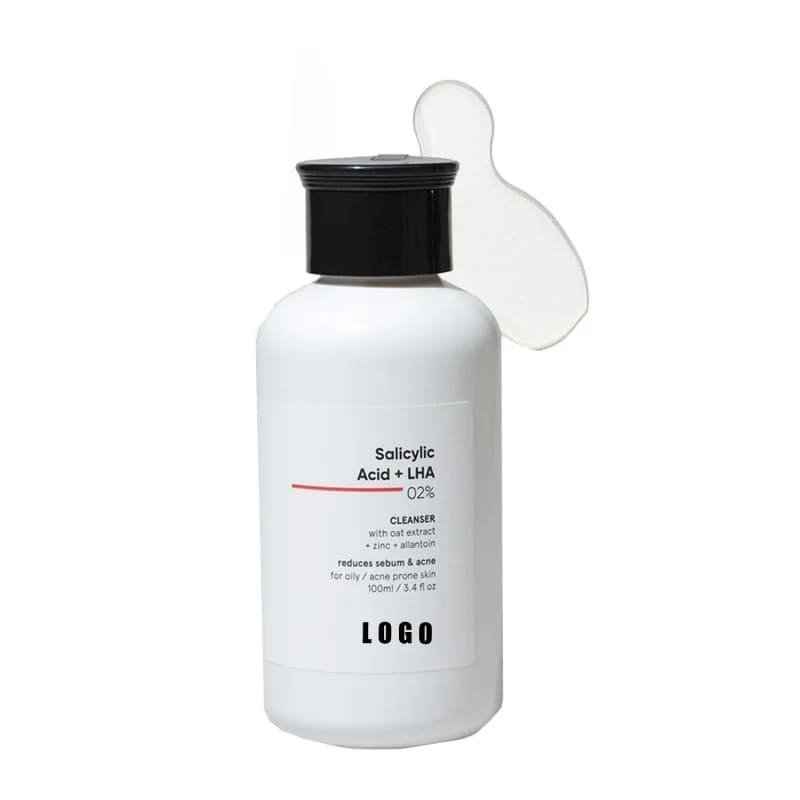
| Salicylic Acid Gel Cleanser for Oily Skin | Salicylic Acid 0.5–1% (rinse-off) + mild amphoteric/NI surfactants | Gel Cleanser | 5.0–5.5 | Rinse-Off |
| AHA/BHA Exfoliating Toner (Oily Skin) | BHA 0.5–1% ± PHA 4–6% (region-dependent) | Toner | 3.5–4.0 | Leave-On |
| Sebum-Control Niacinamide Toner (Alcohol-Free) | Niacinamide 3–5% + Zinc PCA 0.3–0.5% | Toner | 5.0–5.5 | Leave-On |
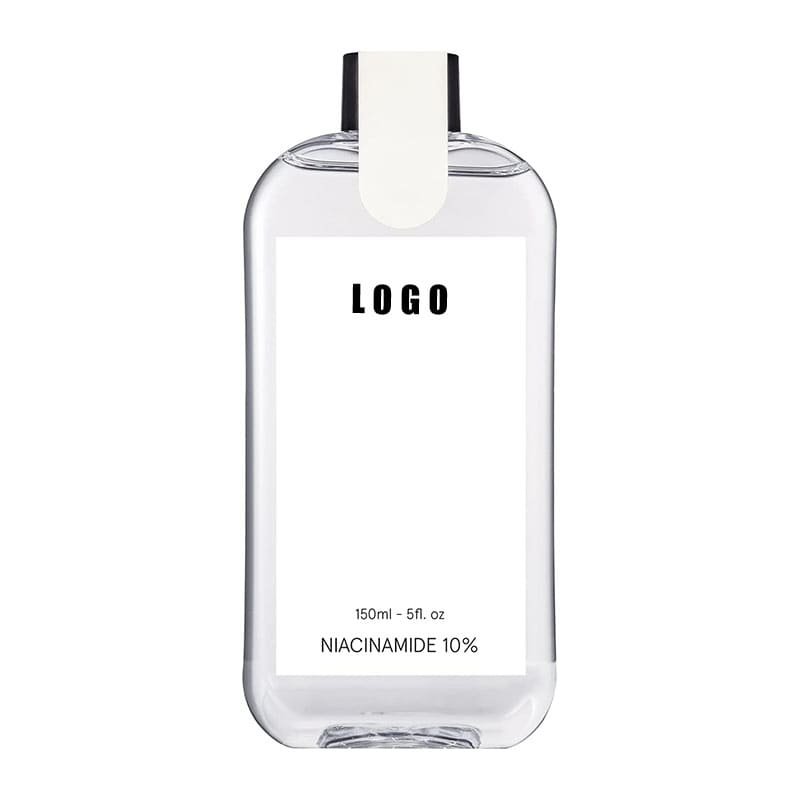
| Niacinamide Oil-Control Serum | Niacinamide 4–5% (10% variant per market tolerance) | Gel Serum | 5.0–5.5 | Leave-On |
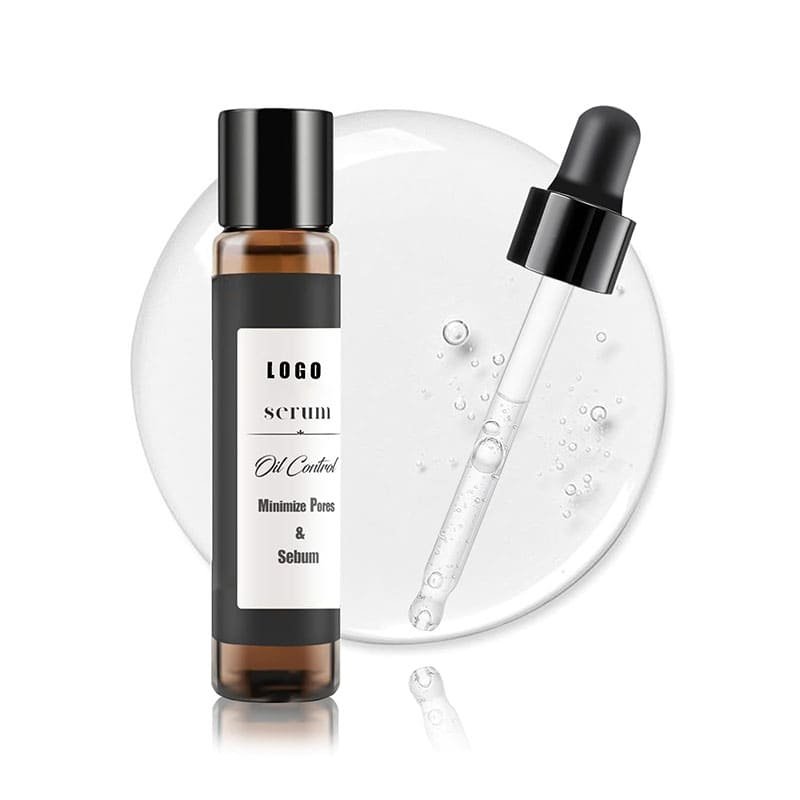
| Zinc PCA Sebum-Control Serum | Zinc PCA 0.3–0.5% + Niacinamide 3–4% | Gel Serum | 5.0–5.5 | Leave-On |
| Oil-Free Mattifying Gel-Cream Moisturizer | Panthenol 1–2% + film former/blurring powders | Gel-Cream | 5.2–5.6 | Leave-On |
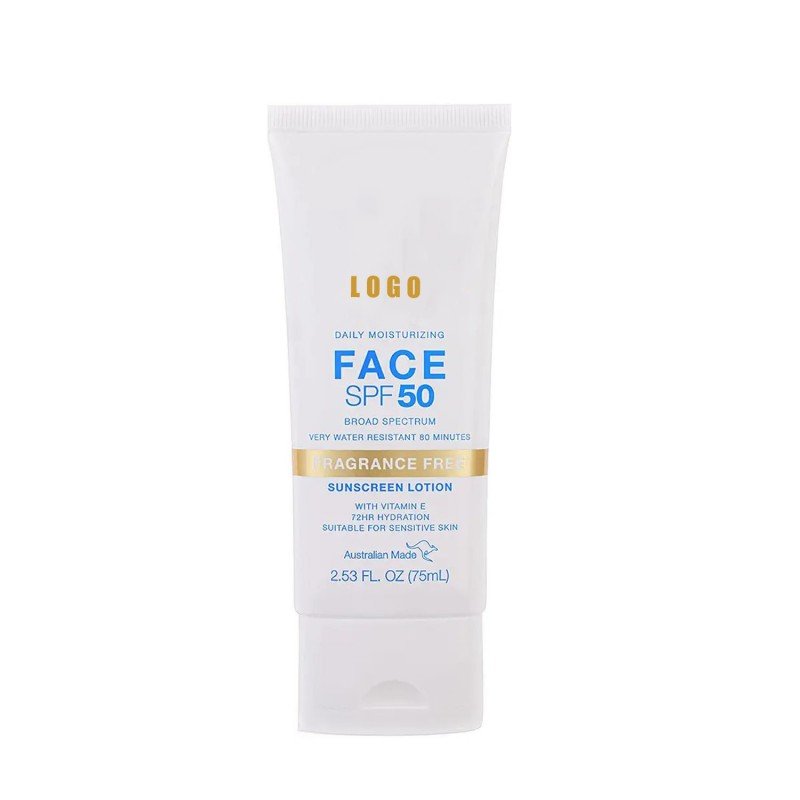
| Non-Comedogenic Sunscreen SPF 50 (Oil-Control) | UV filters per region + Silica/PMSSQ 1–3% | Fluid / Gel-Cream | per UV system | Leave-On |
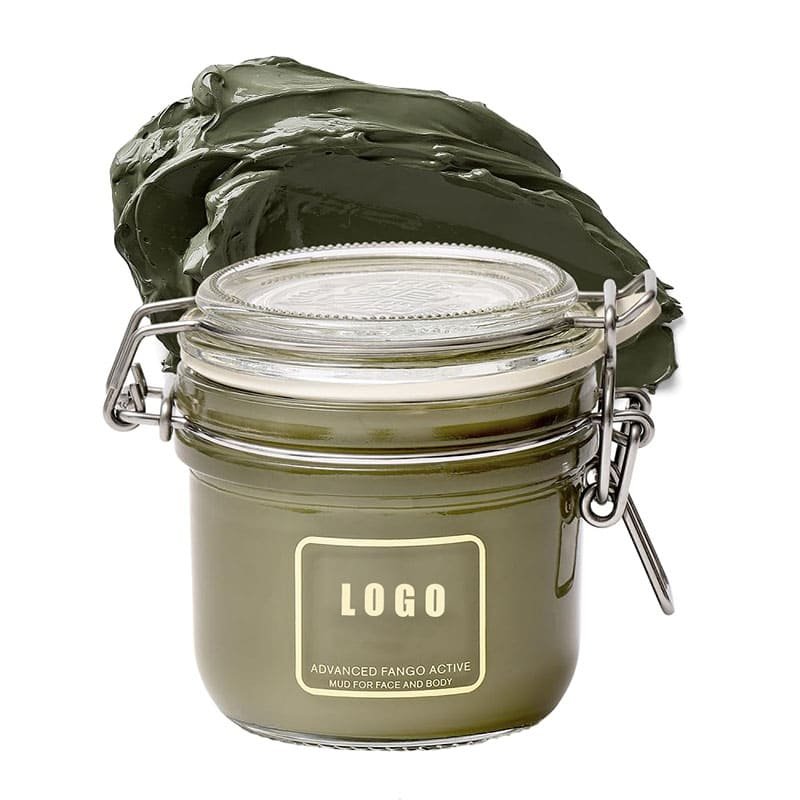
| BHA Clay Mask for Oily & Acne-Prone Skin | Kaolin 12–15% + SA 0.5% or LHA 0.3% | Wash-Off Mask | n/a | Rinse-Off |
| Salicylic Acid Spot Treatment Gel | SA 2% (where allowed) | Gel | 3.5–4.0 | Leave-On |
| Micellar Water for Oily Skin | Micellar surfactants + optional Niacinamide 2% | Micellar Water | 5.0–5.5 | Leave-On (no-rinse) |
Final dosage/pH must follow local regulations, safety assessment, and stability/compatibility data. For retail claims (oil-control, non-comedogenic, pore-minimizing), back with Sebumeter®, gloss imaging, non-comedogenic panels, and HRIPT.
Region & Climate Customization for Global Beauty Brands
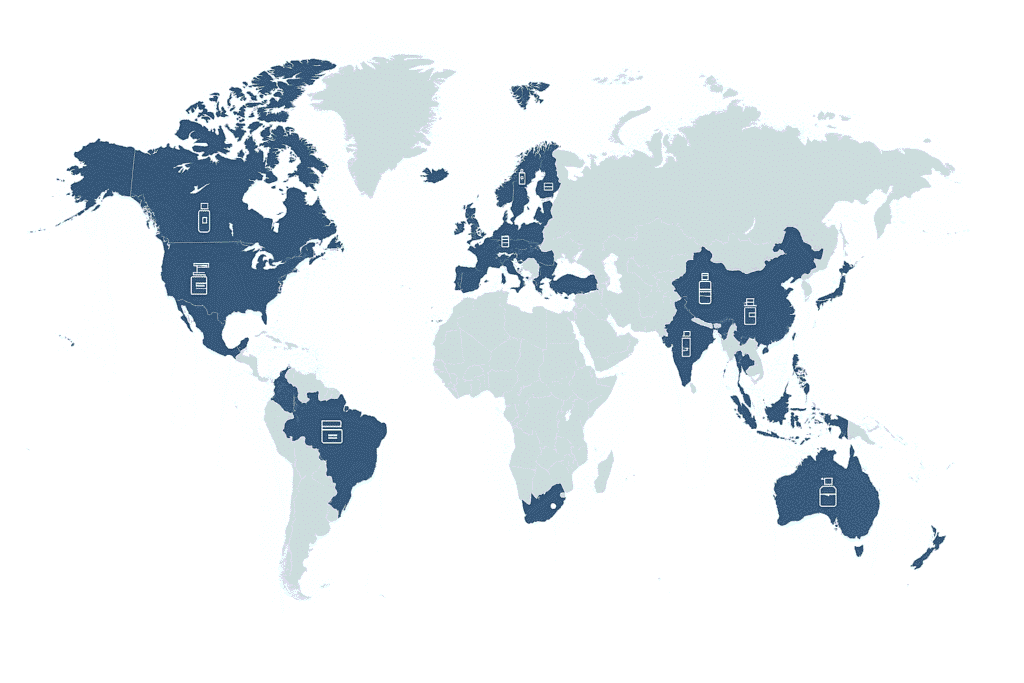
Match oil-control, non-comedogenic systems to climate and culture. Humid markets want ultra-light gels and mattifiers; dry, hot regions need balanced hydration. Align textures, actives %, fragrance/allergens, and packaging to each region.
How climate steers product success:
Sebum flow, transepidermal water loss, and wear-time vary by humidity, heat, and seasonality. Translate that into texture (gel vs gel-cream), pH target, actives %, and packaging hygiene. Local fragrance tolerance and allergen rules also push formulation choices. Use the matrix below to brief region-specific SKUs without reinventing your base.
Regional Matrix
| Region/Market | Climate Reality | Consumer Preference Signals | Recommended Formats & Packaging | Actives & Typical % |
|---|---|---|---|---|
| SE Asia (incl. SG/MY/TH/VN) | Humid-hot year-round | Wants feather-light, fast-dry, no film; anti-shine all day | Oil-free gels / gel-serums, spray toners; airless or PE tubes for hygienic, travel-friendly use | Niacinamide 3–5% + Zinc PCA 0.3–0.5%; BHA 0.5–1%; green tea 0.1–0.3% |
| Middle East / GCC | Hot-dry, AC indoors | Matte look but dislikes tightness; dust/pollution | Gel-creams with humectants; pump bottles; UV-safe for antioxidants | Niacinamide 4%, PAD 3–5% or LHA 0.2–0.3%; panthenol 1–2% |
| North America | Four seasons; indoor heat/AC | Seasonal switchers; value claims + testing data | Summer: gels/toners。Winter: light gel-creams;FBA-ready tubes | BHA 0.5–1% (per region), PHA 4–8%, niacinamide 4% |
| Europe (EU/EEA/UK) | Temperate; strict label norms | Leans dermocosmetic, minimal scents | Alcohol-free toners, gel-serums, airless for actives | Niacinamide 3–5%, zinc PCA 0.3–0.5%, LHA/PHA gentle stacks |
| Japan / Korea | Humid summers, cool winters; ingredient-savvy | Ultra-light sensorials; elegant film formers; layering | Micro-gel serums, mattifying essence toners, soft gel-creams; precise pumps | Niacinamide 3–4%, LHA 0.2–0.3%, PHA 4–6%, ectoin 0.1–0.2% |
| Australia | Coastal sun, pockets dry-hot | UV awareness; sporty, outdoor wear | Oil-control SPF gel-cream, rinse-off clay/BHA mask, PE tubes | Niacinamide 4%, zinc PCA 0.5%, BHA mask 0.5% + clays 10–15% |
Localization playbook (what to standardize vs. adapt):
- Standardize the science: base non-comedogenic system, pH ~5.0–5.5, core niacinamide + zinc stack; keep dossier (INCI, COA, MSDS/SDS) consistent.
- Adapt the sensorials: swap gel ↔ gel-cream and humectant levels per humidity; tune mattifiers/film formers for local wear-time.
- Tune actives: choose BHA/LHA/PHA intensity by season and sensitivity norms; use PAD/PHAs where gentleness or regulatory comfort is needed.
- Packaging & logistics: airless/UV-safe for antioxidant systems; FBA-ready tubes and clear carton labeling; consider travel minis in humid markets.
- Fragrance strategy: always offer a fragrance-free SKU; when scented, keep EU allergen-aware and culturally familiar (citrus/green-tea/herbal).
OEM/ODM Delivery & Pricing to Scale (Place above product images)
Reduce risk and speed to market with OEM/ODM execution tuned for oily-skin lines: low MOQ 500, ~7-day samples, ~30-day production, compliance documents, and FBA-ready packaging. Choose your price tier (Mass/Masstige/Prestige), then scale SKUs across climates with one validated core system.
B2B delivery you can brief today
- MOQ: 500 per SKU; tiered pricing at 3k / 10k; multi-SKU bundling.
- Timelines: Samples ~7 business days (2–3 iterations); Production ~30 days (component-dependent).
- Docs & compliance: INCI, COA, MSDS/SDS, Allergen List, stability/compatibility summary; EU PIF/Responsible Person support where applicable.
- Testing & claims: Sebumeter® kinetics, gloss imaging, non-comedogenic panels, HRIPT; claim language pack (oil-control, pore-minimizing, matte).
- Packaging: Airless / UV-safe droppers / PE tubes; FBA-ready label/carton; travel minis for sampling.
- Cost drivers: actives % and grade, fragrance policy (incl. fragrance-free), packaging mold/finish, shipping terms (DDP/EXW/CIF).
Price-tier playbook (what changes as you trade up)
- Mass: Niacinamide 4% + Zinc PCA 0.5% core; oil-free gel or gel-cream; PE tube / standard pump; strong oil-control claims with value positioning.
- Masstige: + BHA 0.5–1% or PHA 4–6% (region-dependent); film-forming mattifier; airless tube/bottle; richer sensorials; expanded pore-minimizing story.
- Prestige: add LHA 0.2–0.3% / PAD 3–5% / Ectoin 0.1–0.2%; advanced blurring powders; airless, UV-safe premium components; clinical-leaning dossier for retailers.
What you’ll receive in 24h
- 2× texture routes (gel-serum vs gel-cream) with actives % + pH targets
- Packaging shortlist with MOQ/lead-time and FBA notes
- Testing & claims map + compliance checklist by region
- Project timeline and next steps to sampling/PO
FAQs About Oily-Skin Formulation (PAA-Optimized)
Q: Does oily skin need moisturizer?
A: Yes—oily skin still needs moisture to protect the barrier and prevent rebound oil. Use lightweight, non-comedogenic gel-creams with humectants (glycerin, hydroxyethyl urea) and minimal occlusives. Target pH ~5.0–5.5, fast-absorbing textures, and a matte finish. Pair with niacinamide + zinc PCA to regulate sebum so the skin feels comfortable without shine.
Q: What pH is best for oily-skin cleansers and leave-ons?
A: For daily cleansers, target pH 5.0–5.5 to reduce disruption and rebound sebum. Leave-on exfoliating toners/serums using BHA/LHA/PHA must follow local rules; many brands position pH ~3.5–4.0 with safety review. Core serums/gel-creams should sit ~5.0–5.6 to maintain compatibility and comfort for oily, acne-prone users.
Q: What makes a product “non-comedogenic”—and how is it tested?
A: “Non-comedogenic” means formulated to minimize pore-clogging risk. It starts with base design (emollients/emulsifiers with low clog potential) and continues with human panel tests (e.g., back application or face use), dermatologist grading, and tape-strip microscopy where applicable. Combine with Sebumeter®, gloss imaging, and HRIPT to support “oil-control, non-comedogenic, gentle” claims for retail.
Q: Which is better for oily skin: salicylic acid or azelaic derivatives?
A: Both help, but they play different roles. Salicylic acid (BHA) is lipid-soluble, excels at pore decongestion and shine control (typ. 0.5–1% leave-on, region-dependent). Azelaic acid/PAD supports tone, texture, and anti-blemish with good tolerability; PAD (3–6%) is water-soluble and easy for gel-serums. Many brands alternate or layer (with safety review).
Q: Is niacinamide or zinc PCA better for oil control?
A: They’re complementary. Niacinamide (2–5%) helps regulate sebum, improve pore appearance, and calm redness. Zinc PCA (0.3–1%) adds sebum-normalizing and antimicrobial support. Together they create a daily, non-comedogenic base that’s gentle enough for long-term use and compatible with BHA/LHA/PHA schedules.
Q: Which ingredients should oily-skin formulas avoid?
A: Avoid heavy occlusives and high-comedogenic lipids (e.g., isopropyl myristate, some long-chain triglycerides) and high-alcohol toners that trigger rebound oil. Minimize fragrance allergens (EU-aware) and overly alkaline cleansers. Choose light esters, silicone elastomers/blurrers, and oil-free gels/gel-creams to maintain matte comfort.
Q: What sunscreen format is best for oily, acne-prone skin?
A: Look for non-comedogenic, oil-control SPF with matte finish: gel-cream or fluid textures, film formers for stay-put wear, and UV-safe packaging. Use silica/blurring powders to cut gloss. Keep fragrance low or fragrance-free. Retail language such as “shine-control SPF 50” or “oil-free sunscreen” converts well when supported by data.
Q: Can oily-skin products include anti-aging benefits?
A: Yes—use retinoids (retinol/retinal at low, well-tolerated levels), peptides, and antioxidants in light, non-comedogenic systems. Balance with niacinamide/panthenol for comfort and consider airless packaging. Communicate benefits as “pore-refining + anti-aging” and support with tolerability and Sebumeter® endpoints to satisfy retailers.
Q: Alcohol-free vs. low-alcohol toners for oily skin?
A: For broadest tolerance and reduced rebound oil, alcohol-free is safer. If using low alcohol for sensorials, keep it modest and offset with humectants and soothing agents. Either way, prioritize BHA/LHA/PHA or niacinamide/zinc PCA as functional drivers—then choose alcohol strategy based on market preference and claim positioning.
Q: What documentation do retailers expect for oily-skin claims?
A: Prepare a compliance pack: INCI, COA, MSDS/SDS, allergen list; non-comedogenic panel summary, Sebumeter® kinetics, gloss imaging, optional TEWL, and a stability/compatibility brief. For the EU/UK, keep PIF/Responsible Person pathways ready. For marketplaces, include FNSKU/carton labels and any restricted-claims guidance.
Ready to Formulate Your Oily-Skin Line?
Tell us your target markets, budget tier, and launch date. We’ll recommend two texture routes, actives %, pH targets, packaging, and testing plan—then ship samples in ~7 days.