Skip to content
Copper Peptide Serum for Acne: Science-Backed Skin Repair
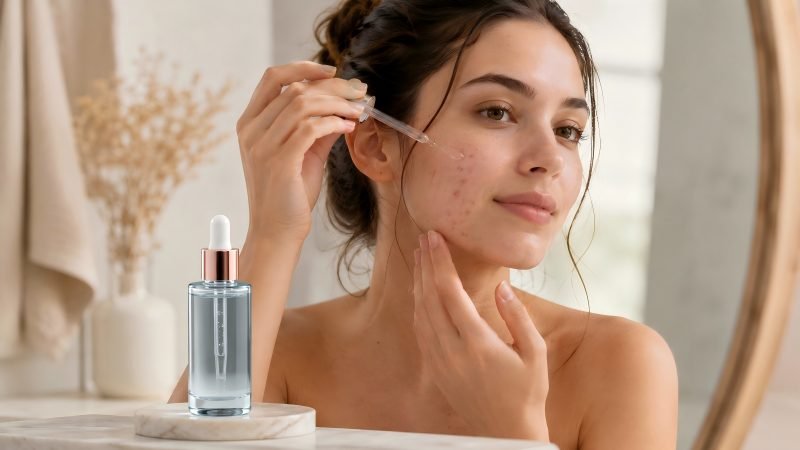
Copper peptides, especially GHK-Cu, are gaining recognition beyond anti-aging for their supportive role in acne-prone skin. Unlike traditional acne treatments such as salicylic acid or benzoyl peroxide, copper peptides act at a cellular level to enhance tissue repair, reduce inflammation, and strengthen the skin barrier. These properties make them particularly valuable for sensitive skin with active breakouts or post-acne marks.
GHK-Cu naturally declines with age, and repeated acne inflammation can further impair skin repair. Topical copper peptide serums serve as biological messengers, signaling fibroblasts and keratinocytes to synthesize collagen, elastin, and glycosaminoglycans, essential for resilient and smooth skin (Healthline).
How Copper Peptides Support Acne-Prone Skin
Copper peptides benefit acne-prone skin in several key ways:
- Reduces Inflammation: GHK-Cu moderates pro-inflammatory cytokines, which helps calm redness and swelling associated with breakouts (Skincare Database).
- Improves Scar and Texture: Stimulates fibroblasts and enhances collagen production, softening post-acne scars and improving skin texture.
- Strengthens the Skin Barrier: Supports lipid synthesis and barrier proteins, enhancing resilience against irritation or further breakouts.
- Enhances Overall Skin Quality: Improves hydration, tone, and elasticity for healthier-looking skin.
These benefits are cumulative, meaning consistent use over several weeks yields measurable improvements in skin health and appearance.
Integration Into a Skincare Routine
For optimal results, copper peptide serums should be incorporated thoughtfully into acne care routines:
- Cleanse: Use a gentle foaming or low-pH cleanser to prepare the skin.
- Copper Peptide Serum: Apply 1–2% GHK-Cu, ideally in the morning or evening.
- Barrier Support: Layer niacinamide, ceramides, or panthenol-based moisturizers to reinforce the barrier.
- Targeted Actives: Use exfoliating acids or retinoids separately to avoid peptide degradation.
- Sun Protection: Broad-spectrum SPF protects recovering skin from UV damage.

Clinical Evidence & Research
| Study / Source | Methodology | Key Findings | Relevance for Acne |
|---|---|---|---|
| Journal of Drugs in Dermatology, 2012 | Topical GHK-Cu applied to epidermal wounds | Accelerated healing, increased collagen | Supports post-acne repair |
| Clinical Trials | 8–12 weeks topical use | Reduced hyperpigmentation, improved skin texture | Enhances post-inflammatory outcomes |
| Real-World User Reports | Sensitive acne-prone skin | Reduced redness and flare-ups | Confirms tolerability and routine compatibility |
| In vitro fibroblast studies | GHK-Cu stimulation | Increased ECM protein production | Supports barrier and structural repair |
These studies demonstrate that copper peptide serums provide science-backed, measurable skin benefits, making them a reliable ingredient for acne-focused premium skincare (WomensHealthMag).
Formulation Considerations for B2B Brands
To ensure efficacy, safety, and consumer satisfaction, manufacturers should focus on:
- pH Stability: Maintain 5–6 for optimal peptide activity.
- Complementary Actives: Include hyaluronic acid, niacinamide, or panthenol for enhanced barrier support.
- Avoid: Strong acids or high-concentration Vitamin C in the same application to prevent peptide degradation.
- Packaging: Airless pump or dark glass bottles preserve active ingredients.
- Regulatory Compliance: Ensure EU/US cosmetic regulations, stability testing, and microbial safety verification.
By considering these factors, brands can deliver premium, effective, and compliant copper peptide acne serums.
Mechanism of Copper Peptide Action
Copper peptides, particularly GHK-Cu, function as biologically active signal molecules that penetrate both the epidermis and dermis, promoting comprehensive skin repair. Their mechanism involves multiple interconnected pathways:
- Fibroblast Stimulation & Collagen Synthesis
GHK-Cu binds copper ions and delivers them to dermal fibroblasts, activating collagen and elastin production. This improves skin firmness and supports the repair of acne-induced tissue damage. Studies indicate that fibroblast proliferation can increase by up to 30–40% under optimized peptide concentrations. - Matrix Metalloproteinase (MMP) Regulation
Copper peptides modulate MMP activity, enzymes responsible for collagen breakdown. By controlling MMPs, GHK-Cu ensures that newly synthesized collagen is preserved, preventing further skin laxity and minimizing the formation of post-acne scars. - Anti-Inflammatory and Antioxidant Effects
Acne-prone skin often exhibits chronic inflammation and oxidative stress. GHK-Cu downregulates pro-inflammatory cytokines such as IL-6 and TNF-alpha while enhancing antioxidant defense systems, reducing redness, swelling, and irritation after breakouts. - Barrier Repair and Extracellular Matrix Support
Copper peptides increase glycosaminoglycans (GAGs) production and restore epidermal barrier proteins like filaggrin. This enhances skin hydration and resilience, preventing new acne lesions and improving tolerance to other active ingredients in formulations.
Takeaway for B2B brands: The multi-pathway mechanism of copper peptides not only addresses active acne inflammation but also promotes long-term tissue remodeling, making it a premium, science-backed ingredient for high-end serum lines.

B2B Insights for Copper Peptide Serum Development
For manufacturers, private label clients, and OEM/ODM partners targeting the acne and sensitive skin market, careful formulation and packaging strategy is critical:
- Optimized Peptide Concentration
- Research shows 1–2% GHK-Cu balances efficacy and tolerability.
- Higher concentrations may increase risk of irritation, while lower concentrations reduce measurable benefits.
- Compatibility Testing with Acne Actives
- Copper peptides can be combined with hydrating, calming, or barrier-support actives such as niacinamide, panthenol, or hyaluronic acid.
- Avoid simultaneous use with strong acids or retinoids in the same application to prevent peptide degradation.
- Stability testing ensures serum retains full potency over 6–12 months.
- Packaging Considerations for Product Stability
- Airless pump bottles, UV-protective amber bottles, or semi-opaque frosted glass maintain peptide integrity.
- Minimal exposure to light, air, and heat is critical to prevent oxidation and maintain consistent product performance.
- Regulatory & Documentation Requirements
- Provide COA, MSDS, stability, and microbial testing reports to comply with EU/US cosmetic regulations.
- Proper documentation enhances B2B trust, facilitates export, and supports brand claims for sensitive and acne-prone skin.
- Premium Positioning & Marketing Benefits
- The multi-functional action (anti-inflammatory + repair + hydration) allows brands to position copper peptide serums as high-value, clinically inspired solutions for acne-prone and sensitive skin.
- Supporting technical data and clear ingredient mechanism increases credibility with dermatologists, spa clients, and high-end DTC brands.
Conclusion
Copper peptide serums deliver inflammation reduction, scar softening, and barrier support, providing a multifunctional solution for acne-prone skin. Supported by clinical research, in vitro studies, and real-world reports, GHK-Cu serums offer scientific credibility and consumer trust. When combined with optimized formulation, packaging, and complementary skincare routines, these serums can become a high-value, premium product in acne-focused skincare lines, meeting both B2B and end-consumer expectations.
More Related
Custom Formulations
Custom Brightening Formulations→
Custom Anti-Aging Formulations→
Custom Sunscreen Formulations→
Custom Acne Treatment Formulations→
Custom Sensitive Skin Care Formulations→
Custom Hair Growth Formulations→
Custom Anti Hair Loss Formulations→
Custom Smooth And Shine Hair Formulations→
Custom Anti Frizz Formulations→
Custom Hair Gloss Formulations→
Custom Anti Static Hair Formulations→
Custom Hair Moisturizer Formulations→
Custom Hair Nourishing Formulations→
Custom Hair Strengthening Formulations→
Custom Hair Damage Repair Formulations→
Custom Hair Volumizing Formulations→
Custom Hair Fluffy Formulations→
Custom Curl Defining Formulations→
Hot Private label Hair products
Private Label Hair Growth Oil→
Private Label Anti Dandruff Shampoo→
Private Label Anti Fungal Shampoo→
Private Label Luxury Hair Oil→
Private Label Lightweight Conditioner→
Private Label Peppermint Hair Oil→
Private Label Leave In Conditioner→
Private Label Curl Defining Cream→
Private Label Hair Volume Powder→
Hot ingredients
Custom cosmetic solutions
FAQ Categories
Can't find the answers?
No worries, please contact us and we will answer all the questions you have during the whole process of OEM beauty and skincare products customization.
Make A Sample First?
If you have your own formula, packaging idea, logo artwork, or even just a concept, please share the details of your project requirements, including preferred product type, ingredients, scent, and customization needs. We’re excited to help you bring your personal care product ideas to life through our sample development process.