Private Label Ectoin Barrier Serum Manufacturer
Custom Ectoin Serum Development for Hydration, Skin Barrier Support, and Comfortable Daily Skincare
Ectoin is a water-soluble extremolyte found in microorganisms adapted to harsh environments. In skincare, it is valued for supporting hydration and skin comfort, making it a useful ingredient for barrier-focused facial serums. However, Ectoin does not replace skin barrier lipids, and its effectiveness depends on the complete formulation rather than concentration alone.
Ectoin Barrier Formulation: Select suitable Ectoin levels and combine humectants, Panthenol, or compatible Ceramide systems to meet specific skincare goals.
Serum Texture Engineering: Develop watery, gel, or milky serums with balanced viscosity, spreadability, and layering performance.
Formulation Safety & Stability: Even stable Ectoin cannot compensate for incompatible ingredients, inadequate preservation, or an unstable serum base. Proper formulation assessment and testing are essential.
Zerun supports formula evaluation, sampling, refinement, and OEM/ODM manufacturing planning.
Ectoin Barrier Serum Benefits & Formulation Priorities
Ectoin barrier serums can be developed around three closely related skincare goals: daily hydration, moisture barrier support, and comfort for dryness-prone skin. Each direction requires a different balance of moisturizing ingredients, serum texture, and skin feel. The right approach depends on your target consumers, intended benefits, and overall formulation strategy.
01
Daily Hydration & Moisture Retention
Designed for dehydrated skin that feels tight or lacks moisture, this direction focuses on supporting daily hydration without a heavy finish.
Ectoin can be combined with a balanced humectant system to create a lightweight serum that spreads easily and layers comfortably beneath moisturizers or sunscreen. The development priority is to balance moisture retention with a smooth, non-sticky skin feel.
02
Moisture Barrier Support
Developed for dry skin with ongoing moisture barrier care needs, this direction focuses on maintaining hydration while supporting the skin’s natural barrier function.
Ectoin can be incorporated into a broader moisturizing system with suitable barrier-supporting ingredients, including compatible lipid systems where appropriate. The aim is to create a serum that provides a more nourishing skin feel without unnecessary heaviness or greasiness.
03
Dryness-Related Skin Comfort
Intended for skin prone to dryness-related tightness and discomfort, this direction prioritizes gentle formulation and comfortable daily use.
Ectoin can be paired with carefully selected moisturizing and skin-conditioning ingredients while minimizing unnecessary fragrance or potentially irritating components. The finished serum should be evaluated for skin tolerance, texture, and layering performance, particularly when targeting sensitive-skin routines.
What Ectoin Actually Contributes to a Barrier Serum
Ectoin offers more than a familiar hydration claim. Its interaction with water and biological structures provides a scientific basis for developing barrier-focused skincare. However, its value in a facial serum depends on understanding what Ectoin contributes, how it differs from conventional moisturizing ingredients, and what the finished formula must achieve.
- Beyond Conventional Hydration
- Glycerin and hyaluronic acid are widely used to support skin hydration. Ectoin introduces a different scientific rationale through its interaction with water and the hydration environment surrounding biological molecules.
- Research describes a mechanism called preferential exclusion, in which Ectoin is preferentially excluded from the immediate hydration environment of proteins and membranes, helping favor their hydrated, structurally stable state.
- This makes Ectoin a relevant ingredient for hydration and barrier-focused development. It does not, however, establish that Ectoin outperforms conventional humectants in every finished formula.
- The Connection to Skin Barrier Function
- A healthy skin barrier helps limit water loss and maintain skin comfort. Studies involving Ectoin-containing topical formulations have reported improvements in skin dryness and certain barrier-related measurements, including transepidermal water loss (TEWL).
- These findings support Ectoin as a candidate active for barrier-focused skincare, rather than merely a marketing ingredient.
- However, much of the published clinical evidence involves specific creams or emollient formulations. A newly developed Ectoin serum should not inherit those performance claims without appropriate finished-product evidence.
- Why Ectoin Fits Water-Based Serums
- Ectoin’s high water solubility makes it practical for incorporation into the aqueous phase of a facial serum.
- This allows formulators to consider lightweight watery, gel, or water-containing milky systems without requiring an oil-based carrier specifically to dissolve Ectoin.
- The serum format can therefore support a leave-on product designed for convenient daily application and layering within a skincare routine. Its final texture and performance still depend on the complete serum base—not Ectoin alone.
Translating Ectoin Science Into Serum Development Decisions
| Brand Development Goal | Recommended Formulation Direction | What Needs to Be Verified |
|---|---|---|
| Lightweight Daily Hydration | Build a water-based Ectoin serum with a balanced humectant system rather than relying on Ectoin as the sole moisturizing ingredient. | Finished-serum hydration performance, tackiness, and skin feel. |
| Stronger Barrier-Care Positioning | Use Ectoin as the core active and evaluate whether additional moisturizing or barrier-lipid support is needed for the intended product benefits. | Moisture retention and barrier-related claims, using appropriate finished-product testing such as TEWL assessment. |
| Comfort for Dryness-Prone Skin | Prioritize a gentle serum base, carefully selected supporting ingredients, and reduced exposure to unnecessary potential irritants. | Skin tolerance, comfort during repeated use, and suitability for the intended consumer group. |
| Lightweight Layering With SPF | Balance humectants, viscosity modifiers, and film-forming ingredients to avoid an excessively sticky or heavy finish. | Pilling, spreadability, and layering performance with moisturizers and sunscreen. |
| Stable Commercial Serum Production | Select a serum base compatible with Ectoin and the complete ingredient system, with appropriate preservation and manufacturing controls. | Physical stability, pH, viscosity, microbiological quality, and packaging compatibility. |
Ectoin provides a scientifically supported starting point for a barrier-focused serum, but it cannot replace the complete formulation. The objective is to translate its properties into a stable, comfortable product with benefits supported by appropriate evidence.
How an Ectoin Barrier Serum Formula Is Built
A well-designed Ectoin barrier serum requires more than adding a single active ingredient to water. Its performance depends on how Ectoin, moisturizing agents, texture modifiers, and protective systems work together. Each component must support the intended skincare benefits while maintaining a comfortable, stable, and practical serum formulation.
Building the Active & Hydration Foundation
- Ectoin serves as the core active ingredient, but the serum’s overall moisturizing performance also depends on its aqueous carrier and supporting humectant system.
- Ingredients such as glycerin or sodium hyaluronate can complement Ectoin by contributing additional moisture-binding properties. Their selection should reflect the intended hydration level, texture, and daily application experience.
- The key is balance rather than ingredient quantity. Excessive use of certain humectants or an unsuitable combination may leave the serum sticky, slow to spread, or uncomfortable when layered with other skincare products.
- A properly designed hydration foundation should support the product’s intended benefits without compromising the lightweight characteristics expected of a facial serum.
Balancing Barrier Support & Serum Texture
- Barrier-focused serums do not always require heavy oils or complex lipid systems. The appropriate structure depends on the desired moisturizing experience and the role of supporting ingredients.
- For a lightweight Ectoin serum, an aqueous formulation with suitable humectants and texture modifiers may provide the intended product characteristics without an added oil phase.
- For a more nourishing barrier-care direction, incorporating ceramides or other lipid-based ingredients may be considered. However, these materials can introduce additional dispersion, emulsification, and stability requirements.
- Adding more barrier-supporting ingredients does not automatically create a better serum. Each ingredient must be compatible with the selected formulation structure while maintaining acceptable spreadability, viscosity, and skin feel.
Protecting the Complete Serum Formula
- Even when Ectoin remains chemically stable, the finished serum can still experience changes in viscosity, appearance, microbial quality, or overall stability.
- Water-containing serums require an appropriate preservation strategy based on the complete formulation and its intended use. Preservative selection must account for factors such as pH, ingredient compatibility, and potential microbial contamination.
- Likewise, the target pH should be determined by the requirements of the entire ingredient system, rather than Ectoin alone. An unsuitable pH may affect other ingredients, preservative performance, or the serum’s thickening system.
- Formula protection must be considered during development, not only before production. The complete formulation requires appropriate stability, microbiological, and compatibility evaluation before commercial manufacturing.
Choosing Watery, Gel, and Milky Bases for Ectoin Barrier Serums
Ectoin can be incorporated into different water-containing serum systems, but the choice of base influences much more than product appearance. Watery, gel, and milky formulations differ in structure, ingredient compatibility, viscosity, and manufacturing requirements. Understanding these differences helps brands select a serum format that supports their intended skincare experience without introducing unnecessary formulation complexity.
Watery Ectoin Serum

Lightweight Aqueous Formulation
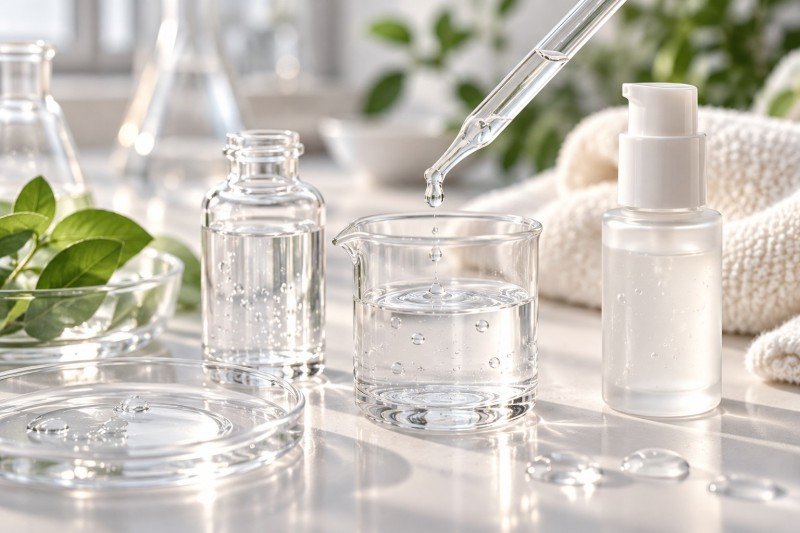
Formula Structure: A low-viscosity, water-based serum incorporating Ectoin and compatible water-soluble ingredients. Supporting humectants such as glycerin or sodium hyaluronate can be selected to complement hydration without requiring a substantial gel network or oil phase.
Development Advantages: Suitable for brands seeking a fluid, lightweight serum that fits naturally into multi-step skincare routines. A transparent appearance is achievable when the complete ingredient system allows it.
Technical Considerations: Humectant balance affects tackiness and application feel, while low viscosity can influence dispensing and dosage control. Maintaining clarity, ingredient compatibility, and appropriate microbial protection remains essential.
Gel Ectoin Serum

Controlled Viscosity & Gel Structure
Formula Structure: A predominantly aqueous Ectoin formulation structured with compatible gelling agents or rheology modifiers. These ingredients control viscosity and flow behavior, allowing formulators to create a more structured serum without necessarily introducing an oil phase.
Development Advantages: Suitable for brands seeking a serum with controlled dispensing, smooth spreadability, and a more substantial texture than a watery formulation.
Technical Considerations: Thickener compatibility, electrolyte sensitivity, and pH requirements can influence gel clarity and viscosity stability. The selected rheology system must work with Ectoin and supporting ingredients while avoiding undesirable residue or layering performance.
Milky Ectoin Serum

Lightweight Emulsion & Lipid Integration
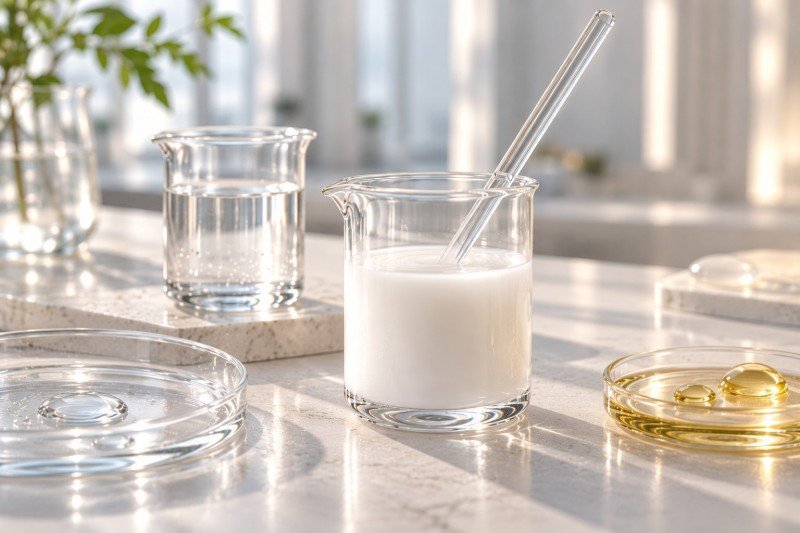
Formula Structure: Typically a lightweight emulsion incorporating water-soluble Ectoin into the aqueous phase alongside compatible emollients or selected lipid-based ingredients. The emulsification system helps maintain the distribution of oil- and water-phase components.
Development Advantages: Suitable for brands seeking a softer, more emollient serum experience or evaluating additional lipid-based components for a barrier-focused formulation without developing a conventional face cream.
Technical Considerations: Emulsifier selection, ingredient compatibility, droplet stability, and processing conditions require careful evaluation. Increasing oil-phase complexity may affect viscosity, sensory properties, and long-term stability. A milky appearance alone does not indicate stronger barrier-care performance.
Which Ectoin Serum Base Fits Your Development Brief?
| Brand Development Requirement | Recommended Starting Direction | Why Consider It? | What Should Be Confirmed? |
|---|---|---|---|
| Lightweight Daily Layering | Watery Serum | Prioritizes a fluid, predominantly aqueous formulation for routine skincare application. | Humectant tackiness, flow, and dispensing compatibility. |
| Clear Serum With Controlled Flow | Gel Serum | Uses a suitable rheology system to create more structure while maintaining a lightweight formulation direction. | Clarity, viscosity stability, and compatibility with other ingredients. |
| Soft, Emollient Barrier-Care Feel | Milky Serum | Allows evaluation of suitable emollients and lipid-based ingredients within a lightweight emulsion. | Emulsion stability, final skin feel, and manufacturing feasibility. |
| Transparent Formula With Ceramides | Ingredient-Dependent | Selected prepared ceramide systems may be compatible with certain aqueous formulations. | Raw-material form, dispersion behavior, achievable clarity, and stability. |
| Specific Dropper, Pump, or Airless Packaging | Base & Packaging Co-Development | Each serum base may require different dispensing characteristics. | Actual viscosity, dosing consistency, leakage risk, and packaging compatibility. |
Development Principle: The appropriate serum base should be selected according to the intended product experience, supporting ingredient requirements, and technical feasibility. Watery, gel, and milky formulations are different development approaches—not different levels of Ectoin effectiveness.
How to Combine Ectoin With Barrier-Supporting Ingredients
Ectoin can serve as the core active in a barrier-focused serum, but supporting ingredients should be selected for their complementary functions rather than popularity alone. Hyaluronic acid, panthenol, ceramides, and niacinamide offer different formulation opportunities, from moisture retention to lipid-based barrier care. Each combination requires appropriate ingredient specifications, compatibility assessment, and finished-formula evaluation.
Complementary Hydration & Moisture Retention

Reference Ingredients: Ectoin + Hyaluronic Acid
Ectoin contributes hydration-related benefits through its interaction with water and biological structures, while hyaluronic acid and its derivatives provide additional water-binding properties.
Combining these ingredients allows formulators to develop a broader hydration system rather than relying on either ingredient alone.
However, hyaluronic acid is not a single formulation choice. Its molecular weight, supplied form, and concentration can influence viscosity, spreadability, and the serum’s overall sensory profile.
The development priority is to select a suitable hyaluronic acid grade and balance the supporting humectants to achieve the intended hydration experience without excessive tackiness or unnecessary texture changes.
Dryness-Related Comfort & Gentle Care
Reference Ingredients: Ectoin + Panthenol
Panthenol contributes moisturizing and skin-conditioning properties, with published research supporting its relevance to skin hydration and barrier-related care.
When combined with Ectoin, it offers a complementary formulation direction for serums intended for dry, tight-feeling, or discomfort-prone skin.
However, adding two ingredients associated with skin comfort does not automatically make the finished serum suitable for sensitive skin.
Development should also consider fragrance selection, other potentially irritating ingredients, the supporting serum base, and intended application frequency.
The priority is to create a balanced, comfortable daily-use formulation, with skin tolerance and claimed benefits supported by appropriate finished-product evaluation.
Hydration & Barrier Lipid Support
Reference Ingredients: Ectoin + Ceramide Complex
Ectoin is a water-soluble active, while ceramides are important components of the skin’s intercellular lipid structure. Their combination allows brands to explore hydration-focused and lipid-supporting approaches within one barrier serum.
The main challenge is incorporating the selected ceramide material into the intended formulation.
Some commercially prepared ceramide dispersions may be suitable for certain aqueous systems, while other lipid-based materials require compatible dispersion or emulsification strategies.
The appropriate route depends on supplier specifications, the desired serum appearance, and stability requirements.
A successful formulation must integrate both ingredient systems without assuming that additional ceramides automatically produce stronger barrier-care performance.
Complementary Barrier-Care Active Functions

Reference Ingredients: Ectoin + Niacinamide
Ectoin and niacinamide provide different scientific rationales for barrier-focused skincare.
Ectoin is valued for its hydration-related properties, while published research on niacinamide includes its influence on epidermal lipid synthesis and skin barrier function.
Combining these ingredients can support the development of a multifunctional serum without relying on a single active ingredient.
However, their individual research findings do not establish proven synergistic performance in a new formulation.
Niacinamide concentration, overall ingredient compatibility, and the intended consumer group should guide development.
The finished serum should be evaluated for skin tolerance, stability, and the evidence needed to support its proposed barrier-care claims.
Engineering Ectoin Serum Texture for Comfortable Daily Use
A well-designed Ectoin barrier serum must deliver more than a suitable ingredient combination. Its overall performance also depends on how smoothly it spreads, how the skin feels after application, and how it layers with other skincare products. Balancing humectants, rheology modifiers, and supporting ingredients helps create a comfortable serum experience without compromising the intended formulation goals.
Smooth Spreadability Without Dragging
- Serum viscosity alone does not determine how comfortably a product spreads across the skin. Its flow behavior, lubrication, and interaction with the skin surface all influence the application experience.
- In Ectoin serums containing hyaluronic acid, glycerin, or other humectants, the selected ingredient grades and rheology system can affect slip, stringiness, and resistance during spreading.
- A serum may appear to have the desired thickness in its container but still feel difficult to distribute evenly.
- Development Priority: Define the intended application feel—such as lightweight slip, smooth spreading, or controlled gel movement—and evaluate prototypes using consistent application amounts and methods. The objective is comfortable, even distribution without unwanted dragging or excessive residue.
Hydration Without Excessive Tackiness
- A serum can feel immediately hydrating yet develop an undesirable sticky or heavy sensation after application. This residual feel depends on the combined behavior of humectants, texture modifiers, and other formulation ingredients—not Ectoin concentration alone.
- Increasing glycerin, sodium hyaluronate, or other moisturizing components does not necessarily improve the overall sensory experience. An excessively tacky finish may also interfere with the intended lightweight positioning of an Ectoin barrier serum.
- Importantly, fast dry-down and moisturizing performance are different evaluation targets. A serum that feels dry quickly is not automatically more effective at maintaining skin hydration.
- Development Priority: Compare initial application and residual skin feel at defined intervals, while evaluating moisturizing performance separately where relevant. The aim is to balance hydration-related benefits with a comfortable, low-tack finish.
Layering Compatibility With Moisturizer & SPF
- Ectoin barrier serums are commonly intended for use before moisturizers, sunscreen, or other leave-on skincare products. A serum that performs well alone may behave differently when additional formulations are applied.
- Pilling or uneven layering can result from interactions between formulation structures, including certain polymers and film-forming ingredients, as well as product quantity, application intervals, and rubbing.
- These issues should not automatically be attributed to Ectoin or any single supporting ingredient.
- Development Priority: Evaluate prototype serums alongside representative moisturizers and sunscreens using consistent application conditions. For makeup-oriented products, selected foundation combinations may also be assessed.
Choosing Packaging for Ectoin Barrier Serum Formulations
Selecting packaging for an Ectoin barrier serum involves more than bottle appearance. The dispensing system must suit the serum’s viscosity, formulation structure, and intended application experience. Brands should also consider packaging compatibility, customization requirements, and sourcing feasibility to ensure the selected packaging supports both product performance and commercial production.

Conventional Dropper Bottles
Best Fit: Watery & Selected Low-Viscosity Gel Serums
Dropper bottles offer a familiar application format for fluid Ectoin serums, with glass and suitable plastic options available for different brand positions.
However, formulations containing certain hyaluronic acid grades or thickening systems may be difficult to draw into or release from the pipette.
Key Considerations: Evaluate liquid pickup, drop formation, closure sealing, and repeated opening during use. The selected pipette and bottle materials should also be assessed for compatibility with the finished serum.
Standard Serum Pump Bottles
Best Fit: Watery & Pump-Compatible Gel Serums
Standard pump bottles provide a convenient dispensing option for Ectoin serums designed for controlled daily application.
Different pump mechanisms have specific flow and dispensing characteristics. A gel serum with suitable viscosity may work well with one pump design but dispense inconsistently through another.
Key Considerations: Confirm pump priming, output consistency, nozzle performance, and compatibility with the serum’s flow properties. Testing the actual formulation with the selected pump helps prevent dispensing difficulties during consumer use.


Airless Dispensing Systems
Best Fit: Selected Gel & Milky Ectoin Serums
Airless dispensing systems can offer controlled product delivery and, depending on their design, reduce repeated air exchange during use.
They may be considered for selected Ectoin gel or lightweight emulsion formulations, particularly when the complete formula has specific packaging requirements.
However, Ectoin itself does not automatically require airless packaging.
Key Considerations: Assess pump compatibility, product evacuation, sealing performance, and packaging-material suitability. An airless system does not replace proper preservation or finished-product stability evaluation.
Packaging Customization Options for Your Brand
| Packaging Route | Available Customization | Commercial Considerations |
|---|---|---|
| Stock Packaging | Select from available bottle designs, capacities, colors, and dispensing components. | A practical starting point for brands seeking simpler packaging sourcing. Availability and formula compatibility must be confirmed. |
| Standard Packaging + Branding | Customize existing bottles with suitable labels, logo printing, or available decorative finishes. | Branding methods, artwork requirements, and packaging supplier minimums may affect MOQ and lead time. |
| Fully Customized Packaging | Develop dedicated bottle shapes, custom colors, components, or exclusive packaging designs. | May require tooling, higher packaging minimums, additional sampling, and longer development schedules. |
Developing Ectoin Serums for Sensitive-Skin Positioning
Ectoin is valued for its hydration-related and skin-conditioning properties, making it relevant to barrier-focused skincare. However, incorporating Ectoin does not automatically make a finished serum suitable for sensitive skin. Developing such a product requires careful consideration of the target consumer, complete ingredient system, skin tolerance, and intended product claims.
Defining the Target Consumer
An Ectoin barrier serum may be developed for consumers experiencing dryness, tightness, or sensitivity-related discomfort during daily skincare.
However, these cosmetic care needs should be distinguished from diagnosed skin conditions requiring medical treatment.
Brands should define their intended users and product benefits before finalizing the formulation. This helps establish appropriate ingredient requirements, product positioning, and evaluation priorities.
Designing for Skin Tolerance
Skin tolerance depends on the complete serum formulation—not Ectoin or any single supporting ingredient.
Fragrance Strategy: Fragrance-free development can be considered for sensitive-skin positioning, but fragrance-free does not guarantee an absence of allergic reactions.
Supporting Ingredients: Niacinamide, panthenol, and other ingredients should be selected at appropriate levels, considering their combined effects and the intended consumer group.
Formula Protection: Preservation, pH, and ingredient compatibility must support product safety without compromising the intended skin feel.
Daily Use: Application frequency and compatibility with typical skincare routines should be considered during development.
The objective is a well-balanced serum that supports the intended cosmetic benefits while minimizing avoidable formulation-related irritation risks.
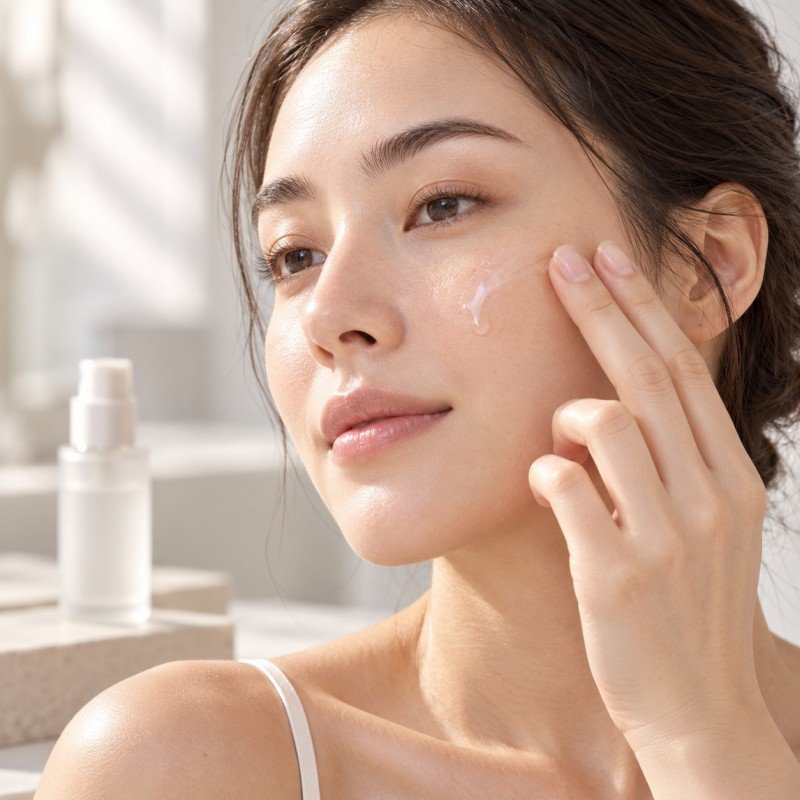
Sensitive-Skin Claims & Supporting Requirements
| Claim Direction | Formulation & Evidence Considerations | Important Limitations |
|---|---|---|
| Fragrance-Free | Review the complete formula, including ingredients that may serve a perfuming or masking function. | Does not guarantee an allergen-free or irritation-free product. |
| Suitable for Sensitive Skin | Assess the finished formula’s safety and relevant skin-tolerance evidence for the intended consumer group. | Cannot be established from Ectoin’s ingredient profile alone. |
| Hypoallergenic | Requires careful consideration of sensitization potential and substantiation appropriate to the target market. | Does not mean allergy-free; regulatory expectations differ between markets. |
| Skin Barrier Support | Align the claim with the finished product’s moisturizing and barrier-related evidence, using suitable evaluation methods where necessary. | Ingredient studies alone do not establish finished-serum performance or disease-treatment benefits. |
Development Principle: Sensitive-skin positioning should be supported by formulation decisions and appropriate evidence—not simply by adding ingredients associated with gentle skincare.
Validating Ectoin Barrier Serum Quality and Performance
A successful Ectoin barrier serum must maintain its intended quality, work with the selected packaging, and support its proposed skincare claims. Validation requirements depend on the complete formulation, intended use, target market, and commercial objectives. Appropriate evaluations help brands identify potential risks and make informed decisions before production and market launch.
01
Formula Stability & Shelf Life
Ectoin’s ingredient stability does not guarantee the stability of the finished serum. The complete formulation must be evaluated under appropriate storage conditions.
Watery serums may require monitoring for clarity and precipitation, gel serums for viscosity or structural changes, and milky serums for emulsion separation or instability.
Relevant assessments can include appearance, pH, viscosity, and other formulation-specific characteristics. Accelerated stability results should be interpreted alongside the available evidence rather than treated as an unconditional shelf-life guarantee.
Development Decision: Determine whether the selected formula maintains acceptable quality and what additional evidence is needed to support the proposed shelf life.
02
Microbial Safety & Preservation
Water-containing Ectoin serums require appropriate microbial risk management, regardless of whether they use dropper, pump, or airless packaging.
Microbial quality testing evaluates contamination against applicable criteria, while preservative efficacy evaluation examines whether the formulation provides adequate antimicrobial protection under relevant conditions. A satisfactory microbial result from one sample does not automatically demonstrate effective preservation throughout product use.
The appropriate evaluation approach depends on the formulation and its assessed microbial risk.
Development Decision: Establish whether the finished serum has suitable microbial quality and whether its preservation strategy is adequately supported before commercial release.
03
Finished-Pack Compatibility
Selecting a dropper, serum pump, or airless bottle does not automatically confirm its compatibility with the finished Ectoin formulation.
For example, a hyaluronic acid-containing gel serum may require dispensing evaluation, while a lightweight Ectoin and ceramide emulsion may require additional assessment of its interaction with packaging components.
Compatibility evaluation may consider dispensing consistency, leakage, material interactions, and changes in product appearance or performance during storage.
Changing the bottle material, pump mechanism, or other contact components may also require reassessment.
Development Decision: Confirm that the selected packaging and final serum can function together under the intended storage and usage conditions.
04
Hydration & Barrier Claim Evidence
Ectoin has published research supporting its relevance to hydration and barrier-focused skincare. However, findings from individual ingredients or previously studied formulations do not automatically substantiate claims for a newly developed serum.
For hydration-related claims, appropriate skin hydration measurements may be considered. Barrier-support claims may require additional evidence, potentially including transepidermal water loss (TEWL) assessments, depending on the specific claim.
The evaluation approach should reflect the intended benefits, target consumers, and applicable market requirements.
Development Decision: Identify which proposed claims can be supported by available evidence and whether additional finished-product testing is needed.
Frequently Asked Questions About Ectoin Barrier Serum Development
Explore key Ectoin serum formulation choices and find practical answers about custom development, packaging, minimum orders, sampling, production, and regulatory documentation.
01. What makes Ectoin barrier serums different from conventional hydrating serums?
Distinct Ingredient Function: Ectoin is a water-soluble extremolyte studied for its relevance to skin hydration and barrier-support applications. It complements rather than simply replaces conventional moisturizing ingredients.
Complete Formula Design: Effective product development requires a balanced hydration system, supporting ingredients, and suitable serum structure—not Ectoin alone.
Product Positioning: Brands can develop Ectoin serums around daily hydration, dryness-related comfort, or cosmetic barrier care, with finished-product claims supported by appropriate evidence.
02. What Ectoin concentration should brands consider for a barrier serum?
Concentration Selection: There is no universally optimal percentage for every serum. The intended benefits, ingredient specifications, formulation compatibility, and supporting evidence should guide the target level.
Supporting Ingredients: Hyaluronic acid, panthenol, ceramide complexes, and niacinamide can support different hydration, comfort, and barrier-care objectives.
Formula Balance: Increasing Ectoin or combining multiple actives does not automatically improve performance. Texture, stability, ingredient compatibility, and overall product positioning must also be considered.
03. How do watery, gel, and milky Ectoin serum formulations differ?
Watery Serum: A fluid, lightweight format suited to fast spreading and layering within everyday skincare routines, depending on the complete formulation.
Gel Serum: Uses an appropriate thickening or gelling system to create a more structured application experience. Spreadability, tackiness, and compatibility with subsequent skincare products require attention.
Milky Serum: Can incorporate a suitable emollient phase or barrier-lipid system for a more cushioning feel. Emulsion stability and packaging compatibility become additional development considerations.
04. What determines whether an Ectoin serum is suitable for sensitive skin?
Complete Formulation: Ectoin’s ingredient profile alone cannot establish finished-product suitability. Supporting actives, fragrance, preservatives, pH, and intended use all require consideration.
Skin Tolerance: Fragrance-free positioning and careful ingredient selection may support the development approach, but cannot guarantee an irritation-free or allergy-free product.
Supporting Evidence: Sensitive-skin suitability and barrier-related claims should be evaluated against the finished serum and applicable market requirements, rather than relying solely on ingredient research.
05. Can brands start with an existing formula or request custom development?
Existing Formula Evaluation: Zerun can review whether a suitable mature formulation base is available for the proposed Ectoin serum project.
Custom Development: Brands may request specific Ectoin levels, supporting ingredients, serum textures, and sensory characteristics for laboratory assessment.
Development Route: Our formulation team evaluates technical feasibility before recommending an existing-base adjustment or a more customized development approach.
06. How do Ectoin serum packaging choices affect MOQ?
Packaging Options: Dropper bottles, standard serum pumps, and selected airless systems can be assessed according to formula texture and dispensing requirements.
Standard MOQ: Orders using suitable stock packaging typically start from 1,000 pieces per SKU.
Custom Packaging: Special bottle finishes, molds, printing, or other packaging modifications may require higher minimum quantities, depending on supplier specifications.
07. How are Ectoin serum samples and production timelines arranged?
Sample Development: Standard sampling generally takes 7–15 working days, depending on formulation complexity and laboratory scheduling.
Formula Refinement: Brands can evaluate samples and provide feedback. Any revisions, additional sampling, and related arrangements are assessed by project.
Bulk Production: Production typically takes around 30 days after the necessary formula, packaging, artwork, and production details are confirmed, subject to project requirements.
Start Your Private Label Ectoin Barrier Serum Project
Tell us about the Ectoin barrier serum you want to develop, including your intended skin benefits, preferred texture (watery, gel, or milky), and any specific Ectoin concentration or supporting ingredients you have in mind. You can also share your target market, packaging preferences, and estimated order quantity.
Whether you have a detailed product brief or an early-stage concept, Zerun can review your requirements, evaluate suitable formulation approaches, and discuss sampling, packaging feasibility, and OEM/ODM production options.
Our team will review your inquiry and advise on the next steps.
Your product ideas and project details will be treated confidentially.