
Private Label Scalp Serum Manufacturer
Develop a scalp serum around your own product concept, target benefits and brand positioning. We customize the formula from texture and active systems to absorption, dry-down and application format, while considering how each choice may affect scalp comfort, root feel, residue and everyday use.
Whether you are starting from an existing formula, a benchmark product or a completely new concept, our team can help turn your requirements into a practical scalp serum development direction.
Custom Formula Direction
Build the serum around your target benefits, ingredient preferences, texture and market positioning rather than being limited to one standard formula.
Scalp & Root Experience
Consider not only how the serum feels on the scalp, but also how it may affect root greasiness, stickiness, weight and visible residue.
Active & Texture Balance
Different active systems can affect viscosity, absorption, color, odor and dry-down, so the formula is adjusted as a complete system.
Formula-Matched Application
Select droppers, targeted nozzles, fine-mist sprays or pumps according to formula viscosity and intended application behavior.
Start Your Scalp Serum Project
Share your product concept, reference formula, preferred ingredients or desired user experience, and we can help define the next development direction.
Start Your Scalp Serum Development From What You Already Know
You do not need a finished formula or a complete technical brief before starting your scalp serum project. You may already know the product goal, have a benchmark you like, prefer certain ingredients, or simply know how you want the finished serum to feel and behave. Share whatever information you already have. These starting points can be used individually or combined, and when suitable, an existing mature formula can also be adjusted to shorten the development path. From there, we can gradually define the formula structure, active system, texture, scalp feel, root finish and application format.
01
Start With a Product Goal
- You may already know what type of scalp care product you want to create, even if the formula itself has not been defined. Tell us the intended user, the main product purpose and how you want the serum positioned in your range.
- We can use this information to establish the appropriate formula direction, texture, active combination and overall user experience instead of forcing the project into a fixed standard formula.
02
Start With a Reference Product
- If there is an existing product you like, send us the reference and explain which characteristics you want to keep, improve or change. This may include its texture, absorption speed, scalp feel, dry-down, applicator or how the hair roots feel after use.
- The benchmark helps us understand your expectations more accurately, while the final formula can still be developed around your own ingredient preferences, positioning and brand requirements.
03
Start With Key Ingredients
- If you already have ingredients in mind, such as Caffeine, Niacinamide, Zinc PCA, Panthenol, Adenosine, Peptides or selected botanical extracts, they can become the starting point for development.
- Rather than simply adding ingredients into a base, we evaluate how they work together and how they may affect viscosity, texture, color, odor, scalp feel and formula stability before determining a practical active system.
04
Start With the Experience You Want
- Some projects begin with sensory requirements rather than a specific ingredient list. You may want the serum to feel water-light, spread easily between the hair, absorb quickly, dry with low tack and leave the roots feeling clean rather than coated or heavy.
- These experience targets help us work backward to determine the suitable formula structure, ingredient balance, viscosity and application system for everyday leave-in use.
What Should Your Scalp Serum Feel Like?
The same scalp serum concept can be developed into very different product experiences. Some brands may want an almost water-like serum that disappears quickly, while others may prefer a slightly richer, more moisturizing feel. You can define how the product should flow, spread, absorb, feel after drying and behave around the hair roots. We then use these expectations to guide the formula direction and application format. These preferences can be freely combined to create a product that fits your own brand positioning.
01
Texture & Flow
- The first thing to decide is how you want the serum itself to feel. It can be very fluid and water-like, slightly more substantial like an essence, or have a soft serum texture that feels more noticeable during application.
- A lighter texture may move quickly through the hair and spread easily across larger areas of the scalp, while a slightly thicker texture can feel more controlled when applied to specific sections.
- There is no single “best” texture. The right direction depends on how you want consumers to use the product and what type of experience you want the serum to create.
- Water-Like · Essence Texture · Light Serum · Soft Gel Texture
02
Absorption & After-Feel
- How the serum feels immediately after application is only one part of the experience. It is also important to consider what happens a few minutes later.
- Some brands may want the product to absorb quickly so consumers can continue styling their hair soon after use. Others may prefer a slightly more moisturized feel that remains noticeable on the scalp for longer.
- We can adjust the product toward a fresher, quicker-drying experience or a softer and more conditioned finish depending on your positioning. The goal is to make the after-feel consistent with how consumers are expected to use the serum in their daily routine.
- Quick Absorption · Fresh After-Feel · Soft Moisturized Feel · Comfortable Daily Use
03
Hair Root Finish
- Because scalp serum is applied directly around the roots, the final hair appearance is just as important as the scalp feel.
- A formula may feel comfortable on the scalp but still leave the roots looking too shiny, heavy or grouped together. For some products, a very clean and barely noticeable root finish may be preferred. Other formulas may intentionally provide a slightly more conditioning feel.
- During development, we consider how the serum sits around the roots after drying so the finished product supports the intended experience without creating an unwanted greasy, coated or overly heavy appearance.
- Clean Root Feel · Natural-Looking Finish · Lightweight Feel · Minimal Visible Residue
04
Application Experience
- The way the consumer applies the serum can also shape the entire product experience. Some products are designed to be applied directly along scalp sections, while others may need faster coverage across a wider area.
- A dropper may suit brands that want a familiar serum-style routine. A narrow nozzle can make it easier to apply the product directly between the hair. A fine spray may be suitable when faster and broader application is preferred, while a pump can provide more controlled dispensing for certain textures.
- We consider both the formula and the intended routine so the product feels practical rather than difficult or messy to use.
- Dropper Application · Targeted Nozzle · Fine Spray · Controlled Pump
What Brands Commonly Ask For — And What We Consider During Development
Scalp serum briefs often sound simple at first: make it lightweight, add more active ingredients, keep it moisturizing, make it absorb quickly, and avoid greasy roots. In practice, these requirements can influence one another. A good formula direction is not about maximizing one characteristic, but about balancing the overall experience so the finished product still feels practical, comfortable and suitable for the way consumers will actually use it.
Lightweight, But Still Easy to Control
Many brands want a scalp serum to feel very light and fluid, especially for daily leave-in use. However, making a formula extremely thin does not always create the best application experience.
If the serum flows too quickly, it may run away from the intended scalp area before the consumer has time to spread it. On the other hand, making the texture too thick can create a heavier or more noticeable feel around the roots.
During development, we consider both lightness and application control so the serum can spread easily without feeling unnecessarily heavy or difficult to use.
Light Feel · Controlled Flow · Easy Spreading · Practical Application
More Actives, Without Making the Serum Feel Heavy
Brands often want to include several active or botanical ingredients to strengthen the product story and create a more distinctive formula.
However, adding more ingredients can also change the way the serum looks and feels. The formula may become more noticeable after drying, develop a stronger natural color or odor, or lose some of the clean and simple feel originally expected.
Instead of only asking how many ingredients can be added, we also consider whether the final combination still supports the texture, appearance and everyday experience the brand wants to create.
Active-Rich Direction · Balanced Feel · Clean Appearance · Brand-Led Formula
Hydrating, Without Making the Roots Look Greasy
A scalp serum may need to provide a more moisturized or comfortable feel, but that moisture should still suit the intended hair-root appearance.
If the finished product leaves too much coating or shine around the roots, the hair may appear heavier, flatter or more separated into strands, even when the scalp itself feels comfortable.
During development, we consider how much moisturized feel the product should provide while keeping the root finish consistent with the brand concept, whether that means very clean and light or slightly more conditioning.
Scalp Comfort · Moisturized Feel · Controlled Shine · Natural Root Finish
Fast Absorption, Without Losing the Intended After-Feel
Quick absorption is a common request, especially for products designed for morning routines or frequent use. Consumers may want to apply the serum and continue with drying or styling without waiting for the scalp to feel wet.
However, the fastest-drying formula is not automatically the best formula. If the serum disappears too quickly or leaves very little after-feel, it may not match a product positioned around comfort, hydration or a more premium treatment experience.
We therefore consider not only how quickly the serum absorbs, but also how the scalp should feel once the product has settled.
Quick Absorption · Comfortable Dry-Down · Fresh Feel · Balanced After-Feel
Easy Direct-to-Scalp Application
The applicator and the formula need to work together. A dropper, narrow nozzle, spray or pump may all look suitable for scalp use, but the final experience depends on how the serum actually flows through the chosen format.
A formula that is too fluid may spread beyond the intended area, while a richer texture may be less suitable for fine spraying. The amount released with each use also affects how wet or concentrated the application feels.
This is why we consider the intended application method during formula development rather than treating packaging as a completely separate decision.
Dropper · Targeted Nozzle · Fine Spray · Controlled Dispensing
Daily Use, Without Unwanted Build-Up
A scalp serum can feel excellent after one application but behave differently when consumers use it repeatedly between washes.
Small amounts of residue that are barely noticeable on the first day may gradually make the roots feel heavier, stickier or more coated after repeated use. This can also affect how the hair looks or how easily it can be styled.
For products intended for regular leave-in use, we therefore consider not only the immediate application experience but also how the formula may feel when used consistently as part of a real routine.
Repeat Use · Low Residue · Root Freshness · Everyday Wearability
A Scalp Serum Must Work on Both the Scalp and Hair Roots
A scalp serum is applied directly to the skin, but it is used inside the hair. This means the finished product needs to create the right experience in two places at the same time. The scalp may need comfort, moisture, freshness or a more conditioned feel, while the surrounding hair roots need to remain natural-looking and practical for everyday styling. A formula can feel good on the scalp but still create the wrong overall experience if the roots look oily, flat, grouped together or visibly coated after use.
What the Scalp Needs
- The scalp experience should match the purpose and positioning of the finished product. Some brands may want a fresher and lighter feel, while others may prefer more noticeable moisture or a softer conditioning effect.
- The serum should spread comfortably across the intended area, feel appropriate during and after application, and remain suitable for the way consumers are expected to use it. A daily-use serum, for example, may need a different overall feel from a richer treatment used only a few times per week.
- The goal is not to force every scalp serum into the same sensory profile, but to make sure the formula feels consistent with the product concept and intended routine.
- Comfortable Application · Suitable Moisture · Easy Spreading · Brand-Matched Feel
What the Hair Roots Need
- The consumer does not only feel what happens on the scalp — they also see what happens to the hair around it.
- If too much product remains around the roots, the hair may appear shinier, flatter or more separated into strands. A formula can also feel heavier than expected if it leaves too much coating or visible residue after drying.
- Depending on the product concept, the target may be a very clean and barely noticeable finish or a slightly more conditioned root feel. What matters is that the final hair appearance remains consistent with the experience the brand wants to create.
- Natural Root Finish · Controlled Shine · Minimal Coating · Limited Visible Residue
01
Moisture vs Root Freshness
A scalp serum may need to leave the scalp feeling moisturized and comfortable, but too much visible coating around the roots can make the hair appear heavier or oilier than intended.
The right balance depends on the product concept. A lightweight daily serum may prioritize a fresher root finish, while a richer care product may allow a more noticeable moisturizing feel.
Development therefore focuses on creating enough comfort for the scalp without allowing the final root appearance to move too far away from the intended positioning.
02
Conditioning Feel vs Natural Hair Movement
Some formulas are designed to leave a softer or more conditioned feel around the scalp. However, if the product remains too noticeable around the roots, the hair may lose some of its natural movement or appear more grouped together.
For many leave-in scalp products, consumers still expect their hair to look normal after application.
This means the conditioning experience needs to be balanced with how freely the hair moves, how the roots sit after drying and whether the product interferes with the normal appearance of the hairstyle.
03
Scalp Coverage vs Hair Wetting
The serum needs to reach the scalp effectively, especially when consumers have dense or longer hair. At the same time, most users do not want to wet a large section of the hair simply to apply a scalp product.
The way the formula flows, the amount dispensed and the application method all influence where the product actually goes.
A well-matched formula and applicator can help consumers place the serum closer to the scalp while reducing unnecessary wetting of the surrounding hair.
04
Immediate Feel vs Repeat Use
A product may feel excellent after the first application, but scalp serums are often used repeatedly between washes.
If small amounts of product remain around the roots after each use, the overall feel may gradually change over several applications. Hair that initially feels clean and natural may begin to feel heavier or more coated if the formula is not well suited to repeated use.
This is why we consider both the immediate experience and how the product may feel as part of a real, ongoing routine.
A well-developed scalp serum should not force brands to choose between scalp comfort and a natural-looking root finish. Both need to be considered together from the beginning.
By defining how the scalp should feel and how the surrounding hair should look after use, we can build a more complete development direction before moving into deeper decisions around texture, ingredients and application format.
What Happens After You Apply a Scalp Serum?
During development, we consider how the serum reaches the scalp, stays in the intended area, spreads, absorbs and dries down. Each stage can influence the next, so the final result should feel practical from the first application through to the finished root appearance.
Step 1
Delivery — Getting the Serum Through the Hair
Before the serum can create the intended scalp experience, the consumer first needs to get it through the hair and close to the target area.
This can be especially important for consumers with dense, long or highly textured hair, where much of the product may otherwise remain on the hair rather than reaching the scalp.
The application style, amount dispensed and way the formula flows all contribute to how easily the serum can be directed where it is actually needed without unnecessarily wetting a large section of hair.
Step 2
Placement — Staying Where It Is Applied
Once the serum reaches the scalp, it should remain manageable long enough for the consumer to apply it comfortably.
If the product flows too quickly, it may run beyond the intended area or move toward the forehead before it can be spread. If it feels too thick, the consumer may find it harder to distribute evenly across the scalp.
The ideal direction depends on the intended routine, but the goal is usually to provide enough movement for easy application while maintaining enough control for more precise placement.
Step 3
Spread — Moving Easily Across the Scalp
Consumers usually apply scalp serum to several sections and then use their fingertips to spread or massage the product across the surrounding area.
The serum should move easily enough that a small amount can cover the intended scalp section without requiring excessive rubbing. At the same time, it should not disappear or run away before the user has time to distribute it properly.
A well-balanced spreading experience can make the product feel simpler, cleaner and more convenient to use, especially when it is part of a regular leave-in routine.
Step 4
Absorption — Fitting Into the Intended Routine
After the serum has been distributed, the next question is how quickly the wet feeling begins to settle.
Some brands may want a faster-absorbing direction for consumers who apply the product before work, blow-drying or styling. Other products may intentionally leave a slightly more moisturized or conditioned feel, especially when the serum is positioned as a more noticeable scalp-care treatment.
The target is not simply to make the formula disappear as quickly as possible, but to make the absorption behavior fit the way the product is expected to be used.
Step 5
Dry-Down — What Remains After a Few Minutes
A serum that feels light during application may still leave a very different impression once it has dried.
After a few minutes, consumers may notice whether the scalp still feels wet, slightly tacky, soft, fresh or more noticeably conditioned. The surrounding hair may also begin to show whether the product is leaving too much coating or causing strands to stay together.
This dry-down stage is important because it often determines whether the product feels almost invisible in daily use or leaves a more deliberate treatment-like presence.
Step 6
Root Finish — The Final Visible Result
The final step is what the consumer sees and feels around the hair roots after the serum has fully settled.
Depending on the product concept, the desired finish may be very clean and barely noticeable or slightly more conditioned. What should be avoided is an unintended result such as excessive shine, flat-looking roots, visible residue or hair strands appearing overly grouped together.
For leave-in scalp products, this final root appearance can strongly influence whether consumers feel comfortable using the serum regularly, particularly during daytime routines.
A successful scalp serum experience is created through the entire journey — not only through the ingredient list. Delivery, placement, spreading, absorption, dry-down and root finish all need to work together so the product remains practical for the intended user and routine.
This gives us a much clearer development target before moving into deeper decisions around texture structure, ingredient systems and packaging compatibility.
Which Texture Direction Fits Your Scalp Serum?
Different brands may want very different experiences — from an almost weightless water-like serum to a softer, more treatment-like milky texture. The directions below are representative rather than fixed formula types, and the final texture can be adjusted between them based on your product concept and intended routine.
Water-Light Serum
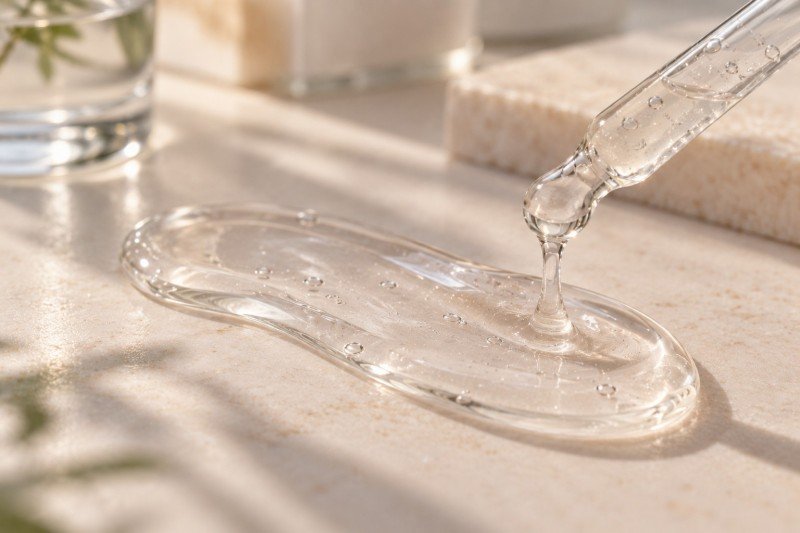
- A water-light scalp serum creates a very fresh, fluid and almost weightless experience. It moves easily through the hair and can feel especially suitable for brands that want a simple, clean or highly lightweight daily-use product.
- This type of texture can work well when consumers are expected to apply the serum frequently or when the brand wants the product to feel barely noticeable after use.
- However, very fluid formulas also need enough control during application. If the serum moves too quickly, it may run beyond the intended scalp area before the consumer has time to spread it comfortably. The goal is to keep the formula light without making the application feel messy or difficult to control.
- Fresh Feel · Very Light Flow · Easy Spreading · Daily Leave-In Direction
Classic Lightweight Serum
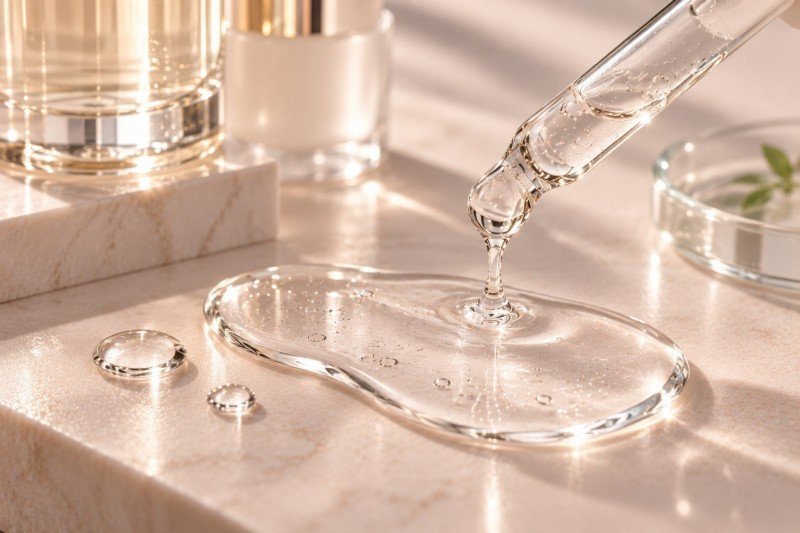
- A classic lightweight serum provides more body and product presence than a water-like formula while still remaining suitable for use around the hair roots.
- This direction often works well for brands that want the finished product to clearly feel like a “serum” rather than a scalp water or tonic. It can create a more premium and treatment-oriented experience while still maintaining easy spreading and a relatively light after-feel.
- The main balance is to provide enough texture for a recognizable serum experience without leaving too much weight or coating around the roots after drying.
- Balanced Serum Feel · Smooth Application · Premium Positioning · Lightweight Root Finish
Gel-Serum
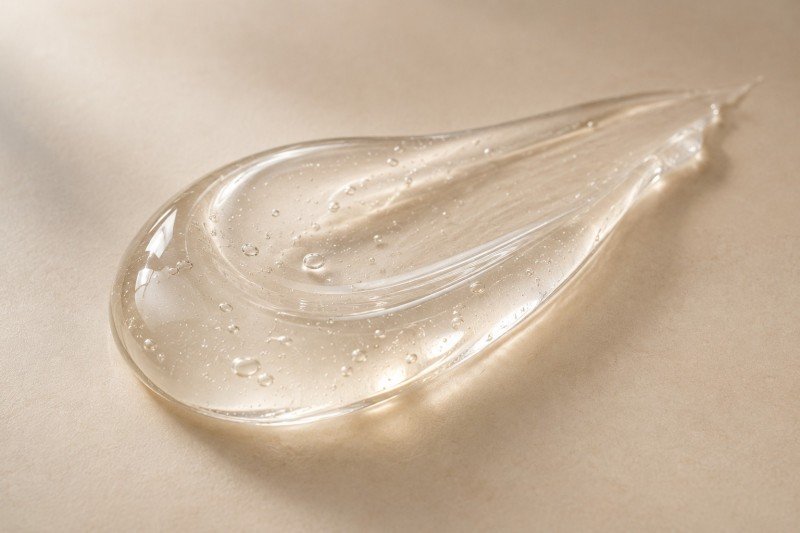
- A gel-serum has a little more structure, which can make the product easier to control when applying it to specific scalp sections. The texture does not need to feel thick or stiff; it can remain soft, light and easy to spread while offering more placement control than a very fluid serum.
- This direction may suit products positioned around more targeted application or a more noticeable treatment experience.
- During development, the key is to create enough structure for controlled placement without making the serum feel sticky, overly coated or too noticeable around the roots once it dries.
- Targeted Application · Better Placement Control · Soft Gel Feel · Controlled Dry-Down
Milky / Lightweight Emulsion Serum
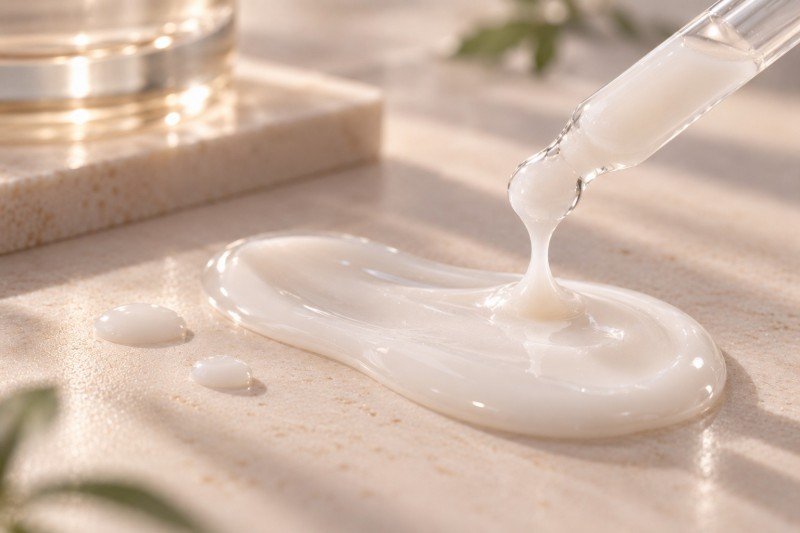
- A milky scalp serum creates a softer, more moisturizing and treatment-like experience. It can be suitable for brands that want the product to feel more nourishing, comforting or premium rather than extremely fresh and water-like.
- This texture can still be designed to remain lightweight, but it naturally creates a different sensory profile from a clear water-based serum. The finished product may leave more softness and conditioning feel on the scalp.
- Because the formula is used close to the roots, we also consider how much richness the product should leave behind so the final experience does not become heavier, shinier or more coating than the brand intends.
- Soft Moisture · Treatment-Like Feel · Lightweight Emulsion · Balanced Root Freshness
Your scalp serum does not need to fit perfectly into one texture category. For example, you may want something slightly more controlled than a water-light serum but lighter than a gel-serum, or a milky texture that still dries down with very little weight around the roots.
By defining the level of flow, control, moisture and after-feel you want, we can refine the final texture direction around the product experience and brand positioning.
Build the Active System Around Your Scalp Serum Concept
Different hero actives naturally support different product positioning, while supporting ingredients help complete the scalp feel, daily-use experience and overall formula. As the active system becomes more complex, we also consider how ingredient loading and compatibility may affect the texture, appearance, dry-down and root finish already defined for the product.
Hero Active & Product Direction
- Most scalp serum projects begin with one clear product direction, and the hero active should support that direction rather than simply be chosen because it is popular. Different ingredients naturally suit different positioning: Niacinamide or Zinc PCA may fit a fresher, oil-balance concept; Panthenol or Beta-Glucan may support a comfort-focused direction; Caffeine, Adenosine or Peptide systems may suit a premium scalp-care or fuller-looking hair concept.
- This is why the first question is not “What is the highest percentage we can use?” but “What do we want this product to be known for?” Once the target benefit and consumer are clear, we can evaluate an appropriate active direction and concentration within the complete formula.
- A higher percentage is not automatically a better product. The more important goal is to use a meaningful level that supports the product story without unnecessarily compromising texture, comfort, appearance or daily-use experience.
- Product Goal · Hero Active · Target Benefit · Meaningful Concentration
Supporting Active System
- Once the hero direction is clear, the next step is to build a supporting active system around what the finished product still needs. Supporting ingredients should strengthen the overall formula rather than compete with the hero ingredient for attention.
- For example, a scalp serum may need additional moisture, a softer after-feel, a fresher daily-use experience or more scalp comfort. Depending on the brief, ingredients such as Panthenol, Zinc PCA, Beta-Glucan, Allantoin, Hyaluronic Acid or selected Amino Acids may be considered to fill those gaps.
- The supporting system should also match the intended texture and routine. A very light daily serum may need a simpler, cleaner support structure, while a more treatment-like formula may allow a broader combination. The aim is to give each ingredient a clear role so the formula feels complete without becoming unnecessarily crowded or losing the original product direction.
- Supporting Actives · Moisture · Comfort · Formula Balance
Active Load vs Formula Experience
- As more active ingredients are added, the formula begins to change in ways that are not always visible on the ingredient list. Additional actives, humectants and supporting materials can influence how the serum spreads, how quickly it settles, how much tack remains after drying, and whether the final root feel still matches the original concept.
- A formula that starts as a very clean, water-light serum can gradually become more noticeable if too many ingredients are layered into the same system. Clarity, color, odor and overall texture may also shift as the active load increases.
- This does not mean an active-rich formula is undesirable. It means the ingredient load needs to be balanced against the experience the brand wants to preserve. During development, we consider whether each added ingredient contributes enough value to justify the change it may create in the final product.
- Active Loading · Texture · Dry-Down · Appearance · Root Feel
Ingredient Compatibility Within the Final Formula
- Ingredients that look suitable individually do not always behave the same way when they are combined inside one finished scalp serum. Each new active changes the environment of the formula, so the complete system needs to be evaluated rather than judging ingredients one by one.
- Several actives may work well together, but the combination can still affect clarity, texture, color, odor, dry-down or overall stability. In some cases, one ingredient may require a different supporting system; in others, the formula may need adjusted levels or a simpler combination to preserve the intended product experience.
- This is why the key development question is not only “Can this ingredient be added?” but “Can these ingredients work together while the serum still looks, applies and feels the way the brand wants?” Compatibility is evaluated within the final texture, active load and intended use rather than as a separate checkbox.
- Compatibility · Formula Balance · Appearance · Texture · Stability
A strong active system is not defined by the highest concentration or the largest number of ingredients. It is defined by whether the ingredient choices clearly support the product direction and still allow the finished scalp serum to deliver the intended texture, scalp feel, dry-down and root finish.
Build the Active System Around Your Scalp Serum Goal
A scalp serum should not begin with the question, “How many active ingredients can we add?” It should begin with a clearer question: What should this product help consumers experience, and what should they remember about it? Different scalp-care goals require different active priorities. A freshness-focused serum, a hydration serum and a fuller-looking hair serum may share some supporting ingredients, but their hero actives, sensory targets and development priorities should not be identical.
Step 1
Scalp Balance & Freshness
- A scalp-balance serum is usually developed for brands that want a fresher, cleaner and lighter daily scalp-care experience. The target may include helping oily-feeling roots feel more manageable, creating a cleaner after-feel or supporting a product positioned around regular scalp maintenance.
- Representative directions may include Niacinamide, Zinc PCA and selected scalp-balancing actives. Supporting ingredients can then be added to maintain moisture and comfort so the finished serum does not feel overly dry or harsh during repeated use.
- The development challenge is balancing freshness with comfort. If the formula is pushed too far toward an extremely dry or astringent after-feel, it may become less pleasant for daily use. If too much conditioning or moisturizing material is added, the clean-root positioning may become less noticeable.
- The goal is therefore to create a fresh, lightweight serum that still feels comfortable enough for frequent leave-in use.
- Representative Actives
Niacinamide · Zinc PCA · Selected Scalp-Balance Actives - Development Focus
Freshness · Comfortable Scalp Feel · Lightweight Dry-Down · Clean Root Appearance
Step 2
Hydration & Barrier Support
- A hydration-focused scalp serum is developed for brands that want to address dryness, tight-feeling scalp or a need for a softer and more comfortable leave-in experience.
- The active system may include Panthenol, Ectoin, Beta-Glucan, Hyaluronic Acid, Betaine or Ceramide-support directions, depending on how light or treatment-like the finished product should feel. These ingredients can create a stronger moisture and comfort story, but the formula still needs to remain appropriate for use close to the hair roots.
- This is where scalp serum development differs from a typical facial moisturizing serum. Increasing hydration can also increase the amount of material that remains after drying. A formula may feel excellent on the scalp but become too noticeable around the roots if the moisturizing system becomes too rich.
- The objective is not maximum hydration, but the right level of hydration for the intended routine while preserving the desired root finish.
- Representative Actives
Panthenol · Ectoin · Beta-Glucan · Hyaluronic Acid · Betaine · Ceramide Direction - Development Focus
Hydration · Barrier Support · Scalp Comfort · Controlled Root Weight
Step 3
Sensitive-Feeling Scalp & Comfort Care
- A comfort-led scalp serum usually requires a more restrained development approach than a formula built around a large number of high-profile actives.
- For this direction, the objective is often to create a calmer, simpler and more comfortable everyday experience. Ingredients such as Allantoin, Beta-Glucan, Ectoin, Bisabolol, Panthenol and selected Centella-derived ingredients may be considered according to the desired positioning.
- A gentle-feeling scalp serum is not defined by one soothing ingredient alone. The complete sensory experience also matters. Strong fragrance, intense cooling effects, excessive botanical loading or an unnecessarily complicated active system may work against the original comfort-focused concept.
- Development therefore considers both what should be added and what may be better kept simple. The finished product should still have a clear active story while remaining comfortable, easy to use and consistent with regular scalp application.
- Representative Actives
Allantoin · Beta-Glucan · Ectoin · Bisabolol · Panthenol · Centella Direction - Development Focus
Comfort · Controlled Sensory Profile · Simpler Active Structure · Everyday Usability
Step 4
Clarifying & Flaky-Looking Scalp Care
- A clarifying scalp serum is built around a different consumer need: helping the scalp feel cleaner and more refined when build-up, roughness or visible flake appearance forms part of the product brief.
- Depending on the intended market and usage routine, directions such as Salicylic Acid, PHA, Urea or selected clarifying actives may be evaluated. The development decision, however, should not be based only on choosing the strongest exfoliating ingredient or the highest possible percentage.
- Usage frequency becomes especially important in this type of product. A serum designed for regular maintenance may require a different active level and after-feel from a more targeted treatment used less frequently. The formula also needs to avoid creating unnecessary dryness or discomfort after repeated application.
- For this reason, active strength, frequency of use, scalp comfort and final leave-in feel should be considered together when defining the product direction.
- Representative Actives
Salicylic Acid Direction · PHA · Urea · Selected Clarifying Actives - Development Focus
Scalp Cleanliness · Controlled Exfoliation · Usage Frequency · Comfortable After-Feel
Step 5
Fuller-Looking Hair & Root Support
- This direction is generally chosen by brands that want a more premium, active-led scalp serum positioned around root care, fuller-looking hair or a more advanced scalp-treatment routine.
- Representative active directions may include Caffeine, Adenosine, selected Peptide systems and Copper Peptide directions. These ingredients can create a strong product story, but this is also one of the areas where brands are most likely to focus too heavily on individual percentages.
- The more important question is whether the active system can be integrated into a formula that consumers actually want to use consistently. A high-value active may influence color, texture, cost, compatibility or overall formula complexity, particularly when it is combined with several other premium ingredients.
- In some projects, the better approach is to simplify the supporting system and allow the main active direction to remain clear rather than stacking multiple competing hero ingredients into one serum.
- Representative Actives
Caffeine · Adenosine · Peptide Systems · Copper Peptide Direction - Development Focus
Premium Active Story · Root-Care Positioning · Compatibility · Lightweight Daily Delivery
Step 6
Antioxidant & Scalp Vitality Support
- An antioxidant or scalp-vitality serum is usually positioned as part of a longer-term, premium scalp-care routine rather than around one immediate concern.
- This type of concept may use Green Tea, Ectoin, selected antioxidant systems, Peptide directions or other premium scalp-care actives to create a broader maintenance and scalp-vitality story. It can be particularly suitable for brands developing a more sophisticated treatment line or looking for a product positioned between basic hydration and highly targeted active care.
- The development challenge is maintaining a clear hierarchy. When too many antioxidant, botanical and specialty actives are combined, the product can become more difficult to explain and unnecessarily complicated to formulate.
- A stronger concept usually comes from deciding which active direction leads the story, which ingredients genuinely support it and which additions do not contribute enough value to justify the extra complexity.
- Representative Actives
Green Tea · Ectoin · Selected Antioxidants · Peptide Directions - Development Focus
Long-Term Scalp Care · Premium Positioning · Active Hierarchy · Formula Cohesion
Once the product direction is clear, we can evaluate which active should lead the formula, which ingredients should support it and what concentration makes sense within the intended texture, scalp feel and usage routine.
A percentage that looks impressive in a marketing brief may not be the best choice if it creates excessive tackiness, changes the appearance of the serum, complicates ingredient compatibility or moves the root finish away from the original concept.
When Ingredient Choices Start Changing the Formula
As botanical extracts, hydration systems, specialty actives or oil-soluble ingredients are introduced, the finished scalp serum may begin to change in color, clarity, odor, texture, dry-down and root feel. A formula that starts as a clear, water-light concept can gradually become richer, more noticeable or more complex as additional ingredients are added. This does not mean those ingredients should be avoided. It means they need to be evaluated as part of the complete formula rather than as isolated marketing claims.
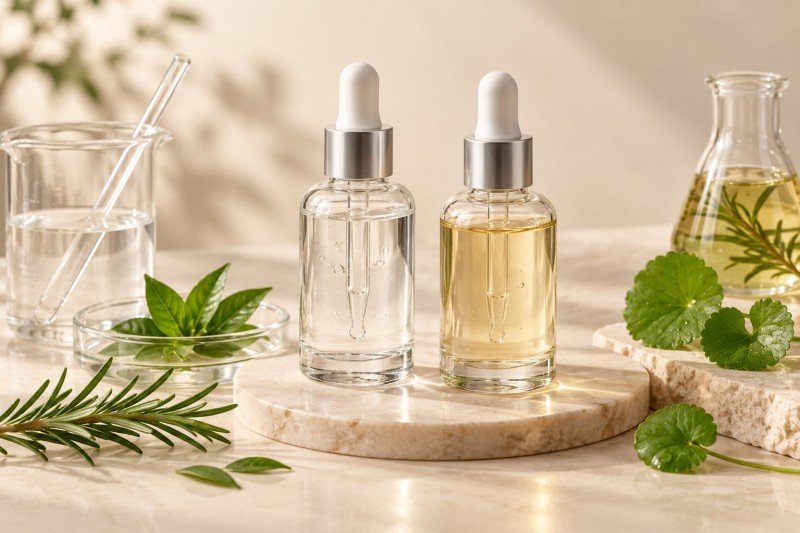
- Botanical ingredients can give a scalp serum a stronger natural, herbal or ingredient-led identity. Brands may want to build their product story around directions such as Rosemary, Ginseng, Green Tea, Centella, Aloe or other selected plant extracts.
- However, botanical materials can also bring their own natural characteristics into the finished serum. Depending on the extract type and usage level, they may contribute color, a noticeable raw-material odor, slight cloudiness or a less “crystal-clear” appearance than a very minimal water-based formula.
- This becomes especially important when a brand wants both a rich botanical story and an extremely clean visual profile. Those two goals can sometimes require adjustment rather than simply adding more extracts.
- A more natural ingredient story can also create a more natural-looking formula. The key is deciding how much botanical character should remain visible in the final product and how closely that matches the intended brand positioning.
- Typical Considerations
Natural Color · Raw-Material Odor · Clarity · Botanical Character
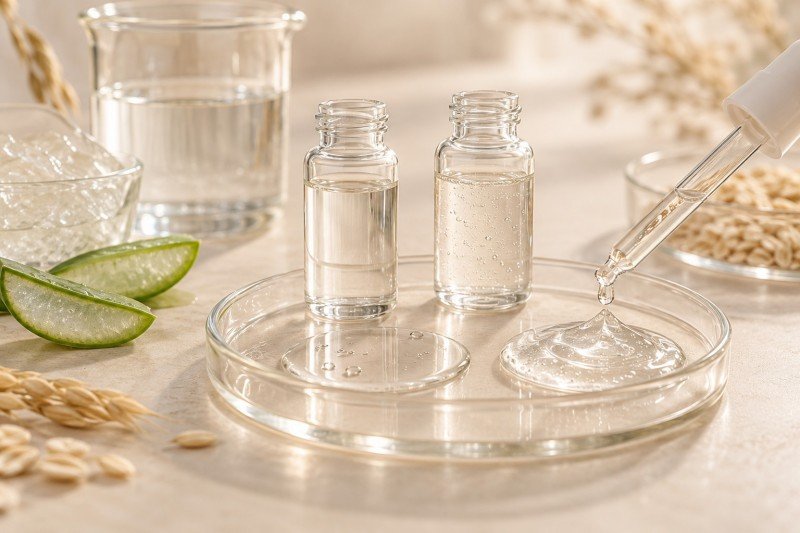
- Hydration is important in many scalp serum concepts, particularly when the product is positioned around dryness, comfort or frequent leave-in use.
- Ingredients such as Hyaluronic Acid, Panthenol, Betaine, Glycerin, Beta-Glucan and other humectant systems can help build a more moisturized and comfortable scalp feel. However, increasing the total hydration system can also change what remains on the scalp and roots after the serum dries.
- A formula may become softer and more conditioning, but it may also feel more noticeable, slightly tackier or more coating if the hydration system becomes too rich for the intended product style.
- This is why the development question is not simply how many moisturizing ingredients can be added. It is how much moisture the product should leave behind once the formula has fully settled.
- A fresh daily serum and a richer treatment serum may both be “hydrating,” but the level and type of hydration should be designed differently.
- Typical Considerations
Moisture Level · Tackiness · Dry-Down · Root Feel

- Some scalp serum projects are built around premium or more technically demanding active systems, such as Peptides, Copper Peptide directions, Adenosine, specialty scalp complexes or higher-load active combinations.
- These ingredients can create a stronger product story, but they can also make the formula more complex. As active loading increases, the serum may become more difficult to keep visually simple, lightweight and consistent with the original sensory target.
- Specialty actives can influence clarity, color, texture, cost and the amount of adjustment needed during sample development. In some cases, the supporting system may need to be simplified so the hero active can remain the clear focus of the formula.
- A premium active therefore does not always work best when it is simply added to an existing serum base. Sometimes the better approach is to build the formula around the active and allow the rest of the system to support it.
- Typical Considerations
Active Loading · Compatibility · Stability · Formula Complexity
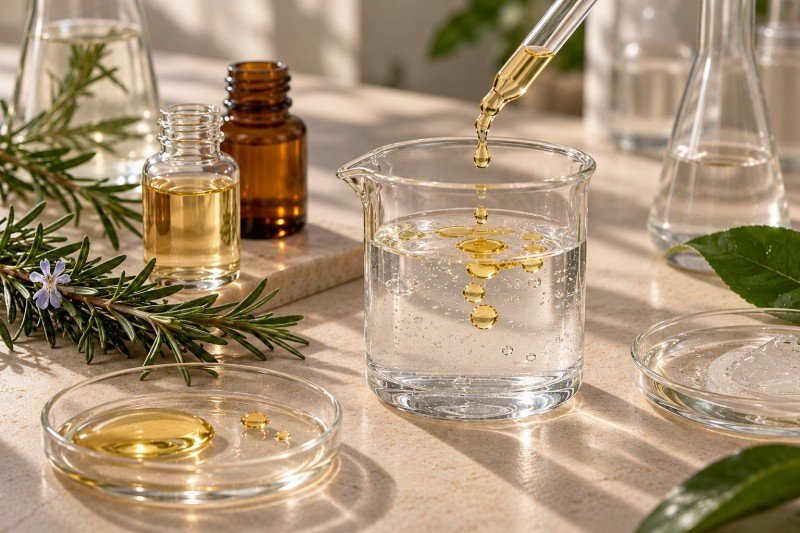
- Oil-soluble and sensory ingredients can have a large impact on a scalp serum that is intended to remain clear, lightweight and non-greasy.
- This may include Essential Oils, Rosemary Oil, fragrance materials, cooling ingredients, selected plant oils or other oil-soluble actives. These ingredients may contribute a distinctive sensory or brand story, but they can also influence clarity, odor, root feel and the overall water-light character of the serum.
- For example, a brand may ask for a “Rosemary Scalp Serum,” but Rosemary Extract and Rosemary Essential Oil can lead to very different development routes even though both support the same broad marketing story.
- This is why we look beyond the ingredient name and consider the actual material being used, how it behaves in the formula and whether it still supports the intended scalp and root experience.
- Typical Considerations
Clarity · Fragrance Profile · Root Lightness · Water-Based Feel
The Ingredient Name Is Only Part of the Decision
- Botanical ingredients can give a scalp serum a stronger natural, herbal or ingredient-led identity. Brands may want to build their product story around directions such as Rosemary, Ginseng, Green Tea, Centella, Aloe or other selected plant extracts.
- However, botanical materials can also bring their own natural characteristics into the finished serum. Depending on the extract type and usage level, they may contribute color, a noticeable raw-material odor, slight cloudiness or a less “crystal-clear” appearance than a very minimal water-based formula.
- This becomes especially important when a brand wants both a rich botanical story and an extremely clean visual profile. Those two goals can sometimes require adjustment rather than simply adding more extracts.
- A more natural ingredient story can also create a more natural-looking formula. The key is deciding how much botanical character should remain visible in the final product and how closely that matches the intended brand positioning.
- Typical Considerations
Natural Color · Raw-Material Odor · Clarity · Botanical Character
What We Review When an Ingredient Is Added
- When a new ingredient is introduced, we do not only ask whether it can be included. We also review how it may change the complete scalp serum.
- Appearance
Will it change the color, transparency or visual cleanliness of the formula? - Odor
Does the ingredient bring a noticeable natural or raw-material smell? - Texture
Will it make the serum feel thicker, thinner or more noticeable during application? - Dry-Down
Does it increase tackiness, coating or the amount of product felt after drying? - Root Feel
Will the finished serum still leave the roots as light, natural and clean-looking as intended? - Compatibility
Can the ingredient work comfortably with the other actives already selected? - Usage Experience
Does the final formula still fit the intended daily, occasional or treatment-style routine?
Not Every Desirable Characteristic Can Be Maximized at the Same Time
Brands may reasonably want more botanicals, more hydration, more premium actives, a perfectly clear appearance, almost no odor, an extremely light texture and no noticeable residue.
Individually, each request can make sense. Once they are combined inside one scalp serum, however, some priorities may begin to compete with one another.
The development task is therefore to identify which characteristics define the product identity and which ones can be adjusted to protect the overall formula experience.
Where Scalp Serum Experience Commonly Breaks Down
A scalp serum can contain attractive ingredients and still create the wrong experience in real use. Many problems only become obvious after the formula has been applied around the roots, allowed to dry, styled with the hair, or used repeatedly between washes. Consumers usually do not know which ingredient or formula choice caused the problem. They simply notice that the roots look heavier, the scalp feels tacky, visible residue appears, or the product becomes more noticeable after several days of use. For this reason, we evaluate not only what the formula contains, but also how the finished serum behaves throughout a real scalp-care routine.
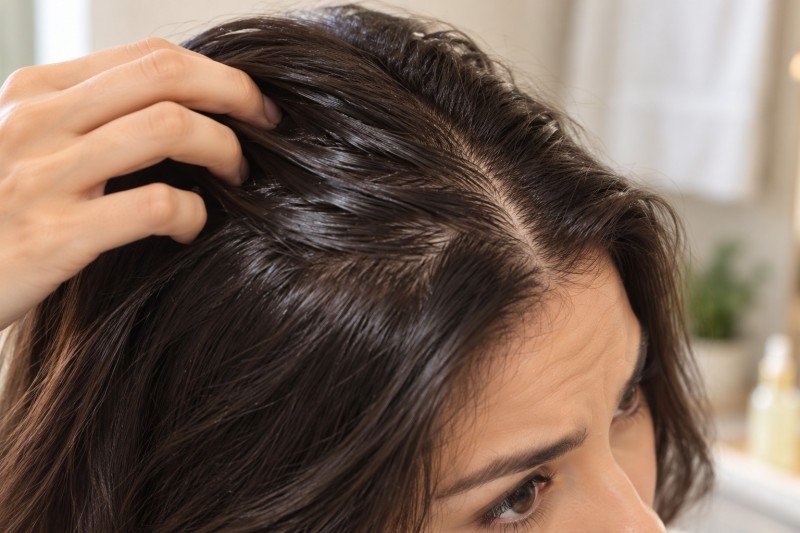
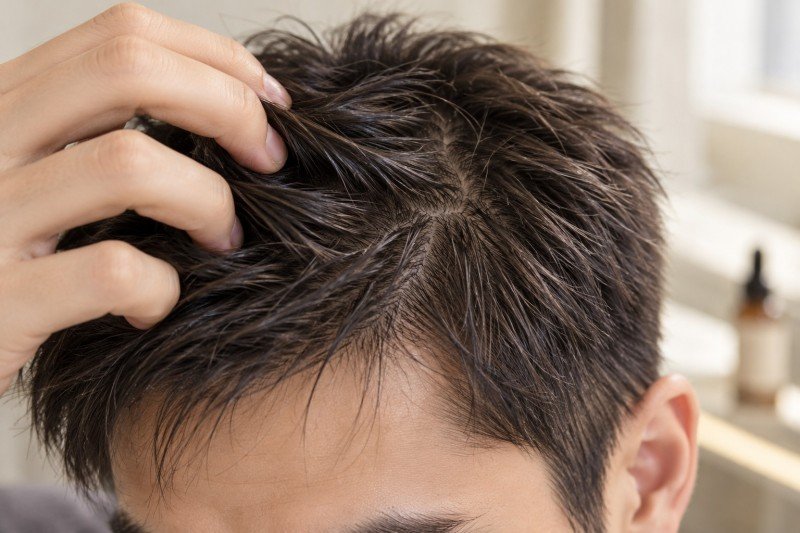
- A scalp serum does not need to contain a large amount of oil to make the roots look greasy or heavy.
- Consumers usually judge this experience through the final appearance of the hair. The roots may become shinier, flatter or more separated into strands, while the hair may lose some of its natural movement and volume after application.
- This can happen when the formula leaves too much coating after drying, when the moisturizing or conditioning system is too rich for the intended positioning, when too much product is released in one application, or when the serum remains concentrated around a small area instead of spreading evenly.
- A water-based serum can therefore still create a “greasy” impression even when the formula itself does not feel oily in the traditional sense.
- During development, we look at the complete root appearance after the product has settled — not simply whether oil-based ingredients are present in the formula.
- What We Look For
Controlled Shine · Natural Root Movement · Limited Strand Grouping · Appropriate Product Weight
- Some scalp serums feel extremely light and fresh during application but become noticeably tackier several minutes later.
- This is why the initial texture alone cannot tell us how lightweight the finished experience will be. A formula may spread like water but still leave a noticeable layer once the liquid phase has settled.
- Consumers may experience this as a sticky scalp feel, strands lightly adhering to one another, a less clean sensation around the roots, or difficulty moving directly into blow-drying and styling.
- A richer humectant system, higher active loading or certain conditioning and film-forming materials can all increase the amount of product that remains after drying.
- The objective is not always to eliminate every trace of after-feel. Some treatment-style products intentionally leave a softer or more conditioned finish. The important point is that the dry-down should match the original product positioning.
- What We Look For
Dry-Down Feel · Residual Tack · Hair Separation · Styling Compatibility
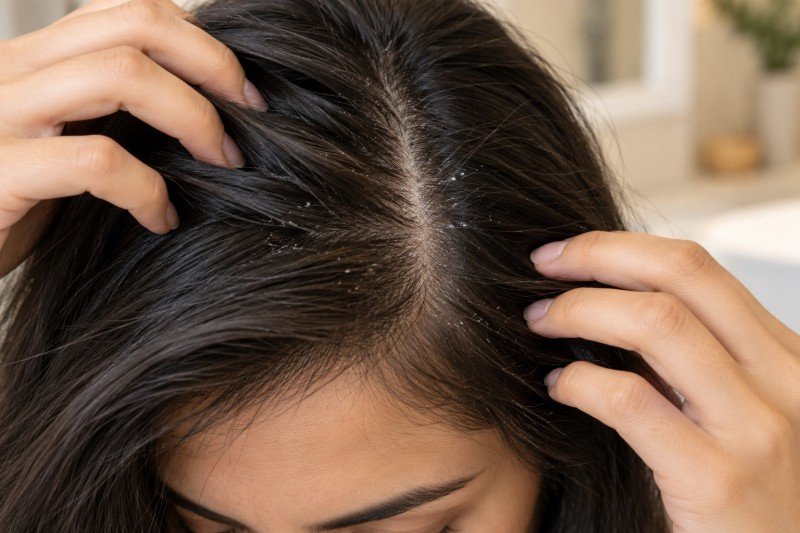
- Visible residue can be particularly damaging to the user experience of a scalp serum because the product is applied directly in an area where consumers may already be concerned about flakes or scalp build-up.
- A formula may appear completely smooth when first applied but begin to leave white residue, small particles or visible deposits after it dries, after the hair is brushed, or after the scalp is touched during the day.
- This can become even more noticeable when a large amount is applied to one area or when the serum is layered with other leave-in products such as styling creams, gels, hair oils or dry shampoo.
- The consumer may not know whether the visible particles come from the serum, another hair product or the scalp itself. They only see that the final result does not look clean.
- This is why we consider both the serum on its own and how it may behave as part of a broader hair-care and styling routine.
- What We Look For
Visible Deposits · Flaking After Drying · Product Layering · Clean Hair Appearance
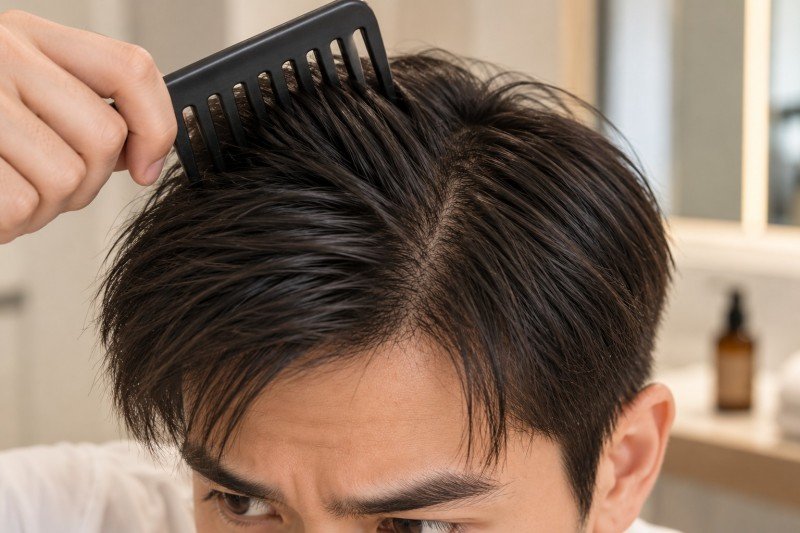
- A scalp serum can perform well after one application but create a very different experience after repeated use.
- Many leave-in scalp products are designed for daily or frequent application, while consumers may only wash their hair every few days. This means each new application may be layered over small amounts of the previous one, together with any styling or conditioning products already present around the roots.
- A formula that feels almost invisible on the first day can gradually become more noticeable. The roots may feel heavier, appear flatter, lose freshness or require washing sooner than the consumer expected.
- This is why first-use performance is only part of the evaluation. For products intended for regular leave-in routines, we also consider how the formula behaves when the same usage pattern is repeated between washes.
- A successful daily-use serum should remain practical over time rather than feeling progressively heavier with each application.
- What We Look For
Repeat-Use Feel · Root Freshness · Progressive Coating · Wash-Cycle Compatibility
A successful scalp serum should not only feel good during the first few seconds of application.
It should remain consistent with the intended product experience after it dries, after the hair is styled and after it becomes part of a repeated routine. This is why root appearance, tackiness, visible residue and build-up are considered as part of development rather than treated as minor finishing details.
Match the Formula With the Right Application System
The applicator is not only a packaging choice — it directly affects how consumers reach the scalp, control the amount used and manage the hair during application. A targeted nozzle, dropper, fine-mist spray and pump can all work well for scalp serum, but they create very different routines. The right direction depends on where the serum needs to go, how precisely it should be applied, how much product should be released each time, the hair density of the intended user and the texture of the finished formula. Instead of selecting an applicator only for appearance, we consider whether it helps consumers place the right amount of serum in the right area without unnecessarily wetting, coating or disturbing the surrounding hair.
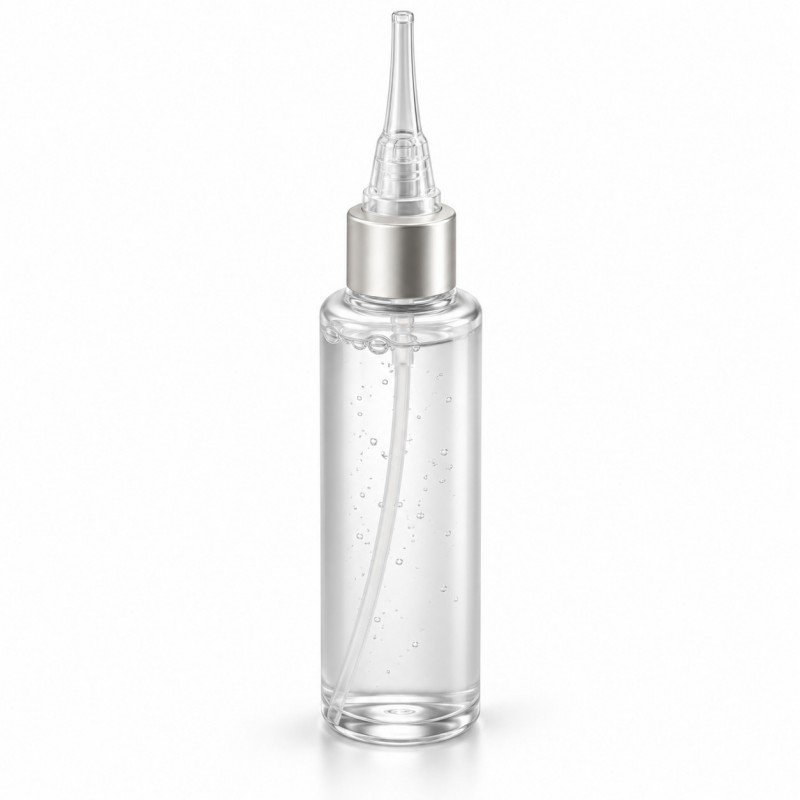
- A targeted nozzle is one of the most practical directions for products designed to be applied directly along scalp sections. The narrow tip allows consumers to move through the hair and place the serum closer to the scalp rather than allowing most of the product to land on the surrounding strands.
- This can be particularly useful for consumers with dense, long or textured hair, where access to the scalp may otherwise require more effort. It also works well for routines where the product is applied section by section or to specific target areas.
- The formula should still have enough flow to move smoothly through the nozzle and across the scalp after application, but it should not be so fluid that it immediately runs away from the intended area. The goal is to combine direct placement with a controlled, easy-to-manage application experience.
- Best Suited For
Dense Hair · Section-by-Section Application · Targeted Scalp Care · Daily Leave-In Use - What to Consider
Flow Control · Direct Placement · Amount Per Application · Reduced Hair Wetting
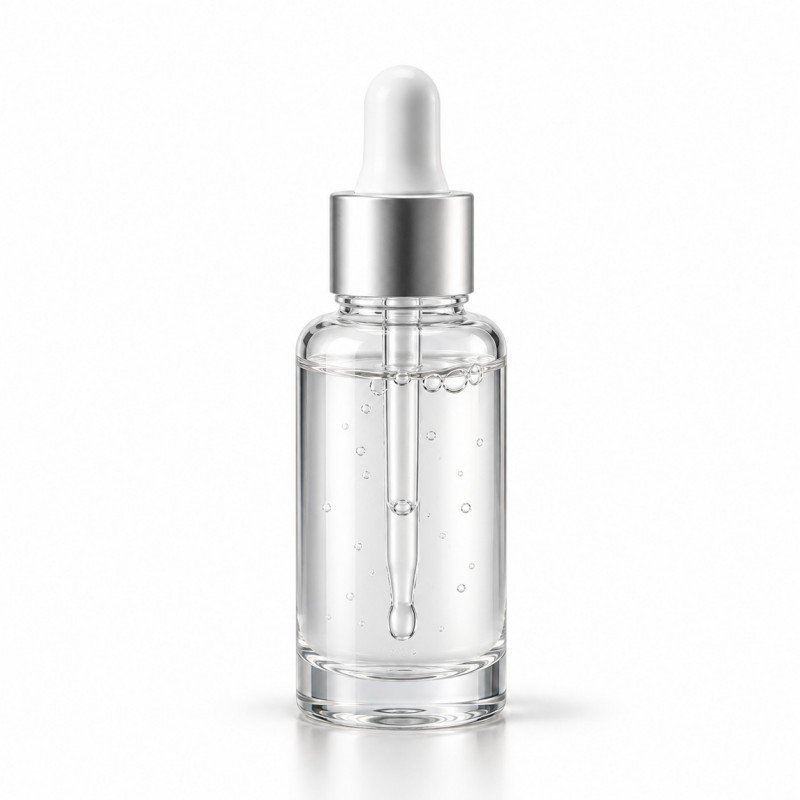
- A dropper gives the product a familiar skincare-inspired serum identity and can work especially well for brands positioning the scalp product as a premium, active-led treatment.
- It allows consumers to see and control individual drops and creates a recognizable “serum ritual,” which can be useful when the product story is built around hero actives, concentrated care or a more premium treatment experience.
- However, a dropper does not automatically guarantee precise scalp delivery. With thicker or denser hair, some of the serum may land on the strands before it reaches the skin. Very fluid formulas can also move quickly after being dispensed, making the application feel less controlled if too much product is used at once.
- The dropper therefore works best when the desired brand experience, formula flow and intended method of scalp sectioning all support the same routine.
- Best Suited For
Premium Serum Positioning · Active-Led Formulas · Fluid Textures · Skincare-Inspired Routines - What to Consider
Scalp Access · Drop Control · Formula Flow · Hair Density
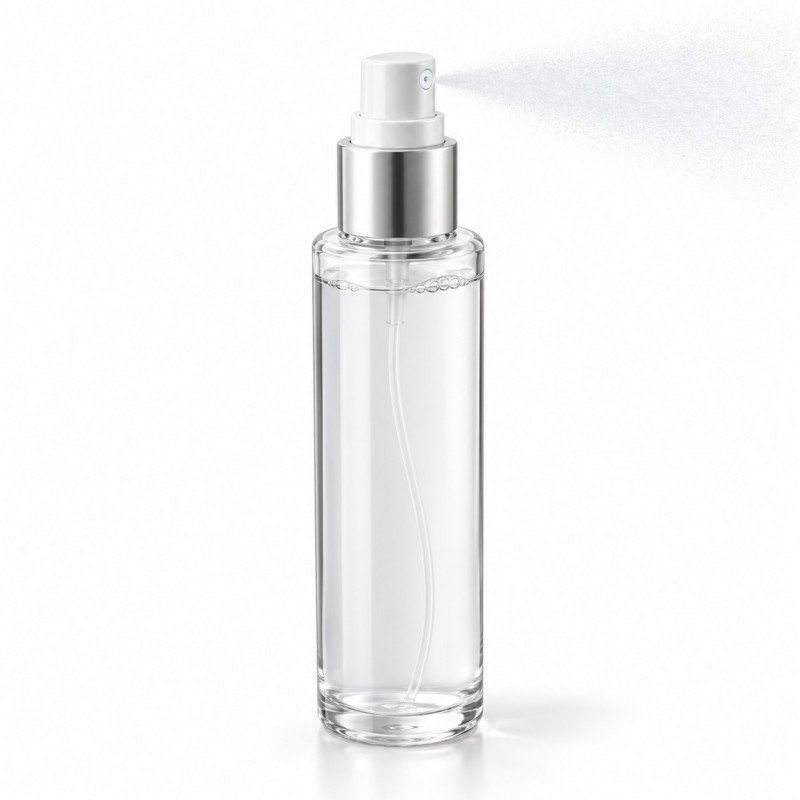
- A fine-mist spray can make scalp serum application faster and more convenient when the product is intended for broader coverage rather than highly targeted placement.
- This direction is often suitable for water-light formulas, fresh daily-use concepts or routines where consumers want to apply the product quickly across a larger area of the scalp without working through many individual sections.
- The challenge is making sure the product reaches the scalp rather than simply coating the hair. If the spray pattern is too broad, too wet or releases too much product at once, consumers may end up dampening the roots and surrounding hair without delivering enough serum to the intended scalp area.
- Hair density, coverage area and the desired amount per spray therefore become important parts of the product concept. A good spray experience should feel quick and convenient without turning the serum into an unnecessarily wet hair application.
- Best Suited For
Water-Light Formulas · Larger Scalp Areas · Quick Routines · Fresh Daily-Use Concepts - What to Consider
Scalp Targeting · Spray Coverage · Hair Wetting · Amount Per Spray
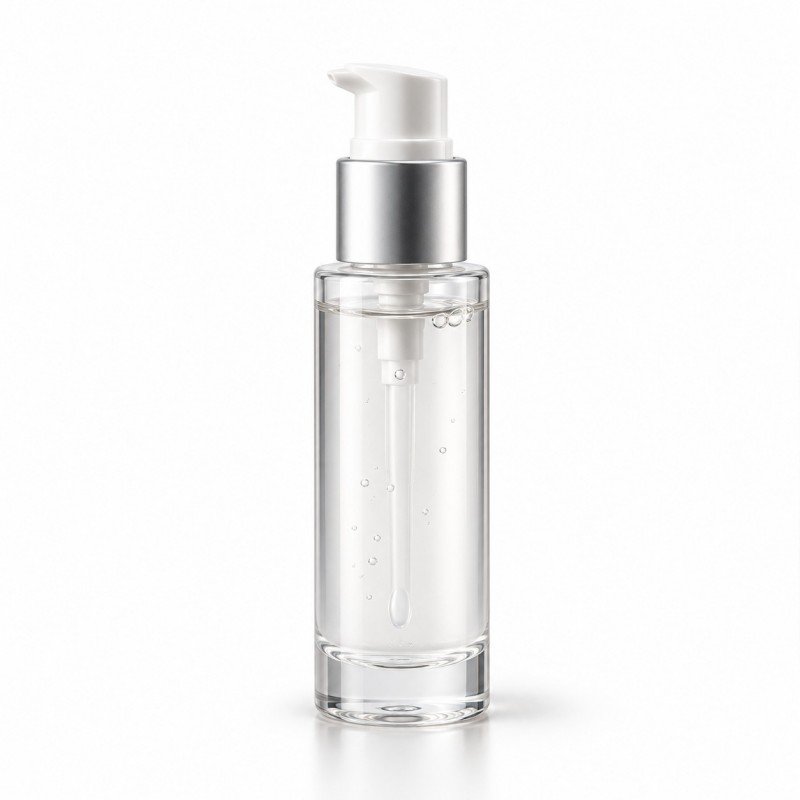
- A pump is useful when brands want a cleaner, more controlled dispensing routine and a more consistent amount of product with each use.
- This can work well for slightly richer serum textures or products where consumers are expected to use one or two measured pumps rather than estimating the amount through drops or sprays. It also creates a clean handling experience and can make daily routines easier to standardize.
- Unlike a targeted nozzle, however, a standard pump may not deliver the serum directly through dense hair. Consumers may need to dispense the product onto the fingertips first and then massage it into the scalp, which creates a different application experience from direct-to-scalp formats.
- The pump is therefore most suitable when dose consistency and clean dispensing are more important than highly precise placement between the hair.
- Best Suited For
Measured Daily Routines · Slightly Richer Serums · Controlled Dosing · Clean Dispensing - What to Consider
Dose Consistency · Hand-to-Scalp Application · Formula Body · Routine Convenience
The best applicator is not necessarily the one that looks most premium. It is the one that helps consumers use the correct amount, reach the intended scalp area and maintain the product experience the formula was designed to deliver.
A targeted nozzle may provide the best placement, a dropper may strengthen a premium serum ritual, a fine mist may improve speed and coverage, and a pump may offer better dose consistency. The final choice should follow the intended consumer routine rather than being treated as a purely visual packaging decision.
When Packaging Starts Affecting Formula Performance
Choosing a suitable applicator is only the first step. Once the target nozzle, dropper, spray or pump has been selected, the next question is whether the final scalp serum can actually move through that packaging smoothly, consistently and reliably over time. Formula viscosity, spray behavior, dose output, sealing and material compatibility can all change the real user experience, which is why packaging should not be treated as a separate decision made only after the formula is finished. We evaluate how the near-final formula and intended packaging work together so the commercial product can deliver the same experience the brand originally designed.
Formula Viscosity vs Dispensing Performance
- The same packaging component can behave very differently when the formula inside it changes. A water-light scalp serum may flow quickly through a nozzle or dropper, while a slightly richer serum may require more pressure, dispense more slowly or behave differently during each application.
- If the formula is too fluid, a targeted nozzle may release more product than expected or allow the serum to run too quickly across the scalp. If the texture becomes richer, a pump may require more effort to operate, and a dropper may no longer pick up or release the same amount consistently.
- This is why packaging should be matched to the near-final formula rather than selected only according to appearance. When texture or active loading changes during development, we also review whether the intended dispensing system still provides the right flow, control and ease of use.
- What We Review
Formula Viscosity · Flow Rate · Dispensing Control · Application Consistency
Spray Pattern, Nozzle Flow & Clogging
- A formula that can physically pass through a spray or nozzle does not necessarily create the right application experience.
- For a fine-mist scalp serum, the goal may be a light and controlled spray that reaches the intended area without creating large droplets or unnecessarily soaking the surrounding hair. Changes in formula thickness, active loading or ingredient composition can alter the spray pattern, making the output wetter, more concentrated or less consistent than originally planned.
- Targeted nozzles also need to release the serum cleanly and repeatedly without leaving excessive product around the opening. Over time, dried residue around the outlet can also affect how smoothly the package performs.
- We therefore look beyond whether the packaging simply “works” and consider whether the actual flow or spray pattern remains suitable for the intended scalp routine.
- What We Review
Spray Quality · Nozzle Flow · Output Consistency · Clogging Risk
Dose Output & Application Consistency
- Packaging also determines how much product the consumer receives with each drop, spray or pump.
- This can directly influence the finished scalp and root experience. If one application releases too much serum, even a lightweight formula may make the roots feel wetter, heavier or more coated than intended. If too little product is dispensed, consumers may need to repeat the action several times, making the routine slower and less intuitive.
- The ideal dose therefore depends on how large an area the serum is expected to cover, how frequently it will be used and how noticeable the product should feel after application.
- This is particularly important because some problems that appear to be formulation issues can actually be caused or amplified by excessive dispensing. The formula and packaging need to work together to guide the consumer toward an appropriate amount per use.
- What We Review
Dose Per Use · Scalp Coverage · Application Control · Routine Consistency
Formula–Packaging Compatibility & Sealing
- A package that looks suitable and dispenses correctly on the first day still needs to remain reliable during storage, transportation and continued use.
- The formula may come into contact with more than the visible bottle. Pumps, dip tubes, inner plugs, seals, gaskets and dispensing mechanisms can also interact with the product or influence how effectively the package remains closed.
- Depending on the active system, fragrance direction, essential oils or other formula characteristics, the packaging may need to be reviewed for changes in appearance, leakage, sealing performance or dispensing behavior over time.
- We therefore consider the components that actually contact or control the formula, not only the outer container. The objective is to confirm that the packaging remains suitable throughout the intended product life rather than simply looking appropriate at the beginning of development.
- What We Review
Material Compatibility · Sealing · Leakage Control · Long-Term Package Performance
The right combination of formula viscosity, dispensing system, dose output, sealing and packaging compatibility helps ensure that consumers receive the serum in the intended amount, apply it in the intended way and experience the same scalp and root finish the formula was designed to create.
This is why the final packaging is evaluated as part of the product system, not simply as the container placed around the finished formula.
How We Develop Your Scalp Serum From Brief to Final Sample
Scalp serum development is not a single step from ingredient list to finished formula. We first translate your product idea into clear development targets, then build the texture and active system around those priorities. Samples are evaluated through real application, dry-down, root feel and packaging use, and each revision focuses on the areas that still need improvement. The goal is to gradually turn your original concept into a formula that feels coherent as a complete product — not only in the laboratory, but in the way consumers are expected to apply and use it.
Step 1
Product Brief & Development Target
Development begins by understanding what you want the finished scalp serum to become rather than immediately selecting ingredients.
You can share your target product direction, intended consumer, reference product, preferred ingredients, desired texture, scalp feel, root finish and application format. Some projects begin with a detailed brief, while others may start with only a few clear expectations such as “water-light, fast-absorbing and suitable for daily leave-in use.”
We organize these requirements into priorities so the laboratory has a clear development target. This also helps identify which characteristics are essential to the product identity and which areas can remain flexible as the formula develops.
Key Focus
Product Goal · Target User · Desired Experience · Development Priorities
Step 2
Formula Direction & Active System
Once the development target is clear, we begin defining the structure of the formula.
This includes deciding whether the product should move toward a water-light serum, classic lightweight serum, gel-serum or more treatment-like texture, then building the active system around the intended product goal.
The hero active, supporting ingredients and target concentration are considered together with scalp comfort, dry-down and root feel rather than as separate decisions. If the brief includes several actives, botanicals or sensory requirements, we also consider how those choices may influence the final appearance and product experience.
At this stage, the objective is to establish a formula direction that can realistically deliver the original concept before fine details are refined.
Key Focus
Texture Direction · Hero Active · Supporting System · Formula Balance
Step 3
First Laboratory Sample
The first laboratory sample establishes the development baseline.
Its purpose is not necessarily to perfect every small detail in one attempt, but to confirm whether the product is moving in the correct overall direction. We look at whether the texture feels appropriate, whether the serum spreads as expected, whether the active system fits the positioning and whether the initial scalp and root experience broadly matches the brief.
For example, a sample may already have the right texture and spreading behavior but feel slightly too noticeable after drying. That does not mean the entire formula direction is wrong — it gives us a clearer target for the next adjustment.
The first sample therefore turns the original product idea into something that can be evaluated through real use.
Key Focus
Overall Direction · Texture · Application · Initial Scalp & Root Feel
Step 4
Real-Use Evaluation & Feedback
Once the sample is available, the most useful feedback comes from describing what you actually see, feel and experience during use.
You do not need to tell the laboratory which raw material should be increased or reduced. Instead, feedback such as “the texture is slightly too thick,” “the roots feel heavy after drying,” “I want faster absorption,” or “the fragrance should be softer” gives us a much clearer basis for adjustment.
We also encourage feedback at different moments — during application, several minutes after dry-down and after normal hair styling. The same formula can feel very different at each stage.
Clear sensory feedback allows the laboratory to identify which part of the formula needs refinement without unnecessarily changing characteristics that already work well.
Key Focus
Texture Feedback · Dry-Down · Root Finish · Scent & Overall Experience
Step 5
Controlled Formula Refinement
Sample revision should preserve what already works while improving what does not.
If the texture, fragrance and spreading are already approved but the dry-down feels too tacky, the next revision should focus primarily on reducing that unwanted after-feel. If root appearance is good but the serum is difficult to control during application, the adjustment should address flow or placement without unnecessarily rebuilding the entire product.
This controlled approach makes each revision easier to evaluate because the differences between samples remain clear.
Some feedback may require only small refinements, while a major change in texture, active system or application format can represent a new development direction. Understanding that difference helps keep the project focused and avoids changing too many variables at the same time.
Key Focus
Keep What Works · Targeted Adjustment · Clear Comparison · Controlled Refinement
Step 6
Near-Final Formula & Packaging Confirmation
As the formula approaches approval, the focus shifts from individual characteristics to the complete product experience.
We review whether the final texture, active system, application, absorption, dry-down and root finish now work together as one coherent scalp serum. The near-final formula should also be evaluated with the intended applicator or commercial packaging direction whenever possible.
This helps confirm that a formula developed for a targeted nozzle, dropper, spray or pump still dispenses and behaves as intended after the final adjustments have been made.
At this stage, the key question is no longer whether one individual feature is good. It is whether the formula, user experience and packaging direction now function together as the product the brand originally intended to create.
Key Focus
Final User Experience · Formula Consistency · Applicator Fit · Sample Approval
You do not need technical formulation knowledge to evaluate a scalp serum sample. What helps most is clear feedback about the finished experience: whether the texture feels lighter or richer than expected, whether application is easy to control, how quickly the serum settles, what remains after dry-down and whether the hair roots still look and move naturally.
The laboratory can then translate those observations into formulation adjustments. This keeps the development process focused on the result you want rather than requiring the brand to decide how the chemistry should be changed.
How We Develop Your Scalp Serum From Brief to Final Sample
Scalp serum development starts with understanding the product you want to create, then gradually translating that idea into a formula that can deliver the intended texture, active direction, scalp feel, root finish and application experience.

Product Brief & Priority Setting
- Every project begins with understanding what the finished product is actually expected to become.
- Your brief may include a target scalp-care direction, preferred hero ingredients, a reference product, desired texture, fragrance preference, intended applicator or simply a description such as “lightweight, fast-absorbing and suitable for daily leave-in use.”
- At this stage, we do more than collect a list of requests. We identify which characteristics are central to the product identity and which areas can remain flexible during development. A project may include many desirable features, but they do not always carry equal importance.
- For example, if a clean root finish and daily usability are essential to the concept, those priorities should continue guiding later decisions around hydration, active loading and texture rather than being lost as more ingredients are added.
Formula Direction & Feasibility Review
- Once the priorities are clear, the next step is to translate the brand brief into a realistic formula direction.
- We consider how the desired texture, hero active, supporting ingredients, scalp experience, root finish and intended application method need to work together as one product. This is where requirements that look simple individually may begin to influence one another.
- For example, a brand may want a very water-light texture, a high botanical load, noticeable moisturization and a completely clear appearance. Rather than treating each request separately, we review whether those expectations can comfortably exist in the same formula and where a balance may be needed.
- This stage helps establish the most practical development route before the first sample is made, so the laboratory is working toward a clear product concept rather than simply combining requested ingredients.

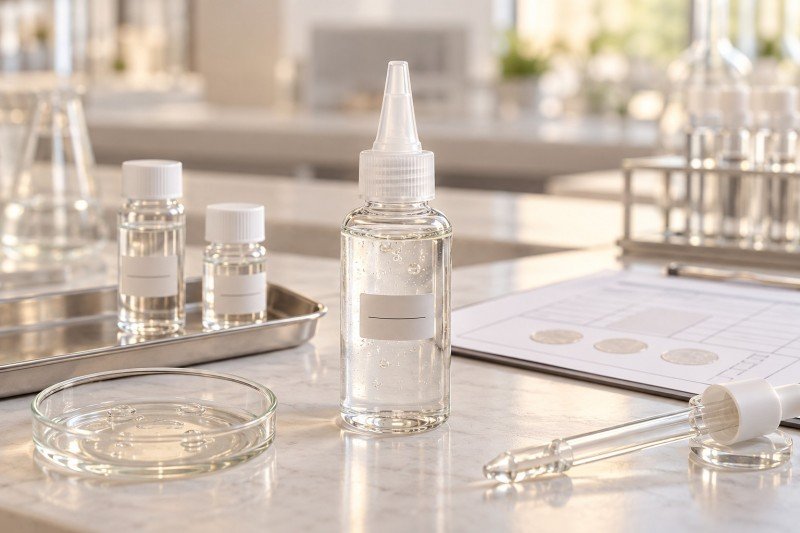
First Laboratory Sample
- The first laboratory sample turns the product concept into something that can finally be applied, felt and evaluated in real use.
- Its main purpose is to confirm whether the project is moving in the right overall direction. At this stage, we focus first on the bigger questions: Does the texture feel appropriate? Is the product lighter or richer than expected? Does it spread comfortably on the scalp? Does the active-led positioning feel consistent with the brand concept? Does the initial scalp and root experience broadly match the brief?
- Not every small detail needs to be perfect in the first version.
- A sample may already have the right texture, fragrance and application behavior but leave slightly too much tack after drying. That does not necessarily mean the formula direction is wrong — it gives the next revision a much clearer target.
Real-Use Evaluation & Brand Feedback
- The most useful sample feedback describes what you actually see, feel and want changed. You do not need to know which raw material should be increased, reduced or replaced.
- For example, feedback such as “the serum feels right at first but becomes sticky after drying,” “the roots feel slightly too heavy,” “I want the product to spread faster,” or “the fragrance direction is right but should be softer” gives the laboratory a much more useful development signal.
- We also encourage brands to evaluate the sample at different moments rather than only immediately after application. The texture may feel excellent during use but behave differently after several minutes, after blow-drying or later in the day.
- You describe what you feel and see. Our laboratory determines what needs to change.
- This helps keep the discussion focused on the final consumer experience rather than requiring the brand to make technical formulation decisions.


Controlled Formula Refinement
- Sample revision should not mean rebuilding the formula from zero every time. The more effective approach is to preserve what already works and focus the next adjustment on the characteristics that still need improvement.
- If the brand already approves the texture, fragrance and spreading behavior but wants a cleaner dry-down, those approved qualities become reference points that should be protected during the next revision.
- Likewise, if the root finish is correct but the formula runs too quickly during targeted application, the adjustment should focus on better placement control rather than unnecessarily changing the active story or overall sensory profile.
- This makes each sample easier to compare and helps the development process move progressively closer to the target rather than changing multiple variables without a clear reason.
Near-Final Sample & Product Alignment
- As the formula approaches approval, the focus changes from improving individual details to checking whether everything now works together as one complete product.
- We review the final texture, active direction, application behavior, absorption, dry-down, scalp feel and root finish as a connected experience rather than as separate features. The intended nozzle, dropper, spray or pump direction should also still make sense with the near-final formula.
- For example, an active adjustment may improve the product story but make the dry-down more noticeable. A texture adjustment may improve scalp placement but change how the serum dispenses through the target applicator. These relationships need to remain aligned before the formula can be considered genuinely near-final.
- The final question is therefore not simply whether each individual feature is acceptable, but whether the complete product now behaves in the way the brand originally intended.
| Final Approval Check | What We Confirm | Why It Matters |
|---|---|---|
| Product Direction | The target benefit, hero active direction, texture and overall positioning still match the product originally defined. | Prevents multiple revisions from gradually moving the formula away from the original concept. |
| Sensory & Root Experience | Application, absorption, dry-down, scalp feel, scent and root finish have reached an agreed direction. | Creates a clear sensory reference instead of relying on a general “sample approved” decision. |
| Formula & Applicator Alignment | The near-final formula still works appropriately with the intended nozzle, dropper, spray or pump direction. | Confirms that the application experience remains consistent with the formula that was actually approved. |
| Approved Product Reference | The accepted sample, key product characteristics and final development direction are clearly identified before moving forward. | Gives the next stage a defined product to reproduce rather than continuing to change major variables. |
Sample development is not about repeatedly changing the formula until something happens to feel right. Each round should preserve what already works, answer a clearer question and move the product closer to the intended consumer experience.
Selected Scalp Serum Development Projects
Every scalp serum project starts from a different point. Some brands already have a clearly defined active system and need the formula to be developed around it, while others prefer to begin with an existing mature formula and only customize where necessary. The projects below show how different briefs can lead to different formulation priorities, evaluation routes and development decisions.
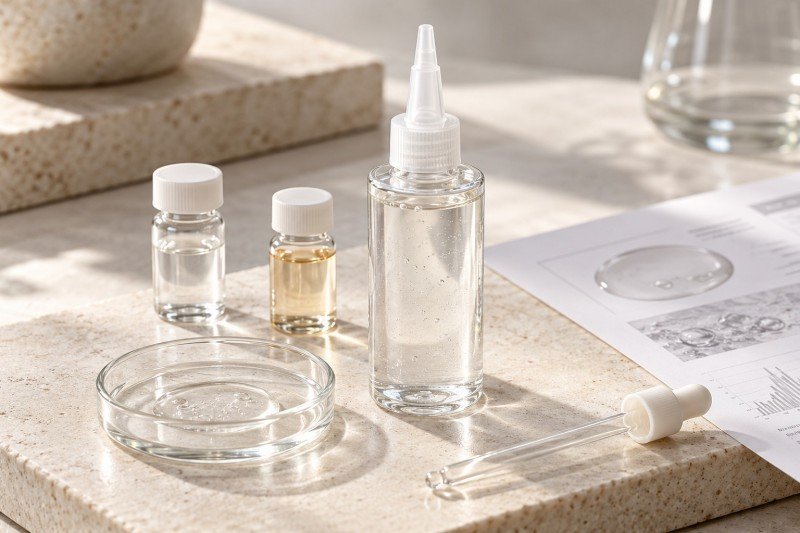
Active-Led Scalp Serum for the U.S. Market
- Project Type
Custom Active-Led Scalp Serum - Project Brief
A U.S. brand approached us with a clearly defined scalp serum concept built around Adenosine and Procyanidin B2. The goal was a lightweight leave-in serum suitable for repeated scalp application while keeping the active system central to the product positioning. - Development Challenge
The challenge was not simply adding the requested actives. The serum base also needed to support the active system while maintaining suitable viscosity, scalp spread, dry-down and a lightweight root feel. - Key Evaluation Points
Active Compatibility · Lightweight Serum Base · Daily Leave-In Feel · Root Finish - Development Approach
We reviewed the active system and serum base as one formulation. Texture, humectancy, supporting ingredients and after-feel were considered together so the active-led positioning would not unintentionally create a serum that felt too sticky, heavy or noticeable around the roots. - Development Route
Active Brief → Formula Review → Laboratory Sample → Brand Evaluation
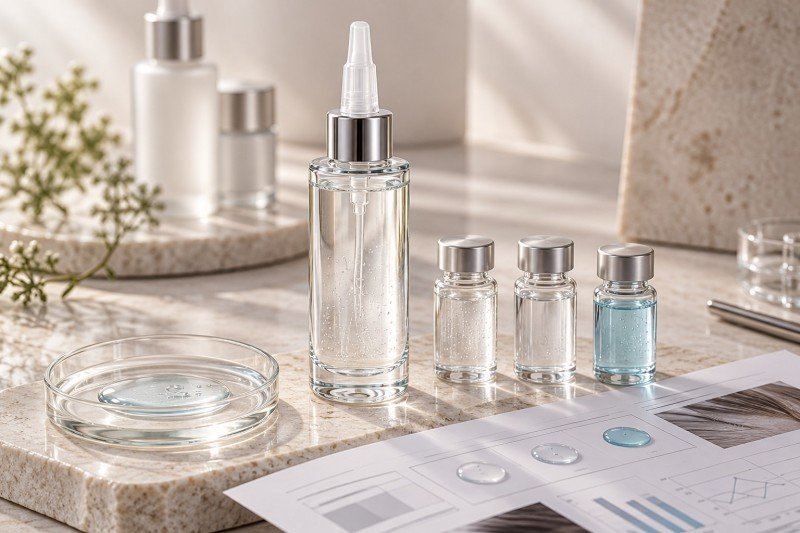
Copper Peptide Scalp Serum for the UK Market
- Project Type
Mature Formula Evaluation / White Label Direction - Project Brief
A UK brand was developing a broader copper peptide product line and wanted to evaluate existing mature scalp serum formulas before considering full custom development. - Development Challenge
An existing formula can shorten the development route, but only if it genuinely fits the intended product. The scalp serum still needed to align with the copper peptide positioning while providing suitable texture, root feel and practical leave-in application. - Key Evaluation Points
Existing Formula Fit · Copper Peptide Direction · Texture & Root Feel · Application Format - Development Approach
We first compared the brief with available mature formula directions. If an existing serum closely matches the intended active story and user experience, it can provide a more efficient starting point; where gaps remain, targeted adjustment can be considered instead of rebuilding the formula from zero. - Development Route
Mature Formula Review → Sample Evaluation → Gap Assessment → Targeted Adjustment if Needed
The right starting point depends on what has already been defined, what still needs to be developed and how closely the available formula matches the intended product experience.
We do not force every scalp serum project through the same development path. We first identify what the project already has, what is still missing and which development route makes the most sense.
Frequently Asked Questions About Private Label Scalp Serum Development
Whether you are starting from an existing formula, a reference product, a specific active system or a completely new concept, the development route can vary. Here are some of the most common questions brands ask before starting a private label scalp serum project with us.
01. Can I Start With an Existing Formula or Develop a Custom Scalp Serum?
Yes. The most suitable route depends on how specific your product concept already is.
- Existing Formula: Suitable when a mature formula already closely matches your target product and faster development is preferred.
- Formula Adjustment: A mature direction can be refined around texture, scent, actives or application experience when only part of the product needs changing.
- Custom Development: Better suited to projects with a specific active system, texture target or differentiated product concept.
- We first review your brief and recommend the most practical development route rather than requiring every project to start from zero.
02. Can You Develop From My Ingredient Idea or Reference Product?
Yes. You do not need to provide a complete formulation brief before starting.
- You can begin with preferred ingredients, a reference product, a texture target or the user experience you want to create.
- Reference products help us understand characteristics such as viscosity, spread, absorption, dry-down and overall positioning.
- We evaluate which characteristics can realistically be adapted within our own formulation system.
- The goal is to develop a product around your brief rather than make an exact copy of another formula.
03. Can I Specify the Active Ingredients or Target Concentrations?
Yes. Brands can propose hero actives, supporting ingredients and target concentrations for our laboratory to evaluate.
- We review the specific raw-material form, recommended use level and compatibility with the intended formula.
- The active system is considered together with texture, stability, scalp feel and root finish.
- A higher percentage is not automatically the better choice if it negatively affects the finished product experience.
- Final concentration and formulation feasibility are confirmed according to the complete product direction.
04. What Is the MOQ for Private Label Scalp Serum?
Our standard MOQ is generally 1,000 pcs per SKU when suitable stock packaging is available.
- Stock bottles and standard applicators usually provide the most practical starting point for initial production.
- Custom bottles, special applicators, colors or more complex packaging may require a higher packaging MOQ.
- Formula type, fill size and packaging direction are reviewed together before the final MOQ is confirmed.
- If you already have a preferred bottle or applicator, you can share it with us for evaluation.
05. How Does Scalp Serum Sampling and Revision Work?
Sampling is used to gradually move the formula closer to the product experience you want.
- We first confirm the product brief and prepare the initial laboratory sample.
- You evaluate the texture, application, absorption, dry-down, scent, scalp feel and root finish.
- Your feedback is translated into targeted formulation adjustments by our R&D team.
- Characteristics you already approve are preserved while the remaining gaps are refined.
- You do not need formulation knowledge — clear feedback about what you feel, see and want changed is enough.
06. What Packaging Can Be Used for a Scalp Serum?
Several application systems can work depending on the formula and intended routine.
- Targeted Nozzle: For direct placement between the hair and onto the scalp.
- Dropper: For a familiar, serum-style application ritual.
- Fine-Mist Spray: Better suited to water-light formulas and wider scalp coverage.
- Pump: Useful for controlled dosing and clean handling.
- Final packaging should be evaluated together with the near-final formula because viscosity, flow and dose output can affect the actual user experience.
07. How Long Does Scalp Serum Development and Production Usually Take?
Timing depends on whether the project begins with a mature formula or requires more customized development.
- Initial laboratory samples typically require around 7–15 working days, depending on formula complexity and ingredient availability.
- Additional adjustment time may be needed when texture, active loading, dry-down or application experience requires further refinement.
- After the formula, packaging and artwork are confirmed, bulk production is generally around 30 days.
- Custom packaging, specialty raw materials or major changes after sample approval can extend the overall project timeline.
08. What Happens After the Final Scalp Serum Sample Is Approved?
Once the product direction is approved, the project moves from development into commercial production preparation.
- Final formula, fill size, packaging and artwork details are confirmed.
- Raw materials and packaging components are prepared for the production batch.
- Bulk manufacturing, filling, assembly, packing and finished-product checks are completed.
- Batch documentation and shipment preparation are arranged according to the project requirements.
- Major changes to the active system, texture or applicator after approval may require additional evaluation before production.
Start Your Private Label Scalp Serum Project
Tell us what you already know about the scalp serum you want to develop — your product goal, preferred actives, texture, application format, target market or reference product. You do not need to have the complete formula defined before contacting us.
Our team can review your brief and help determine whether your project is better suited to an existing mature formula, targeted formula adjustment or custom development, then recommend the next practical step for sampling and packaging.
Not Sure What to Send Us?
- Your scalp serum idea or target product direction
- Preferred hero actives or ingredients
- A reference product you like
- Target texture or root feel
- Preferred nozzle, dropper, spray or pump
- Target market and estimated first order quantity
Our team typically responds to project inquiries within 12 hours.
Your product concept and project information will be kept confidential.