Skip to content
Shaving Cream for Sensitive Skin: What to Look For and How to Private-Label It?
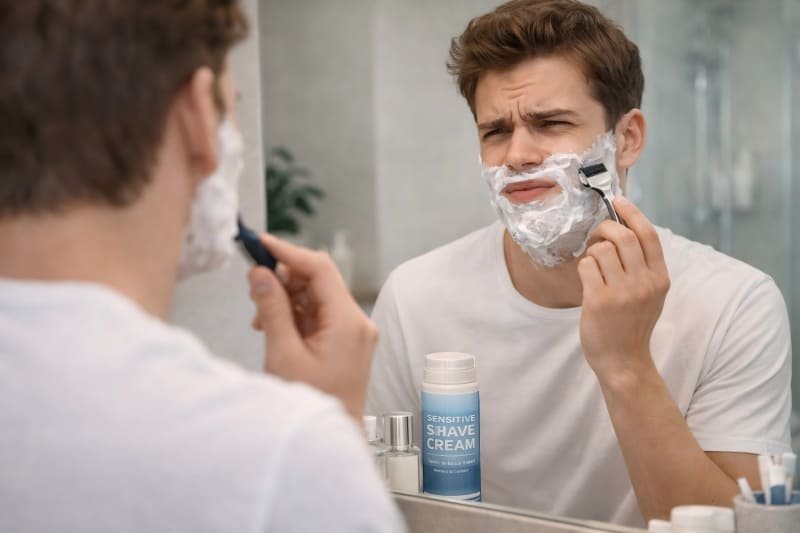
You shave and the burn shows up before you’ve even rinsed the sink. The skin turns red, stings, and feels tight for hours. By the next day, small razor bumps or ingrown hairs appear along the jawline or neck, and any “fresh” aftershave makes the irritation worse. Many people switch to “sensitive” shaving products, but still get dryness, a dragging blade feel, or a strong scent and cooling sensation that triggers more discomfort.
Sensitive-skin shaving is mainly a friction and trigger-control problem. A high-lubricity, low-irritation shaving cream can reduce blade drag and micro-damage, but it only works when three things line up: (1) the formula avoids common irritants like heavy fragrance and high sting additives, (2) the texture creates real cushion and glide, and (3) the shaving method uses a sharp, clean blade with low pressure—preferably shaving with the grain first. Brands that win this category design for “no burn, no bumps, easy rinse,” then validate it with simple sampling acceptance checks that match real user behavior.
Why sensitive shaving turns into redness, burn, and bumps: three causes
Most “sensitive skin” complaints come from a mix of mechanical, chemical, and technique factors. If you diagnose the main driver, product selection becomes much easier.
Mechanical friction (blade drag)
Dry shaving, thin foam, or a formula that collapses quickly increases drag. The blade scrapes instead of gliding, creating micro-damage that looks like redness and feels like burning.
Chemical triggers (sting and barrier stress)
Fragrance, strong cooling agents, and high-sting components can trigger discomfort on freshly shaved skin. Even if the shave feels “clean,” the barrier can be stressed and react later.
Technique and tools (pressure, direction, blade condition)
Shaving against the grain, pressing too hard, or using a dull/dirty blade increases irritation and bump risk. A great cream cannot fully rescue poor blade hygiene or high-pressure passes.
Buyer tool: Irritation map
| Symptom | Likely driver | First fix to try |
|---|---|---|
| immediate burn | friction + sting triggers | switch to higher glide, lower sting formula |
| razor bumps | direction + pressure + residue | shave with grain first + easy-rinse texture |
| tight dryness | barrier stress | reduce alcohol/fragrance + add post-shave comfort |
Fast label screening: Pass / Caution / Avoid
Sensitive-skin shoppers want simple rules. Give them a clear “pass/caution/avoid” system and you reduce returns.
Pass (low-conflict signals)
- Fragrance-free positioning (or very low scent policy)
- Alcohol-free positioning for post-shave comfort lanes
- “High glide / cushion” language with simple, skin-friendly claims
- “Non-lathering” or “brushless” options for users who dislike foam collapse
Caution (depends on the user)
- “Unscented” without clarifying fragrance policy (some users still react)
- Strong “cooling” sensations marketed as a benefit
- Complex botanical/essential oil blends in a sensitive positioning lane
Avoid (high-risk for sensitive positioning)
- Strong perfume-driven experience
- High sting “fresh” sensations that feel good for 10 seconds and burn later
- Heavy residue textures that trap sweat and increase bump complaints
This section does not need medical language. It’s a return-rate control checklist.
Cream vs gel vs foam vs brushless: which textures reduce friction best?
Sensitive users do not need more bubbles. They need glide, stability, and easy rinse.
Cream (traditional or brush cream)
- Strength: can provide cushion and glide
- Risk: some creams feel heavy or leave residue if not tuned
Gel (often clear or semi-clear)
- Strength: good visibility for edging and can rinse clean
- Risk: can feel slippery but “thin” if the glide film collapses too fast
Foam (aerosol)
- Strength: fast, convenient, familiar
- Risk: some foams feel airy and collapse quickly, increasing drag for sensitive users
Brushless / non-lathering shave cream
- Strength: consistent glide film, often positioned as low-irritation and fragrance-minimal
- Risk: needs an “easy rinse, no greasy after-feel” finish to avoid bump complaints
Buyer conclusion: for sensitive-skin positioning, prioritize textures that keep a stable glide film during the full pass, not textures that look thick in the hand.
The sensitive-skin shaving routine that prevents irritation
Even the best formula can’t compensate for a dull blade and high pressure. Keep routine guidance short and rule-based.
Low-irritation shaving flow
- Prep with warm water: shave after shower or soften hair with warm water first
- Apply a real lubricating layer: don’t “stretch” a small amount too thin
- Shave with the grain first: reduce tugging and bump risk
- Use light pressure and short strokes: let the blade do the work
- Rinse well and pat dry: avoid aggressive rubbing
Blade rules that protect results
- Use a sharp, clean blade
- Replace blades regularly; dull blades increase tugging
- Rinse blade often during use to prevent buildup
This routine section builds trust because it acknowledges the real-life cause of irritation: friction and technique, not just ingredients.
Post-shave aftercare: reduce sting and barrier stress fast
Sensitive users often ruin a good shave with a harsh aftershave. Your content should steer them toward calm, simple aftercare.
What usually works
- Rinse with cool-to-lukewarm water after shaving
- Pat dry gently
- Apply a mild, fragrance-free moisturizer or a simple soothing lotion if dryness is a frequent issue
What often backfires
- Alcohol-heavy splashes that sting on micro-damaged skin
- Strong fragrance layering on freshly shaved areas
- Over-exfoliating immediately after shaving
Buyer mindset: aftercare is part of the product system. If you private label shaving cream, consider pairing it with a calm, no-scent post-shave lotion to improve repeat purchase and reduce complaint rates.
Three formula lanes for sensitive shaving: redness, bumps, dryness
Most brands can cover the category with three clear lanes. Each lane has a different “why it works” story.
Lane 1: Redness and stinging (reactive-feel lane)
- Goal: reduce sting triggers + maximize glide
- Positioning: fragrance-free, low-sting, cushion and comfort
Lane 2: Razor bumps and ingrowns (bump-prone lane)
- Goal: low drag + clean rinse + low residue
- Positioning: easy rinse, non-greasy finish, visible shaving control
Lane 3: Tight dryness (dry-barrier lane)
- Goal: glide plus post-shave comfort
- Positioning: comfort-first, barrier-friendly feel, less tightness after rinse
This lane framework helps buyers select without guessing, and it makes your private label SKU planning clean and logical.
Packaging and channel reality: tube, pump, aerosol
Packaging influences dosing and hygiene, which impacts irritation outcomes.
Tube
- Pros: controlled dispensing, travel-friendly, good for e-commerce
- Risks: if texture is too thick, squeezing frustrates users
Pump
- Pros: consistent dose, hygienic, fast daily use
- Risks: pump compatibility must match viscosity
Aerosol
- Pros: instant foam convenience
- Risks: sensitive positioning requires stricter control of scent and sting triggers
For Amazon and DTC shipping, leakage and cap integrity are part of the product experience. A leaking shave cream becomes a “bad product” before the user even shaves.
Private label plan: 3 SKUs + sampling acceptance checklist
A tight 3-SKU set covers most sensitive shaving demand:
SKU A: Fragrance-free brushless shave cream
- Core promise: high glide, low sting, easy rinse
- Best for: reactive-feel users and daily shavers
SKU B: Sensitive shave gel (clean-rinse lane)
- Core promise: control + clean finish
- Best for: bump-prone users and neck/jawline edging
SKU C: Shave cream + calm aftercare pair
- Core promise: shave comfort + post-shave recovery
- Best for: dryness complaints and higher repeat purchase behavior
Sampling acceptance checklist (buyer-ready)
- Glide and drag: blade feels smooth, no tugging
- Immediate sting score: low burn on first use
- Post-shave tightness: reduced within 10–20 minutes
- Rinse-off: no heavy residue film
- Bump feedback: fewer bumps after 3–7 uses vs baseline
- Scent tolerance: no fragrance-trigger discomfort
- Packaging: no leakage, consistent dosing
More Related
Custom Formulations
Hot ingredients
Custom cosmetic solutions
FAQ Categories
Can't find the answers?
No worries, please contact us and we will answer all the questions you have during the whole process of OEM Cosmetic customization.
Make A Sample First?
If you have your own formula, packaging idea, logo artwork, or even just a concept, please share the details of your project requirements, including preferred product type, ingredients, scent, and customization needs. We’re excited to help you bring your personal care product ideas to life through our sample development process.