Skip to content
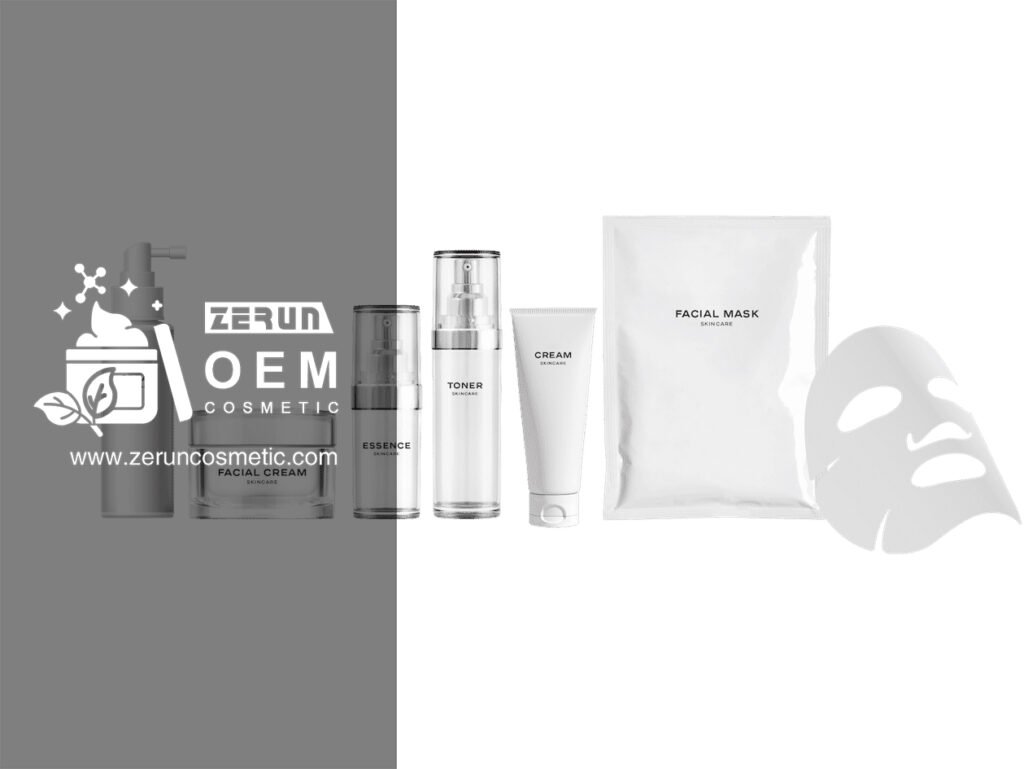
In today’s skincare market, “good enough” manufacturing is rarely enough. One unstable serum, one pump that leaks in transit, or one claim that crosses a compliance line can turn a promising launch into returns, delays, and long-term brand damage—especially when products are sold across multiple regions or platforms with strict requirements.
The best private label skincare manufacturers stand out less by marketing promises and more by sourcing realities: MOQ that matches brand stage, predictable lead times, packaging compatibility discipline, and documentation habits that support US/EU compliance expectations. A strong shortlist should help buyers compare suppliers side-by-side—by region, minimums, capabilities (private label vs custom), and the level of compliance support that prevents costly rework.
Picture a first shipment arriving exactly as planned: labels look premium, formulas are consistent batch to batch, pumps work flawlessly, and every file a retailer or distributor asks for is ready without scrambling. That outcome is rarely luck—it’s the result of choosing a manufacturer whose systems fit your brand’s stage and market path.
What does “private label skincare manufacturer” mean?

For most brands, “private label” simply means speed without starting from zero. A manufacturer has ready base formulas (often a full formula library), and your brand selects a starting point, adds branding, chooses packaging, and makes small, controlled tweaks where needed. OEM and ODM are broader terms that describe who leads development: OEM usually follows your specs or a supplied formula, while ODM develops the formula for you and produces it under your brand. In real projects, many partners offer a mix—private label for fast launches, ODM for differentiation, and OEM for tighter control.
A practical way to compare the models is to focus on ownership, timeline, and what minimums you’ll actually face (because suppliers don’t always use these words consistently).
| Model | Who drives the formula direction? | Typical speed | Typical MOQ reality | Best for | Common pitfalls |
|---|---|---|---|---|---|
| Private label | Manufacturer base + your branding | Fastest | Often lower for filling, higher for packaging | Fast launch, market tests | Packaging MOQs, limited differentiation, claim mismatch |
| ODM (custom development) | Manufacturer develops from your brief | Medium | Medium (samples + stability + packaging) | Hero SKUs, brand differentiation | Timeline creep, “custom” that’s only lightly changed |
| OEM (manufacture to spec) | You define the spec or supply formula | Varies | Often higher (validation + control systems) | Strict positioning, higher control | Tech transfer gaps, raw material sourcing differences |
| CDMO / development partner | Deep co-development + scale systems | Slower to start, easier to scale | Usually medium-to-high | Multi-market pipelines | Too heavy for early-stage needs |
Two realities matter more than the label on the service:
First, private label is not automatically low risk. The real risk often lives in packaging compatibility, stability inside your chosen pump/tube/jar, microbiology control for water-based products, and claim discipline. A “ready” formula only helps if it stays stable, ships cleanly, and supports compliant marketing in your target markets.
Second, OEM/ODM alone doesn’t tell you whether the partner fits your stage. The right factory for a brand testing three SKUs at low MOQ is often different from the right factory for a multi-market rollout that needs tighter documentation habits, translation-ready labeling workflows, and predictable release gates.
Manbe you are trying to solve one of these problems:
- A real factory that can ship consistent product under a brand quickly
- A low-MOQ path to test demand without getting trapped by packaging minimums
- A partner that supports US/EU claim boundaries and compliance expectations without surprises
- End-to-end execution: packaging, labeling, and documentation handled with minimal back-and-forth
That’s why the shortlist is organized by MOQ reality, region, and compliance support—the variables that most often decide whether sourcing feels smooth, or turns into delays and rework.
20 private label skincare manufacturers (non-ranked) — a global shortlist

This is a non-ranked shortlist built for sourcing. Each company is described with the same procurement-friendly fields, using publicly available “about/company” pages or reputable directories where needed. It’s a starting point, not an endorsement—final selection should be validated with the RFQ questions and document checks later in the process.
Enterprise / global-scale (multi-market, multi-site oriented)
- COSMAX
- Country: South Korea
- Founded: 1992 (public profile)
- Website: cosmax.com
- Main business: ODM/contract manufacturing for cosmetics & skincare
- Strength signal: scale-oriented ODM model; global manufacturing footprint is emphasized publicly
- Kolmar Korea
- Country: South Korea
- Founded: 1990 (public profile)
- Website: kolmar.co.kr (or global kolmar.co.kr pages)
- Main business: ODM/contract manufacturing for cosmetics & skincare
- Strength signal: large ODM positioning; commonly used for scale-driven programs (verify category and site scope)
- Intercos Group
- Country: Italy
- Founded: 1972
- Website: intercos.com
- Main business: contract manufacturing (beauty), including skincare lines depending on site/category
- Strength signal: long-established EU manufacturer with group scale signals
- FAREVA
- Country: France
- Founded: 1981 (group positioning “since 1981”)
- Website: fareva.com
- Main business: contract manufacturing across health/beauty-related categories depending on division/site
- Strength signal: large multi-site group; compliance-heavy channels typically require verifying site certificates
- KDC/One
- Country: Canada (group with North America/EU presence)
- Founded: 1990
- Website: kdc-one.com
- Main business: beauty/personal care manufacturing group (capabilities vary by site)
- Strength signal: built as a manufacturing group; useful when brands need multi-site options
Mid-size turnkey / full-service (good for “0→1” building and scaling)
- Voyant Beauty
- Country: United States
- Founded: 2019 (formed as a combined manufacturer group)
- Website: voyantbeauty.com
- Main business: contract manufacturing for beauty/personal care (site-dependent)
- Strength signal: multi-site consolidation model can improve capacity options; verify per-plant strengths
- Kolmar Laboratories
- Country: United States
- Founded: 1921
- Website: kolmarlabs.com
- Main business: contract manufacturing for beauty/personal care (site/category dependent)
- Strength signal: long history; tends to fit brands that want a mature manufacturing partner
- Cosmetic Solutions
- Country: United States
- Founded: 1991
- Webiste: cosmeticsolutions.com
- Main business: private label + custom formulation and manufacturing (skincare-forward positioning)
- Strength signal: clear “stock + custom” model is often attractive for faster concept-to-shelf workflows
- Mana Products
- Country: United States
- Founded: 1975 (public profiles)
- Website: manaproducts.com
- Main business: contract manufacturing for beauty/personal care; confirm skincare program fit
- Strength signal: established contract manufacturer; best assessed via category case studies + site audit
- CoValence Laboratories
- Country: United States
- Founded: 1989 (30+ years signal)
- Website: covalence.com
- Main business: contract development/manufacturing for cosmetic + topical OTC, including private label specs
- Strength signal: publicly states FDA registration, cGMP compliance, and ISO 22716 certification
Startup / lower-MOQ friendly (fast testing, stock bases, smaller runs)
- Zerun Cosmetic
- Country: China
- Founded: 2012
- Website: zeruncosmetic.com
- Main business: private label + custom development + manufacturing
- Strength signal: publicly positions “FDA registered and GMP,ISO22716 certified” and explicitly markets private label paths
- RainShadow Lab
- Country: United States
- Founded: 1983
- Website: rainshadowlabs.com
- Main business: private label + custom development + manufacturing
- Strength signal: publicly positions “FDA registered and ISO certified” and explicitly markets private label paths
- Nutrix USA
- Country: United States
- Founded: 2014–2015 (public profiles differ)
- Website: Nutrix USA — nutrixusa.com
- Main business: private label + contract manufacturing across personal care categories including skincare
- Strength signal: publicly states NSF ISO certification and FDA-registered facility language
- Vitelle Labs
- Country: Canada
- Founded: 1997
- Website: vitellelab.com
- Main business: private label + contract manufacturing with professional spa/clinic positioning
- Strength signal: pro-channel focus can be useful when brands sell into esthetic/med-spa contexts
- Essential Wholesale & Labs
- Country: United States
- Founded: 2000 (public profiles)
- Website: essentialwholesale.com
- Main business: stock bases + customization/private label and custom manufacturing services
- Strength signal: publicly describes FDA-registered / cGMP-compliant facility language in its own content; verify scope and current certificates
Region specialists (useful when “made in region” or regional compliance is the strategy)
- Cosmewax
- Country: Spain
- Founded: 1960
- Website: cosmewax.com
- Main business: cosmetics/personal care manufacturing (EU-based); confirm skincare program scope
- Strength signal: long-established EU manufacturer—often relevant for EU-centric sourcing strategies
- Cosmo Beauty
- Country: Japan
- Founded: 1949
- Website: cosmo-beauty.co.jp (or English pages under cosmo-beauty.co.jp)
- Main business: contract manufacturing for cosmetics/personal care (Japan-based)
- Strength signal: Japan-made positioning; confirm skincare range + export documentation flow
- TOA Inc.
- Country: Japan
- Founded: 1912
- Website: toa-cosme.co.jp
- Main business: cosmetics manufacturing (Japan-based)
- Strength signal: very long operating history; confirm which sites/categories align to skincare needs
- Nox Bellcow
- Country: China / Hong Kong (group presence)
- Founded: 2004
- Website: hknbc.com (group pages)
- Main business: skincare/cosmetics contract manufacturing (group positioning)
- Strength signal: cross-border manufacturing group model; verify audit readiness per plant
- HCP Wellness
- Country: India
- Founded: 2017 (company profile), while the website also claims 20+ years / nearly 40 years experience
- Website: hcpwellness.in
- Main business: private label cosmetics / contract manufacturing across multiple personal care categories
- Strength signal: publicly uses GMP/USFDA language; treat as “verify-by-document” during RFQ
How can brands compare manufacturers side-by-side with one procurement table?
A single comparison table works when it matches how procurement decisions are actually made: region fit, MOQ reality, timeline confidence, capability scope (private label vs custom), and compliance signals that can be proven with documents. The goal is not to “rank” factories—it’s to remove mismatch fast.
Use the table below as a starting grid. It intentionally avoids guessing exact MOQs or lead times when they are not publicly stated; instead it shows what to request and what each supplier publicly signals.
| Manufacturer | Region | Lead time signal | Capabilities (PL vs custom) | Compliance support (EU/US) | Best for (brand stage) | Notes |
|---|---|---|---|---|---|---|
| COSMAX | Asia (KR) | Large ODM scale | ODM + custom programs | Not summarized here; request certificates | Enterprise / multi-market | Global ODM footprint is a key fit signal |
| Kolmar Korea | Asia (KR) | Large ODM scale | ODM + custom programs | Not summarized here; request certificates | Enterprise / multi-market | Often chosen for scale + systems; verify scope |
| Intercos | EU (IT) | Multi-site group | Contract + custom | Not summarized here; request certificates | Enterprise / premium | Strong EU manufacturing presence; verify skincare scope |
| FAREVA | EU (FR) | Multi-site group | Contract + custom | Not summarized here; request certificates | Enterprise / regulated channels | Group “since 1981” positioning; confirm site scope |
| KDC/One | USA (CA/US) | Multi-site group | Contract + PL programs (varies) | Not summarized here; request certificates | Enterprise / scaling brands | Built as a manufacturing group; confirm facility fit |
| Voyant Beauty | USA (US) | Multi-site US network | Contract + custom | Not summarized here; request certificates | Mid-size brands scaling | Formed from multiple manufacturers; verify plants |
| Kolmar Laboratories | USA (US) | Long-running manufacturer | Contract + custom | Not summarized here; request certificates | Mid-size to enterprise | Founded 1921; check category strengths |
| Cosmetic Solutions | USA (US) | Stock + custom lab model | PL + custom | Not summarized here; request certificates | Indie → mid-size | Public “founded 1991” signal; confirm lead-time gates |
| Mana Products | USA (US) | Scale manufacturer | Contract + custom | Not summarized here; request certificates | Mid-size brands | Contract manufacturing profile; confirm skincare focus |
| CoValence Laboratories | USA (US) | Single-site, compliance-forward | PL + custom | FDA registered; cGMP; ISO 22716 | Indie → mid-size | Good fit when documentation discipline is key |
| Zerun Cosmetic | Asia (CN) | Stock formulas + in-house fill | PL + custom | FDA registered; cGMP; ISO 22716 | Startup / fast testing | Low-MOQ + custom development path; confirm documentation scope and lead-time gates in RFQ.” |
| RainShadow Labs | USA (US) | Stock formulas + in-house fill | PL + custom | FDA registered; ISO certified | Startup / fast testing | “Since 1983” and PL + custom positioning |
| Nutrix USA | USA (US) | Turnkey positioning | PL + contract | NSF ISO certified; FDA registered (public) | Startup → mid-size | Public compliance language; confirm SKU/category fit |
| Vitelle Labs | Canada (CA) | Pro-spa market focus | PL + contract | Not summarized here; request certificates | Spa/clinic-oriented brands | “Founded 1997” and pro channel positioning |
| Essential Wholesale & Labs | USA (US) | Stock base + customization | PL + custom | cGMP language is public; request scope docs | Startup / “clean” assortments | Founded 2000 (public profiles) |
| Cosmewax | EU (ES) | Long-established manufacturer | Contract + private label | Not summarized here; request certificates | EU compliance-heavy | Founded 1960 signal; verify skincare range |
| Cosmo Beauty | Asia (JP) | Large-scale JP manufacturer | Contract + custom | Not summarized here; request certificates | Japan-made positioning | Founded 1949 signal; confirm facilities/services |
| TOA Inc. | Asia (JP) | Long-established manufacturer | Contract + custom | Not summarized here; request certificates | Japan-made positioning | Founded 1912 signal; confirm skincare scope |
| Nox Bellcow | Asia (CN/HK) | Cross-border manufacturing group | Contract + custom | Not summarized here; request certificates | Asia supply-chain strength | Founded 2004 signal; verify site + audit path |
| HCP Wellness | Asia (IN) | Broad category capacity | Private label + contract | Claims legacy/USFDA/GMP language is public; verify documents | Cost-sensitive scaling | Public “20+ years / nearly 40 years” claims vary; confirm legal entity/site scope |
What questions should go into a “compliance-ready” RFQ and first call?
A shortlist becomes a supplier list only after the same set of questions is asked, answered with documents, and matched against the product’s claim path, target markets, packaging, and launch timeline. The fastest way to de-risk is to run one structured RFQ and treat “missing documents” as a signal, not a later task.
The RFQ structure that works well for skincare procurement is: (1) product scope, (2) quality/compliance documents, (3) testing plan, (4) packaging + supply chain, (5) commercial terms, (6) change control + IP.
Here’s a practical set of questions brands can copy into the RFQ (and reuse in the first call). Keep answers in writing.
| RFQ / First-call question | Why it matters | Red-flag signal | What “good” looks like |
|---|---|---|---|
| Which markets are in scope (US, EU, UK, CA, AU), and which claims must be supported? | Determines documentation, labeling, testing, and “cosmetic vs OTC/drug” boundaries | “We’ll figure that out later” | Clear market scope + claim boundary guidance tied to documents |
| Which quality standards are in place (e.g., ISO 22716, cGMP), and can certificates be shared? | Baseline for audit readiness | Refuses to share certificates or gives vague statements | Shares current certificates and scope (site + activities) |
| Can an itemized testing plan be proposed for this SKU set (stability, micro, compatibility, claim support)? | Prevents “launch now, fix later” failure | No defined test plan or suggests skipping basics | A staged plan aligned to risk, packaging, and channel |
| Who owns the formula, and what happens if production moves to another factory? | Avoids lock-in and future disputes | “Factory owns everything by default” | Clear IP clauses + transferability terms |
| What’s the MOQ logic (by formula, packaging, decoration) and what can be mixed? | Real MOQ is often packaging-driven | MOQ stated without explaining drivers | MOQ broken down by component + batching constraints |
| What is the lead-time model (lab samples → pilot → production), and what are “stop-the-line” risks? | Prevents timeline fantasy | No critical path; ignores packaging tooling | Real gates + dependencies + escalation rules |
| Can a packaging compatibility approach be described (fill trials, torque, leakage, liner, pump fit, decoration rub)? | Many skincare failures are packaging-system failures | Treats packaging as “customer problem” | Packaging trials + compatibility checks built into plan |
| What is the change-control process (raw material substitutions, fragrance changes, preservative swaps)? | Controls quality drift and review risk | Changes happen without notice | Written change control + approval workflow |
| Can batch records / COA / traceability be provided per lot? | Core for complaints, recalls, and retail readiness | “We don’t provide those” | Lot-level traceability + COA sharing policy |
| What is the complaint handling + CAPA workflow? | Shows operational maturity | No CAPA process | Clear CAPA + timelines + root-cause practice |
The 6 filters that remove 70% of “wrong-fit” manufacturers in 10 minutes
A “Top 20” list becomes useful only after you apply hard filters. These six checks are fast, evidence-based, and remove most wrong-fit suppliers before you waste time on calls or samples.
Filter 1: Target market fit (US, EU, or both)
This isn’t about “we ship worldwide.” It’s about whether the partner routinely supports the documents, labeling discipline, and claim boundaries your market expects.
- Pass signals: clear experience with your target market(s), a structured approach to labels/claims, and a testing/documentation pathway.
- Fail signals: “We can claim anything you want,” or “We’ll figure compliance later.”
Filter 2: Category and formula type match (not just “skincare”)
Many manufacturers say they do skincare. Fewer are consistently strong in your exact formula challenges (high-active serums, sensitive-skin creams, exfoliating acids, vitamin C derivatives, retinoids, masks, etc.).
- Pass signals: they can name similar product types they run often, plus realistic stability/micro expectations.
- Fail signals: they immediately promise a complex formula with no discussion of stability, packaging compatibility, or tolerance.
Filter 3: MOQ reality (formula MOQ vs packaging MOQ)
This is the biggest sourcing trap for early-stage brands. A manufacturer may offer “low MOQ,” but your packaging components quietly force a much higher real MOQ.
- Pass signals: they separate “formula batch MOQ” from “packaging component MOQ,” and explain how to reduce risk (stock packaging, digital printing, standardized pumps, etc.).
- Fail signals: one number only, vague “depends,” or they avoid packaging MOQ questions.
Filter 4: Lead-time signal (how predictable is their workflow?)
You’re not asking for a guarantee; you’re checking whether they run a repeatable process.
- Pass signals: a clear sampling path (sample → pilot → first shipment) with decision gates and typical ranges.
- Fail signals: everything is “fast” until you ask about packaging, testing, artwork approvals, or revisions.
Filter 5: Capability match (private label only vs true customization)
Private label can be perfect for speed, but it has limits. The wrong match shows up as “every brand launches the same formula,” or the opposite: “custom work that takes forever with no control points.”
- Pass signals: they can offer a tiered approach (base formula → modified base → full custom) and can explain what changes are realistic without destabilizing the product.
- Fail signals: “Fully custom” offered instantly with no questions about performance targets, cost, packaging, or timeline.
Filter 6: Transparency and evidence (documents, process, responsiveness)
The supplier you can trust is usually the supplier who can show.
- Pass signals: they answer directly, provide example documentation lists, explain testing logic, and clarify responsibilities.
- Fail signals: they dodge, overpromise, or give contradictory answers across emails and calls.
If you want a simple way to apply these filters, use this mini-table during your first scan of websites and initial replies:
| Filter | Pass signals | Evidence to request | Common red flags |
|---|---|---|---|
| Market fit | structured compliance support | doc list + label workflow | “any claim is fine” |
| Category match | similar SKUs run regularly | sample spec + stability notes | no mention of stability |
| MOQ reality | formula vs packaging MOQs separated | component MOQ list | “MOQ is low” (no details) |
| Lead-time signal | clear stages + decision gates | timeline by stage | “2 weeks” for everything |
| Capability match | tiered offer (PL → custom) | what can/can’t be changed | “full custom” instantly |
| Transparency | direct answers + proof | sample docs + test plan outline | dodging, contradictions |
These filters set up the next sections: what capabilities really matter, and what to ask in your first email so you get usable answers.
What capabilities matter most for skincare?

The best skincare partners don’t just “manufacture.” They reduce repeatable failure modes: instability, micro risk, packaging incompatibility, claim risk, and scale-up surprises. If you’re trying to avoid reformulations, delays, and negative reviews, these are the capabilities that matter in real projects.
- Stability thinking that starts early (not after samples fail) Most headaches show up as phase separation, viscosity drift, discoloration, odor changes, or texture changes after a few weeks in the wrong packaging. A strong partner will:
- propose a stability pathway early (baseline + accelerated + packaging checks)
- ask about storage, shipping lanes, and climate exposure
- flag “risk formulas” (high acids, high actives, low preservative load, high natural content, fragrance sensitivity)
- Microbiology control that matches the formula style Skincare is often “water-based + consumer-finger contact + bathroom conditions.” That’s a perfect recipe for microbial risk if the system isn’t designed correctly. Look for:
- a clear preservative strategy tied to the formula’s challenge level
- a defined micro testing approach and release logic
- an understanding that “clean” positioning changes preservative constraints and raises the bar for process control
- Packaging compatibility and fill performance (this is where “low MOQ” often breaks) A manufacturer can make a great cream that fails in your pump. Or a serum that leaks under temperature swings. Capability here includes:
- experience with your packaging type (airless pumps, droppers, tubes, jars)
- a packaging fill trial / compatibility check mindset
- willingness to discuss wiper inserts, orifice size, pump output, and viscosity range—before you print 10,000 boxes
- Scale-up discipline (lab feel ≠ production feel) A lab sample that feels perfect can change when you scale mixing, shear, heating/cooling, and batch size. Strong partners:
- control critical process parameters (mix order, temperature windows, shear, hold times)
- have a pilot approach for risky formulas
- can explain how they keep batch-to-batch sensory consistent
- Claims and positioning discipline (especially for US/EU) You don’t need a partner to be your lawyer. You do need them to understand “claim risk” and build formulas around realistic, supportable claims. Good signs:
- they ask what claims you want, then sanity-check feasibility
- they warn against drug-like directions (especially for acne/sunscreen-like territory in the US)
- they align claims with testing plans, ingredient levels, and consumer expectations
- Project management that prevents chaos The “best formula” is worthless if artwork approvals, packaging procurement, testing, and production aren’t coordinated. Look for:
- a single project owner, clear timelines, and change-control logic
- defined revision cycles for samples
- clear responsibilities: what the factory does vs what the brand must provide
A quick way to pressure-test capability is to describe one realistic SKU and see what questions they ask. For example:
- “A vitamin C brightening serum for sensitive skin” should trigger questions about derivative choice, oxidation risk, packaging (airless vs dropper), and color/odor drift.
- “A gentle exfoliating body lotion” should trigger questions about acid level, pH, sting risk, and stability with fragrance or botanical extracts.
- “A retinol night cream” should trigger questions about retinoid form, light/oxygen control, packaging, and irritation management.
If the supplier response is mostly “yes, we can,” with no risk questions, you haven’t found a real partner yet—you’ve found a sales script.
A practical RFI you can paste into your first email
A good first email does two jobs. It gets real answers fast, and it forces the supplier to reveal whether they run a structured process. Keep it short, specific, and evidence-first.
Below is a copy-paste RFI template you can use as-is. It’s written to work for private label or custom projects, and it naturally surfaces MOQ reality, compliance posture, packaging risk, and timeline truth.
Subject: RFI – Private label / custom skincare manufacturing (MOQ, compliance, lead time)
Email body (copy-paste):
Hello,
We are shortlisting manufacturing partners for a skincare project. Please answer the questions below with concrete ranges and examples (bullet format is fine). If any items depend on product type, please state the assumptions.
- Scope & capability
- Which skincare formats do you manufacture regularly (cleanser, serum, cream, mask, toner, eye cream, etc.)?
- Do you offer private label base formulas, modified base formulas, and full custom development? Please outline what changes are realistic at each level.
- MOQ and minimums (please separate)
- Finished goods MOQ per SKU (by format, if different)
- Formula batch MOQ vs packaging component MOQ (bottles, pumps, caps, labels, cartons)
- Options to start with lower MOQ (stock packaging, digital printing, standard components)
- Lead time (typical ranges)
- Sample timeline (first sample → revisions)
- Packaging procurement timeline
- Production + QC + shipment timeline Please list the biggest factors that usually extend timelines.
- Quality system & release
- Do you follow a cosmetic GMP/quality system? What documents can you share under NDA (example COA/COC, batch record template, release checklist, micro test approach)?
- What are your standard micro and stability checks for water-based skincare?
- Compliance support (US/EU)
- Which documents can you provide for finished products and key ingredients (examples: COA, SDS, allergen statements, IFRA if fragrance is used, etc.)?
- Can you support label copy review for claim risk and required label elements (high-level process description is enough)?
- Packaging compatibility and fill performance
- Do you run packaging compatibility/fill checks before mass production?
- What packaging formats do you recommend for active serums and creams (airless, dropper, tube, jar) and why?
- Commercial terms
- Payment terms for sampling, first order, and repeat orders
- How pricing typically changes with volume (high-level is fine)
- Next steps
- Please share: your standard process from brief → sample → pilot → first shipment
- If possible, share 1–2 anonymized examples of similar skincare projects (format + market + MOQ range)
Thank you.
How to score the replies (simple and effective)
Use this quick scoring logic so your shortlist doesn’t get hijacked by the best salesperson.
Strong replies usually include:
- separated MOQs (formula vs packaging), not one vague number
- lead-time ranges by stage, plus the real bottlenecks (packaging, testing, artwork)
- a clear description of sample iterations and decision gates
- a documentation list and a sensible testing logic
- “risk questions” back to you (market, claims, packaging, actives, sensitivity targets)
Weak replies usually look like:
- “Yes, we can do everything” with no details
- unrealistically fast timelines with no mention of packaging and testing
- avoidance of compliance/claims questions
- no explanation of how they prevent stability or leakage failures
- contradictions between MOQ, pricing, and lead time
These three sections (filters, capability reality, and the RFI template) are the backbone of your differentiation. Once a reader has this framework, the later “Top 20” list becomes a tool—not a random directory—so the shortlist becomes actionable instead of overwhelming.
Quality & GMP: what to verify?
“GMP” is one of the most overused words in private label sourcing. Many suppliers will say they are “GMP compliant,” but buyers often discover too late that “GMP” meant “clean factory and uniforms,” not a repeatable system that prevents batch drift, micro failures, or documentation gaps.
A practical way to vet quality without doing a full onsite audit is to ask for evidence in three buckets: (1) how they control raw materials and batches, (2) how they release finished goods, and (3) how they handle problems when something goes wrong.
What “real GMP behavior” looks like in day-to-day skincare manufacturing
- Incoming control: raw materials and packaging are checked against specs, and issues are documented (not silently “accepted to keep schedule”).
- Batch control: there are batch records with critical parameters (temperature windows, mixing steps, hold times, pH checks, viscosity ranges).
- Micro control: water-based skincare has defined micro testing, environmental hygiene, and clear release rules.
- Change control: if you change a fragrance, preservative, or packaging component, there’s a process to assess impact (stability, compatibility, labeling, claims).
- Traceability: they can trace every batch to lots of key raw materials and packaging.
- Complaint handling: they have a CAPA-style mindset (root cause + corrective action), not “we’ll replace it and move on.”
What “meaningless GMP signals” often sound like
- “We have GMP” but they can’t show sample templates or explain release criteria.
- “No micro issues ever” (unrealistic).
- “We can produce anything quickly” without discussing stability, packaging compatibility, or preservative strategy.
- “We do your documentation later” without a clear list of what they can provide.
A buyer-ready document request list (lightweight but revealing)
You don’t need confidential client files. You want templates and example formats that prove the system exists.
| Area | Ask for (examples are fine) | Why it matters | Red flags |
|---|---|---|---|
| Batch records | a blank batch record template + a sample of in-process checks | shows whether process is controlled | “We don’t share anything” or “not recorded” |
| Release criteria | a simple release checklist (what must pass before shipment) | reveals whether QC gates are real | “We ship first, test later” |
| Micro approach | their standard micro test panel for water-based skincare + release rules | prevents the most expensive failures | vague answers, no release rules |
| Deviations/CAPA | a blank deviation form or CAPA template | shows maturity in problem handling | “We just remake it” |
| Traceability | how they code batches + retain samples | protects you during complaints/returns | no retention, unclear batch coding |
| Packaging incoming checks | how they verify pumps, caps, liners, print | packaging causes many failures | “Packaging is always fine” |
A simple pass/fail thought test during the first call
Describe one realistic product and listen for the questions they ask.
Example: “A low-odor retinoid night cream for sensitive skin in an airless pump.”
A quality-minded partner will usually ask about: retinoid form and stability needs, airless compatibility, oxygen/light exposure, viscosity range for pumping, irritation guardrails, and how you want to position claims.
If the supplier asks none of those questions and only talks about price and speed, you’re likely buying rework later.
Compliance & claims: how to avoid regulatory risk in US/EU while still marketing well?
Brands don’t get into trouble because they used one “wrong ingredient.” They get into trouble because claims, labeling, and product positioning drift away from what the formula and evidence can support—especially when trying to stand out in crowded categories.
Your shortlist process should treat compliance support as a sourcing capability, not an afterthought. Even if you use external consultants, the manufacturer still needs to operate with claim discipline and documentation readiness.
Start by separating three things that buyers often mix up
- Market access documents: the “paperwork reality” your distributors, platforms, or retailers may require.
- Labeling execution: ingredient list format, warnings where needed, net contents, responsible party details, language requirements, batch coding, etc.
- Claims risk: the difference between cosmetic positioning and drug-like promises (especially sensitive in areas like acne, hair loss, and sunscreen-like positioning).
A practical way to keep marketing strong without crossing lines
You don’t need to make your copy boring. You need to anchor claims to appearance, consumer-perceived benefits, and measurable cosmetic outcomes—then back them with reasonable testing and consistent use instructions.
Here’s a simple “risk map” buyers can use during sourcing:
| Claim direction | Why it’s risky | Safer cosmetic-style approach | What a good partner should do |
|---|---|---|---|
| “Treats acne” / “heals breakouts” | can imply drug treatment pathways in some markets | “helps reduce the look of blemishes,” “supports clearer-looking skin” | ask about claim boundaries + suggest testing/label language |
| “Kills bacteria” / “antibacterial” | can trigger regulated antimicrobial territory | “helps keep skin fresh,” “helps reduce odor-causing buildup” (context-dependent) | caution against absolute kill claims |
| “Repairs eczema/dermatitis/psoriasis” | medical condition claims | “soothes visible dryness,” “supports skin comfort” | redirect to cosmetic phrasing |
| “SPF-like protection” without proper pathway | high regulatory risk | “helps defend from environmental stressors” (if supportable) | explain what’s feasible for your route-to-market |
| “Clinically proven” without evidence | false advertising risk | “consumer tested,” “dermatologist tested” only if real | align marketing words with actual tests |
What to ask a manufacturer about compliance support (without expecting legal advice)
- Can they provide a clear list of documents they can supply for finished goods and key raw materials (e.g., COA/SDS where appropriate, allergen/fragrance statements if used, and other common support documents)?
- Do they have a structured process to review label drafts for obvious issues (missing required items, contradictory claims, inconsistent INCI, etc.)?
- Do they proactively flag high-risk marketing directions and propose safer alternatives?
- Do they plan testing as part of launch readiness (stability, micro, packaging compatibility), rather than treating testing as “optional” and separate?
Red flags that usually predict compliance headaches
- “Any claims you want are fine.”
- “We can label anything; it’s your problem.”
- “No need for stability/micro—our base formula is proven.”
- “We’ll finalize documents after you sell.”
A brand doesn’t need a factory to be a regulator. But a brand does need a factory that behaves like compliance matters—because that behavior shows up in documentation, change control, and claim realism.
MOQ, lead time, and cost drivers: what brands usually underestimate?
Most sourcing delays and budget surprises come from one misunderstanding: MOQ and lead time are not “one number.” They’re the sum of multiple minimums and multiple timelines that move at different speeds.
Think of it as a stack: formula batch → packaging components → decoration/printing → testing and release → logistics. If any one layer runs slow or has high minimums, your “low MOQ” plan can collapse.
MOQ reality: the two MOQs that matter
- Formula batch MOQ: the minimum a manufacturer can produce efficiently for your product base.
- Packaging component MOQ: bottles, pumps, caps, labels, cartons—often the true limiter for first orders.
Many early-stage brands fail here because they ask only “What’s your MOQ?” and don’t ask “Which part of the BOM sets the MOQ?”
Lead time reality: the hidden timeline multipliers
Even with a ready base formula, these are common timeline drivers:
- packaging sourcing and supplier production time
- artwork approvals and print proofs
- compatibility checks (especially pumps/airless systems)
- stability/micro release gates
- revisions caused by fragrance, texture feel, or viscosity/pump performance issues
A buyer-friendly way to estimate “where time and money really go”
Use this map when comparing suppliers:
| Driver | What it changes | What to ask | What to do to reduce risk (not quality) |
|---|---|---|---|
| Packaging MOQs | your real minimum order | separate MOQs for bottle/pump/label/carton | start with stock packaging; standard components; fewer SKUs |
| Decoration method | cost + time | digital vs screen vs hot stamp vs label | choose simplest decoration for first run |
| Formula complexity | stability + revision cycles | what actives, what constraints (“clean” rules) | choose one hero claim; avoid stacking too early |
| Testing gates | release speed | what tests are required before shipping | run early screens; align on release criteria |
| SKU count | project load | how many SKUs can run in parallel | launch 1–2 hero SKUs first, then expand |
| Shipping lane | variability | destination, incoterms, climate exposure | plan buffers; ask about warm-climate risk |
A realistic “first order structure” that controls risk
If you want speed and learning without overspending, a low-risk first order often looks like:
- 1–2 hero SKUs (not 6–10)
- one packaging family (same bottle + pump across variants if possible)
- conservative decoration (label first, premium finishes later)
- a clear sample revision limit (e.g., “two rounds, then freeze”)
- defined acceptance criteria (viscosity feel, odor, color tolerance, pump output, micro/stability basics)
Cost drivers brands underestimate the most
- Packaging tooling or custom molds (time + cost + rework risk)
- Component MOQ and freight for pumps and cartons
- Revisions caused by sensory preferences (especially fragrance and after-feel)
- Returns/complaints caused by leakage, pump failure, or inconsistent texture
- “Rushed launches” that skip early checks and pay later in rework
If you treat MOQ and lead time as a system—not a single number—you can compare manufacturers fairly, set realistic launch timelines, and avoid the classic trap of choosing the “fastest promise” instead of the “most predictable process.”
Why Zerun Cosmetics?
Choosing a private label skincare manufacturer is a strategic decision that shapes far more than your unit cost. It affects product stability, compliance risk, speed to market, and—most importantly—whether customers repurchase or leave “leaked, separated, irritated” reviews that quietly erode a brand’s reputation. A strong sourcing outcome comes from matching the right partner to your brand stage and market path, then validating that fit through evidence: transparent MOQ logic, predictable lead-time gates, disciplined quality systems, and a testing plan that prevents surprises after launch.
The strongest manufacturers aren’t “best” in a universal sense—they’re best for a specific scenario. Enterprise-scale partners may be ideal for multi-market rollouts and tighter documentation expectations, while mid-size turnkey partners often win on flexibility and end-to-end execution. For early-stage brands, low-MOQ-friendly options can be the fastest route to proof of demand—if packaging minimums, compatibility checks, and release rules are handled with the same seriousness as the formula itself. Using a non-ranked shortlist, a consistent comparison table, and a structured RFI process turns sourcing from guesswork into a repeatable system.
Contact Zerun Cosmetic for the process from formula selection and sampling to packaging coordination and documentation planning. Reach out for a tailored quotation and a practical sampling roadmap—so the first shipment sets a higher bar for stability, consistency, and market readiness.