Skip to content
Which certifications matter most for skincare OEM/ODM?
A long list of certifications often looks impressive—until you try to confirm what’s actually covered, where production happens, and whether the factory can show daily execution records. For skincare OEM/ODM, the certifications that matter most are the ones tied to real controls: QC release specs, traceability, change control, and a test + documentation set that fits your market route. This page helps you separate signals from proof, verify claims quickly, and build a short list with confidence before you spend time and budget on samples.
What does a certification really prove?
Certifications are a signal of process discipline, not a shortcut to compliance or product performance. To avoid misaligned expectations, separate four proof types—certifications, compliance dossiers, tests, and daily execution records—so every request you make is specific, verifiable, and comparable.
Certifications
A certification tells you the factory claims to operate under an auditable system with defined procedures. It’s useful as an entry signal, but it cannot confirm that your exact SKU is stable, correctly documented for your target market, or scalable without drift. The real value depends on what the certificate actually covers (scope) and where it applies (site).
Ask for:
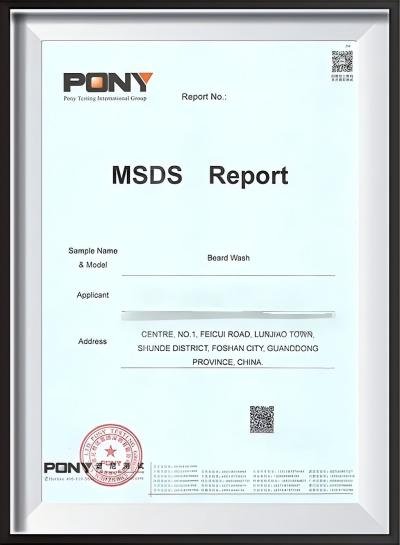
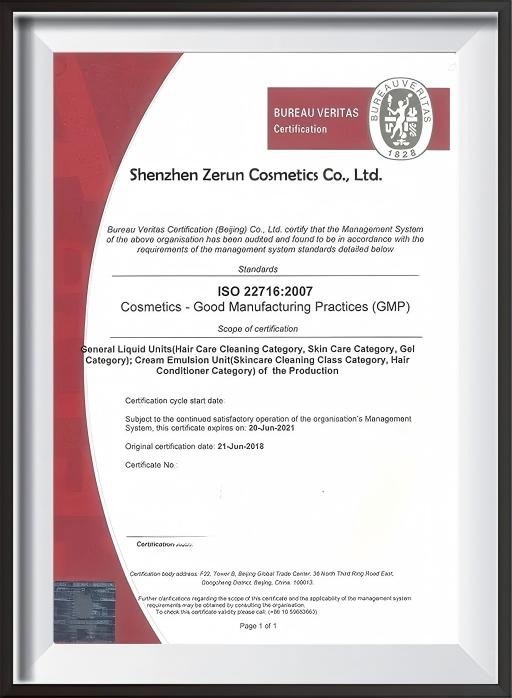
- Certificate PDF plus scope page (not only the cover page)
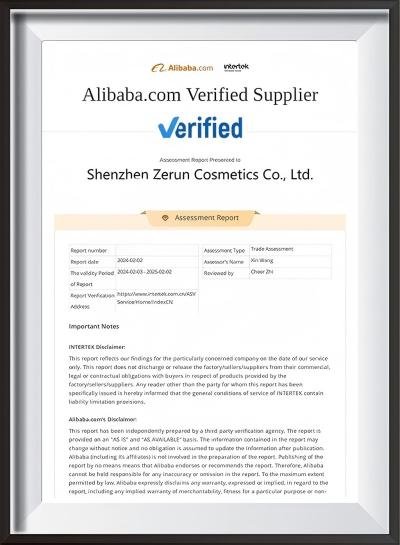
- Audited site address and legal entity name (must match the manufacturing site and contract party)
- Latest audit date and validity period
- A brief audit summary or evidence of corrective actions (redacted is fine)
Compliance dossier
A compliance dossier is your “route readiness” proof: it shows the product can be documented and defended for a specific market route (US/EU/UK, etc.), including labeling logic and claim boundaries. Many projects fail not because the factory can’t make the product, but because the documentation and labeling workflow is missing or inconsistent.
Ask for:
- Dossier document index for your route (what they provide vs what your RP/brand must hold)
- INCI/label review checklist and a label compliance workflow outline
- Claims boundary notes (what they will/won’t support without specific evidence)
- A standard document index they routinely provide (COA/SDS/spec sheet list)
Tests
Tests prove what certificates cannot: how the actual formula behaves over time and under realistic conditions, and whether it stays micro-safe and packaging-compatible. Treat testing as part of the selection decision—not a “later step”—because your risk and timeline are set here.
Ask for:
- Stability plan outline (timepoints, conditions, and pass/fail logic)
- Micro testing approach (release limits, frequency, and lab standards)
- Preservative challenge testing plan when relevant to the format and risk
- Packaging compatibility plan, especially for pumps/sprayers/liners and active-heavy formulas
Records & controls
Records show daily execution. If you want sample-to-bulk consistency, this is the proof type that matters most after the baseline system. Batch records, QC release decisions, traceability examples, and change control templates reveal whether the factory can scale without “same INCI, different reality.”
Ask for:
- One redacted batch record page showing timestamps and line clearance steps
- A COA sample tied to a release spec (not just “passed”)
- A traceability example (raw lot → finished batch → shipment), redacted
- Change-control template or a redacted example showing how changes are approved and logged
Which certifications are truly baseline?
Start with manufacturing control baselines, then add channel-driven audits and positioning certifications only when they match your route.
Baseline (most skincare projects)
- ISO 22716 (cosmetics GMP guideline): a core benchmark for cosmetics production, control, storage, and shipment practices.
- ISO 9001 (quality management): helpful for disciplined change control, complaint handling, and supplier management (especially when you scale)
Channel add-ons (often requested by large retail or enterprise procurement)
- Social/compliance audits (commonly requested by certain retailers/distributors): SMETA / BSCI-style programs (treat these as “customer requirement” items, not universal must-haves)
- Environmental/occupational management systems: ISO 14001 / ISO 45001 (common in large procurement checklists)
Positioning certifications (only when your brand story requires them)
- Natural/organic standards (e.g., COSMOS-standard paths)
- Certification bodies such as ECOCERT (scope depends on what you certify)
- Supply-chain standards (e.g., RSPO for palm-derived sourcing) when your buyer or brand policy requires it
Mini tool: “Priority Map” (short and visual)
P0 (baseline): ISO 22716 + a real QC/test pack
P1 (route/channel): the dossiers and audits your market/channel will actually ask for
P2 (positioning): natural/vegan/sustainability claims backed by standard + evidence


How do you verify GMP claims?
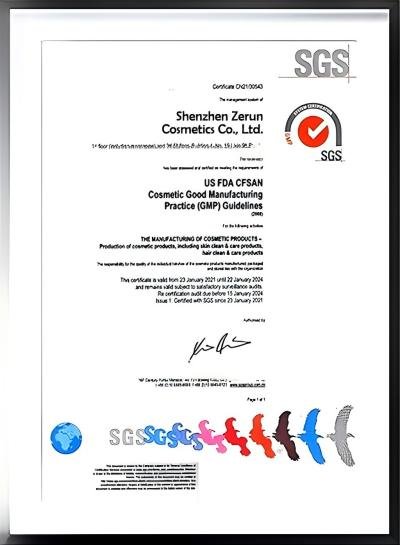
If a factory claims “GMP” or “ISO 22716,” don’t stop at the certificate cover page. Verify the audit scope and site match your actual production, check recency and corrective actions, then request one or two redacted record samples (batch/QC/traceability) to confirm daily execution is real.
The “60-second certificate verification” checklist (10 items, keep strict)
- Does the certificate legal entity match the contract entity?
- Does the audited site address match the production site you will use?
- Does the audit scope cover your needed processes (manufacturing + filling + labeling + warehousing)?
- Is the certificate current (valid dates) and issued by a credible body?
- Is it a full audit (not only training/attendance documentation)?
- Were there non-conformities (NCs), and can they share a CAPA summary?
- Is key work outsourced (filling, labeling, cartons) and clearly disclosed?
- Can they show one anonymized batch record page (with timestamps/line clearance)?
- Can they show a QC release example (spec + COA style output)?
- Can they show a change-control example (how formula/packaging changes are logged and approved)?
Red flags (keep it punchy)
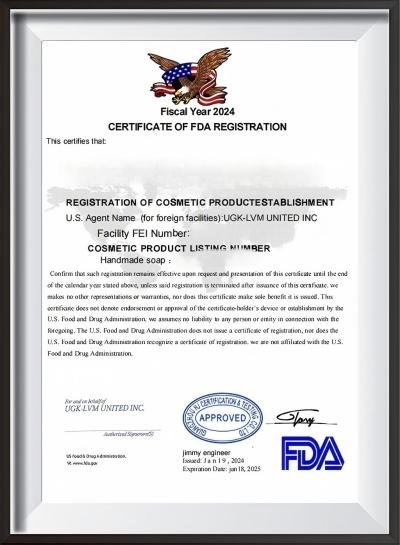
• “FDA certified GMP” wording for cosmetics is a common misunderstanding; the U.S. Food and Drug Administration repeatedly explains that cosmetics are not FDA-approved like drugs (with limited exceptions).
• Certificate has no scope page or site address.
• Factory refuses to share any anonymized record samples.
What proof changes by market?
Different markets don’t just change paperwork—they change what proof buyers expect before you launch. Use the market route to decide the minimum dossier and testing mindset you must have, then keep claims within what your evidence can support.
What to request from the OEM/ODM
- A route document index (what they provide vs what you must hold)
- Label/INCI review checklist
- Claims boundary notes (what they won’t support)
- Stability plan outline (timepoints/conditions)
- Micro control approach (release limits + frequency)
- One execution proof sample: redacted COA or batch record page (to show daily discipline)

Claim level: how deep proof needs to go
- Low: basic cosmetic benefits → basic stability plan + micro limits + clean label checks.
- Medium: performance-forward cosmetic claims → tighter QC anchors (pH/viscosity/appearance/odor) + clearer claims boundary notes.
- High: medical-sounding promises → high risk of crossing the line; freeze claims until your compliance path is confirmed.

Market route: what changes first
- United States: Buyers typically focus on disciplined manufacturing control—QC release specs, traceability, complaint handling, and a label-review workflow that avoids “approval-style” language.
- European Union: Expect a more dossier-driven workflow. You’ll need clearer documentation readiness plus stability/micro control thinking before artwork and launch planning.
- United Kingdom: Treat it as its own workflow lane—confirm the responsible party / labeling process early so you don’t rework packaging later.

How do you compare factories fast?
Use one RFI + one scoring grid so every factory answers the same questions with the same attachments.

Section D — Label/claim readiness
D1) Do you offer INCI/label review support for our target market route?
Required attachment: label review checklist (1 page)
D2) What claim substantiation approach do you follow (what you will/won’t support)?
Required attachment: claims boundary list (1 page)
D3) What documents can you provide routinely (SDS/COA/spec sheets/allergen statements as applicable)?
Required attachment: standard document index (1 page)

Section C — Traceability & records
C1) Can you provide anonymized batch record pages showing timestamps and line clearance?
Required attachment: redacted batch record sample
C2) How do you trace raw materials to lots and finished goods to shipments?
Required attachment: traceability example (redacted)
C3) What is your retention sample policy and complaint investigation workflow?
Required attachment: complaint SOP summary (1 page)

Section B — QC release & test gates
B1) What are your standard QC release specs (pH/viscosity/appearance/odor/micro limits) for this format?
Required attachment: sample spec sheet + COA sample
B2) What stability and micro tests do you recommend for this product risk level?
Required attachment: testing menu + sample report table of contents
B3) How do you handle deviations, holds, and rework decisions?
Required attachment: deviation/CAPA workflow summary (1 page)

Section A — Audit scope & site control
A1) Which legal entity and site address will manufacture and fill the product?
Required attachment: certificate scope page + site address proof
A2) What processes are in scope (manufacture, filling, labeling, warehousing)? What is outsourced?
Required attachment: process flow or capability statement (1 page)
A3) What is your change-control process for formula/packaging/process updates?
Required attachment: change-control template (redacted)
What proof pack prevents bulk drift?
Bulk drift happens when sample approval isn’t tied to measurable QC anchors and controllable changes. A decision-grade proof pack locks what will be made (specs), how it will be made (records), and how it will be validated (tests + route documents), so scale-up stays consistent and disputes are prevented.
Product identity & QC targets
Core (request these)
- Formula ID sheet: target INCI list + key concentration ranges (as applicable) + formula version/date
- Finished product spec with tolerances: pH / viscosity / appearance / odor (range + pass/fail)
- Micro limits + release rule: limits + who releases + what happens if borderline
- Packaging BOM/spec: material + pump/sprayer model + liner/wiper/orifice (if applicable)
- Label copy draft + claims boundary notes (what you will say / won’t say)
- “Golden sample” anchor: which approved sample is the reference (date/lot) + match points
Optional (nice-to-have)
- Sampling gates acceptance criteria (Sample → Pilot → First PO)
- Top 5 drift risks + triggers (separation, odor drift, clogging, etc.)

Raw material compliance inputs
Core (request these)
- COA for key raw materials (recent lot example)
- SDS for key raws (latest version)
- Fragrance/allergen statement (if applicable)
- Restricted substance check aligned to your route (supplier declaration format is fine)
- Key actives: supplier/grade/lot traceability note
- Raw material change notice rule: what counts as “material change” + re-test trigger
Optional
- Heavy metals / impurities statement (only if relevant to your positioning/route)
- Vegan/cruelty/palm/non-GMO declarations (only if you plan to claim them)

Manufacturing & traceability records
Core (request these)
- Process spec / master process summary (order of addition + key temps/times)
- Redacted batch record sample page (timestamps + sign-offs + in-process checks)
- QC release example (COA-style): spec vs actual + release decision
- Traceability example: raw lot → bulk batch → filled lot → shipment
- Change-control template (redacted)
- Retention sample policy (how long, conditions, quantity per lot)
Optional
- Deviation/CAPA example (redacted)
- Line clearance / sanitation verification example

Testing + label/claim readiness
Core (request these)
- Stability plan outline: conditions + timepoints + pass/fail logic
- Micro testing plan: release limits + test frequency + lab method standard
- Preservative challenge testing plan (when relevant to the format/risk)
- Packaging compatibility plan (especially pumps/sprayers)
- Route label review checklist (required elements + approval workflow)
- Claim boundary list: “safe cosmetic language” vs “do not claim” + evidence needed for any stronger statement
Optional
- Shipping stress / leakage mini-plan (e-commerce focused)
- Shelf-life statement basis (how expiry/PAO is decided)

Frequently Asked Questions about Skincare OEM/ODM Certifications
Buyers usually get stuck in three places: whether “GMP” claims are meaningful, how to verify scope fast, and what to request besides certificates so sampling doesn’t drift at scale. These quick answers keep decisions practical.
Q1: Are cosmetics “FDA approved” in the US?
- Cosmetics generally do not require FDA premarket approval (with limited exceptions such as certain color additives).
- Focus on MoCRA readiness, labeling discipline, and proof of QC/traceability instead of “approval” language.
- If a supplier markets “FDA approved cosmetics,” treat it as a red flag and ask for documentation.
Q2: Is “FDA certified GMP” a real certification for cosmetics?
- Be cautious with that phrase; ask which standard was audited and what the scope covers.
- Request the scope page, site address, and a redacted record sample.
- Prioritize evidence of QC release and change control over slogans.
Q3: Is ISO 22716 enough on its own?
- ISO 22716 is a strong baseline guideline for cosmetics GMP practice, but it doesn’t replace product-specific tests.
- Always pair it with stability/micro/compatibility evidence aligned to your SKU risk.
- Ask for record samples to prove it’s executed daily.
Q4: What matters more than certificates when choosing an OEM/ODM?
- Clear release specs + COA examples tied to your format.
- A test plan that matches your route and claim intensity.
- Traceability + change control that prevents silent drift.
Q5: If I sell in the EU, what is the one document concept I must understand?
- The Product Information File (PIF) obligation is central in the EU framework.
- Your partner should support PIF readiness inputs (specs, safety-related data, labeling workflow).
- Treat it as an ongoing file, not a one-time PDF.
Q6: If I sell in Great Britain, what changes compared to the EU?
- GB requires a UK Responsible Person with a UK established address.
- Confirm labeling and notification workflow alignment for GB.
- Don’t assume your EU process automatically covers GB details.
Q7: What’s the fastest way to spot a “logo wall” supplier?
- They show certificates but can’t share any redacted batch/QC/traceability samples.
- Their scope is vague or doesn’t match your needed processes/site.
- They avoid discussing change-control and test gates.
Q8: What should I do before approving samples?
- Lock measurable QC anchors (odor/viscosity/pH/appearance/micro limits).
- Collect the proof pack first, then sample against those anchors.
- Define change-control rules before scaling.
Make A Sample First?
If you have your own formula, packaging idea, logo artwork, or even just a concept, please share the details of your project requirements, including preferred product type, ingredients, scent, and customization needs. We’re excited to help you bring your personal care product ideas to life through our sample development process.
How will Zerun Cosmetic support your certification-backed OEM/ODM decision?





- Our team will answer your inquiries within 12 hours.
- Your information will be kept strictly confidential.
We start from your reality:
- Confirm target market route(s), channel, and claim boundaries (what you will say vs won’t say).
- Translate that into a short “baseline proof” list (what must exist before sampling).
- Build a comparable supplier checklist so 3–5 factories answer the same questions.
We co-develop formulas, formats and routines:
- Turn your positioning into a clear formula brief, key actives direction, and measurable QC targets.
- Recommend packaging directions that match viscosity, pump/sprayer behavior, and leakage risk.
- Define the “golden sample” and the match points that bulk must follow.
We help plan claims, tests and documentation:
- Prepare a practical Proof Pack request (QC targets, raw inputs, records, testing + label readiness).
- Align stability/micro/compatibility testing to product risk and your launch timeline.
- Set up label copy guardrails and an approval workflow to reduce rework later.
If you already have reference products or ideas, share:
- Product links/photos, target textures, fragrance style, and pricing lane.
- Any existing certificates, spec sheets, COAs, or test reports (even if incomplete).
- Your current supplier list—so gaps and red flags can be spotted quickly.