Skip to content
Witch Hazel Ingredient Custom Cosmetics Manufacturer
Discover witch hazel’s soothing, pore-refining, and oil-balancing power. Learn recommended pH ranges, % use levels and extract grades, product formats, stabilization strategies, compatible co-actives, packaging/MOQ, and private-label options to build high-performing skincare for global markets.
What Is Witch Hazel

Witch Hazel (Hamamelis virginiana) is a botanical astringent rich in tannins, proanthocyanidins, and flavonoids that deliver soothing, oil-control, and pore-refining benefits. Cosmetic grades include alcohol-free distillates/hydrosols and glycerin/propylene glycol extracts standardized for consistent color, odor, and performance.
INCI: Hamamelis Virginiana (Witch Hazel) Water / Hamamelis Virginiana (Witch Hazel) Extract · CAS (typical): varies by part/solvent; suppliers provide grade-specific CAS on COA. (EC CosIng, Wikipedia)
Sources: Steam-distilled hydrosol from twigs/leaf/bark or solvent extracts (glycerin/PG); low-alcohol/ alcohol-free options for sensitive-skin toners and serums.
Water solubility: Freely water-soluble; ideal for toners, essences/mists, gel-creams, lotions, and scalp tonics.
pH flexibility: Works in mildly acidic to neutral systems (~4.5–6.5). To maximize comfort, use alcohol-free grades and avoid prolonged high heat during batching.
Witch Hazel Benefits: Mechanisms, Results & OEM Formulation
See how witch hazel delivers soothing, pore-refining, oil balance, post-shave/after-sun comfort, and scalp-calming—plus recommended % and testing for private-label launches.

Soothing & Redness Relief
Mechanism: Polyphenols/tannins modulate irritant pathways and provide mild vasoconstrictive action.
Benefits: Redness looks reduced, sting/tight feel eased after cleansing.
Importance: A gentle calm-and-comfort anchor for daily toners.
Use level & testing: 2–10% distillate (alcohol-free) in leave-ons; track Δa*, stinging panels, standardized photography.
Good pairings: Panthenol, allantoin, centella actives, beta-glucan.
Pore-Refining & Texture Smoothing
Mechanism: Astringent tannins tighten the look of pores and improve micro-surface regularity.
Benefits: Refined appearance with smoother makeup laydown.
Importance: Strong consumer demand for “pore-minimizing” claims.
Use level & testing: 5–15% distillate or 0.2–1% extract in gels/toners; pore imaging (VISIA/Canfield), profilometry.
Good pairings: Niacinamide (2–5%), light film formers, low-% AHAs (mandelic/lactic) for optical smoothness.

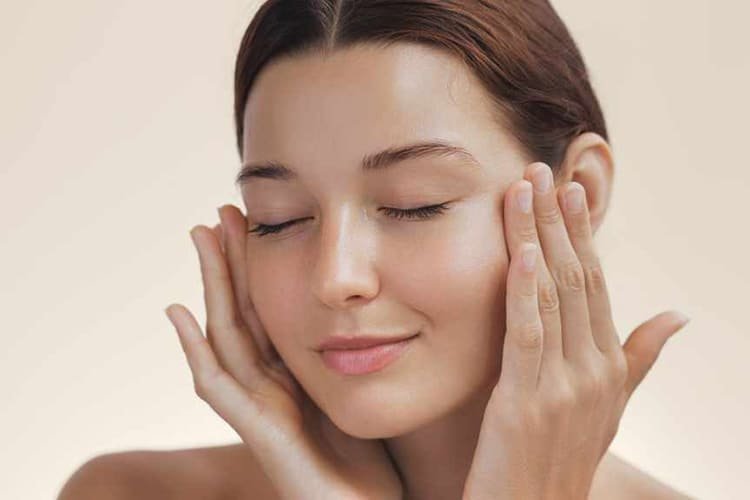
Oil Control & Shine Reduction
Mechanism: Balances surface sebum with mild astringency and keratinocyte micro-tightening.
Benefits: Less shine, fresher feel without overdrying.
Importance: Core for combination/oily lines and hot-weather routines.
Use level & testing: 5–10% distillate in mists/fluids; validate Sebumeter, gloss reduction, consumer panels.
Good pairings: Zinc PCA, green-tea polyphenols, salicylic acid 0.5–1% (buffered).
Post-Shave & After-Sun Comfort
Mechanism: Cooling hydrosol matrix + polyphenols help calm superficial irritation.
Benefits: Quick comfort return, smoother post-shave feel.
Importance: Expands into barber/athleisure and summer SKUs.
Use level & testing: 10–20% distillate (alcohol-free/low-alcohol) in gels/splashes; Δa*, tactile grading, comfort diaries.
Good pairings: Aloe vera, bisabolol, panthenol, menthyl lactate (low %).

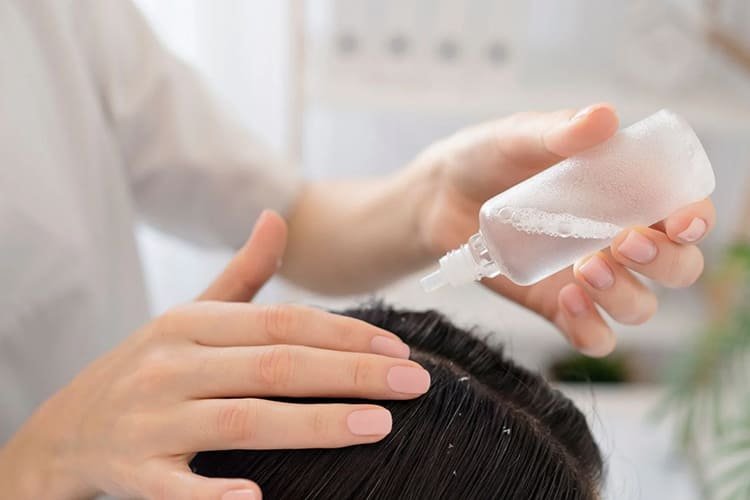
Scalp-Calming & Clarifying
Mechanism: Film-forming hydration plus astringency improves root freshness and flake appearance when paired with supportive actives.
Benefits: Itch relief, lighter roots, easier day-2 styling.
Importance: Bridges face care into scalp serums and tonics.
Use level & testing: 2–8% distillate in leave-ons; flake reduction, itch scales, time-to-grease; combing force for rinse-offs.
Good pairings: Niacinamide, zinc PCA, piroctone olamine, lightweight esters/silicones.
Best Product Formats for Witch Hazel
Witch hazel fits leave-on and rinse-off formats for pore-refining, oil control, soothing, post-shave, and scalp care. It performs best in pH 4.5–6.5 systems and is typically dosed in the water phase.

Witch Hazel Toner

Pore Minimizer Serum

Firming Eye Cream

Witch Hazel Spray

Anti Acne Serum

Witch Hazel Cleanser
Ready to Launch Your Witch Hazel Line?
Talk to our formulation experts today to receive a formula proposal within 48 hours—including recommended percentages, base selection, co-actives, and stability/micro plans. We’ll help you deliver validated claims, premium sensorials, custom packaging, and compliant documentation.
Witch Hazel Concentration Options | Custom Distillate 2–20% for OEM/ODM
Choose the right witch hazel loading for your claim, pH-adjusted base, and format. We guide grade selection, preservation, and stability—supported by testing and documentation for safe, compliant launches.
1. Concentration Range
Typical usage:
- daily soothing/mists: 2–5%
- oil control products: 5–10%
- pore-refining toner/pads: 8–15%
- post-shave/after-sun gels: 10–20%
Formulate at pH 4.5–6.5; avoid prolonged high heat to preserve polyphenols and color. Prefer alcohol-free grades for sensitive lines.


2. Typical Use Levels
| Target Use Case | Witch Hazel % | Best Formats | pH Window | Proof & QA |
|---|---|---|---|---|
| Daily soothing & freshness | Distillate 2–5% or Extract 0.2–0.5% | essence, mist, toner | 5.0–6.5 | Δa* redness, stinging panels, photo grading |
| Pore refining & texture | Distillate 8–15% or Extract 0.3–0.8% | toner, gel-cream, pads | 4.8–6.0 | Pore imaging (VISIA/Canfield), profilometry |
| Oil control & shine reduction | Distillate 5–10% + optional zinc PCA | fluid lotion, mist | 4.8–6.0 | Sebumeter, glossmeter, consumer panels |
| Post-shave / after-sun comfort | Distillate 10–20% (alcohol-free/low-alcohol) | splash/gel, hydrogel | 5.0–6.2 | Δa*, tactile grading, comfort diaries |
| Sensitive-skin toner (gentle) | Distillate 2–4% (alcohol-free) | toner, essence | 5.2–6.5 | Stinging tests, tolerance panels |
| Scalp clarifying & comfort | Distillate 2–8% or Extract 0.2–0.6% | scalp tonic, shampoo | 5.0–5.8 | Flake-reduction scoring, itch scales, time-to-grease |
*Final percentage depends on target claim, skin type, and regional compliance.
Witch Hazel Formulation & Actives Ingredient Customization
Build formulas around witch hazel for soothing, pore refinement, oil balance, post-shave comfort, and scalp clarifying, complemented by niacinamide, zinc PCA, panthenol, aloe/centella, beta-glucan, and light film formers. We provide stability + ISO 11930 testing, flexible MOQs, and full OEM/ODM documentation.
1. Formulation Systems
2. Ingredient Customization Case

Pore-Refining Toner
Benefits: Tightens the look of pores, calms redness, leaves a fresh, non-sticky finish.
Actives: Witch Hazel Distillate 8% + Niacinamide 3% + Beta-glucan 0.20% + GLDA 0.05% + Glycerin 4% (pH 5.5).
Oil-Control Gel-Cream
Benefits: Shine reduction with smooth makeup laydown; comfortable all-day wear.
Actives: Distillate 7% + Zinc PCA 0.5% + Niacinamide 4% + Green-Tea Extract 0.15% + Light Esters 4% (pH 5.2).

Post-Shave Cooling Gel
Benefits: Rapid comfort and reduced redness look after shaving or sun exposure.
Actives: Distillate 15% (AF/low-alc) + Aloe 10% + Panthenol 2% + Allantoin 0.30% + Menthyl Lactate 0.08% (pH 5.6).
Sensitive-Skin Essence
Benefits: Gentle soothing for easily irritated skin; layers under SPF/actives.
Actives: Distillate 4% + Centella Extract 1% + Panthenol 1% + Allantoin 0.20% + Glycerin 4% (pH 5.8).
Scalp Clarifying Tonic
Benefits: Itch relief, lighter roots, improved day-2 feel.
Actives: Distillate 5% + Niacinamide 2% + Zinc PCA 0.3% + Piroctone Olamine 0.25% (opt.) + Betaine 0.5% (pH 5.3).

Pore-Perfecting Pads
Benefits: On-the-go refresh + refine with controlled gentle resurfacing.
Actives: Distillate 10% + Mandelic Acid 2% (opt.) + Sodium Lactate 1% + Glycerin 3% + EDTA 0.05% (pH 5.0). Test substrate compatibility, seal integrity, and preservative efficacy.
Witch Hazel Toners Global Trends & Regional Analysis
The rising preference for alcohol-free skincare products is a key driver of the Witch Hazel Toners Market. Consumers are increasingly cautious about harsh formulations that strip natural oils, opting instead for gentle, soothing alternatives. Witch hazel toners formulated without alcohol cater to this demand by balancing oil control with hydration, making them suitable for sensitive and acne-prone skin.
1. Witch Hazel Toners Global Trends
The Witch Hazel Toners Market is expected to record a valuation of USD 1,052.1 million in 2025 and USD 3,102.1 million in 2035, with an increase of USD 2,050 million, representing a growth of nearly 193% over the decade.


Rising Preference for Alcohol-Free and Gentle Skincare
Consumer demand for alcohol-free skincare has accelerated growth in witch hazel toners. Many buyers are increasingly aware of the irritation and dryness associated with alcohol-based formulations, opting instead for gentle, soothing options. Witch hazel toners align with this trend by offering oil control and pore-minimizing benefits while maintaining skin hydration. Dermatologist endorsements and the popularity of clean-label claims have further strengthened trust. This driver is particularly strong in North America and Europe, where sensitive-skin products dominate retail shelves, and in Asia, where multifunctional toners cater to diverse skin concerns.
Oil Control Leading in Market Share
The oil control segment is forecasted to hold 47.8% of the market share in 2025, driven by its effectiveness in addressing excess sebum, acne, and blemishesconcerns that dominate skincare routines for younger and combination-skin consumers. Oil-control witch hazel toners are widely adopted for their astringent properties, which help tighten pores and reduce shine without stripping the skin barrier. Their growth is bolstered by rising demand across Asia-Pacific, where humid climates increase oil-control needs, and by product innovation in pads and mists for convenient daily use. With increasing consumer awareness of preventive skincare, the oil control function is expected to maintain a central role in the witch hazel toners market.

2. Witch Hazel Toners Regional Analysis
The global Witch Hazel Toners Market demonstrates diverse adoption patterns across regions, influenced by cultural preferences, skincare routines, and product innovation. Asia-Pacific emerges as the fastest-growing region, with India (17.7% CAGR) and China (15.8% CAGR) driving momentum.
In Europe, the UK (10.2% CAGR) and Germany (7.7% CAGR) reflect strong demand for fragrance-free and hypoallergenic variants, supported by regulatory emphasis on clean-label transparency and sustainable packaging. European consumers also drive premiumization, favoring hybrid witch hazel toners blended with modern actives like niacinamide.
In North America, the USA (6.6% CAGR) records steady growth, anchored by heritage brands such as Thayers and Dickinson’s, but facing intense competition from actives-driven alternatives. Demand is concentrated in alcohol-free and sensitive-skin formulations, with mass retail and drugstores remaining dominant. The overall global outlook reflects a split between mature markets prioritizing gentle, clinically backed claims and emerging economies driving growth through natural, affordable, and multifunctional formulations.

More witch hazel product customization instructions and FAQs
Q: What skin types is Witch Hazel suitable for?
A: Witch hazel works for normal, combination, and oily/acne-prone skin thanks to its astringent, pore-refining properties. Sensitive or dry skin can also use it when you choose alcohol-free distillates and buffer with humectants (e.g., glycerin, panthenol, beta-glucan). Always patch test, especially near the eyes.
Q: Alcohol-free vs. alcohol-containing witch hazel—what’s the difference?
A: Alcohol-free distillate/hydrosol offers gentler soothing with less sting—ideal for daily toners and sensitive lines. Low-alcohol grades give a stronger quick-tightening, refreshing feel and suit post-shave/after-sun concepts. For most skincare, we recommend alcohol-free to reduce dryness and improve compatibility with leave-on actives.
Q: What concentration should I use for different goals?
A: Typical levels: 2–5% distillate (daily soothing/mists), 5–10% (oil control), 8–15% (pore-refining toners/pads), 10–20% (post-shave/after-sun gels). For standardized glycerin/PG extracts, use 0.2–1.0% depending on supplier strength. Formulate at pH 4.5–6.5 and avoid prolonged high heat to protect polyphenols and color.
Q: Can Witch Hazel be combined with Niacinamide, BHAs/AHAs, or Zinc PCA?
A: Yes. It pairs well with niacinamide (2–5%) for pore + redness care, with salicylic acid 0.5–1% or mandelic/lactic (low%) for clarity/texture, and with zinc PCA 0.3–0.5% for shine control. Keep formulas alcohol-free for sensitive users, target pH ~5–6, and add humectants to minimize dryness.
Q: Will Witch Hazel dry or irritate skin—and how can I prevent that?
A: Dryness is typically linked to high ethanol or overuse. Choose alcohol-free grades, include glycerin 3–5% / panthenol 1–2% / beta-glucan 0.2–0.3%, and keep pH 5.0–6.0. Use chelators (EDTA/GLDA), limit heat, and pack in UV-safe bottles to control color/odor drift.
Launch Your Custom Cosmetics Line Now!