Skip to content
Zinc Oxide Ingredient Custom Cosmetics Manufacturer
Discover zinc oxide’s mineral broad-spectrum UV defense, photostability, and sensitive-skin comfort for daily sunscreens, tinted SPF, baby care, and mattifying hybrids. See use levels (≈5–25%), coating/dispersion choices, white-cast mitigation, packaging, MOQ, and OEM/ODM test plans for fast, compliant launches.
What Is Zinc Oxide

Zinc oxide (ZnO) is an inorganic mineral UV filter providing true broad-spectrum (UVB + UVA) protection with excellent photostability and low irritation. Engineering options include non-nano and nano particle sizes plus surface-coated grades (e.g., alumina/silica/triethoxycaprylylsilane) to improve dispersion, aesthetics, and formula compatibility across emulsions, sticks, and anhydrous oils.
INCI: Zinc Oxide · CAS: 1314-13-2 · white, water-insoluble powder; available as untreated or coated, non-nano or nano dispersions. (EC Cosing, Wikipedia)
Source: Refined mineral/industrial synthesis with cosmetic-grade controls (metals/bioburden/particle distribution).
Particle & Phase: Supplied as dry powders or pre-dispersions (oil/silicone/water). Particle morphology and coating dictate SPF efficiency, feel, and whiteness.
pH & Stability: Chemically robust across cosmetic pH; choose emulsifiers/chelators to avoid fatty-acid soap formation and maintain viscosity/color.
Zinc Oxide Benefits: Mechanisms, Results & OEM Formulation
See how zinc oxide enables broad-spectrum SPF, sensitive-skin comfort, white-cast mitigation, mattifying/soothing effects, and durable films—with recommended %, testing, and pairings for private-label development.

Broad-Spectrum UV Defense & Photostability
Mechanism: Mineral scattering + absorption across UVB/UVA with negligible photodegradation.
Benefits: Reliable SPF/UVA-PF with predictable in-use stability.
Importance: Foundation of daily, sport, and pediatric sunscreens.
Use level & testing: Typically 10–25% ZnO depending on format/SPF target. Validate ISO 24444 SPF, ISO 24443 UVA-PF/CW (≥370 nm), and in-pack assay; profile particle size (D50) and dispersion fineness.
Good pairings: Film formers (Acrylates systems), silicone elastomers, hydrogenated polyisobutene, chelators/antioxidants.
Sensitive-Skin Mineral Comfort
Mechanism: Inorganic, non-penetrating particles lower sting risk; non-acidic system suitable for reactive users.
Benefits: Comfortable daily wear with reduced redness triggers.
Importance: Key for baby, post-procedure, and retinoid users.
Use level & testing: 8–20% in mild emulsions; run HRIPT, stinging panels, TEWL/redness (a)*, and fragrance-allergen checks.
Good pairings: Panthenol, bisabolol, beta-glucan, ceramides/cholesterol/FA.


White-Cast Minimization & Aesthetics Engineering
Mechanism: Surface coatings, optimized PSD, and pigment/tint blending reduce visible scattering in the VNIR range.
Benefits: More transparent finish, better tone flexibility.
Importance: Increases adoption for deeper skin tones and makeup wearers.
Use level & testing: Select coated, narrow-PSD ZnO; add iron oxides/mica. Assess ΔE (Lab)*, gloss, transfer, and pilling under makeup.
Good pairings: Iron oxides, micas, spherical silica/PMMQ, low-tack esters/silicones.
Mattifying, Soothing & Antimicrobial Support
Mechanism: ZnO offers gentle astringent/adsorptive effects and supports a calmer skin feel; aids shine control in hybrid SPF-moisturizers.
Benefits: Soft-matte finish with comfort—ideal for combination/oily skin.
Importance: Bridges skincare and sun care in daily routines.
Use level & testing: 5–12% in day creams/fluids. Track Sebumeter, gloss units, comfort diaries, and 8-hr shine control.
Good pairings: Niacinamide, zinc PCA, porous silica, lightweight film formers.


Water/Sweat Resistance & Film Durability
Mechanism: Hydrophobic coatings + film formers enhance cohesion and reduce wash-off.
Benefits: Maintains protection during activity and humidity.
Importance: Critical for sport/outdoor and beach SKUs.
Use level & testing: Choose hydrophobic grades; verify ISO 16217/18861 water-resistance, sweat tests, rub-off, and salt-spray.
Good pairings: Alkyl acrylates, polyurethanes, waxes, volatile silicones; confirm valve/pump compatibility.
Best Product Formats for Zinc Oxide
Explore how zinc oxide (ZnO) powers formulas—from sheer daily fluids to water-resistant sticks—balancing broad-spectrum UV, sensitive-skin comfort, mattifying, and tint flexibility with smart coatings and dispersion systems.

mineral sunscreen

zinc oxide sunscreen

sunscreen stick

sunscreen for sensitive skin

sunscreen gel based

zinc oxide cream for face
Ready to Launch Your Zinc Oxide Line?
Talk to our formulation experts today and receive a 48-hour proposal with ZnO %, particle size, surface coating, dispersion medium, film-former strategy, tint map, and white-cast mitigation plan. We deliver sampling, ISO 24444/24443 test roadmaps, ISO 16217/18861 water-resistance plans, stability & micro (ISO 11930), and regulatory-ready tech packs.
Zinc Oxide Concentration Options | Custom for OEM/ODM
Choose the right zinc oxide pathway for daily mineral SPF, tinted inclusivity, sport water-resistance, and pediatric comfort. We align % with coating/PSD, dispersion quality, film former, preservation, and UV-safe, low-OTR packaging—and deliver testing dossiers for safe, compliant launches.
1. Concentration Range
Typical cosmetic levels:
5–12%: Sheer daily mineral moisturizers/tints
15–20%: Daily high-protection mineral SPF
18–25%: Sport/baby/water-resistant formats


2. Typical Use Levels
| Target Use Case | ZnO Type & % | Best Formats | pH Window | Proof & QA |
|---|---|---|---|---|
| Sheer daily mineral | Coated ZnO 8–15% (narrow PSD) | fluid, gel-cream | System-dep. | ISO 24444 SPF, spreadability, gloss/ΔE (white-cast) |
| High-protection daily | Coated ZnO 15–20% + film former | gel-cream, lotion | System-dep. | ISO 24444, ISO 24443 UVA-PF/CW ≥370 nm, pilling under makeup |
| Sport/water-resistant | Hydrophobic-coated ZnO 18–25% | lotion, stick | System-dep. | ISO 16217/18861 water-resistance, rub-off, sweat tests |
| Tinted inclusivity | ZnO 12–18% + Iron Oxides | tint/primer, fluid | System-dep. | *ΔE(Lab)**, shade range mapping, transfer resistance |
| Baby/sensitive | ZnO 10–20% (mild base) | cream, balm | System-dep. | HRIPT, stinging panel, fragrance-allergen compliance |
*Final percentage depends on target claim, skin type, and regional compliance.
Zinc Oxide Formulation & Actives Ingredient Customization
Build formulas around zinc oxide for broad-spectrum UV, sensitive comfort, white-cast mitigation, and durable films. Pair with iron oxides/micas for tone, silicone or hydrocarbon film formers for SPF efficiency, spherical silica/PMSQ for glide/blur, and panthenol/bisabolol/ceramides for comfort. Specify coating/PSD, optimize dispersion energy, and choose UV-shielded, low-OTR airless with corrosion-safe contacts.
1. Formulation Systems
2. Ingredient Customization Case

Daily Sheer Mineral SPF
Benefits: Lightweight, non-greasy protection with reduced cast and seamless layering under makeup for everyday wear.
Actives: ZnO 12–15% (coated) + Silicone elastomer + Low-tack esters + Chelator; pH system-dependent.
High-Protection SPF 50 Fluid
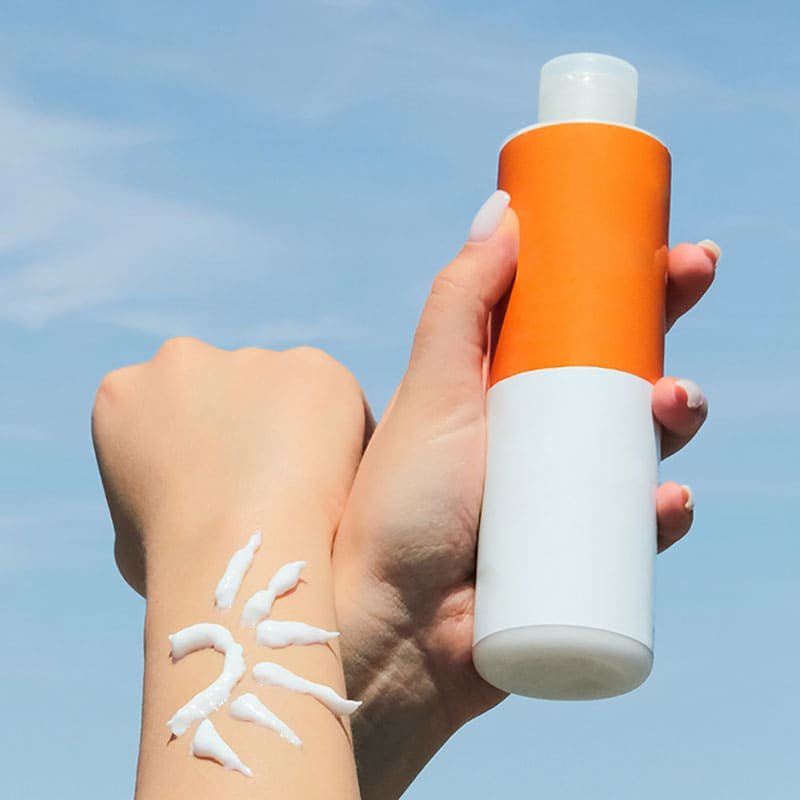
Benefits: High SPF/UVA performance with elegant slip and minimal pilling, maintaining comfort across humid climates.
Actives: ZnO 18–20% + Film former (acrylates) + Spherical silica + Antioxidants; pH system-dependent.

Tinted Mineral SPF
Benefits: Visibly reduces cast, evens tone, and improves camera readiness while preserving true mineral protection.
Actives: ZnO 12–18% + Iron oxides/mica + PMSQ + Low-tack esters; pH system-dependent.

Baby/Sensitive Mineral Cream
Benefits: Gentle, fragrance-low protection that calms redness triggers and supports barrier comfort for delicate skin.
Actives: ZnO 10–20% + Panthenol + Ceramides/Cholesterol/FA + Bisabolol; pH system-dependent.

Sport Water-Resistant Lotion
Benefits: Durable film resists sweat and water with reduced rub-off, keeping protection steady during outdoor activity.
Actives: ZnO 20–25% (hydrophobic) + Polyurethane/Alkyl acrylates + Waxes + Antioxidant; pH system-dependent.

Mineral Stick / Lip SPF
Benefits: Precise, mess-free application with high coverage on small areas and comfortable wear on lips and eye zone.
Actives: ZnO 18–25% + Wax/ester blend + Antioxidant + Flavor-safe profile; anhydrous / pH N/A.
Zinc Oxide Global Trends & Regional Analysis
Zinc Oxide is a white, powdery mineral with a long history of use as sun protection. It is used in a wide range of cosmetics and personal care products, including makeup, nail products, baby lotions, bath soaps, and foot powders. Zinc oxide is also used in skin protectants, such as diaper rash ointments and sunscreen products.
1. Zinc Oxide Global Trends
The Global Zinc Oxide Market size is expected to be worth around USD 16.7 billion by 2034, from USD 9.5 billion in 2024, growing at a CAGR of 5.8% during the forecast period from 2025 to 2034.


Zinc Oxide Application Insights
Rubber held a dominant market position, capturing more than a 43.2% share in the global Zinc Oxide market. Zinc oxide is a key material in rubber production, mainly used to enhance durability, elasticity, and heat resistance. The tire industry, in particular, heavily relies on zinc oxide for improving performance and extending product life.
As global vehicle production and tire replacement needs rise, the demand for zinc oxide from the rubber sector has stayed strong. The rubber application segment is expected to continue leading, supported by growth in automotive, industrial, and consumer goods sectors. The steady rise in transportation activities worldwide is likely to keep the rubber segment of the total market share.
2. Zinc Oxide Regional Analysis
The Asia-Pacific (APAC) region stands as the preeminent force in the global zinc oxide market, commanding a substantial 51.2% share, which translates to approximately USD 4.8 billion in revenue. This dominance is underpinned by the region’s robust industrial base, rapid urbanization, and burgeoning demand across key sectors.
The cosmetics and personal care industry in APAC is experiencing a surge, driven by consumer preferences for sun protection and skin-whitening products. Zinc oxide’s efficacy as a UV filter and its anti-inflammatory properties have led to its widespread adoption in sunscreens and skincare formulations.

More Zinc Oxide product customization instructions and FAQs
Q: What skin types is Zinc Oxide suitable for?
A: Zinc oxide suits all skin types, especially sensitive, reactive, baby, and post-procedure skin because it’s inorganic, non-acidic, and photostable. Oily/combination users benefit from its soft-matte feel when paired with light esters/silicones; dry skin should include humectants and barrier lipids for comfort.
Q: Can Zinc Oxide be used together with other UV filters or brightening actives?
A: Yes. It’s commonly combined with titanium dioxide or (region-permitting) organic filters to raise SPF/UVA-PF and improve aesthetics. For cast control and tone flexibility, add iron oxides/mica; for slip and blur, use spherical silica/PMSQ. Choose coated ZnO plus chelators/antioxidants to minimize color/viscosity drift.
Q: What’s the difference between 5–12%, 15–20%, and 20–25% Zinc Oxide concentrations?
A: 5–12% targets sheer daily mineral moisturizers/tints (SPF 15–30). 15–20% suits high-protection daily wear (SPF 30–50) with elegant slip when dispersion and film formers are optimized. 20–25% is typical for sport/baby/water-resistant formats prioritizing film durability; actual SPF depends on PSD, coating, and dispersion quality.
Q: Will Zinc Oxide irritate acne-prone or very sensitive skin?
A: Generally no—ZnO is non-penetrating and often soothing, making it a go-to for acne-prone and reactive users. To avoid dryness or pilling, pair with panthenol/ceramides and low-tack emollients, and keep fragrance/allergens low. Patch-test if highly sensitized and select coated, narrow-PSD grades for comfort.
Q: How long does it take to see visible results with Zinc Oxide?
A: UV protection is immediate upon proper application at adequate dose. Visible finish improvements (less white cast, better tone) are instant with tinted systems; perceived redness calming may be noticed within days to 2 weeks. For outdoor use, reapply every ~2 hours and after swimming or heavy sweating.
Launch Your Custom Cosmetics Line Now!