
Ectoin vs Hyaluronic Acid: Which Is Better for a Hydrating Serum?
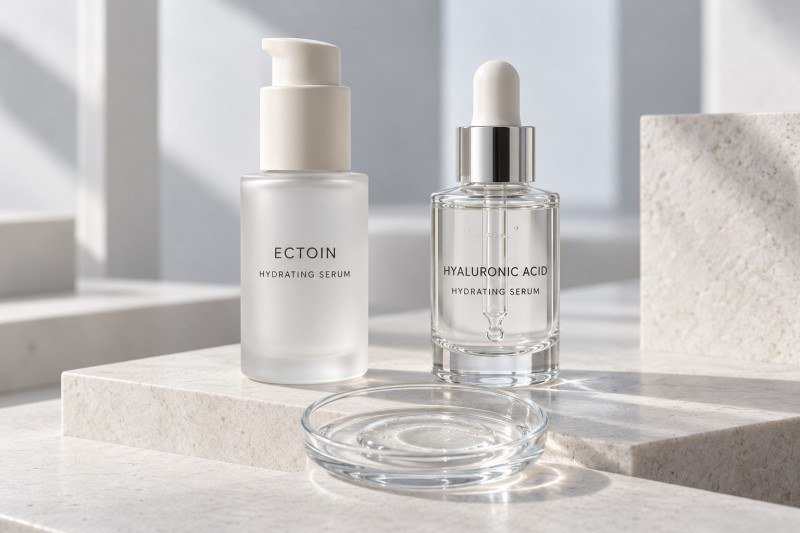
Ectoin and hyaluronic acid can both contribute to a hydrating serum, but they offer different reasons for inclusion.
Hyaluronic acid is a familiar moisture-binding ingredient, often chosen for hydration, surface smoothness and a plumper-looking finish. Ectoin is a water-soluble extremolyte studied for hydration and its ability to help stabilize biological structures under stress, making it relevant to comfort-focused and barrier-support skincare.
For a straightforward hydrating serum, hyaluronic acid provides an established starting point. For a serum built around hydration and dryness-related comfort, ectoin offers an additional development direction.
They can also work together. The best choice depends on the intended product experience, supporting ingredients and evidence for the finished formula.
Ectoin vs Hyaluronic Acid at a Glance
The main difference is their ingredient role, rather than a simple distinction between stronger and weaker hydration.
Hyaluronic acid is a large water-binding molecule available in different molecular weights and forms. Ectoin is a small protective molecule produced by certain microorganisms adapted to challenging environments.
| Comparison | Ectoin | Hyaluronic Acid |
|---|---|---|
| Ingredient type | Water-soluble extremolyte | Water-binding polysaccharide |
| Main formulation appeal | Hydration with a comfort and protective-care story | Hydration, surface smoothness and plumper-looking skin |
| Scientific starting point | Interaction with water and stabilization of biological structures under stress | Water binding and hydration-related effects |
| Common serum positioning | Barrier-focused hydration and dryness-related comfort | Everyday hydration and dehydration-related fine-line appearance |
| Texture contribution | Does not create a serum gel structure on its own | Can influence viscosity, slip and film feel depending on grade |
| Key development question | What role does ectoin play within the complete moisturizing system? | Which HA grades and levels deliver the intended feel? |
| Can they be combined? | Yes | Yes |
| What neither ingredient replaces | A balanced formula, effective preservation and appropriate evaluation | A balanced formula, effective preservation and appropriate evaluation |
What Does Ectoin Contribute to a Serum?
Ectoin is produced by microorganisms that survive conditions such as high salinity. It helps them manage environmental stress through interactions involving water and biological structures.
In skincare, this provides a scientific starting point for hydration and comfort-focused formulations.
An ectoin serum may be developed around:
Hydration for skin that feels tight
Dryness-related skin comfort
A lightweight moisturizing step
Cosmetic moisture-barrier support
A simple, fragrance-free product concept
Published research includes a randomized, vehicle-controlled study of an ectoin-containing formulation. Such research supports interest in the ingredient, although results from a particular formulation do not automatically establish the performance of another serum.
Ectoin should therefore have a clear role within the formula, supported by the base and the intended product claims.
What Does Hyaluronic Acid Contribute to a Serum?
Hyaluronic acid is valued for its ability to bind water. In topical skincare, it is commonly used to support hydration and a smoother, more supple-looking skin surface.
A hyaluronic acid serum may suit consumers looking for:
Lightweight hydration
A softer surface feel
A plumper-looking finish
Reduced appearance of dehydration-related fine lines
A moisturizing layer beneath cream or sunscreen
Its performance depends partly on the selected form and molecular weight, along with the surrounding formula.
Some grades contribute more noticeable viscosity or a surface film. Others can be used with less effect on thickness.
A clinical evaluation of a topical hyaluronic acid serum reported hydration benefits for the tested product. As with ectoin research, those findings should be interpreted in the context of the complete formulation studied.
Which Is Better for Dehydrated Skin?
Hyaluronic acid is an established starting point when the main need is additional hydration without a heavy texture.
Ectoin can also contribute to a hydrating serum, particularly when the product concept includes dryness-related tightness and comfort.
The distinction becomes clearer when the brief defines the intended experience.
Lightweight Hydration Is the Main Goal
A hyaluronic-acid-led serum may provide a straightforward direction.
Development can focus on moisture binding, easy spreading and a soft finish beneath other skincare.
Hydration and Comfort Have Equal Importance
An ectoin-led serum may provide a more differentiated concept.
Supporting humectants and skin-conditioning ingredients can help turn that concept into a complete moisturizing product.
Both Goals Matter
A combined ectoin and hyaluronic acid serum may be appropriate.
The combination should deliver a useful experience, rather than simply create a longer ingredient list.
Hydration and Barrier Support Are Connected, but Different
Hydration describes the water content of the skin. Barrier function includes the skin’s ability to regulate water loss and limit exposure to external substances.
A serum can increase hydration without supplying the lipid components associated with the outer skin barrier.
This distinction matters when comparing ectoin and hyaluronic acid.
Hyaluronic acid binds water, but it does not replace skin barrier lipids. Ectoin is relevant to barrier-focused skincare, but it is not a ceramide or an oil-phase ingredient.
For dry skin, the wider routine may need emollients and suitable lipid support as well as humectants.
A watery serum can be a useful step within that routine. A milky serum or accompanying moisturizer may provide a more conditioning experience when needed.
Which Is Better for Sensitive-Skin Positioning?
Ectoin offers a relevant scientific and commercial direction for comfort-focused skincare. However, adding it does not automatically make a serum suitable for sensitive skin.
Hyaluronic acid can also be used in sensitive-positioned products.
For either direction, the complete formula deserves attention.
Supporting Actives
A serum containing several exfoliating or high-activity ingredients may create a different experience from a simple hydrating formula.
Fragrance
Fragrance-free development may suit the intended positioning, although it does not guarantee that a product will be irritation-free.
Preservation and pH
The finished serum needs suitable preservation and a pH compatible with the complete ingredient system.
Real-Use Comfort
Evaluation should consider application, after-feel and use alongside the intended skincare routine.
Sensitive-skin suitability should be supported by appropriate evidence for the finished product.
Does Hyaluronic Acid Molecular Weight Matter?
Hyaluronic acid is not one uniform raw material. Different molecular weights and modifications can influence film formation, viscosity and skin interaction.
This gives formulators several options, but it also makes simple marketing comparisons less useful.
Higher-Molecular-Weight HA
Often contributes surface film formation and can influence slip, cushion and viscosity.
Lower-Molecular-Weight HA
May behave differently on and within the skin, depending on the specific material and formulation.
Blended HA Systems
Can combine different sensory and hydration-related characteristics.
A blend is not automatically better because it contains more molecular-weight grades.
The practical question is whether the selected system improves hydration, application and after-feel in the finished serum.
Can Ectoin and Hyaluronic Acid Be Used Together?
Ectoin and hyaluronic acid can be formulated together in one serum.
The combination can connect a familiar hydration ingredient with a more differentiated comfort and barrier-care story.
| Ingredient or System | Intended Contribution |
|---|---|
| Ectoin | Hydration and comfort-focused active direction |
| Hyaluronic acid or sodium hyaluronate | Moisture binding and selected sensory effects |
| Glycerin or other compatible humectants | Additional hydration support |
| Suitable skin-conditioning ingredients | Support for the intended after-feel |
| Texture system | Controlled flow, spreading and application |
| Preservation system | Microbial protection appropriate to the formula |
Combining the two does not establish superior performance or synergy by itself.
The value should be demonstrated through the finished product’s experience and any relevant testing.
Why More Hydrating Ingredients Can Make a Serum Sticky
A serum may contain several well-known moisturizing ingredients and still feel unpleasant.
Tackiness can come from the combined humectant load, selected polymers, film-forming ingredients or how the formula dries on skin.
A high-viscosity HA system may also create a stringy texture that feels different from the smooth, lightweight serum the brand intended.
Useful sample checks include:
How easily the serum spreads
Whether it becomes tacky while drying
How the skin feels after several minutes
Whether the recommended amount feels comfortable
How it behaves beneath moisturizer and sunscreen
The solution is not always removing hyaluronic acid or increasing ectoin.
The hydration and texture systems need to be adjusted together.
Watery, Gel or Milky: Which Serum Texture Fits?
Neither ectoin nor hyaluronic acid requires one particular serum format.
The texture should follow the target skin feel and the product’s place in the routine.
| Serum Format | Main Advantage | Main Development Consideration |
|---|---|---|
| Watery serum | Fast spreading and a lightweight application | Avoid excessive runoff, tackiness or insufficient conditioning |
| Gel serum | Controlled application and a more cushioned feel | Manage stringiness, residue and layering |
| Milky serum | More emollience and a softer conditioned finish | Confirm emulsion stability and packaging compatibility |
Watery Serum
Useful when the product should feel light and easy to layer.
The formula still needs enough structure for controlled dispensing.
Gel Serum
Useful when users prefer a more substantial application experience.
Thickness should not be confused with hydration performance.
Milky Serum
Useful when the brief calls for additional conditioning.
A suitable emollient phase can provide a different after-feel from a water-based gel, without requiring a heavy cream.
Can Either Serum Be Used With Retinol or Exfoliating Acids?
An ectoin or hyaluronic acid serum can be developed as a moisturizing step within a routine that includes retinoids or exfoliating products.
The most practical approach is to keep the serum’s role clear.
A hydration-focused formula may be intended to provide moisture and a comfortable after-feel alongside other products. It should not be presented as making an overly aggressive routine harmless.
The assessment also differs between two situations:
Separate products used in one routine: Evaluate layering, comfort and clear directions.
Several actives combined in one bottle: Review pH, stability, preservation and ingredient compatibility within the same formula.
If the goal is a simple supporting serum, adding more active ingredients may make that role less clear.
Does an Ectoin or HA Serum Replace Moisturizer?
Either serum may provide sufficient light hydration for some users, depending on the formula and conditions.
For dry skin, a watery serum may not provide enough conditioning on its own.
A moisturizer can add emollients and ingredients that help reduce moisture loss. This complements the water-binding role of a hydrating serum.
A milky ectoin or HA serum may provide more conditioning than a watery version, but its product name alone does not establish whether it replaces a cream.
The decision should reflect the actual formula and intended routine.
For brands, defining whether the serum is a standalone light moisturizer or a layering step helps guide texture, claims and packaging.
Which Ingredient Fits Different Product Positions?
The strongest choice follows the product need the brand wants to serve.
| Product Position | Direction to Explore | Main Reason |
|---|---|---|
| Straightforward everyday hydration | Hyaluronic-acid-led serum | Familiar hydration concept |
| Dryness-related comfort | Ectoin-led serum | Clear comfort-focused development direction |
| Hydration with a differentiated ingredient story | Ectoin and HA serum | Complementary formulation roles |
| More conditioning barrier care | Ectoin with a suitable emollient or lipid system | Broader moisturizing support |
| Lightweight skincare layering | Either ingredient system | Texture and residue control determine fit |
| Sensitive-skin positioning | Individually assessed formula | Suitability depends on the complete product |
Ectoin does not need to replace hyaluronic acid to create value.
Likewise, a familiar HA serum can remain a useful product when its sensory experience and positioning are well defined.

What Should Be Evaluated Before Approving a Sample?
A sample should be judged against the intended routine, rather than only from a quick application to the back of the hand.
Application
Check dispensing, spreading, slip and the amount required.
After-Feel
Assess tackiness, residue, softness and comfort after the serum settles.
Layering
Try the intended amount beneath representative moisturizers and sunscreens. Pilling can depend on the combination of products and application method.
Stability and Preservation
Plan appropriate evaluation of appearance, pH, viscosity, microbial quality and preservation.
Packaging
Confirm that the final serum works with the selected dropper, pump or airless system.
Claim Support
Match proposed hydration and barrier-related claims to the available evidence. Testing may include hydration measurements or transepidermal water loss assessment, depending on the claim.
Common Ectoin and Hyaluronic Acid Serum Development Mistakes
Several decisions can make a hydrating serum less effective as a product, even when the ingredient selection looks attractive.
Treating the Ingredients as Direct Replacements
Ectoin and HA offer different functions. Substituting one for the other may require changes to both the formula and product story.
Increasing Concentration Without a Clear Purpose
More ingredient does not automatically produce a better sensory experience or stronger substantiated claims.
Using Thickness as Proof of Hydration
A thick gel can feel substantial without outperforming a well-designed fluid serum.
Calling Every Hydrating Serum a Barrier-Repair Product
Moisturizing performance and specific barrier claims need appropriate support.
Ignoring the Wider Routine
A serum that feels pleasant alone may pill or feel heavy when layered.
Applying Research Results to a Different Formula
Ingredient studies and published product studies inform development. They do not automatically substantiate every claim for a new serum.
How Zerun Supports Ectoin Serum Development
Shenzhen Zerun Cosmetics Co., Ltd. helps brands develop ectoin serums around hydration, dryness-related comfort and cosmetic barrier-care positioning.
The formula direction can include ectoin with hyaluronic acid, other compatible humectants or suitable emollient and lipid systems.
Development discussions can cover:
The intended user and skincare routine
Ectoin’s role within the formula
Supporting hydration ingredients
Watery, gel or milky textures
Tackiness and layering priorities
Packaging and dispensing requirements
Sampling and evaluation needs
Share your target market, reference product, desired after-feel, packaging idea and expected quantity.
Explore our private label ectoin barrier serum development options to plan a suitable starting formula.
Request Formula Proposal
Conclusion
Hyaluronic acid is an established choice for moisture binding, surface smoothness and a familiar hydration concept. Ectoin offers a different starting point for products combining hydration with dryness-related comfort and barrier-focused care.
They can be used separately or together.
For a successful serum, the ingredient choice needs to work alongside the texture, supporting moisturizing system, packaging and intended routine.
Choose the roles your product needs to fulfill, then confirm the finished experience through sampling and appropriate evaluation.
More Related
Custom Formulations
Custom Brightening Formulations→
Custom Anti-Aging Formulations→
Custom Sunscreen Formulations→
Custom Acne Treatment Formulations→
Custom Sensitive Skin Care Formulations→
Custom Hair Growth Formulations→
Custom Anti Hair Loss Formulations→
Custom Smooth And Shine Hair Formulations→
Custom Anti Frizz Formulations→
Custom Hair Gloss Formulations→
Custom Anti Static Hair Formulations→
Custom Hair Moisturizer Formulations→
Custom Hair Nourishing Formulations→
Custom Hair Strengthening Formulations→
Custom Hair Damage Repair Formulations→
Custom Hair Volumizing Formulations→
Custom Hair Fluffy Formulations→
Custom Curl Defining Formulations→
Hot Private label Hair products
Private Label Hair Growth Oil→
Private Label Anti Dandruff Shampoo→
Private Label Anti Fungal Shampoo→
Private Label Luxury Hair Oil→
Private Label Lightweight Conditioner→
Private Label Peppermint Hair Oil→
Private Label Leave In Conditioner→
Private Label Curl Defining Cream→
Private Label Hair Volume Powder→
Hot ingredients
Custom cosmetic solutions
FAQ Categories
Can't find the answers?
No worries, please contact us and we will answer all the questions you have during the whole process of OEM beauty and skincare products customization.
Make A Sample First?
If you have your own formula, packaging idea, logo artwork, or even just a concept, please share the details of your project requirements, including preferred product type, ingredients, scent, and customization needs. We’re excited to help you bring your personal care product ideas to life through our sample development process.