Skip to content
How to choose a private label skincare gift set manufacturer?
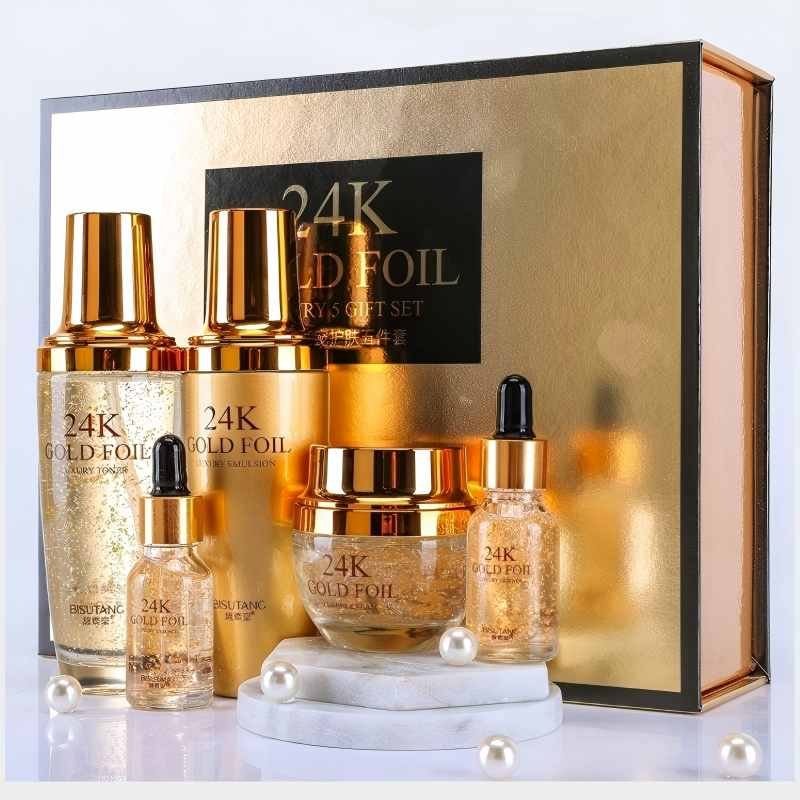
Skincare gift sets fail for reasons that rarely show up in single-SKU projects: carton scuffs, insert fit issues, barcode mistakes, leakage during transit, mismatched batches, and “looks premium in mockups but cheap in hand” unboxing. The manufacturer choice matters because gift sets add an assembly layer (kitting) on top of formula, filling, and packaging—and that layer is where timelines and costs often slip.
The safest way to choose a private label skincare gift set manufacturer is to screen for proven kitting/assembly capability, packaging sourcing control, clear MOQ logic (per SKU vs per set), a disciplined sampling workflow (what exactly gets approved), and consistent documentation habits for retail/Amazon readiness. You can find the set-planning decisions behind Gift Kit Solutions by turning “manufacturer selection” into a practical checklist.
Why gift set manufacturing is different from single-SKU private label
A gift set is a mini supply chain: multiple primary packs (bottles/tubes/jars), secondary packaging (unit boxes), and a tertiary pack (set box + insert) that must survive shipping and look premium on arrival.
The manufacturer needs to control three extra realities:
- Assembly accuracy (right SKUs, right batch codes, right quantities, right placement)
- Packaging fit and protection (insert geometry, compression, scuff resistance, leakage risk)
- Final QC at the set level (not just each individual product)
Manufacturer shortlisting checklist (the questions that reveal real set capability)
Use this to compare suppliers quickly without getting lost in marketing claims.
Table 1: Private label skincare gift set manufacturer checklist
| Capability to verify | Why it matters for gift sets | What to ask | What “good” looks like |
|---|---|---|---|
| Kitting/assembly line | Sets fail at the assembly stage | “Do you assemble sets in-house? What is the daily kitting capacity?” | Clear SOPs, line photos/videos, rework and QC steps explained |
| Packaging sourcing control | Inserts/boxes cause most delays | “Who manages box/insert sourcing and print QA?” | Vendor network + print proof process + timelines stated upfront |
| MOQ logic | MOQs are often per SKU, not per set | “Is MOQ per SKU, per formula, or per set configuration?” | Transparent rules and options for mixed-SKU first runs |
| Sampling workflow | Prevents endless revisions | “What does a ‘set sample’ include and what is frozen at approval?” | Defined approval checkpoints (formula, pack, assembly, artwork) |
| QC and traceability | Returns often come from batch mix-ups | “How do you track batch codes across a multi-item set?” | Batch-level traceability and final set-level inspection |
| Stability/compatibility discipline | Scent/texture can drift in final pack | “Do you run compatibility checks in final packaging?” | Compatibility + stability gate before scale-up |
| Documentation habits | Retail/Amazon readiness depends on documents | “Which documents are standard and how fast can they be provided?” | Consistent, organized document set per SKU and per batch |
MOQ reality for first-time gift sets (and how to structure a lower-risk launch)
Many first orders fail because the set is designed like a catalog: too many SKUs, too many unique packs, too many printed components. A better first launch is a controlled set architecture.
Practical ways to keep MOQ achievable:
- Keep the same primary packaging family across SKUs (same bottle/tube style, different labels)
- Reduce unique secondary packaging (one unit box size that fits multiple items, when possible)
- Start with fewer steps (2–3 products) instead of a full routine bundle
- If splitting into multiple SKUs, keep the set box and insert identical across variants to avoid extra tooling
Sampling workflow: what must be approved before bulk production
Gift sets need two levels of sampling: the product samples and the assembled set sample. Approving only “the formula in a bottle” is not enough.
A clean sampling sequence usually includes:
- Formula sample approval (texture, odor profile, rinse/afterfeel, claims fit)
- Packaging compatibility sample (leak checks, pump performance, label adhesion)
- Printed packaging proof (colors, finishes, barcode scannability, copy accuracy)
- Assembled set sample (fit, rattle, drop resistance logic, unboxing presentation)
- Pre-production confirmation sample (final BOM locked, no substitutions)
Lead time planning: what actually drives the timeline for gift sets
Gift sets are often delayed by packaging, not filling. Inserts, rigid boxes, special finishes, and multi-component pumps can move slower than expected—and a set cannot ship until every component arrives.
A simple way to map lead time is to separate it into four critical paths:
- Formula and lab path (finalize formula, compatibility checks, batch plan)
- Primary pack path (bottles/tubes/jars, pumps, caps, label materials)
- Set packaging path (set box, insert, sleeves, finishing)
- Assembly path (kitting schedule, final QC, carton master packs, palletization)
Most avoidable delays come from late artwork changes, uncertain box/insert specs, and switching components midstream after sampling.
Compliance and documentation: what to request for retail/Amazon readiness
Even when the products are cosmetics (not drugs), buyers often need documents for onboarding, quality assurance, and internal compliance checks. The manufacturer selection should include “how they handle documents,” not only whether documents exist.
Common requests to prepare for:
- Ingredient list/INCI and finished product specs (per SKU)
- SDS for relevant materials and COA (especially for batch release and QC)
- Micro testing summaries and stability-related notes (as applicable to the product type)
- Batch records and traceability approach (important for multi-SKU sets)
- Label copy checks (INCI order, net contents, warnings, country-specific requirements)
If a supplier is vague or slow here, gift set projects tend to stall late—right when packaging and launch calendars are already committed.
Red flags that predict delays, rework, and returns
A few warning signs consistently show up in problematic set projects:
- “We can do sets” but no clear kitting SOP, QC, or capacity numbers
- MOQ answers that change after the quote (“set MOQ” turns into “per SKU MOQ” later)
- No clear packaging responsibility (buyer expected to source boxes/inserts with no guidance)
- Frequent component substitutions (“same bottle, similar pump”) without compatibility testing
- No set-level QC plan (only SKU-level checks, nothing for final assembled kits)
What to ask on the first call (to screen fast)
These questions quickly reveal whether a manufacturer is truly set-ready:
- Do you assemble gift sets in-house, and what is the kitting QC process?
- Is MOQ per SKU, per formula, or per set configuration?
- Can the first order mix SKUs or sizes to reduce risk?
- What exactly is included in the “set sample,” and what is frozen after approval?
- Who owns packaging sourcing, print QA, and insert fit responsibility?
- What are the most common delay points for gift sets in your workflow?
- How do you manage batch traceability across multi-item kits?
- Which documents are standard, and what is the typical turnaround time?
Frequently Asked Questions about private label skincare gift set manufacturers
Most questions come down to MOQ rules, sampling clarity, and whether the supplier can actually run assembly like a system.
- Is MOQ usually per gift set or per SKU?
- Many suppliers set MOQs per SKU or per formula, not per “bundle name.”
- Mixed-SKU first runs are sometimes possible if packaging is standardized.
- Clear MOQ logic should be confirmed before artwork and box specs are locked.
- What should a gift set sample include?
- Product samples in final packaging (leak/function/label adhesion checked).
- Printed packaging proofs (color/finish/barcode verified).
- A fully assembled set sample to confirm fit, rattle risk, and unboxing quality.
- What causes the most delays in gift set projects?
- Packaging lead times (boxes, inserts, special finishes) arriving late.
- Late artwork changes that reset print schedules.
- Assembly scheduling conflicts when kitting capacity is limited.
- How can returns be reduced for skincare gift sets?
- Require set-level QC (correct items, placement, batch/label checks).
- Design inserts to prevent movement and leakage during transit.
- Avoid overly strong scent/irritation risks that trigger negative reviews at scale.
- What documents do buyers most often request for onboarding?
- Ingredient/INCI and product spec sheets per SKU.
- COA and batch release/QC targets for production lots.
- Micro and stability-related summaries appropriate to the product type and channel.
Conclusion
Choosing a private label skincare gift set manufacturer is less about who can fill products and more about who can run a controlled kitting system: packaging sourcing that doesn’t drift, MOQ logic that is transparent, sampling checkpoints that lock decisions early, and set-level QC and documentation that match retail/Amazon expectations. When those basics are verified upfront, the set is far more likely to launch on time, arrive intact, and feel premium in hand.
More Related
Hair & Scalp Care OEM/ODM Solutions →
Deodorant &Freshness OEM/ODM Solutions →
Hand & Foot Care OEM/ODM Solutions →
Spa, Bath and Aromatherapy OEM/ODM Solutions →
Custom Massage Oil Manufacturer →
Fragrance & Scent Design OEM/ODM Solutions →
Body Care Gift Set Solutions →
Seasonal& Holiday Gift Set Solutions →
Custom Formulations
Custom Brightening Formulations→
Custom Anti-Aging Formulations→
Custom Sunscreen Formulations→
Custom Acne Treatment Formulations→
Custom Sensitive Skin Care Formulations→
Custom Hair Growth Formulations→
Custom Anti Hair Loss Formulations→
Custom Smooth And Shine Hair Formulations→
Custom Anti Frizz Formulations→
Custom Hair Gloss Formulations→
Custom Anti Static Hair Formulations→
Custom Hair Moisturizer Formulations→
Custom Hair Nourishing Formulations→
Custom Hair Strengthening Formulations→
Custom Hair Damage Repair Formulations→
Custom Hair Volumizing Formulations→
Custom Hair Fluffy Formulations→
Custom Curl Defining Formulations→
Hot Private label Hair products
Private Label Hair Growth Oil→
Private Label Anti Dandruff Shampoo→
Private Label Anti Fungal Shampoo→
Private Label Luxury Hair Oil→
Private Label Lightweight Conditioner→
Private Label Peppermint Hair Oil→
Private Label Leave In Conditioner→
Private Label Curl Defining Cream→
Private Label Hair Volume Powder→
Hot ingredients
Custom cosmetic solutions
FAQ Categories
Can't find the answers?
No worries, please contact us and we will answer all the questions you have during the whole process of OEM Cosmetic customization.
Make A Sample First?
If you have your own formula, packaging idea, logo artwork, or even just a concept, please share the details of your project requirements, including preferred product type, ingredients, scent, and customization needs. We’re excited to help you bring your personal care product ideas to life through our sample development process.