
Scalp Serum vs Hair Oil: Which Is Right for Your Scalp and Hair?
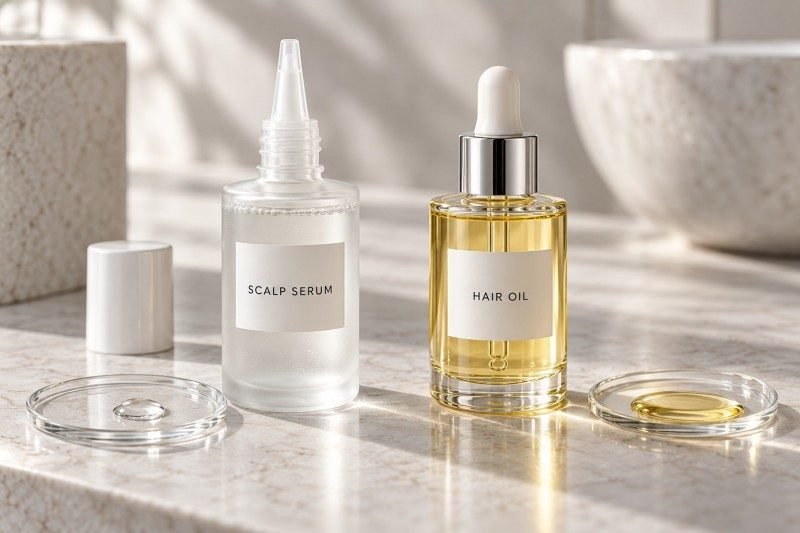
A scalp serum is formulated primarily for application to scalp skin. A hair oil is often formulated for the hair lengths and ends, although some oils are specifically designed for scalp use.
Scalp serums commonly offer lightweight hydration or conditioning with limited residue around the roots. Hair oils commonly improve lubrication, softness and shine, or form part of a pre-shampoo routine.
The important difference is where the product is intended to work and what the complete formula can deliver. “Serum” and “oil” are product descriptions, not standardized measures of effectiveness.
For brands developing a private label scalp serum, defining the application area and routine is more useful than choosing a format name first.
Scalp Serum vs Hair Oil at a Glance
Scalp serum and hair oil can belong in the same routine, but they are not automatically interchangeable.
A scalp product must perform on skin while remaining practical around the hair roots. A product for the lengths and ends has different priorities, including slip, conditioning and control of surface residue.
| Comparison | Scalp Serum | Hair Oil |
|---|---|---|
| Primary application area | Scalp skin | Often hair lengths and ends; some formulas are intended for the scalp |
| Common formula structure | Water-based liquid, gel-serum or light emulsion | Oil blend, ester-based formula, silicone-containing formula or combination |
| Typical purpose | Scalp hydration, conditioning and a defined scalp-care experience | Hair lubrication, softness, shine and selected pre-shampoo uses |
| Common sensory priority | Controlled flow and limited unwanted root residue | Slip, spreadability and an appropriate conditioned finish |
| Use pattern | Often leave-on, according to directions | Leave-on or pre-shampoo, according to directions |
| Possible drawback | Tackiness, runoff, visible residue or root wetting | Excessive coating, greasy appearance or difficult removal |
| Does the format establish hair growth? | No | No |
| Main selection question | What does the scalp need? | Is the product intended for scalp skin, hair fibers or both? |
What Is a Scalp Serum?
A scalp serum is a targeted product designed to reach the skin beneath the hair.
Many scalp serums use a water-based system, but the category also includes gels and light emulsions. Some products marketed as serums are oil-based, so the name alone does not establish the formula structure.
A cosmetic scalp serum may focus on:
Hydration for dry-feeling scalp skin
A more comfortable after-feel
Lightweight conditioning
A fresh application experience
Limited residue around the roots
These goals require different formulation choices.
A serum designed for hydration does not necessarily address excess oil. A cooling sensation does not establish that the product treats irritation. The product description and directions should make its intended role clear.
What Is Hair Oil?
Hair oil describes a broad range of products.
Some contain predominantly plant oils. Others combine oils with lightweight esters, silicones or additional conditioning ingredients. These differences can substantially change spreading, shine, residue and washability.
For the hair lengths and ends, an oil-based product may help:
Improve lubrication during handling
Reduce a rough-feeling surface
Add shine
Improve manageability
Support a pre-shampoo conditioning routine
These are hair-fiber benefits.
An oil intended for the scalp needs its own suitability assessment and directions. A finishing oil developed for the ends should not automatically be applied to scalp skin.
Scalp Skin and Hair Fibers Have Different Needs
The scalp is skin. The visible hair shaft is a keratinized fiber.
A formula that makes hair feel smoother may not provide the scalp experience a user needs. Likewise, a comfortable scalp serum may do little to improve dry-feeling ends.
This distinction explains why one product does not always replace the other.
| Application Area | Typical Product Priority | What to Evaluate |
|---|---|---|
| Scalp skin | Moisturizing feel and comfortable application | Tolerance, spreading, residue and intended use |
| Hair roots | A practical appearance after application | Greasiness, clumping, flatness and styling compatibility |
| Mid-lengths and ends | Slip, softness and manageability | Distribution, coating, shine and buildup |
| Pre-shampoo routine | Conditioning before cleansing | Application amount and removal during washing |
Start with the application area before selecting ingredients or packaging.
Which Is Better for a Dry-Feeling Scalp?
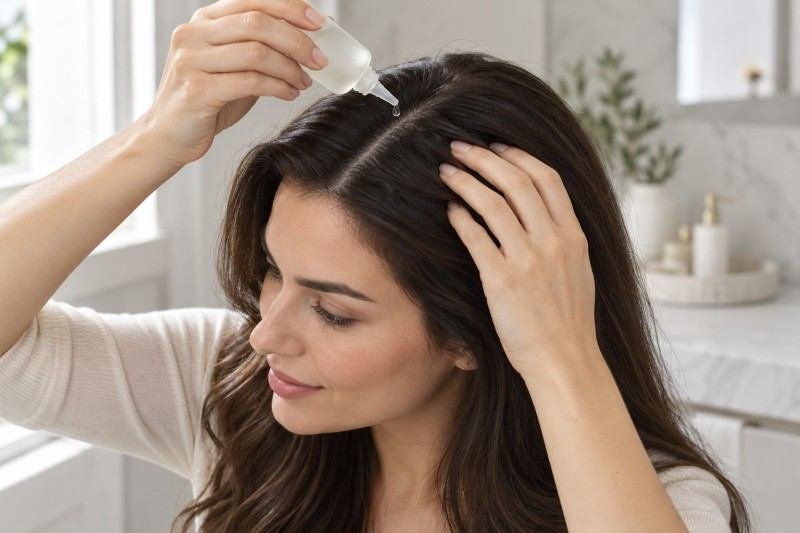
A hydrating scalp serum may be a useful starting point when the goal is to deliver water-binding ingredients in a lightweight format.
An oil-based scalp product may provide emollient conditioning, but an anhydrous oil does not supply water. Moisturization involves more than either water or oil alone.
The choice depends on what the user experiences:
Tightness With a Preference for Lightweight Care
A water-based serum with a balanced humectant system may fit the routine.
A Preference for Richer Conditioning
An appropriately formulated scalp oil or light emulsion may be worth evaluating.
Dryness Accompanied by Persistent Flaking or Itching
The cause needs attention before choosing a cosmetic moisturizer.
Flakes do not automatically indicate simple dryness. The American Academy of Dermatology identifies several possible causes of an itchy scalp, including dandruff and reactions to hair-care products.
Which Is Better for Oily Roots?
A low-residue, water-based scalp serum may be easier to incorporate when users want to avoid adding visible oil around the roots.
However, water-based does not mean residue-free.
Humectants, polymers, botanical materials and other ingredients can still make hair feel tacky, coated or grouped together.
An oil-based product may be less suitable for daytime root application when the main concern is a greasy appearance. It may still fit a separate pre-shampoo routine if that use is supported by its directions.
Neither product format establishes control of sebum production.
Claims about reducing scalp oil need evidence for the finished formula, rather than assumptions based on a fresh or dry sensation.
Which Is Better for Dry, Frizzy or Rough-Feeling Ends?
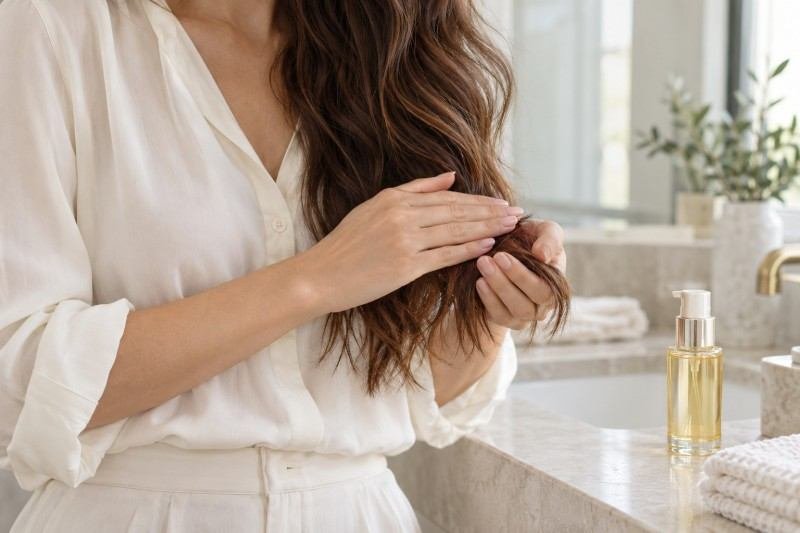
A hair oil is usually the more relevant category when the intended application area is the mid-lengths and ends.
A suitable formula can improve lubrication and the appearance of the hair surface. The right amount matters: a dose that works for coarse hair may make fine hair look overly coated.
Different oils also behave differently.
A study comparing coconut, sunflower and mineral oils found that coconut oil reduced hair protein loss under the tested pre-wash and post-wash conditions.
That finding concerns hair-fiber damage. It does not demonstrate scalp treatment, follicle repair or hair regrowth, and it should not be generalized to every oil or finished product.
A scalp serum should not be expected to replace a conditioner or finishing product unless it was developed for those additional uses.
Is Scalp Serum Better Than Hair Oil for Hair Growth?
Neither category is inherently better for hair growth.
A product may make hair look fuller by changing root lift, fiber coating or styling behavior. That is different from increasing the number of growing hairs.
Likewise, improved hair lubrication may help reduce some handling-related damage, but reduced breakage is not the same as treating follicular hair loss.
A useful comparison separates three outcomes:
| Outcome | What It Describes |
|---|---|
| Fuller-looking hair | A visible appearance effect |
| Reduced breakage | Less damage to existing hair fibers |
| Hair regrowth | A change involving hair production from follicles |
Evidence for one outcome does not establish the others.
The American Academy of Dermatology explains that effective hair-loss treatment begins with identifying the cause. A cosmetic serum or oil should not be presented as a universal solution for alopecia.
What About Rosemary Oil?
Rosemary oil is frequently discussed in relation to hair growth, but the evidence needs careful interpretation.
A 2015 randomized comparative trial studied a rosemary-oil preparation and 2% minoxidil in people with androgenetic alopecia over six months. Both groups showed increased hair counts at six months, and the study did not find a statistically significant difference between the groups.
That result does not establish that rosemary oil is equivalent to minoxidil. Absence of a statistically significant difference is not proof of equal effectiveness.
It also does not validate every rosemary-containing serum or oil. The preparation, concentration, vehicle, population and assessment method matter.
Rosemary essential oil, rosemary extract and a finished rosemary hair oil are different materials and products. They should not be treated as interchangeable evidence.
Can Scalp Serum and Hair Oil Be Used Together?
They can be used in the same routine when their purposes and directions are compatible.
A common approach is to apply a scalp serum to the scalp and a suitable finishing oil to the lengths and ends.
This separates the application areas and makes the role of each product clearer.
Before recommending a combined routine, consider:
Whether both products are leave-on
Whether either is intended to be washed out
The amount applied
Fragrance and potential irritation
Root residue
Compatibility with styling products
Applying both to the same scalp area is not automatically beneficial.
Adding more layers can increase residue or make it harder to identify which product is causing discomfort.
Does a Scalp Serum Need to Feel Completely Water-Light?
A water-light texture can support easy spreading, but it can also run away from the intended application area.
A slightly structured serum may offer better placement without becoming heavy.
The development target should balance:
Delivery
Can the applicator reach the scalp through the hair?
Placement
Does the product stay close to where it is dispensed?
Spread
Can it cover the intended area without excessive rubbing?
Dry-Down
What remains after the liquid phase settles or evaporates?
Root Appearance
Does the hair remain natural-looking and manageable?
A serum can feel pleasant on bare skin yet perform poorly when applied within the hair. Both conditions need evaluation.
Why Do Some Scalp Products Make Roots Sticky or Flat?
The cause is not always the ingredient highlighted on the label.
Root appearance can be affected by the total formula, dose and application method.
| Problem | Possible Contributors | Development Check |
|---|---|---|
| Sticky roots | Humectants, polymers or excessive application | Assess tackiness after drying |
| Flat-looking hair | Residual oil, coating or too much product | Evaluate root movement and volume |
| Hair clumping | Uneven distribution or persistent residue | Check dose and applicator placement |
| Visible flakes after drying | Dried formula residue or interactions with other products | Compare individual and layered use |
| Slow drying | High dose, formula composition or extensive hair wetting | Review delivery and dry-down |
These are possible contributors, not diagnoses.
Visible residue from a product should also be distinguished from scalp flaking. Persistent skin symptoms need appropriate assessment.
Which Applicator Works Best?
The applicator should help place a suitable amount in the intended area.
A package that looks attractive but mostly coats the hair can undermine a scalp-care concept.
| Applicator | Potential Advantage | Main Limitation to Check |
|---|---|---|
| Targeted nozzle | Direct placement along scalp partings | Flow rate, tip comfort and leakage |
| Dropper | Visible dose and targeted application | Dripping, user technique and viscosity |
| Pump | Repeatable dispensing when appropriately specified | Output per stroke and transfer method |
| Spray | Convenient distribution for selected formulas | Hair wetting, overspray and eye exposure |
A fine mist is not automatically the best choice for dense hair.
A dropper is not automatically precise if the liquid runs too quickly.
Final-pack testing should use the approved formula rather than a substitute liquid.
How Should Brands Evaluate a Scalp Serum Sample?
A sample should be tested within the intended hair-care routine.
A quick application to the back of the hand cannot show how it affects root appearance or repeated use between washes.
Useful evaluation points include:
Ease of reaching the scalp
Control of the application amount
Runoff and spreading
Scalp feel during application
Tackiness after drying
Root greasiness or clumping
Interaction with styling products
Residue after repeated use
Washout behavior
The evaluation conditions should be recorded.
Hair density, washing frequency, dose and whether the product is applied to damp or dry scalp can change the experience.
Stability, microbial protection and packaging compatibility require separate assessment. Pleasant sensory feedback does not establish those qualities.
When Is a Cosmetic Product Not Enough?
A cosmetic scalp serum or oil may support moisturizing and conditioning care, but it cannot identify the cause of persistent scalp symptoms or hair loss.
Sudden or patchy hair loss, ongoing pain, sores or persistent inflammation warrant professional assessment.
Persistent itching and flaking also should not automatically be managed by adding more oil or another leave-on product.
This boundary matters for product communication.
A brand can describe supported cosmetic benefits clearly without promising to treat infections, cure alopecia or restore damaged follicles.
Which Product Should a Hair-Care Brand Develop First?
Choose the product around the main application area and customer need.
| Project Goal | Starting Direction to Explore | Main Priority |
|---|---|---|
| Lightweight scalp hydration | Water-based scalp serum | Moisture support with controlled residue |
| Scalp conditioning with a richer feel | Suitable scalp oil or emulsion | Comfort, dose and washability |
| Smoother-feeling lengths and ends | Finishing hair oil | Slip, distribution and coating control |
| Pre-shampoo conditioning | Oil-based pre-wash product | Appropriate application and removal |
| A complete scalp-and-hair routine | Separate products with clear roles | Compatible directions and limited overlap |
A single product can sometimes serve more than one purpose, but that needs deliberate development.
Calling a formula “multi-purpose” does not demonstrate that it performs equally well on scalp skin and hair fibers.
How Zerun Supports Scalp Serum Development
Shenzhen Zerun Cosmetics Co., Ltd. helps brands define scalp serum projects around the intended scalp feel, application method and root finish.
The starting point may be a product goal, reference sample, ingredient direction or preferred sensory experience.
Development discussions can cover:
Hydration and conditioning priorities
Water-light, gel-serum or light-emulsion textures
Ingredient compatibility
Tackiness and dry-down
Hair-root appearance
Applicator and dispensing requirements
Sampling and evaluation priorities
Share your target market, intended application, reference product, preferred packaging and expected quantity.
Explore our private label scalp serum development options to plan a formula around your intended routine.
Conclusion
Scalp serum and hair oil serve different starting purposes.
A scalp serum is developed primarily for scalp skin and often prioritizes lightweight application and controlled root residue. A hair oil commonly focuses on lubrication, softness and shine along the hair, although some oil products are specifically formulated for scalp use.
Neither format alone establishes hair-growth performance.
Choose according to the application area, intended benefit, complete formula and real-use experience. When both products have clearly defined roles, they can complement each other within a practical hair-care routine.
References
More Related
Custom Formulations
Custom Brightening Formulations→
Custom Anti-Aging Formulations→
Custom Sunscreen Formulations→
Custom Acne Treatment Formulations→
Custom Sensitive Skin Care Formulations→
Custom Hair Growth Formulations→
Custom Anti Hair Loss Formulations→
Custom Smooth And Shine Hair Formulations→
Custom Anti Frizz Formulations→
Custom Hair Gloss Formulations→
Custom Anti Static Hair Formulations→
Custom Hair Moisturizer Formulations→
Custom Hair Nourishing Formulations→
Custom Hair Strengthening Formulations→
Custom Hair Damage Repair Formulations→
Custom Hair Volumizing Formulations→
Custom Hair Fluffy Formulations→
Custom Curl Defining Formulations→
Hot Private label Hair products
Private Label Hair Growth Oil→
Private Label Anti Dandruff Shampoo→
Private Label Anti Fungal Shampoo→
Private Label Luxury Hair Oil→
Private Label Lightweight Conditioner→
Private Label Peppermint Hair Oil→
Private Label Leave In Conditioner→
Private Label Curl Defining Cream→
Private Label Hair Volume Powder→
Hot ingredients
Custom cosmetic solutions
FAQ Categories
Can't find the answers?
No worries, please contact us and we will answer all the questions you have during the whole process of OEM beauty and skincare products customization.
Make A Sample First?
If you have your own formula, packaging idea, logo artwork, or even just a concept, please share the details of your project requirements, including preferred product type, ingredients, scent, and customization needs. We’re excited to help you bring your personal care product ideas to life through our sample development process.